
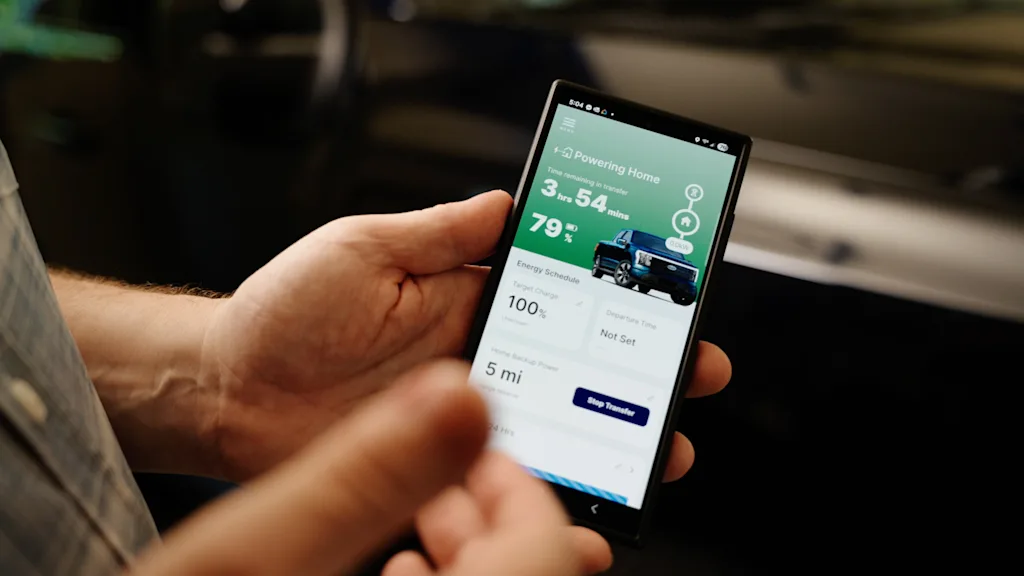
As more and more drivers purchase electric vehicles, some people have voiced concerns about how the EV boom could further strain our aging, stressed electricity grid. More EVs means more electricity demand, which could require costly infrastructure upgrades or limit when drivers can charge if demand is too high.
But one long-talked about promise of EVs is that they could actually make our electricity grid more resilient. Through bidirectional charging, EVs could essentially act as batteries parked outside your home, powering houses so that they don’t need to rely on outside electricity.
They could also even send energy back to the grid.
A handful of EVs can already power your home during an outage, including the Ford F-150 Lightning. And Ford is expanding how its EV drivers can take advantage of bidirectional charging.
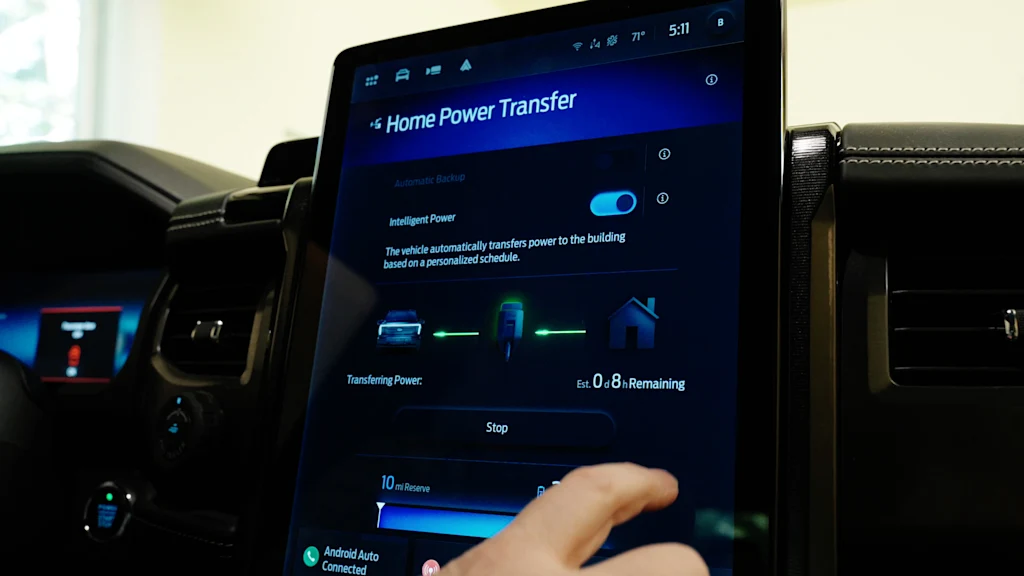
Through its Home Power Management program, F-150 Lightning owners can use their trucks to power their homes when electricity prices from the grid are high, easing energy burdens and saving people money on their monthly bills.
It also gives customers the ability to send energy from the trucks back to the grid, in some instances earning them money from their electricity company for doing so.
“We see an opportunity here where our vehicles can be part of the solution rather than compounding the problem,” Dave McCreadie, director of Ford’s EV-Grid Integration Strategy and Business Development, said during a recent press briefing on the program.
The rollout is currently limited, but Ford expects to expand a Home Power Management pilot in 2026.
At a time when EV sales are lagging and EV tax credits have expired—and as homeowners across the country are seeing their energy bills increase—Ford hopes potential customers see these features as another benefit to owning an EV.
A personal power plant to lower energy bills
Backup power has been a feature in the F-150 Lightning since its release in 2022.
After major hurricanes like Helene in North Carolina and Beryl in Texas, F-150 Lightning owners used their trucks as generators, allowing them to keep the lights on and the refrigerator running when the power went out. A fully charged F-150 Lightning can power a home for three days; if that power is rationed, it can last up to 10 days.
Backup power only works when the grid goes down. Home Power Management, however, allows EV owners to use their trucks to power their homes even when the grid is up and running.
The idea is that customers can charge their EVs overnight during offpeak hours, when electricity rates are low. Then, when demand peaks and rates go up, they can use their EV to power their homes.
That both offsets a homeowner’s electricity bills and frees up power from the grid to go elsewhere. The home in question is now essentially “invisible” to the grid, the automaker explains.
In June 2024, Ford partnered with Baltimore Gas & Electric (BGE) and Sunrun, a home solar and battery company, to launch the country’s first vehicle-to-home pilot program, allowing EV owners to use their vehicles to power their homes anytime, not just during an outage.
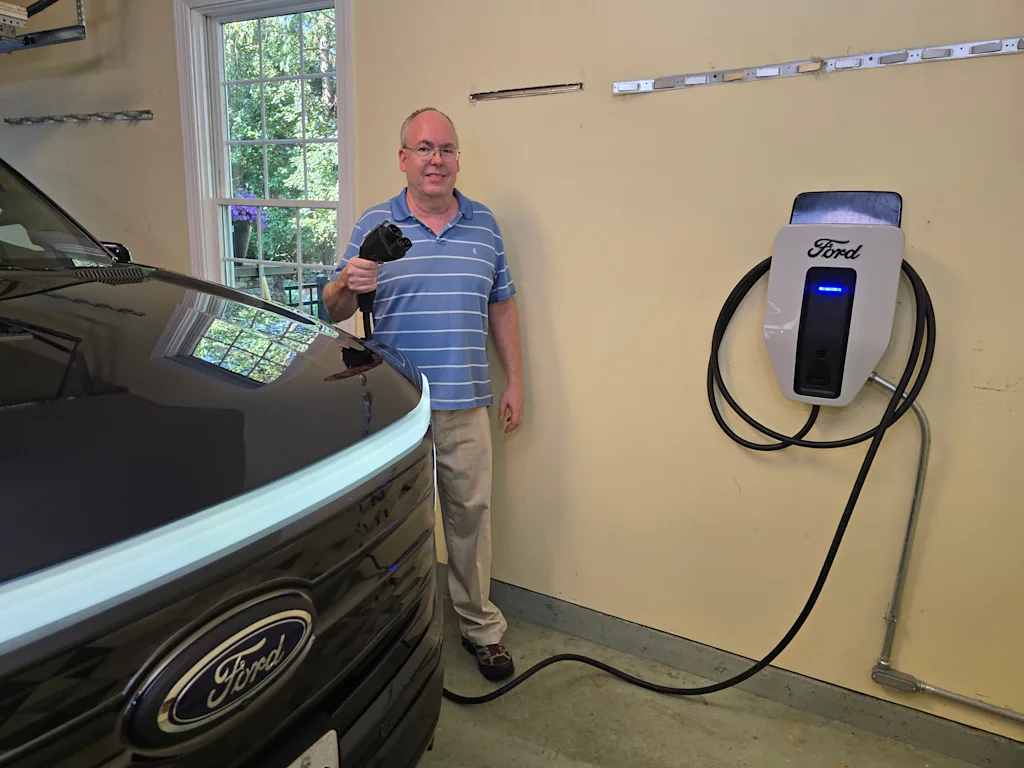
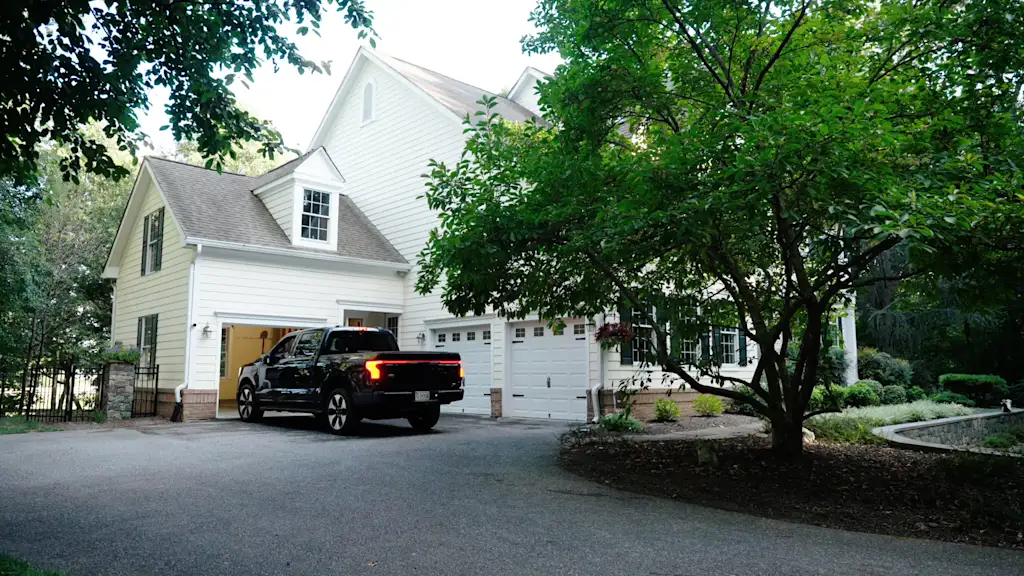
Brian Foreman, an F-150 Lightning owner in Highland, Maryland, was the first customer to do so, essentially turning his EV into his own personal power plant.
Ford didn’t share exactly how much Foreman saved on his electricity bills, but says that customers can save an average of $42 per month, or $500 per year, by using the vehicle-to-home capability.
“When most people would be concerned, ‘I’ve got an electric vehicle, my electricity bill is going to go up,’ well now you have this offset. Your vehicle is actually working for you in your driveway while it’s parked,” said Ryan O’Gorman, senior manager of energy services business strategy and delivery at Ford.
Sending energy to the grid—and making money
In the summer of 2025, Foreman joined two other BGE customers for another pilot, this time one that allowed customers to use their F-150 Lightnings to send power to the grid.
This turns the EVs into “distributed power plants,” per the utility company, which also paid customers for the energy they shared.
Instead of just saving customers money on their electricity bills, this next step in Ford’s Home Power Management program lets EV owners make money through their EVs. The participants could earn up to $1,000 for the power they provided between July and September.
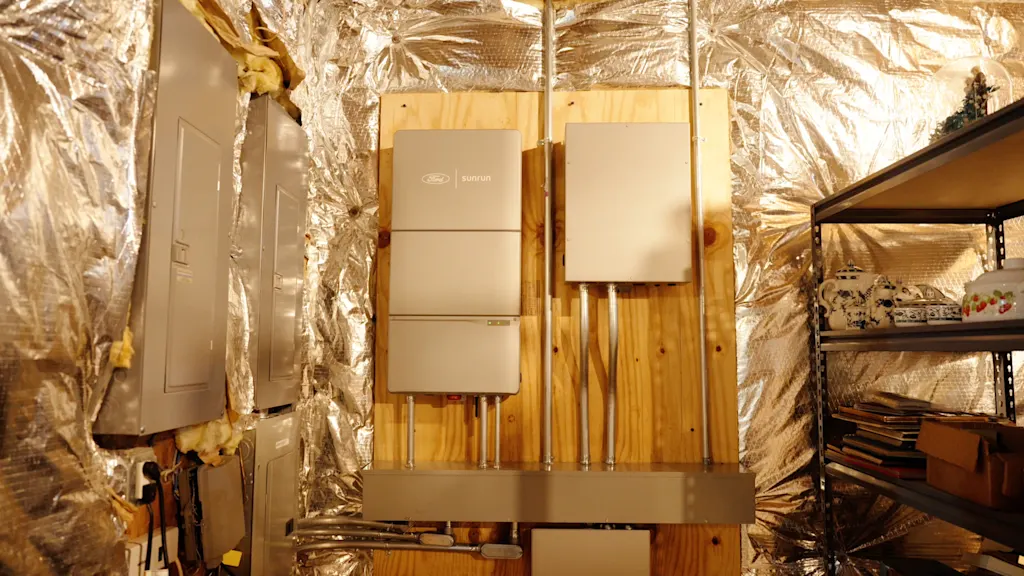
Using your F-150 Lightning to power your home during peak energy demand or to send power to the grid does require extra equipment: an inverter called the Home Integration System, created by Ford and Sunrun.
That equipment is also needed if you want to use your truck to provide backup power during an outage, so some customers already have it installed. The Home Integration System costs $3,895, and installation can be another $3,000, though those prices vary.
That expense is on top of the price to buy and install a home EV charger. Some Ford customers received a free charger and installation through the automaker’s Ford Power Promise program, but for those that missed out on that opportunity, a level 2 Ford Charge Station Pro costs another $1,310 plus installation, which can vary from $200 to $1,000, depending on any wiring upgrades your home needs.
That means there is an upfront cost to eventually being able to offset your energy bills or make money by providing power through your EV. But Ford says its F-150 Lightning is cost competitive to buying a 10-kilowatt stationary backup generator for your home—plus, it’s a generator you can drive around.
Looking ahead for Ford
Currently, a handful of customers in just nine states are using Ford’s Home Power Management capabilities, including Maryland, Georgia (where Ford did a six-month pilot program with energy provider Southern Company focused on commercial fleets), and Vermont (where energy expert Peter Schneider tested the program with Ford, using it to power his home, and reduce grid strain, during extreme heat there this past summer).
Getting this system set up requires working with utility companies, which have to provide approval and permits for EVs to be interconnected with the grid in these ways.
Automakers also work with utilities to communicate about peak demand, with software that automatically charges an EV at grid-friendly times.
“Ford trying to maintain communications with hundreds and even thousands of electric utilities across the country is an untenable business solution,” McCreadie said. “We found that other automakers were having the same problem.”
Ford worked with BMW and Honda to create ChargeScape, a joint venture that launched in 2024, which basically acts as “connective tissue,” McCreadie explained, to link utilities and automakers, and integrate EVs into the grid.
Though vehicle-to-home and vehicle-to-grid charging is a goal for the EV industry at large, Ford says it’s ahead of the pack with its recent pilot programs.
Ford and Michigan-based DTE Energy have also recently launched a new program piloting the vehicle-to-home capabilities, starting with a group of 15 Ford employees.
Through that pilot, DTE Energy will pay participants for using their EVs to power their homes during times of high electricity demand. But EV owners don’t have to do anything themselves; the system is entirely automated.
DTE Energy will send notifications to ChargeScape to schedule when participants EV’s provide power for their homes. Though it’s only available to Ford employees right now, the automaker says it’s working with DTE to hopefully expand the program to the general public later on in 2026.