
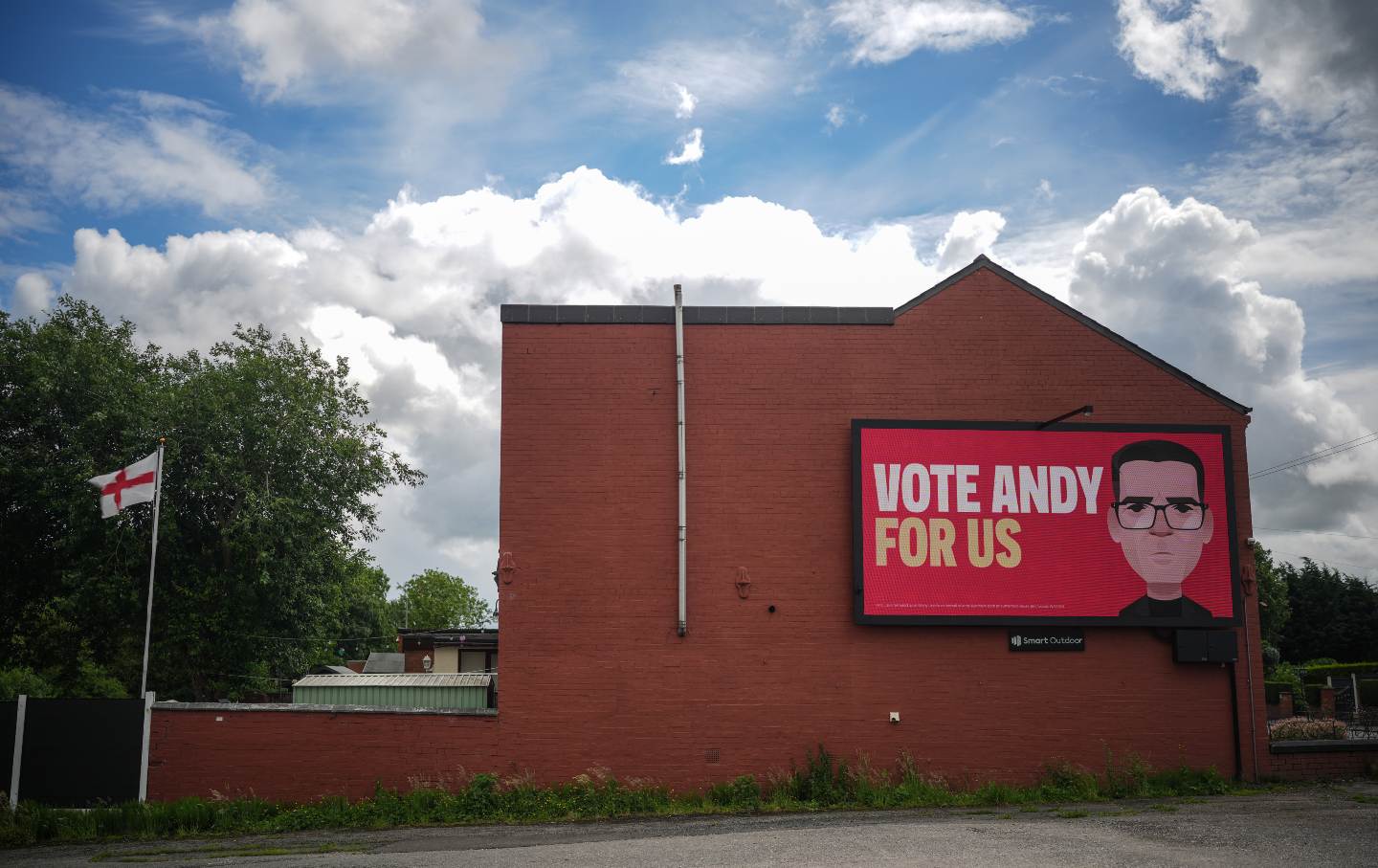
Mayor of Greater Manchester Andy Burnham is expected to challenge Starmer for leadership of the Labour Party.
On June 18, an unusual but potentially consequential vote is scheduled to be held in a little-known parliamentary constituency on the outskirts of Manchester in northwest England. The outcome in Makerfield, as the area is known, could quickly lead to the selection of a new British prime minister.
The candidate of the governing Labour Party is Andy Burnham, the mayor of Greater Manchester. If he wins, Burnham is expected to quickly challenge Prime Minister Keir Starmer, who has been badly wounded by a series of snafus and regional election losses. “If I get your support, I would seek to represent you at the highest possible level,” he said during a BBC debate in Makerfield.
A career politician, Burnham, 56, gave up his parliamentary seat in the area for the mayoralty in 2017. Now, at a time when the central government in London is out of favor, he is trying to parlay his association with Manchester, the star performer of an otherwise lackluster British economy, into the premiership. “I pioneered a new politics,” he said during a recent televised debate staged by the BBC. Burnham said he would bring the “more collaborative,” long-term approach that he calls “Manchesterism” back to the capital “to restore the public’s trust.”
Current Issue

The Makerfield vote will also be a test of whether Labour can weather the rise of Reform UK, the British analogue of Donald Trump’s MAGA movement, which made large gains in local elections in May. With Reform leading in recent national polls, the party’s leader, Nigel Farage, who was instrumental in pushing Britain to vote to leave the European Union a decade ago, is now also seen as a possible future prime minister. Farage’s gaining that role “would obviously have all sorts of impacts in terms of the nation’s foreign policy, its stance toward Europe and its relations with the United States,” said Tim Bale, professor of politics at Queen Mary University of London.
That the election is occurring at all is evidence of the volatility of contemporary British politics, which has produced five prime ministers in the last seven years.
Less than two years ago, on July 4, 2024, Starmer led the Labour Party to its first general election victory in nearly 14 years, winning a large majority of 411 of 650 seats in parliament. Yet the goodwill Starmer earned by the win dissipated at a pace that surprised analysts. What’s certain is that Starmer is now hugely unpopular and that a series of wrong moves contributed. Early in his term, Starmer cut a popular subsidy of winter heating costs for the elderly. Later, he appointed Peter Mandelson, a controversial political figure, to the prestigious post of ambassador to Washington, and then dismissed him after embarrassing revelations of the close ties the envoy had to the late financier Jeffrey Epstein.
The May elections benefited not only Reform but other parties too, including the Greens, who are now focused on inequality, and the Welsh nationalist Plaid Cymru party. Britain’s traditional duopoly between Labour and the right-leaning Conservatives has fragmented. For example, a May survey of voters by YouGov, a polling firm, was topped by Reform, with 24 percent, and showed four other parties with 14 percent or more. Labour polled only 17 percent.
Labour’s defeats triggered a wave of soul-searching and a handful of resignations by ministers in Starmer’s government. “Where we need vision, we have a vacuum,” Wes Streeting, the health secretary, wrote in his departure letter to Starmer. Streeting, another possible—though unlikely—prime ministerial candidate, said it was clear that the prime minister would not lead the Labour Party in the next election, which must be held by 2029. Starmer is resisting those urging him to set a departure date.
The Makerfield election was triggered when the incumbent, Josh Simons, resigned last month to give Burnham the opportunity to win the parliamentary seat he needs to challenge Starmer.
Burnham won’t need a national election to become prime minister. He can force a leadership contest by gaining support from 20 percent, or 81, of Labour’s members of parliament. “He’ll be riding on the crest of a wave, really, as far as a lot of Labour MPs are concerned,” Bale said.
Although Makerfield, a collection of town centers and former coal mines, has been a Labour constituency, its characteristics now favor Reform. The residents are almost all white and British-born. The area voted heavily to leave the European Union in 2016. Brexit voters now form the core of Reform’s support, analysts say.
“If it was any other Labour candidate, you would be sure they would lose,” said Scarlett Maguire, founder of Merlin Strategy, a polling firm, referring to Burnham. Burnham’s roots in the area seem to stand him in good stead. While the foundations of Manchester’s success were largely laid before his election as mayor, he is able to claim credit for it.
John Horton, a former city official who is now vice president for innovation and civic engagement at the University of Manchester, recalls a city that seemed “stuck in terminal postindustrial decline” a few decades ago being transformed into a vibrant urban environment. Aided by the name recognition of two top professional soccer teams, Manchester City and Manchester United, the city’s leaders “were able to go out internationally and sell Manchester as an investment destination,” Horton said.
The efforts paid off, with Manchester shifting away from lower-value manufacturing to higher-paid jobs in law, broadcasting, and information technology. Since 2008, Manchester has created more such jobs than any area in Britain except London, according to a recent study by Oxford Economics, a research firm.
Popular
“swipe left below to view more authors”Swipe →
While there is some carping among voters and political opponents about Burnham’s using Makerfield as a stepping stone, a recent sampling of voter intention by Survation, a polling firm, gave Burnham about 49 percent of the vote, a 10-point lead over Reform’s candidate, Robert Kenyon, a self-employed plumber. Survation shows Rebecca Shepherd, the candidate of Restore Britain, a harder-line offshoot of Reform, helping Burnham by gaining 8 percent of the vote.
Burnham is rated a better communicator than Starmer, but whether he has the answers to Britain’s national discontents is another question. Sluggish economic growth appears to have played a major role in voters’ willingness to abandon established political parties not only in Britain but in other European countries like France and Germany. Starmer promised voters change, but he has so far failed to deliver the oomph needed to push up earnings and fund major improvements in public services like healthcare. Burnham appears to be tacking leftward, suggesting that he will provide additional funding for services like care for the elderly, potentially paid for with higher taxes on real estate and share sales.
His ability to make major changes seems limited. Britain already has some of the highest interest rates of major industrialized countries, likely limiting his scope to lift government spending. In a warning shot, interest rates on government bonds surged last month as the likelihood of a Burnham-led government appeared to increase.
“Of the advanced economies, only Italy has similarly poor debt dynamics,” wrote analysts at Oxford Economics. Leaving the European Union, Britain’s largest trade partner, has damaged industries from auto-making to finance and reduced the size of the economy by an estimated 6 to 8 percent, according to a working paper by the National Bureau of Economic Research published late last year.
Burnham, however, has played down trying to rejoin the European Union soon, though he says he would like to see Britain return in his lifetime. “There are some really bad headwinds still,” said Tim Leunig, an economist who has advised two British chancellors of the exchequer.
With the midterm elections now firmly upon us, the question is whether Democratic candidates will do more than merely occupy ballot lines as mild alternatives to the red-hot crisis that is Donald Trump.
As Trump spends over $1 billion a day on a globally destabilizing war on Iran and admits that he doesn’t “think about Americans’ financial situation,” millions across the country are struggling with the surging costs of essentials. Democrats must seize this moment and advance bold, small-“d” populist ideas—not settle for cynical caution that once again snatches defeat from the jaws of victory.
The Nation elevates progressive ideas, movements, and elected officials achieving real change across the country into the national conversation. At the same time, our journalists are exposing how crypto and AI-funded super PACs are spending hundreds of millions of dollars to knock out candidates they oppose, reporting on the devastating impact of the Supreme Court’s evisceration of the Voting Rights Act, and sounding the alarm on attempts by red states to quickly redraw electoral maps, disenfranchising Southern Black voters.
We can play this critical role because of support from readers like you. This June, we’re raising $20,000 to power The Nation’s independent journalism in the run-up to November’s immensely consequential elections.
It’s in our power to build a more just society, and your support at this critical moment brings us closer to that bold vision. I hope you’ll donate today.
Onward,
Katrina vanden Huevel
Editor and Publisher, The Nation
More from The Nation

Ordinary people are rising up against neoliberal orthodoxy.
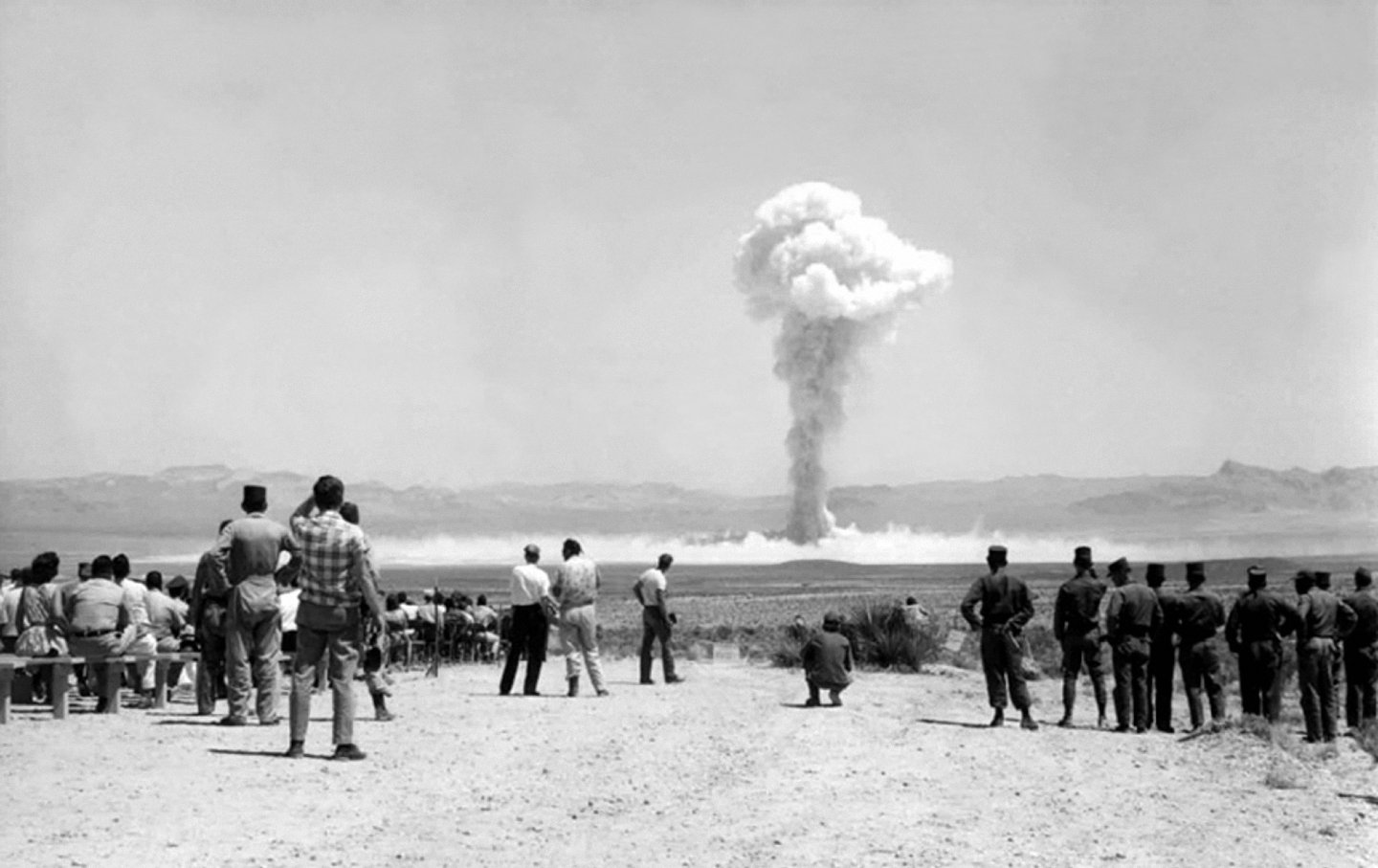
A new documentary issues an urgent warning about our dangerous nuclear delusions.

By failing to absorb the lessons of Iran’s strategic victories, the White House is on course to turn the present stalemate into a disastrous quagmire.

Outraged Albanians are targeting the presidential son-in-law for pursuing a $4 billion luxury resort deal in a business climate rife with corruption and environmental neglect.