
Hello and welcome to Modern CEO! I’m Stephanie Mehta, CEO and chief content officer of Mansueto Ventures. Each week this newsletter explores inclusive approaches to leadership drawn from conversations with executives and entrepreneurs, and from the pages of Inc. and Fast Company. If you received this newsletter from a friend, you can sign up to get it yourself every Monday morning.
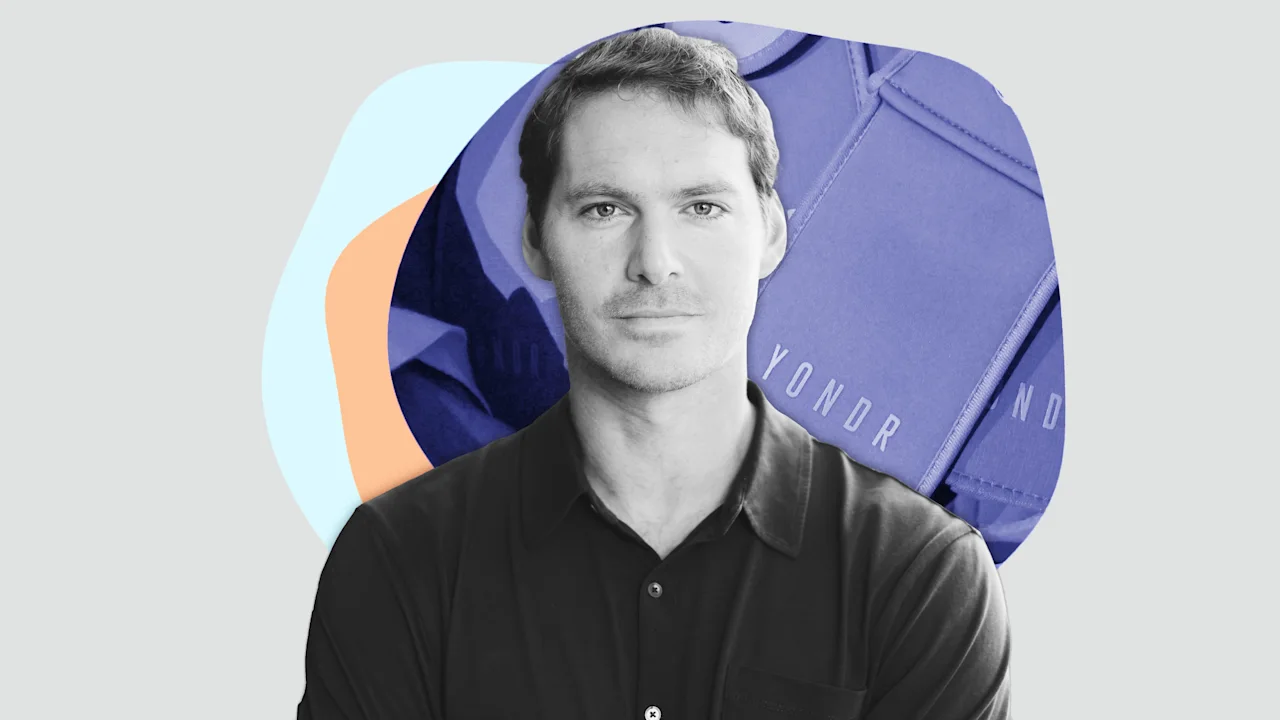
Fourteen years ago, Graham Dugoni decided to start a movement to address what he viewed as the deleterious effects of rampant smartphone usage. “What I saw was kind of impending nihilism, the sense that everyone is going to be inundated with media, and it’s going to hollow out the meaning in your life,” he recalls.
An Analog Solution
His response was not a manifesto or a march. It was a product: an individual, locked pouch that holds devices while users are in designated phone-free zones such as classrooms or concerts. Phones can be removed from the pouches via unlocking bases in areas where phone use is allowed. In 2014, Dugoni launched Yondr, which offers customers the tools to create phone-free spaces, including the pouches and operational resources and support. Today the company operates in more than 55 countries, works with schools in all 50 states, and counts Dave Chappelle, Bruno Mars, and Madonna among its artist partners.
Dugoni acknowledges the irony of trying to combat the impacts of tech conglomerates via yet another business. “The idea of starting a company was kind of [uncomfortable] to me,” he says. He had considered pursuing his efforts via academia, but he says he realized “the only way to have a mass sociological effect was at a scale that only a company could achieve.”
That Yondr sells to school systems, which often are on tight budgets, is a further complication. A recent article in The New York Times described how students are breaking into the pouches and cited examples of schools opting for low-tech (and presumably cheaper) solutions such as lockers or cubbies. “I think spending a bunch of money on a product right away was not wise,” one teacher, who instead has his students deposit their phones in a plastic caddy in his classroom, told the Times.
Following In Others’ Footsteps
Dugoni’s desire to turn his company into a movement echoes the ethos of Patagonia founder Yvon Chouinard. Patagonia isn’t just a clothing and equipment maker, it “is a philosophy, a way of being, a subculture, one that represents an alternative vision of what it means to be a part of the modern economy,” writes David Gelles in Dirtbag Billionaire, his recent book about Chouinard.
Perhaps unsurprisingly, Patagonia is emblematic of the uneasy relationship between capitalism and idealism that Dugoni and other well-meaning founders often encounter. Chouinard “was cautious about growing the business too quickly, but he needed to increase sales to fund his environmental philanthropy. He took good care of his employees in many ways, but never shared equity or profits with them,” Gelles tells me. “This tension is what makes Patagonia so unique. It’s a company that has wrestled with its own imperfections for decades now, using them as a source of inspiration in its unending quest to get better.”
By at least one measure, Dugoni’s phone-free movement is well underway: more than 30 states ban mobile phones in schools. Dugoni views Yondr as a facilitator; enduring change needs to come from passionate people and communities. “What happens inside the spaces Yondr helps provide is really up to the people running the show,” he says. “Yondr is there to create space to allow those things to thrive.”
Reader Mailbag
A few weeks ago I asked you to share the youth trends you’re tracking in 2026. Many of you submitted responses that suggest that young people are embracing Yondr’s phone-free philosophies. Here’s a sampling:
Lesley Gold, Cofounder And CEO, SutherlandGold Group
“Gen Z is the first generation to be ‘digitally native’ and yet they are turning to analog. They are looking for wisdom that comes from experiences that are sensory. It’s like the Good Will Hunting quote (paraphrasing here): ‘You can read every book on Michelangelo, know every fact about him, and never know what the Sistine Chapel smells like.’ They want to see, touch, taste, hear, smell life . . . everything you can’t get on a screen.”
Barby K. Siegel, Global CEO, Zeno Group
“The youth trend we’re watching in 2026 is self-preservation. Through Zeno’s Project GAP (Generational Advisory Perspectives), we see Gen Z creating its own alignment—setting clearer tech boundaries, becoming more selective about trust, and choosing what feels livable over what looks aspirational.”
Gabrielle Wesley, Chief Marketing Officer, Confectionery, Mars Snacking North America
“Staying current on culture isn’t about chasing trends but earning relevance and credibility. With 93% of consumers skipping or blocking ads, Gen Z is leading the charge, and they are sending a clear message: brands must earn their time by adding real value. For Mars, that means practicing true consumer obsession—listening deeply to cultural signals and showing up in ways that are rooted in real-life experiences that reflect how this consumer thinks, feels, and behaves. For example, a live Big Game moment with Skittles turned advertising into participation, delivering a commercial straight to one lucky fan’s front yard. Younger generations don’t want to be talked at; they want to be invited in.”
Read more: less tech
Fast growth founders help kids break their tech addiction
Why the ‘anxious generation’ needs cellphone bans in school
New York law bans algorithmic feeds for kids on social media