
Debates over what visitors will see and experience in the nation’s capital city have taken center stage as Americans prepare to mark the 250th anniversary of the Declaration of Independence.
For President Donald J. Trump, the event inspired a massive redevelopment project. Since the beginning of his second term, Trump has argued that Washington, D.C., needs serious renovation. To date, the president’s beautification projects include repainting the Lincoln Memorial Reflecting Pool “American flag blue,” demolishing the East Wing of the White House to make room for the construction of a large ballroom, and plans for a 250-foot-tall “triumphal arch” near Arlington National Cemetery.
For Trump, how the city looks is perhaps more important than what the city symbolizes.
As a scholar of U.S. presidential rhetoric and political communication, I study how leaders use words and actions to create a particular vision of the United States to national and global audiences, and sustain it. My current book project traces the rhetorical history of Washington, D.C.
In my research, it has become clear that this preoccupation with cultivating the city’s image is not new. In fact, it is built into the very foundations of Washington itself.
Washington was built to be seen
Early U.S. political leaders put considerable thought into how the new capital city would appear to citizens and visitors alike.
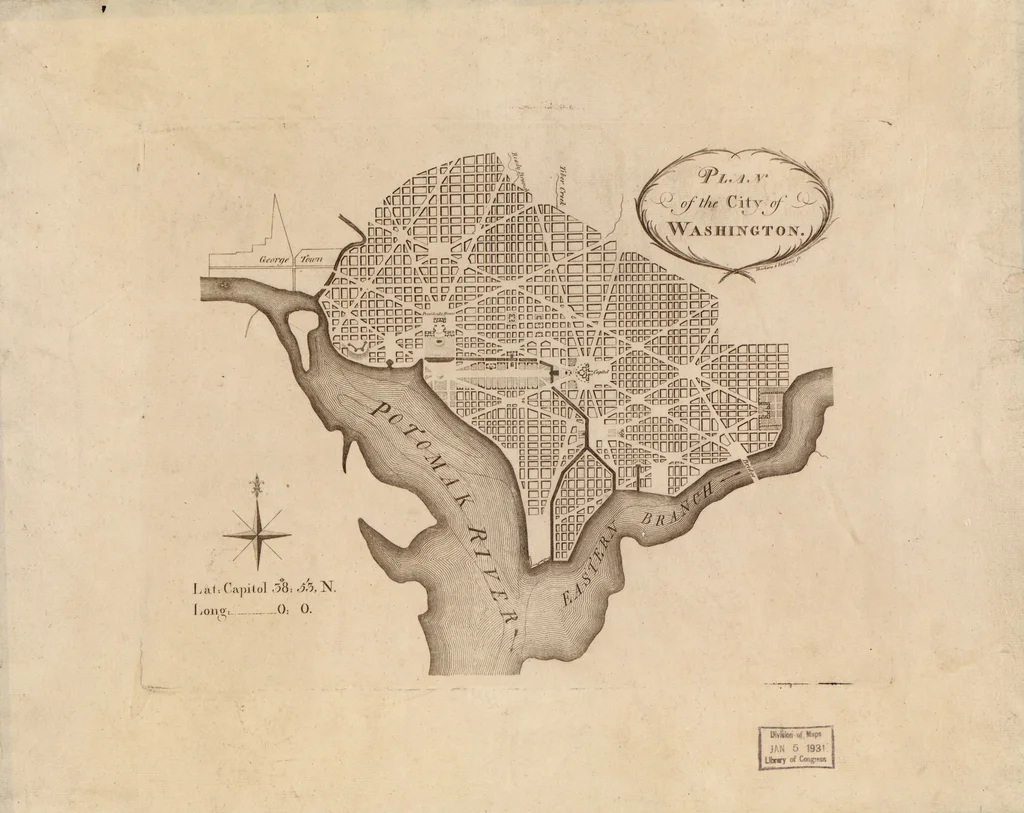
In March 1791, French architect Pierre Charles L’Enfant reported to George Washington that he had found “a most elligible position for the First Setlement of a grand city” after a survey of land that would become the nation’s capital. “[F]rom these height[s] Every Grand building would rear with a majestik aspect over the Country all round and might be advantageously seen From twenty miles off.”

L’Enfant designed the city’s grid around key landmarks, including the White House, the U.S. Capitol, and the National Mall. These “principal points,” L’Enfant wrote, were linked by lines or avenues that would make “the real distance [seem] less from place to place,” thus providing “them a reciprocity of sight and making them thus seemingly Connected.”
From the very beginning, then, Washington was built to be seen. And as the nation’s sense of self has shifted and changed over time, so, too, have images depicting what the nation’s capital is and should be.
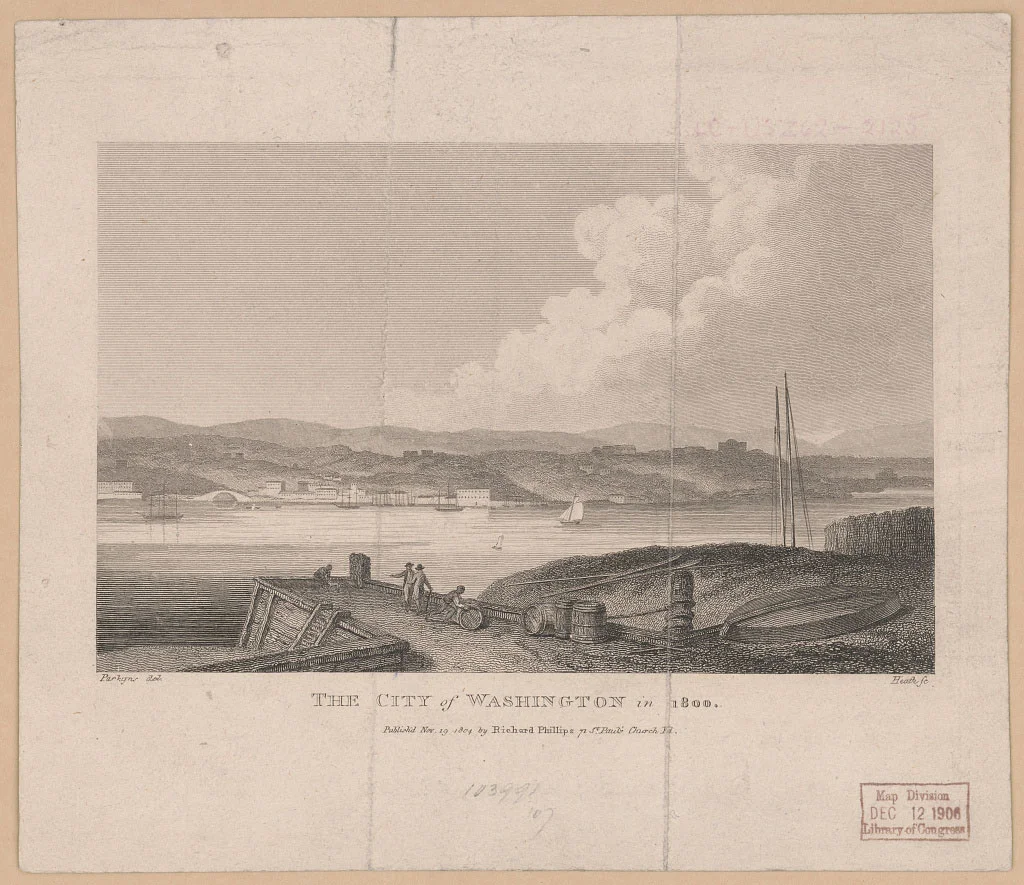
Many early images of Washington reflected a city under construction. President John Adams was the first to move into the “President’s House,” and Congress assembled in the Capitol’s North Wing in late 1800. Construction on the Capitol was still going on when the British captured the city in 1814.
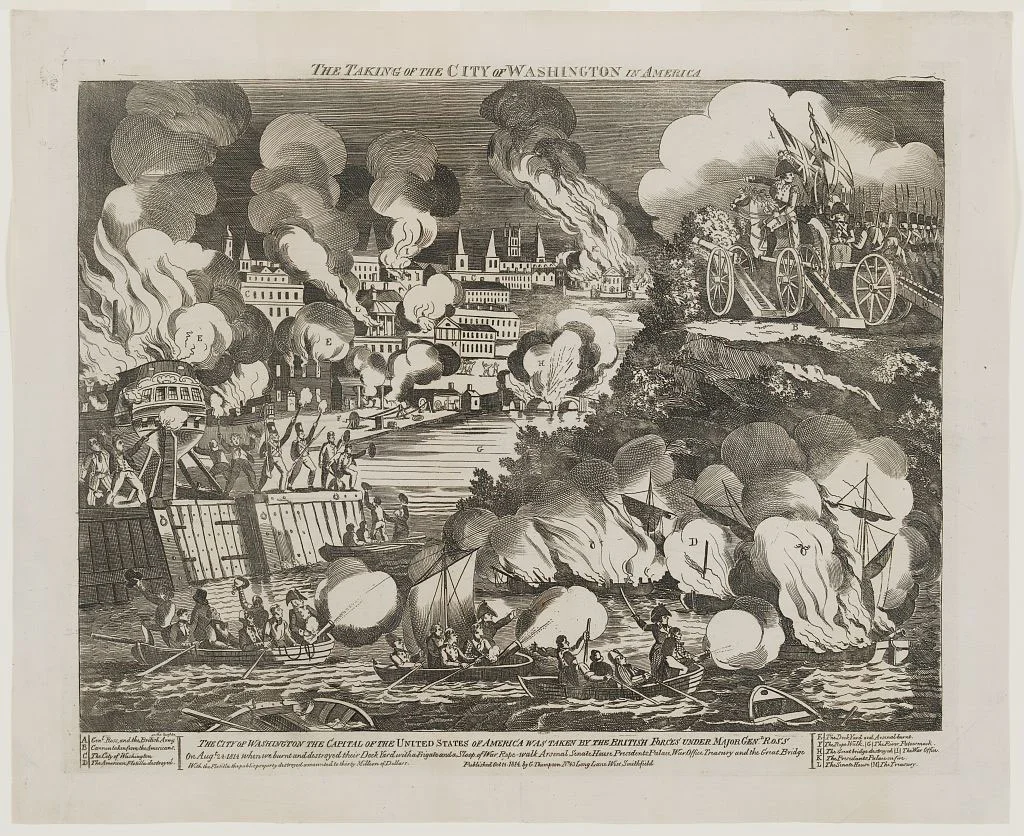
You can imagine the terror felt by those living in the nation’s capital as the British set fire to the White House and the Capitol. The sight lines so central to L’Enfant’s original design made scenes of destruction that much more visible.
“Land of the Free” and “Home of the Oppressed”
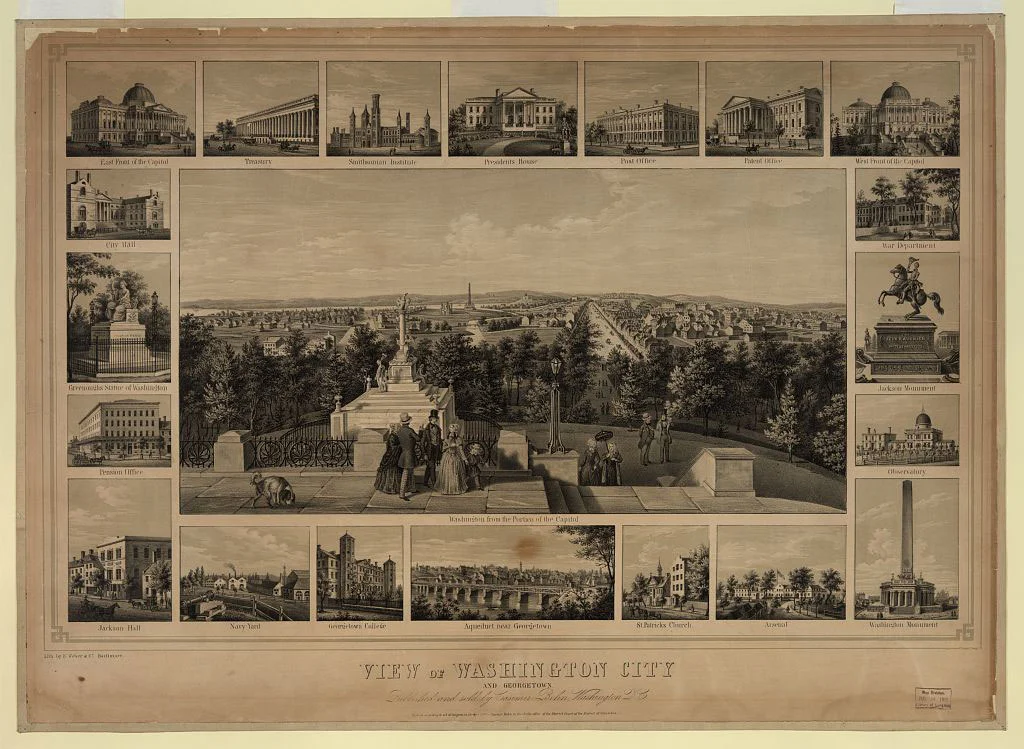
By the 1830s and 1840s, various prints and broadsides published in magazines and newspapers celebrated the city of Washington’s grandeur—even if and when their visual depictions were not yet a reality. They included depictions of a completed Capitol dome or the initial—yet never built—design for the Washington Monument.
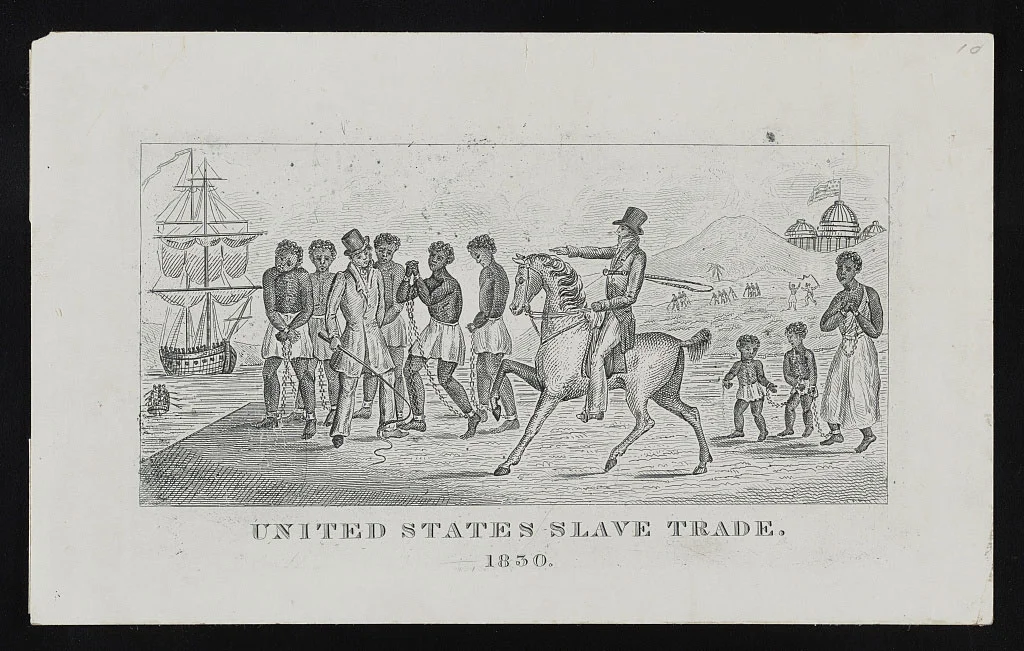
Other groups, however, used images of the capital city to display the chasm between the nation’s founding ideals and the institution of slavery. Such images included depictions of enslaved men, women, and children in shackles, with the U.S. Capitol behind them.
In one 1836 broadside printed and circulated by the American Anti-Slavery Society, two images drew a sharp contrast between the “The Land of the Free” articulated by the signers of the Declaration of Independence and “The Home of the Oppressed” experienced by the enslaved throughout the District of Columbia.
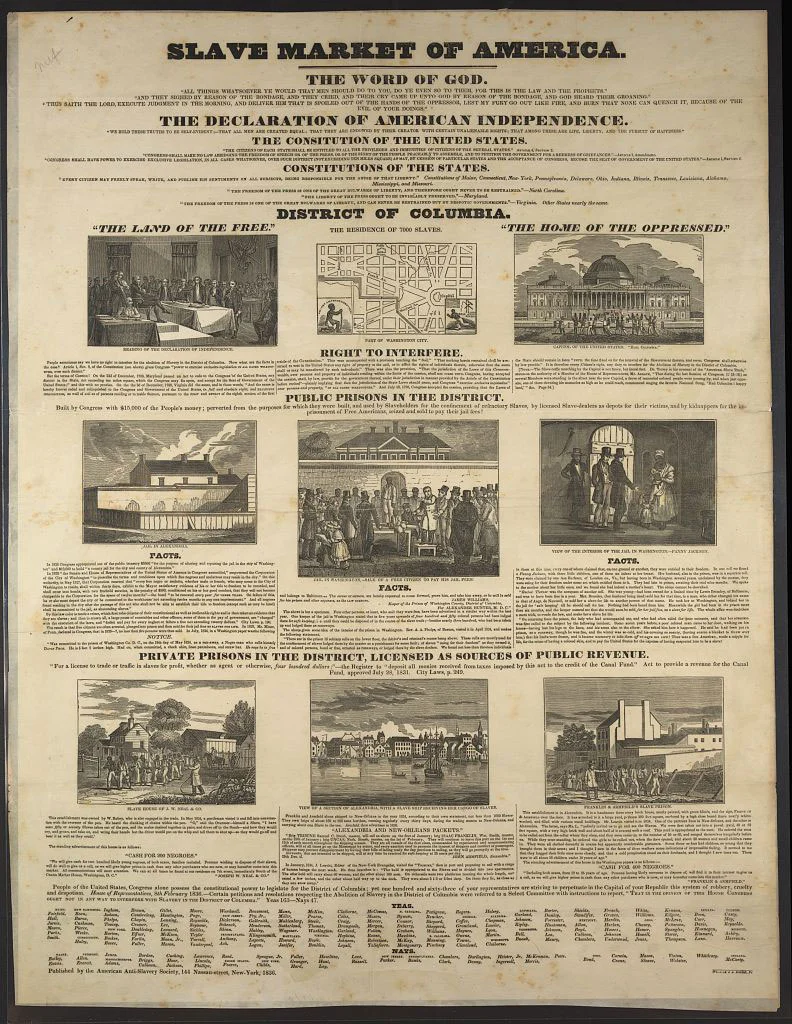
Another image on this broadside featured a section of the city’s grid based on L’Enfant’s initial drawing. But unlike that first map, this depiction highlighted Neal’s Prison, Robey’s Old Prison, and the Public Prison—three sites located just off the National Mall where the enslaved were imprisoned before being sold.
When the Civil War began, it came to the very heart of Washington. Abraham Lincoln took the oath of office on March 4, 1861, in the shadow of an unfinished Capitol dome.
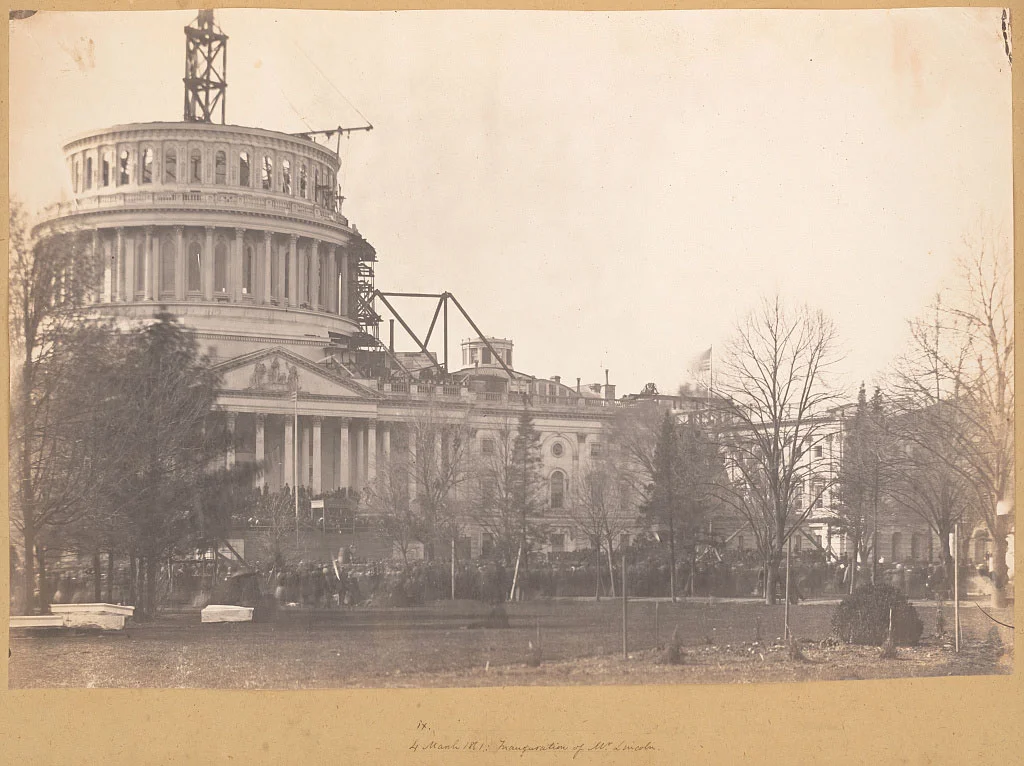
Later that year, Congress redirected funds from the dome completion to support the Union war effort. But Lincoln understood the Capitol’s symbolism—and what the sight of its construction might communicate. He persuaded Congress to resume funding in 1862.
“If people see the Capitol going on,” he said in 1863, “it is a sign we intend the Union shall go on.”
A 35-gun salute
On December 2, 1863, just 13 days after Lincoln declared that the nation would have a “new birth of freedom,” laborers hoisted the Statue of Freedom to the top of the completed Capitol dome. A 35-gun salute followed—one for every state in the Union, including those in the Confederacy.
So it was that when Lincoln delivered his second inaugural address in March 1865, he did so under a completed dome on the East Portico of the Capitol. Unlike the views 21st-century audiences have come to expect during inaugural ceremonies held on the Capitol’s West Front, Lincoln’s view would have been limited to the surrounding neighborhoods.
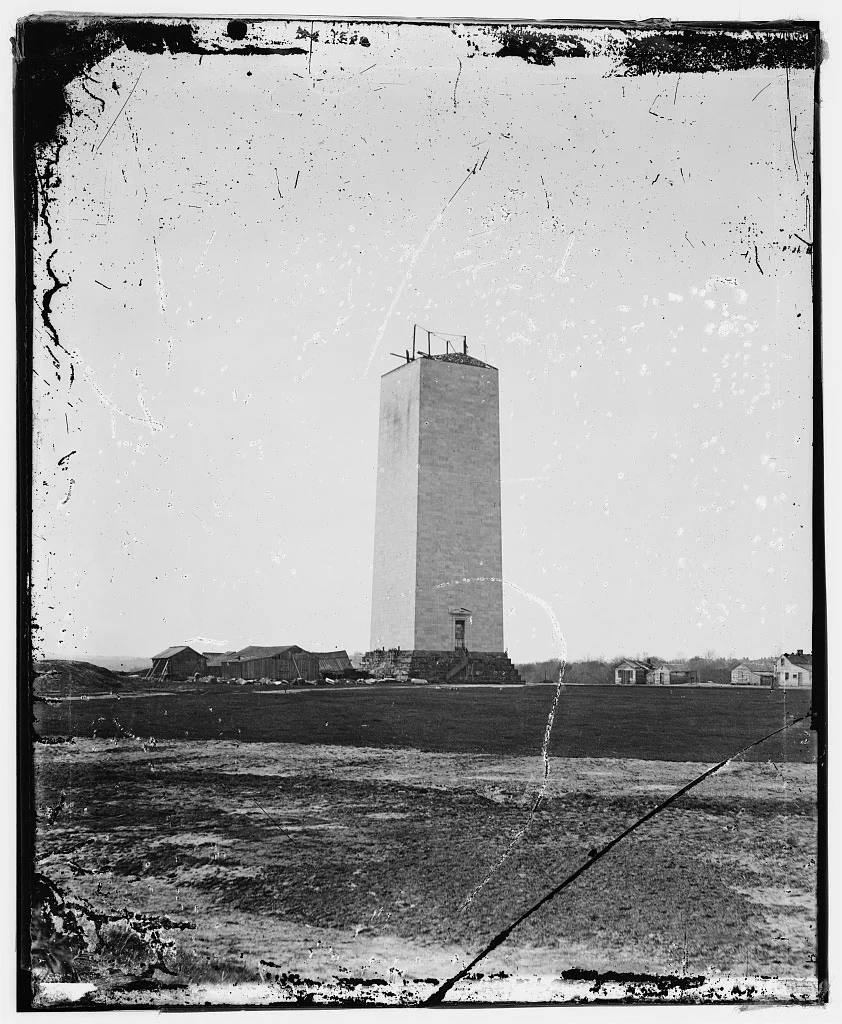
But if he had looked out the windows on the West Front, Lincoln would have seen the initial stump of the Washington Monument, an unfinished obelisk designed to honor the nation’s first president. The monument was also a casualty of war funding reallocation.
And if he looked farther afield, he could not have imagined that 49 years later, in 1914, construction would begin on a memorial where the words of his Gettysburg Address and second inaugural address would be inscribed in stone.
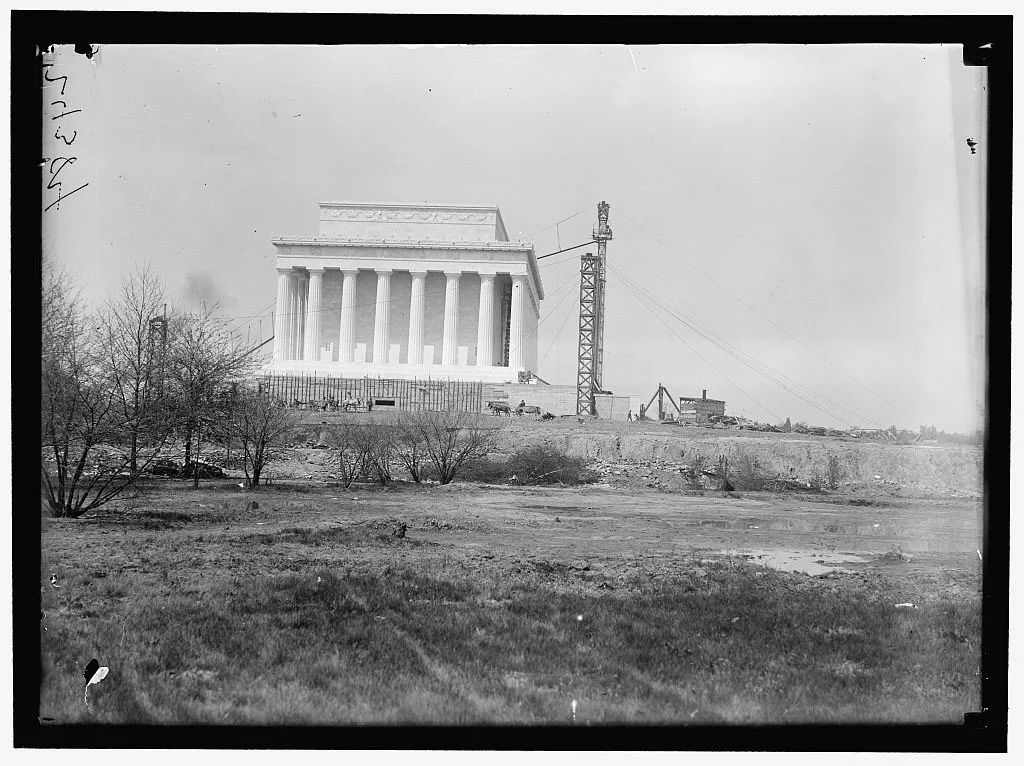
Today, if you stand on the steps of the Lincoln Memorial, above the Reflecting Pool, you can just make out the Capitol dome behind the Washington Monument—and the Statue of Freedom set on top.
These sight lines, and all they communicate, were always part of the plan.
What, then, is there to see this Fourth of July?
Layers upon layers of rich and complicated history made up of events and actors and stories that are worth telling and reflecting upon. Many of those stories have been hidden over the decades, the result of impulses that obscure the view, just as the murky, algae-infested waters of the Lincoln Memorial Reflecting Pool compromise the sharp reflection of surrounding monuments.
And what can Americans do on the nation’s semiquincentennial?
They can remember that recognizing and reckoning with the complex layers that make up their shared national story opens up space for both celebration and critical reflection.
Allison M. Prasch is an associate professor of rhetoric, politics, and culture at the University of Wisconsin-Madison.
This article is republished from The Conversation under a Creative Commons license. Read the original article.