
Key Takeaways
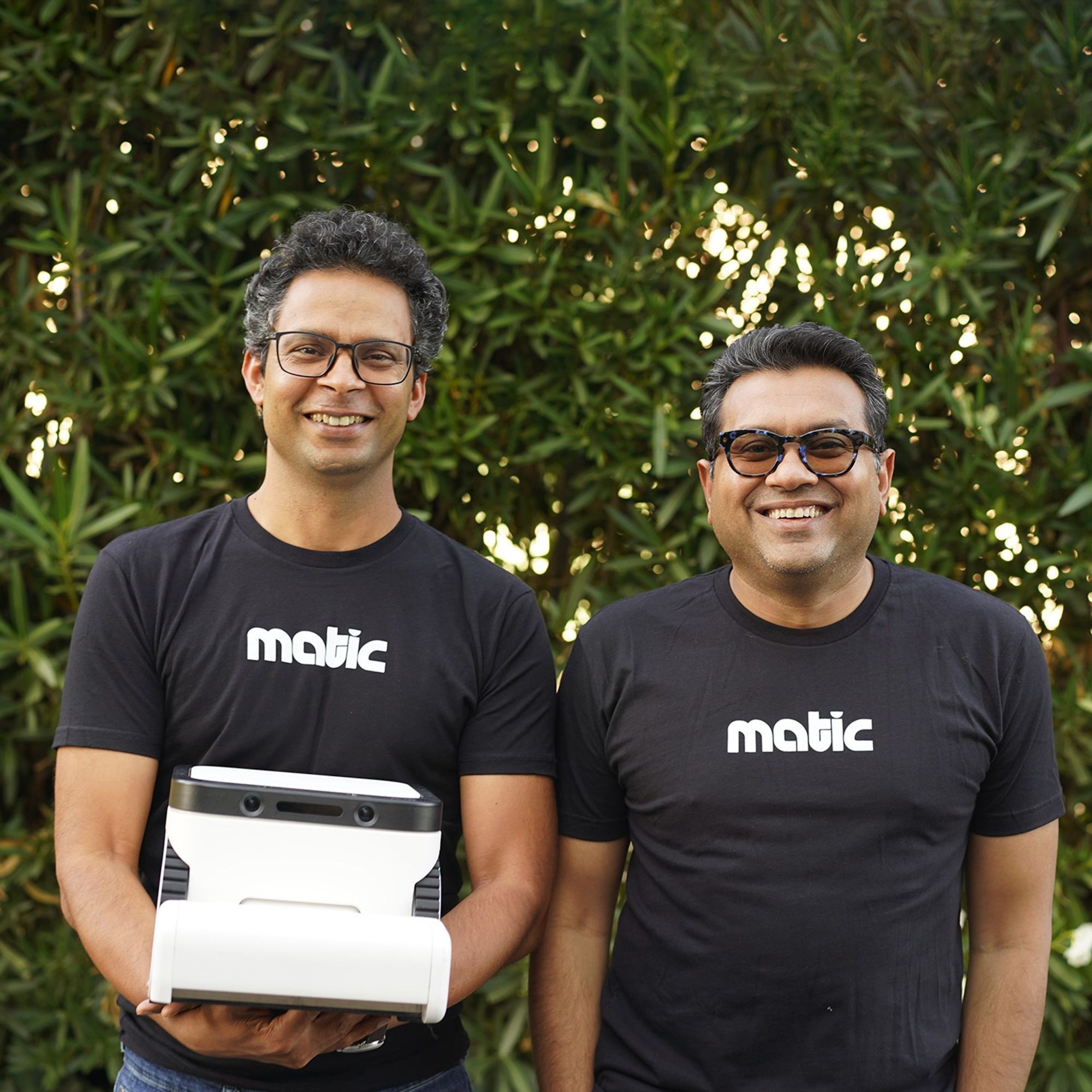
- Mehul Nariyawala and his cofounder Navneet Dalal wrote a 21-page problem memo focusing on why customers disliked existing robot vacuums.
- They designed Matic to be a privacy-focused home robot that easily navigates through the spills and messes of a standard household.
- Matic has sold more than 13,000 robots since its November 2024 launch, generating an estimated $15 million to $20 million in revenue.
For Mehul Nariyawala, a household product’s costly mistake was the jumping-off point for a $20 million company. Nariyawala had a $1,000 robot vacuum, which he watched destroy a rug in his home while he was away. The machine had powerful suction but wasn’t intelligent enough to free itself from the rug. It got stuck, kept running for 45 minutes and tore away a patch of the rug.
“That was a realization that, Wow, this thing is really stupid,” Nariyawala tells Entrepreneur in a new interview. Worse, he found that many robot vacuums could not reliably return to their own charging docks. “To me, it’s an oxymoron to call these things robots because if it’s a robot and it can’t even find its own dock, what good is it?” he says.
That irritation planted the seed for Matic, the home-robotics company Nariyawala co-founded with CEO Navneet Dalal after the pair left Google Nest in 2017. Nariyawala is Matic’s president. Their goal was not simply to make another robot vacuum. It was to build a machine that could safely and quietly navigate the disorder of an actual home, avoiding pets, toys, cords, spills, furniture and the people moving through it.
Nariyawala says Matic has sold more than 13,000 robots since its November 2024 launch, generating an estimated $15 million to $20 million in revenue. Matic’s robot vacuum costs $1,495. Nariyawala said the company employs about 110 people and is aiming to sell 30,000 robots by year-end.
Outlining the problem
Before they started building Matic, the co-founders did something less glamorous: They wrote a 21-page “problem memo.”
Instead of jumping to a solution, Nariyawala says, they asked what customers disliked about current products, why robot vacuums failed them and what a genuinely useful home robot would need to do.
“We just kept going again and again and again at every level until we deeply understood the problem,” he says.
That process eventually produced Matic’s first product, a privacy-focused robot vacuum designed around computer vision, on-device processing and a more human-like understanding of a home.
Start with the problem
Nariyawala’s path to Matic began in India, where he grew up. He moved to the United States in high school and attended the University of Maryland for undergraduate studies. After graduating in 1999, he joined a startup based in Northern Virginia that burned through $30 million in 11 months.
“It turned out to be a spectacular failure,” he says. “That was my how-not-to-ruin-a-startup 101.”
After a stint in consulting at Accenture and an MBA from Chicago Booth, Nariyawala joined Like.com in 2005, an early Silicon Valley computer-vision startup. There, he met Dalal, a researcher and engineer whose doctoral work became influential in the field of classical computer vision.
Google acquired Like.com in 2010. Nariyawala and Dalal then formed Flutter, a gesture-recognition startup that let people control iTunes and Spotify using a webcam. Users could wave to change a song or make a shushing motion to mute audio. The app reached No. 1 in Apple’s Mac App Store in 73 countries in 2012, according to Nariyawala.
But the founders learned a crucial product lesson: A flashy interface does not necessarily create a business.
“No one wakes up in the morning and says, ‘Today I’m gonna buy gestures,’” Nariyawala says. “It’s a really cool app but not necessarily a product that can potentially generate revenue.”
Another acquisition
Google acquired Flutter in late 2013. The founders later moved to Nest, where Nariyawala led products in the Nest camera portfolio, including the Nest Cam, Nest Hello doorbell and related devices. Dalal led perception and computer-vision work on the same set of products.
At Nest, Nariyawala learned that a product is more than its hardware or software. It encompasses every point a customer encounters the company, from learning about the product to purchasing, onboarding, receiving support and deciding whether to stay loyal to the brand or not.
“One of the biggest learnings there was that it’s really just about the entire experience of the product,” he says.
Customer support, he argues, is especially important for an expensive consumer device. “When they reach out to you, that’s the first time they’re meeting humans behind Matic,” he says. “How we respond to that is actually really, really critical.”
A privacy-first approach
Matic’s founding idea grew from both professional experience and family life. While working on Nest cameras, Nariyawala noticed that many indoor cameras were pointed outside. He could personally relate. His wife had done the same thing, and after leaving Google, he says she did not want any indoor cameras monitoring their home.
“That’s when I realized that for her, privacy mattered,” he says.
The founders concluded they did not want to trade away privacy merely to automate a household chore. They wanted a robot that would process its understanding of the home locally rather than operate like an always-recording cloud-connected camera.
“As fathers and homeowners, we don’t want to jeopardize privacy just to keep our floors clean,” Nariyawala says. “Why would I invite something that is recording them and putting it out onto the cloud?”
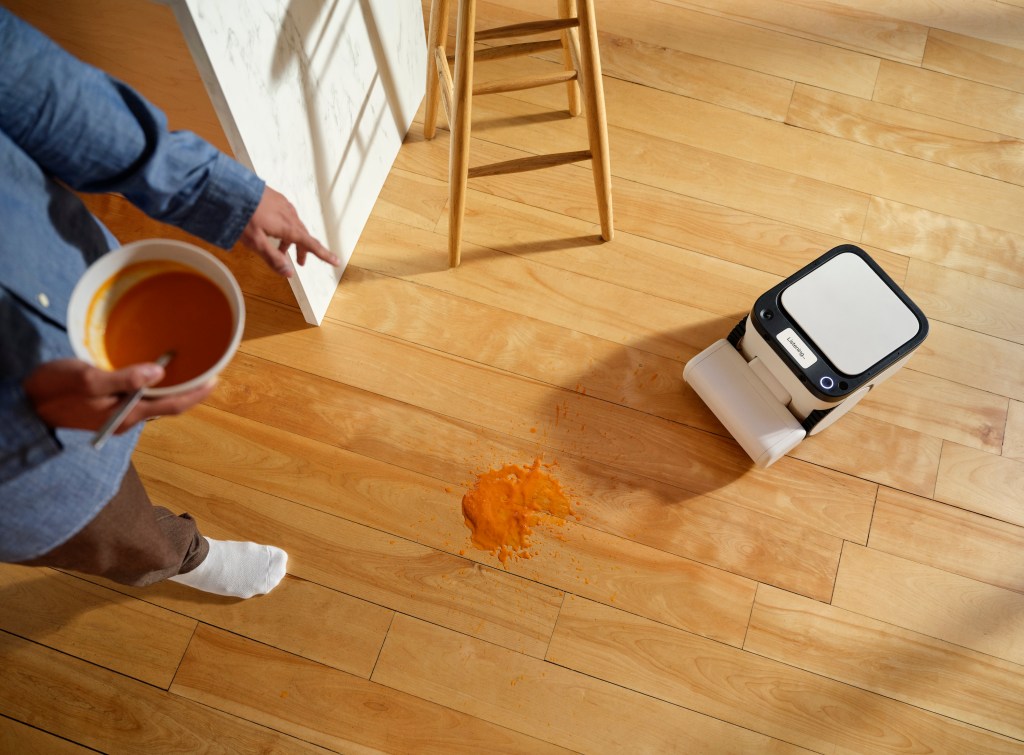
The pair saw a broader opportunity in the gap between the robotics ambitions emerging in self-driving cars and the mediocre performance of household cleaning robots. If companies believed they could develop vehicles capable of safely navigating roads, Nariyawala wondered, why was no one making a household robot that could move through a living room without crashing into objects?
Matic’s unique answer to cluttered homes
Nariyawala says that homes are among the most difficult environments for robots because they are cluttered, dynamic, and highly personal. Furniture shifts. Lighting changes. Children leave toys out. Pets cross a room. A cord may be on the floor one day and gone the next.
Matic’s answer was a vision-based system built around two RGB cameras and local computing. Rather than use the flat, circular shape common in robot vacuums, the company opted for a taller machine that gives its cameras a more useful perspective of the room.
“We wanted to build a vantage point that was much more like a human crawling child,” Nariyawala says.
That concept reflects Dalal’s broader philosophy: Do not bet against nature. Human beings learn to perceive their surroundings before they learn more complex skills, Nariyawala says. Young children learn where they can walk, what they should avoid, how to get from one room to another, and how not to fall down stairs. Matic’s early work focused on giving a robot some of those same foundational abilities.
“The indoor world is entirely built by humans for humans,” he says.
Self-funding the company
Nariyawala and Dalal did not immediately seek venture funding. Having founded companies before and seen what happens after an acquisition, they wanted to build Matic for the long haul. Their ambition extended beyond cleaning floors.
“We’re really building the Apple of home robotics,” Nariyawala says.
That long-term vision informed an unusual early decision. The cofounders self-funded Matic for roughly its first year and a half. They agreed not to raise outside capital until they had a working prototype and had addressed major technical risks.
“Raising funding is never easy, but when you have gone through an exit and you try to do a second startup, it is slightly easier,” Nariyawala says. “But because it’s slightly easier, you don’t actually spend more time thinking through and developing your idea, and that sometimes plays a catastrophic [role].”
The team focused on proving key capabilities: depth perception using two cameras, voice and gesture recognition, quieter cleaning and a wheel-base design. Its first prototype arrived in 2018. By spring 2019, it had developed an early demonstration in which a person could speak to the robot, point to a mess and tell it to clean a specific spot.
Only then did the founders begin raising money. “Venture capital funding, or institutional funding, is like rocket fuel,” Nariyawala says. “The best time to go get rocket fuel is when your rocket is ready and docked.”
In 2019, Matic attracted early investment from entrepreneurs including Jack Dorsey, Stripe cofounders Patrick and John Collison and Nest cofounder Matt Rogers.
A longer journey than expected
Matic has raised $115 million in outside investment to date, with additional personal investment from the founders.
The journey took longer than planned. The founders originally thought they might ship around 2020 or 2021. Matic instead began shipping in November 2024.
In August, the U.S. Federal Communications Commission (FCC) banned foreign-made advanced robots, including robot vacuums. The ruling prohibited new foreign-made models from getting future import and sales approval.
Nariyawala says that the ban does not affect Matic and instead makes it “easier” for the company to build robots in the U.S. From day one, the company has been focused on security and privacy, he says. Their existing robot is already grandfathered in for sale in the U.S., and their next set of robots is heading in the right direction to move through the FCC ban. The company is determined to source its components in the U.S.
“We cannot guarantee the security and privacy of the robot unless we assemble it in the United States,” Nariyawala says. “So for us, designing and assembling it here and putting all the software here was not an optional thing. That was something we always wanted to do, and we did that from 2017 onwards.”
Nariyawala says he reached out to the FCC after the ban was announced and showed them a path to how Matic will source as many components in the U.S. as possible moving forward.
“The FCC and government have been very much accommodating and understanding what we’re doing,” Nariyawala says. “Their entire point is that yes, you guys are heading in the right direction. So as long as it’s heading in the right direction, we’re supportive of it. We just have to show that we’re pushing in that direction.”
An intelligent machine
Matic now positions its vacuum as an intelligent, autonomous machine rather than a device that follows a fixed or random cleaning routine. Nariyawala contrasts that vision with early robot vacuums, which he compares to a blindfolded person bouncing from wall to wall.
“Hardware is hard,” Nariyawala says. “If hardware is 10 times harder than software, then building a robot is 100 times harder than software.”
Many current robot vacuums use a form of LiDAR sensing, he says, which can help a machine detect walls and certain obstacles but does not provide enough context to distinguish among a person, a cabinet, a pet, or a pile of clothes.
“It has no contextual awareness,” he says.
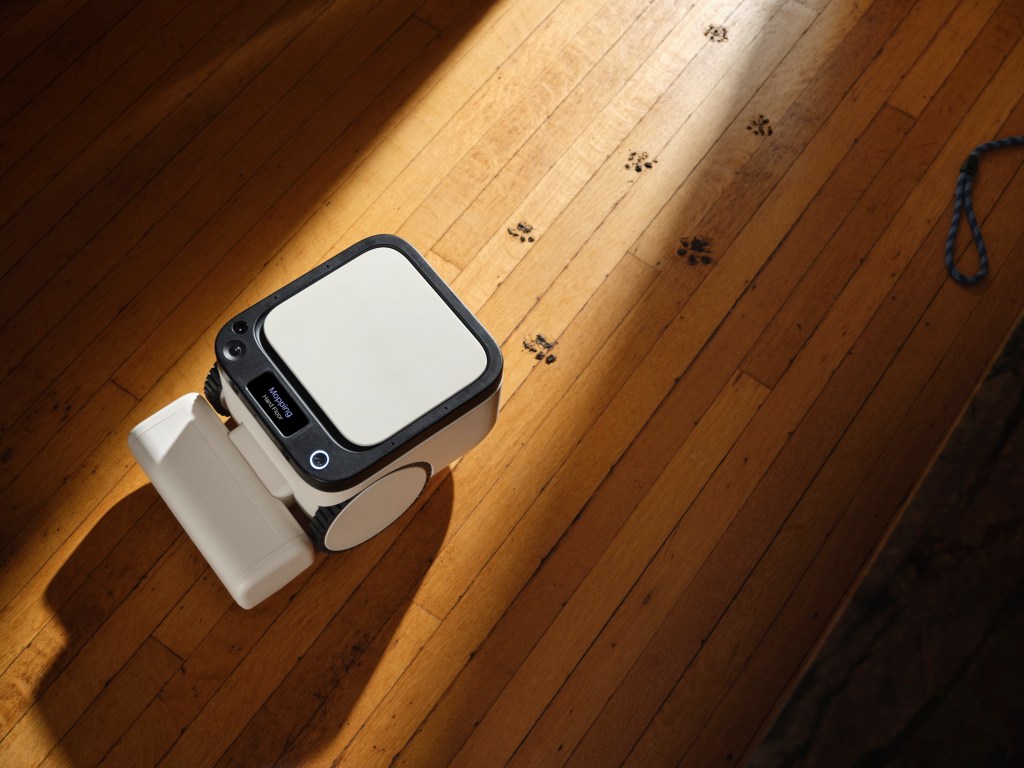
Matic’s system is meant to create a three-dimensional, evolving understanding of a home. Nariyawala describes this as an “absolute map,” rather than a map that only orients the robot relative to its charging dock. The distinction matters, he says, because a robot should be able to understand its environment even if the dock is moved.
A game-changing update
Matic recently introduced “Cues,” an update enabling users to communicate with the robot through voice commands and gestures. Through the update, the robot can understand more than 70 spoken languages, and users can point to an area they want cleaned to have the robot take care of a mess.
The robot has an accompanying app that remains necessary for onboarding and detailed settings, such as setting no-go zones, but the company wants routine interaction to feel more natural.
“If this is truly an intelligent robot, then we should be able to communicate with it in the same exact way that we communicate with each other,” Nariyawala says.
The approach is designed for households that include children, older adults, people who do not want to use another app and family members who may not speak English — personalized experiences for different users.
Growth strategies
Matic has focused less on traditional marketing than on getting customers to talk about the product. Nariyawala says roughly two-thirds of orders have come through word-of-mouth referrals, and the company did little marketing before this year.
“The only evergreen marketing channel is a great product,” he says. “When you build something really unexpected, delightful that customers love, they can’t help talking about it.”
For Nariyawala, Matic’s floor-cleaning robot is only the first stage. The company’s roadmap imagines a “trusted organizer” that can handle simpler tasks, followed by a more capable household robot that can take on complex planning and execution.
But he returns repeatedly to the same principle that shaped the company’s original 21-page memo: The technology is not the product. The customer’s problem is.
“Customers don’t want hardware or robots,” he says. “They want a solution to their problems.”