
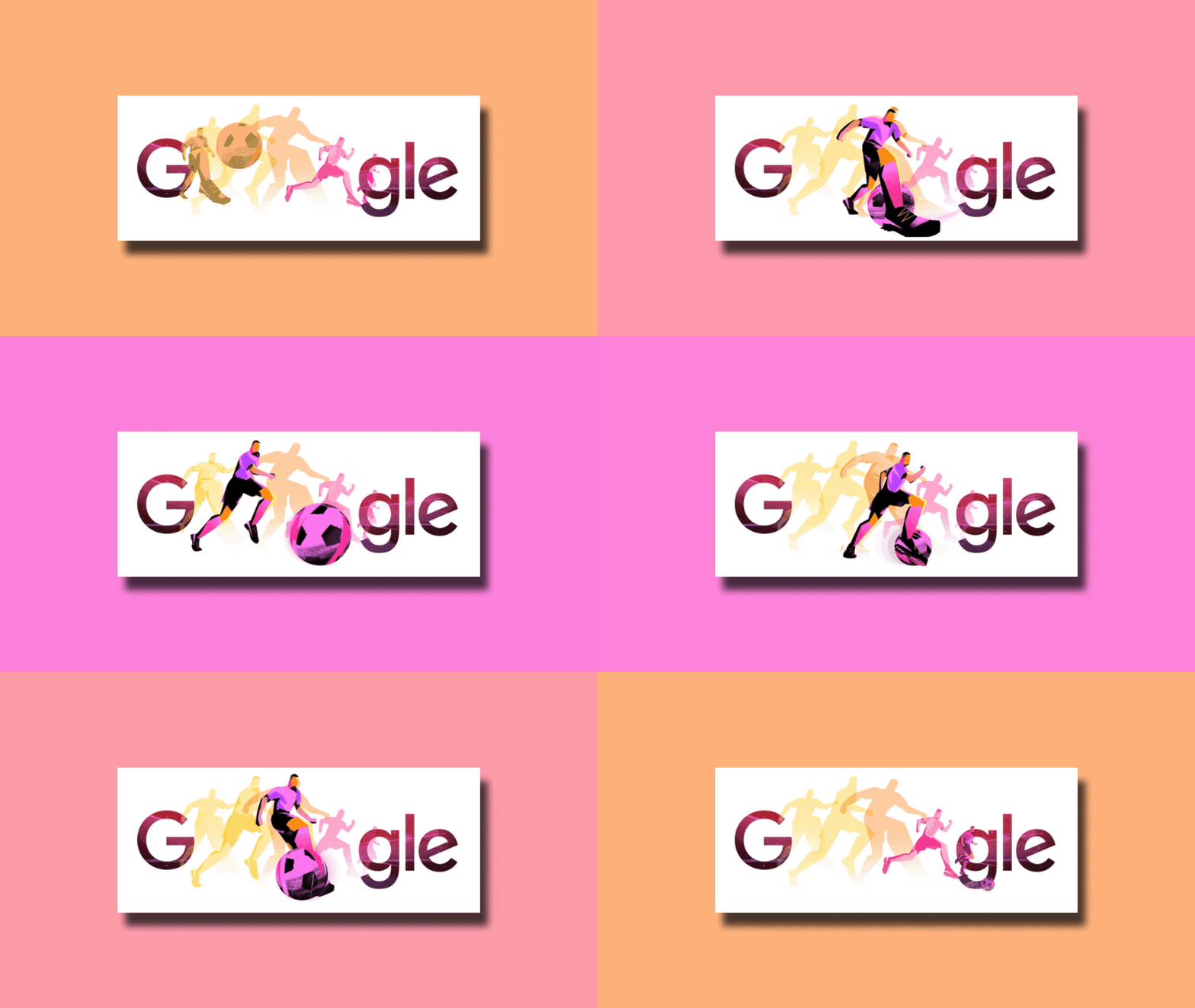
On nearly every day of the World Cup, Google has debuted a new custom doodle—and, to do it, the brand’s designers became full-on soccer historians.
To celebrate the 2026 FIFA World Cup, Google is debuting 69 unique doodles, including 28 unique pieces of art, across more than 180 markets. The rollout comes with custom doodles for different locations, easter eggs designed to appear after key highlights in the games, and doodles created in partnership with national teams and former coaches. The doodles launched June 11, opening day of the tournament.
According to Jonathan Johnsongriffin, Google’s VP of global brand and creative, it’s one of Google’s most extensive and coordinated doodle projects for a single sporting event.
‘The goal wasn’t just volume; it was relevance’
Google’s mission with its World Cup doodles was to create designs that would resonate strongly with fan chatter. To do that, Johnsongriffin’s team needed to look back at games past.
The process started back in January, when Johnsongriffin’s team began combing through past World Cup trends and Google search results to identify patterns that might reemerge this year. “The goal wasn’t just volume; it was relevance,” Johnsongriffin says, adding, “In sports, design has to reflect the energy of the streets and the stadiums.”
Based on those insights, the first arm of the doodle campaign is a series called the “Art of Motion,” which converts 16 of the most recognizable and iconic soccer plays—such as the bicycle kick, the sliding tackle, and the volley—into colorful animations.
These doodles have been rolling out on a calendar, but that schedule has been changed at certain points in order to capture viewer discussion—like when Mexico’s Julián Quiñones scored the first goal of the World Cup by executing a nutmeg against the South African goalkeeper on June 11, causing Google to debut its “Art of the Nutmeg” doodle the next day. (A nutmeg is a move where a player flicks the ball between an opponent’s legs, usually with the aim of retrieving it on the other side.)
“I’ve always found that the most beautiful moments in sports are about physics meeting human expression—the split-second suspension of a bicycle kick or the sudden change of direction in a nutmeg,” Johnsongriffin says. “We studied classic sports photography and sports cinematography and connected with former athletes and coaches to figure out how to translate that explosive movement into artwork. It’s about making sure the tension and the flow of the game feel real, even on a small phone screen.”
How Google took its design cues from soccer ephemera
The other main category of World Cup doodles is all about capturing fans’ home team pride when they visit Google’s home page.
Google’s team created a range of doodles featuring illustrations of official federation badges or local cultural motifs in global markets including the U.S., Canada, Argentina, Germany, Portugal, France, England, Spain, Brazil, Scotland, Mexico, and Japan. These badges appear for local residents in some markets when their team has an upcoming game.
To design these doodles, Johnsongriffin’s team looked at ephemera like vintage and current badges, historic federation crests, and national iconography.
“We looked at the subtle shifts in design over the decades—like how a star is added after a championship, or how a minimalist update can modernize a classic symbol,” Johnsongriffin says. “The goal was to create digital illustrations that feel as tactile as an embroidered patch on a classic kit, giving fans a moment of recognition and pride when they visit their local home page on match day.”
Beyond these preplanned doodles, Google has also been leaning into easter eggs embedded in search that are designed for less predictable moments.
After Cape Verde’s goalie, Vozinha, made a series of saves against Spain on June 15, for example, searching for “Vozinha” triggered an animation of a character blocking shots. And when Lionel Messi set the all-time World Cup scoring record on June 22, Google gave users the option to click a confetti button after searching his name; it was clicked more than 21.4 million times within two days.
Google’s World Cup doodle rollout is a lesson in letting fan behavior set the tone, and using clever marketing to follow suit.
“When a moment captures the public’s attention, our goal is to show up alongside the fans in a way that feels natural, timely, and fun,” Johnsongriffin says.