

Close Menu
    Facebook X (Twitter) Instagram
    TRENDING :
    • Too Much Computer: Ingrid Burrington Discusses ‘Hyperscale’ with Paris Marx
    • Ex-Banker’s Haunted House Became a Multimillion-Dollar Empire
    • Central Pa. Prep Standouts Shine on Oct. 21 Soccer, Volleyball and Field Hockey
    • Meta Must Pay $25 Billion fo Duping Users on Privacy
    • Ranking the Toughest High School Football Leagues and Divisions
    • Wendy’s Hopes to Win Back Customers With a $7.99 Combo
    • Week 8 High School Football: Live Scores and Game Recaps Thursday
    • France & The Demise Of Macron
    Populist Bulletin
    • Home
    • US Politics
    • World Politics
    • Economy
    • Business
    • Headline News
    Populist Bulletin
    Home»Business»Forget AI training data. This startup learned from slime mold
    Business 3 Mins Read

    Forget AI training data. This startup learned from slime mold

    Business 3 Mins Read
    Share Facebook Twitter Pinterest LinkedIn Tumblr Telegram Email Copy Link
    Follow Us
    Google News Flipboard
    Share
    Facebook Twitter LinkedIn Pinterest Email


    In a classic experiment more than a decade ago, researchers in Japan gave a slime mold—a single-celled organism known for forming efficient networks—a “map” of the cities around Tokyo. They represented each municipality with an oat flake, the organism’s favorite food, and watched as it created a network that looked eerily similar to the Japanese rail system.

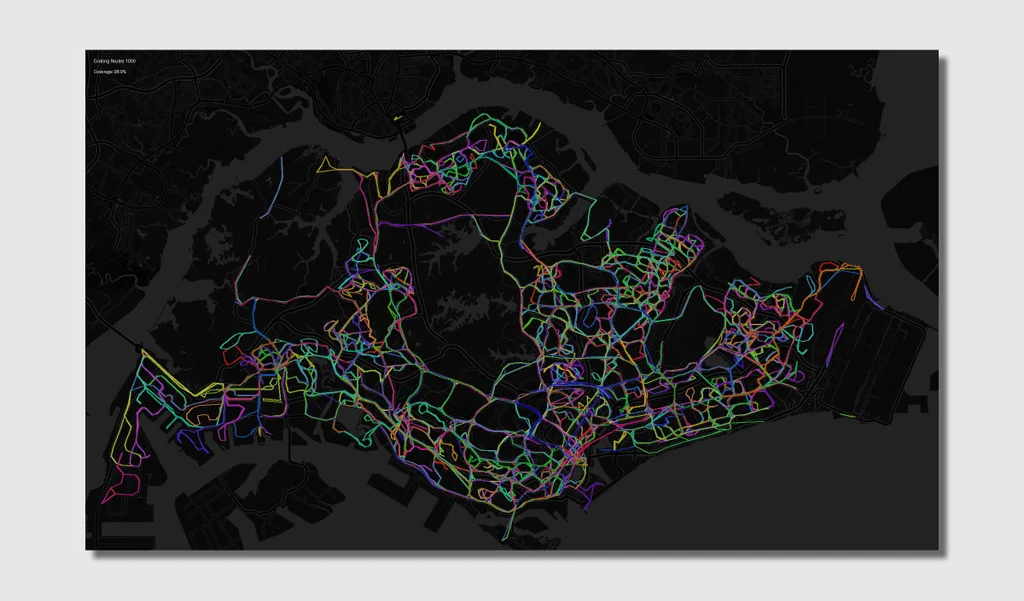
    The takeaway was clear: Slime mold is surprisingly good at creating complex and efficient paths. A startup called Mireta Urban Dynamics is now using the same basic approach in software designed for urban planners.

    [Image: Mireta Urban Dynamics]

    “Very early on in my architecture degree, I was fascinated with strategies that nature and biology evolved for solving challenges,” says Mireta cofounder Raphael Kay. Humans have been designing transportation networks for thousands of years, but some organisms “have been solving analogous challenges for hundreds of millions, if not billions, of years,” he says.
    [Image: Mireta Urban Dynamics]

    Instead of training AI on the slime mold, the software copies the basic way the organism grows. “This is already a form of intelligence that has been evolved over a large number of evolutionary cycles,” Kay says.

    Then the software adds in multiple other layers. For example, a city planner looking at a subway network could add details about the city’s population distribution—so the tool prioritizes certain areas—and a flood map that helps it avoid other areas. (AI can help build these other features, though the core of the tool is based on biological intelligence, not AI.)

    [Image: Mireta Urban Dynamics]

    The tool can be used either to design transportation networks from scratch or to suggest small changes to existing networks. Mireta has begun working with design firms on a handful of projects, from a road network on a college campus to a new metro network. So far, those designs are still in the proposal stage with clients, though Kay expects them to move forward.

    [Image: Mireta Urban Dynamics]

    There’s already evidence that the tool works. In the pilot projects, the company says that the tool has created networks that are 20% to 30% more resilient for the same unit cost as alternatives. Resilience, in this case, means that if a disaster shuts down some part of a transportation network, people still have other ways to get around. That’s a challenge that slime molds know how to address.

    “There’s this beautiful naturally evolved trade-off between cost and resiliency that I think biology has had to solve because there’s a huge penalty for dying,” Kay says. “They’ve evolved strategies for strategic redundancy.”

    [Image: Mireta Urban Dynamics]

    As climate change increases disaster risk, from wildfires to flooding, planners are looking for ways to build more resilience into design.

    “It’s only recently that the winds have shifted, where municipalities are starting to really pay attention to and pay for long-term resiliency solutions,” Kay says. “What’s emerged is that there’s a lack of tooling and quantitative approaches to meet the demand of resiliency planning and network design. What’s really fascinating is that these organisms have been solving this challenge for so long.”


    Source link

    Share. Facebook Twitter Pinterest LinkedIn Tumblr Email

    Related Posts

    Ex-Banker’s Haunted House Became a Multimillion-Dollar Empire

    October 22, 2026

    Meta Must Pay $25 Billion fo Duping Users on Privacy

    October 22, 2026

    Wendy’s Hopes to Win Back Customers With a $7.99 Combo

    October 22, 2026
    Top News
    Business 3 Mins Read

    Microsoft Unveils AI Tool to Transform Customer Feedback into Actionable Insights

    Business 3 Mins Read

    In today’s fast-paced business environment, staying attuned to customer needs is crucial, especially for small…

    Billings Central Cruises to Homecoming Victory

    September 26, 2026

    Why Economists Cannot Forecast The Future

    November 11, 2025

    What the Latest Interest Rate Hike Could Mean For You

    September 17, 2026
    Top Trending
    US Politics 1 Min Read

    Too Much Computer: Ingrid Burrington Discusses ‘Hyperscale’ with Paris Marx

    US Politics 1 Min Read

    Ad Policy The JHB1 hyperscale date center in Midrand, South Africa, on…

    Business 3 Mins Read

    Ex-Banker’s Haunted House Became a Multimillion-Dollar Empire

    Business 3 Mins Read

    Chris Stafford was 15 when a friend invited him to help scare…

    World Politics 1 Min Read

    Central Pa. Prep Standouts Shine on Oct. 21 Soccer, Volleyball and Field Hockey

    World Politics 1 Min Read

    Central Pennsylvania’s high school athletes delivered standout performances across three sports on…

    Categories
    • Business
    • Economy
    • Headline News
    • Top News
    • US Politics
    • World Politics
    About us

    The Populist Bulletin was founded with a fervent commitment to inform, inspire, empower and spark meaningful conversations about the economy, business, politics, government accountability, globalization, and the preservation of American cultural heritage.

    We are devoted to delivering straightforward, unfiltered, compelling, relatable stories that resonate with the majority of the American public, while boldly challenging false mainstream narratives that seem to only serve entrenched elitists, and foreign interests.

    Top Picks

    Too Much Computer: Ingrid Burrington Discusses ‘Hyperscale’ with Paris Marx

    October 22, 2026

    Ex-Banker’s Haunted House Became a Multimillion-Dollar Empire

    October 22, 2026

    Central Pa. Prep Standouts Shine on Oct. 21 Soccer, Volleyball and Field Hockey

    October 22, 2026
    Categories
    • Business
    • Economy
    • Headline News
    • Top News
    • US Politics
    • World Politics
    Copyright © 2025 Populist Bulletin. All Rights Reserved.

    Type above and press Enter to search. Press Esc to cancel.