
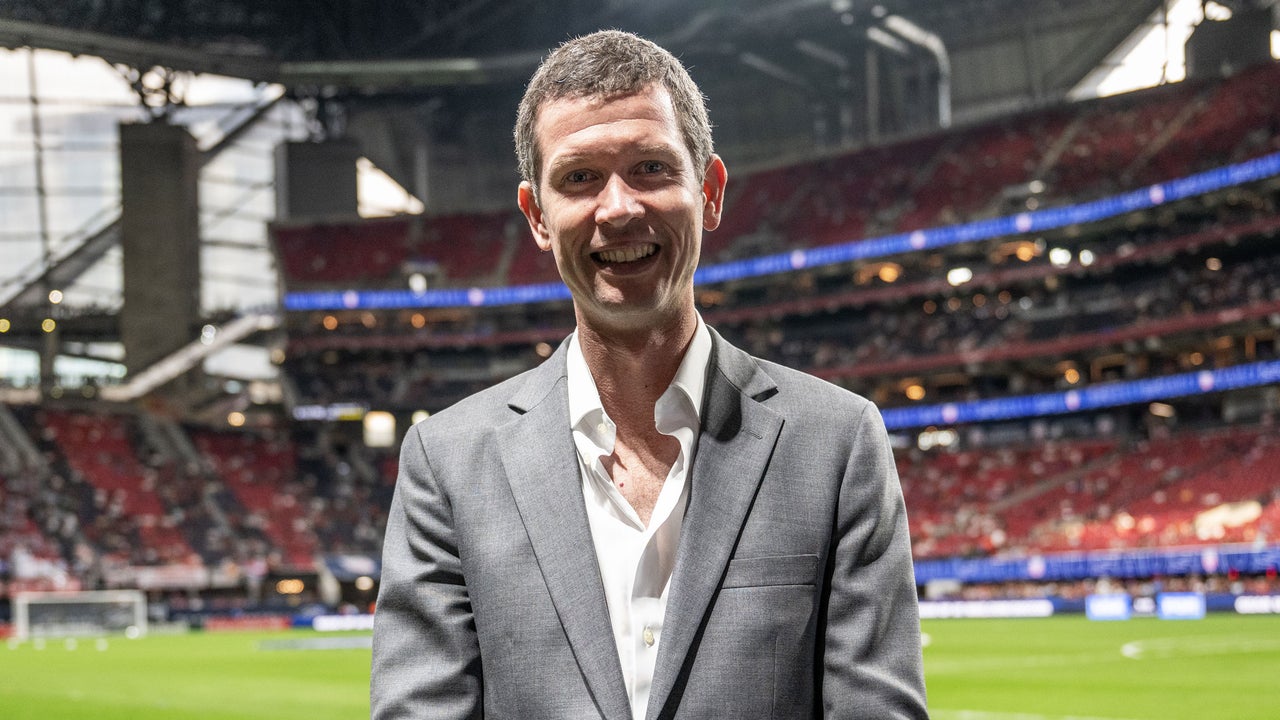
The World Cup arriving on American soil is more than a cultural moment. For U.S. Soccer Federation CEO JT Batson, it’s a launchpad. As group stage matches kick off, Batson reveals what’s on the line for the U.S. men’s team and why this tournament is nothing like the last time America hosted in 1994. And he makes the case that winning a World Cup and growing a soccer nation are the same mission. Whether you’ve got World Cup fever or not, Batson’s vision for building a winning culture from the ground up is a leadership story worth hearing.
This is an abridged transcript of an interview from Rapid Response, hosted by former Fast Company editor-in-chief Robert Safian. From the team behind the Masters of Scale podcast, Rapid Response features candid conversations with today’s top business leaders navigating real-time challenges. Subscribe to Rapid Response wherever you get your podcasts to ensure you never miss an episode.
The World Cup itself is FIFA’s tournament, not [the U.S. federation’s], even though the U.S., along with Canada and Mexico, is hosting. What does U.S. Soccer control? Is there an impact you have on the event itself, or is that up to FIFA?
This is the first World Cup where FIFA is fully responsible for the operational delivery of the tournament. I’m sure many of the people who listen to this manage risk at their organization and think about that. For FIFA, the World Cup is the overwhelming percentage of its revenue, and so the idea that it would want to be operationally responsible for it makes sense. That’s allowed us to focus on three main things.
You mentioned our team. Of course, we want to make sure our team is in the best position to be successful. Two, we want to make sure every American who wants to be part of this tournament can be part of it. We have lots of ways we’re doing that, from more than 500 Soccer Forward Fests all across the country. So think of those as watch parties plus play-soccer parties. And third, how do we use this World Cup to leave a real legacy around what soccer looks like in this country? The fact that we don’t have to worry about the operations of the tournament means we have a lot more headspace and a lot more time to focus on the things that ultimately matter for us.
In terms of access and accessibility, the price of the tickets and whatever—which there’s been a lot of blowback about—that’s not on you, right? You’re leaning into these other things, like Soccer Forward, to make the sport accessible.
In 1994, when the men’s World Cup was last here, I grew up in Augusta, Georgia. We didn’t have the ability to go to World Cup games, and I very much felt part of that tournament and fell in love with the World Cup and with our men’s national team. I actually had a chance last week to spend time with the ’94 World Cup team, and I felt like a kid in a candy store. The other thing is, in New York, the Knicks played in the NBA Finals for the first time in forever. I saw people pay a million dollars for two courtside seats. The demand relative to supply for live events has certainly shifted over the years, and you’re seeing big numbers for a lot of high-profile sporting events. Of course, the World Cup is going to be no different.
You mentioned your own experience with the World Cup in 1994, which kind of sparked a wave of popularity for the U.S. overall. When you look at this year’s World Cup, are there lessons you’re applying? Are the goals the same, or have the goals changed that much?
We’ve come a long, long way. We had no pro soccer leagues. You could barely watch soccer on television. Today, of course, we’ve got incredible Major League Soccer, NWSL, and USL. We have the ability, as Americans, to watch more soccer on television than anywhere else in the world. Well more than 100 million Americans are fans of soccer in this country, so we are a soccer country. ’94, plus the Atlanta Olympics in ’96 and the Women’s World Cup in ’99, was an incredible five-year run that ushered in a soccer culture in this country. Now we’re in a materially different place, and so our goals can be different. We can dream bigger. We can aim higher. How do we make it so that soccer ultimately is the number one played sport in every community?
When you talk about the soccer culture in the U.S.—I don’t know whether this is my misimpression, but I kind of feel like it’s historically been almost middle class and above. Around the world, it’s anyone who can get a ball can play. But it hasn’t necessarily been embraced that same way here.
America has an incredible sports tradition. We have lots of great sports and lots of opportunities for kids to play those sports. If you go to any playground or public park, or to any school, what’s one thing you almost always see? A basketball hoop. So it is our state and local governments subsidizing basketball accessibility. Of course, I grew up in the South, as you can hear by my accent. High school football and middle school football are ubiquitous and very expensive. That is state and local money subsidizing football. We’ve been subsidizing accessibility in other sports, and I think what we’re starting to see is that when local municipalities, school districts, and nonprofits are intentional about making soccer accessible, soccer thrives.
For the first time in history in the city of L.A., soccer is the number one played sport. The city of L.A. is very diverse, has folks of all backgrounds and all income levels, and the fact that soccer is now the number one played sport is a sign of where the sport is going in this country. Those who grew up with ’94 as a seminal moment for them are now the folks who are in positions of power at corporations, governments, and nonprofits. The decision-makers who have the ability to influence how money is spent and how actions are taken are soccer people now, and this is the first generation where that’s the case.
The opportunity to use [the World Cup] this summer, L.A. ’28 [Olympics], and hopefully the Women’s World Cup in 2031 to get way more school districts and way more communities to make soccer accessible—we’re already seeing some early signs of that. And we’re excited about more to come on that front very soon.
This year’s tournament comes in a charged political climate, with U.S. immigration enforcement and visa concerns, and the Iran situation. How much of your job is managing those broader issues? I know you’re trying to make cultural impact, and this environment could complicate things.
We truly believe that soccer is a force for good, and we believe that more soccer in this country is going to lead to us being happier, healthier, and more connected. As I shared earlier, more than 100 million Americans are fans of the sport. One hundred million Americans barely agree on anything, so the fact that that’s one of the things they can agree on and come together around is really exciting. Last week I was in Washington, D.C., and a couple of senators and members of Congress were generous enough to host us for a lunch in the Senate dining room, where you had Republicans and Democrats, big states, small states, big cities, small cities, and rural areas, and everything in between, all coming together to talk about how to get soccer into more communities. We want to make sure we’re maniacally focused on doing just that.
Your cohosts, Canada and Mexico—I’m curious what your relationship with the Canadian and Mexican soccer bodies is. They’re also rivals on the field.
Sure. My counterpart in Canada and I actually went to college together, so we’ve been friends for a very long time. Of course, with Mexico, we’re bidding for the 2031 Women’s World Cup, along with Jamaica and Costa Rica, which would be the first time a Central American or Caribbean country gets to host a World Cup. At U.S. Soccer, we’re very focused on how we continue to support soccer in all forms and in all parts of our region.
Before the World Cup draw, we were in the box with the Canadian prime minister, the Mexican president, and some U.S. officials, as Trump was joining at the Kennedy Center, and seeing how soccer brings people together. Everyone was talking about their favorite team or their favorite game or their first experience. These opportunities for getting to know people as people, and rallying around the sport and that shared experience, are a positive thing that our world needs more of.
This summer provides an opportunity for people—whether they’re going to games or not, whether they’re soccer fans or not—to meet people from other parts of the world or even other parts of the country and come a little bit closer together.