
Want more housing market stories from Lance Lambert’s ResiClub in your inbox? Subscribe to the ResiClub newsletter.
In today’s article, we’ll share the full results from the latest TurboHome-ResiClub Housing Sentiment Survey for Q2 2026. To conduct the survey, ResiClub partnered with TurboHome, a digital platform that combines expert local agents with AI tools to help homebuyers save on transaction costs.
In total, 430 U.S. adults participated in the TurboHome-ResiClub Housing Sentiment Survey between April 21 and May 21. This marks the third time we’ve run this particular survey, with the previous surveys conducted in Q1 2025 and Q3 2025.
By rerunning many of the same questions over time, ResiClub and TurboHome aimed to track how consumer attitudes around home prices, mortgage rates, agent commissions, and housing affordability are evolving.
Note: Some survey results are based solely on responses from U.S. homeowners, while others reflect the views of a broader group that also includes renters and individuals living with family or friends rent-free. Each chart title specifies whether the data represents all respondents or only homeowners. Due to rounding, totals may not add up to exactly 100%.
Affordability pressures are still sidelining many prospective buyers and sellers
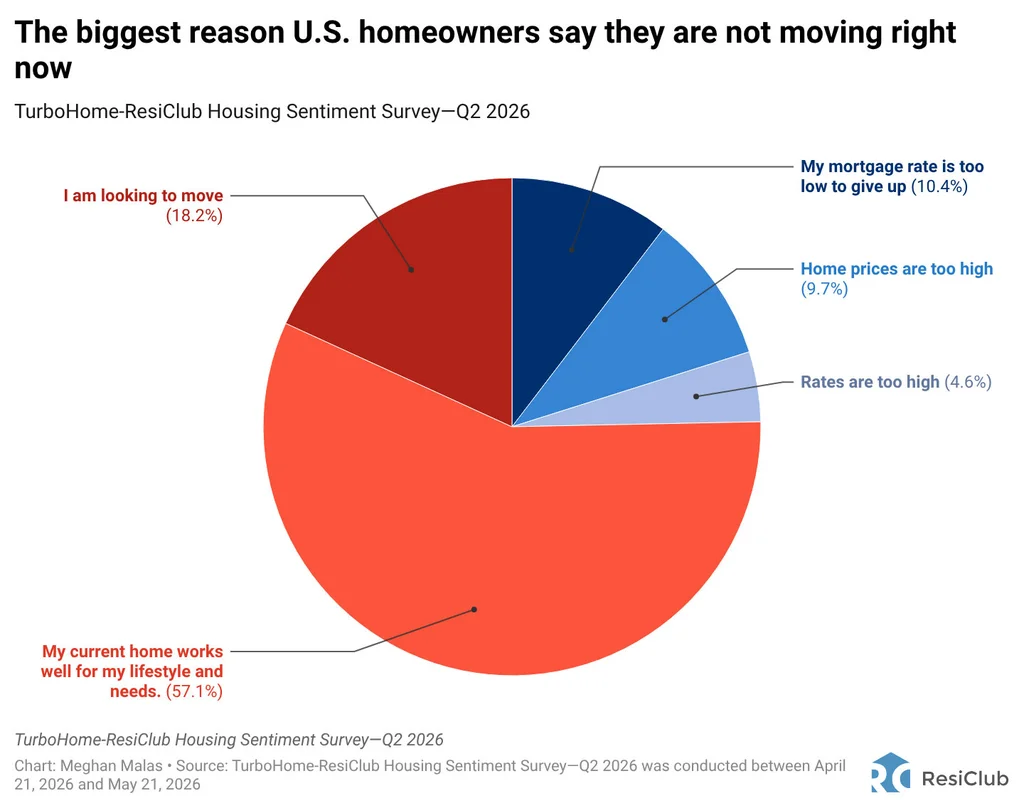
Among homeowners surveyed, the dominant reason for staying put remains simple: Their current home still works for their lifestyle and needs.
However, it is clear that affordability pressures continue to shape mobility decisions. Roughly 20% of respondents cited either elevated mortgage rates or high home prices as the biggest reason they aren’t moving right now. Moreover, roughly 10% of surveyed homeowners say their mortgage rate is too low to give up.
So while some homeowners are gradually adapting to a higher-rate environment, many prospective buyers remain stuck on the sidelines.
Among survey respondents, only a minority said they are “very likely” to purchase a home within the next 24 months, while a sizable share described themselves as either unlikely or uncertain about buying in the near term.
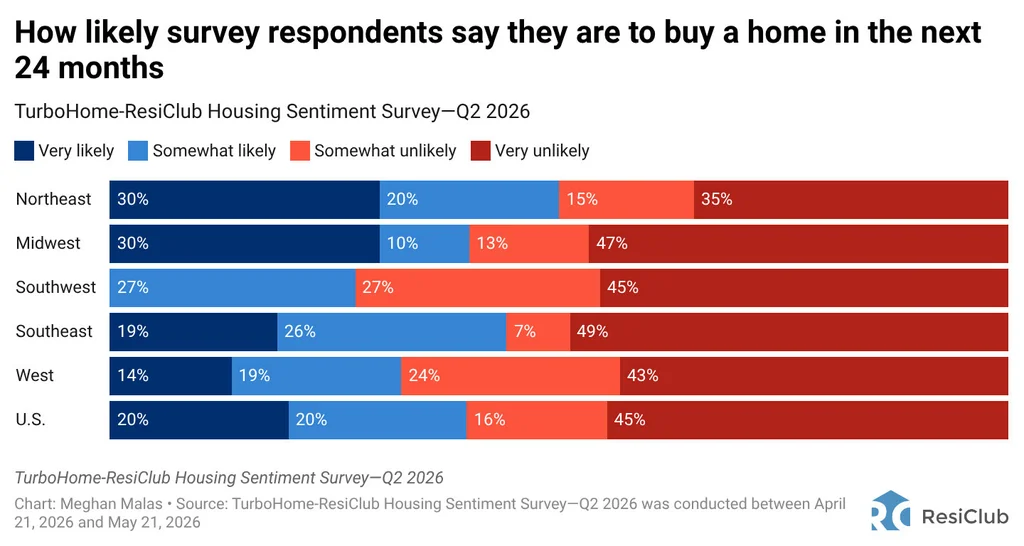
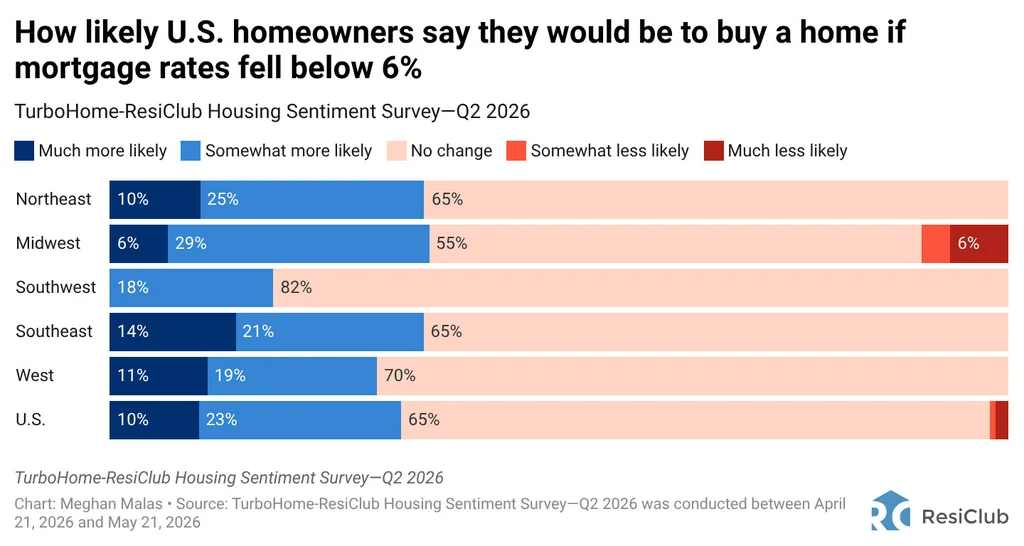
Still, the survey suggests that lower mortgage rates could quickly bring some demand back into the market.
A third of homeowners surveyed said they would be somewhat more likely (23%) or much more likely (10%) to buy a home if mortgage rates fell below 6%, underscoring how psychologically significant that threshold remains for many Americans.
Homeowners are expecting a slower, softer housing market
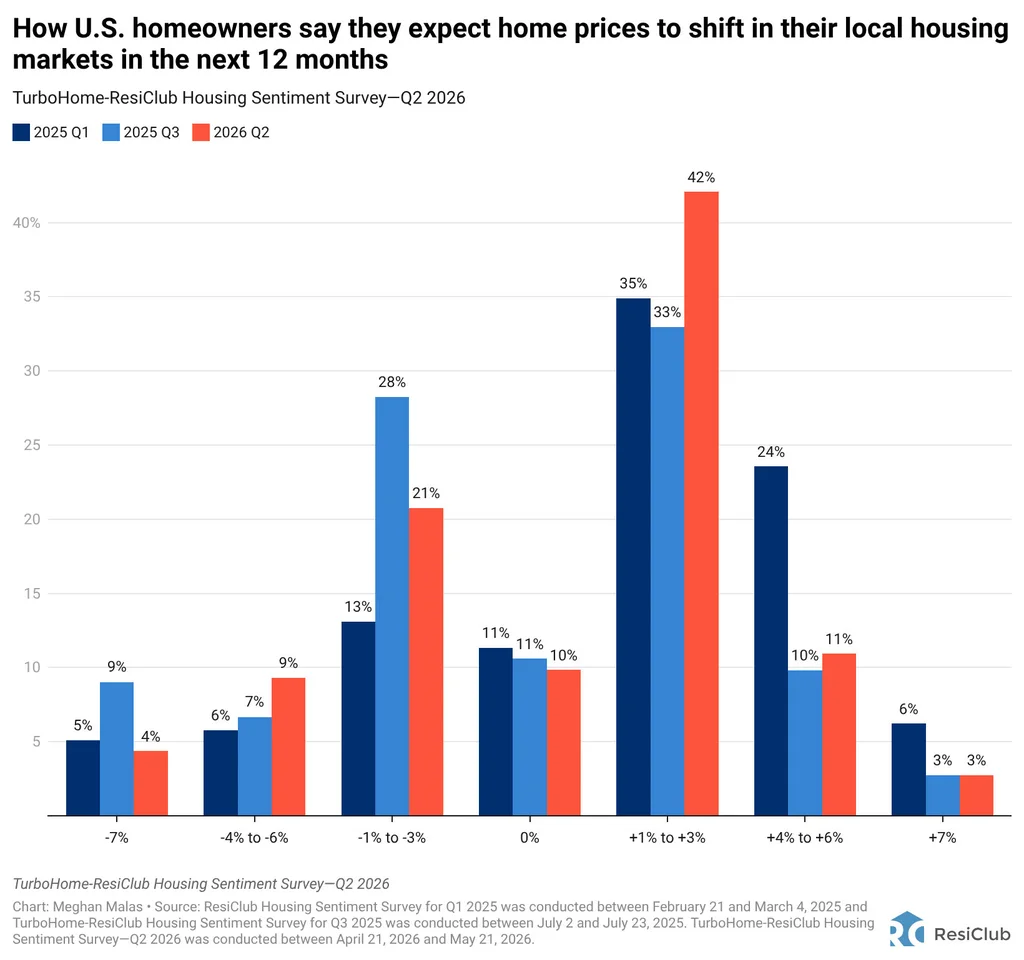
Homeowners remain cautious on home prices over the next year, though the outright bearishness seen in late 2025 has eased somewhat.
In Q1 2025, nearly 30% of homeowners surveyed expected local home prices to rise by at least 4% over the next 12 months. By Q3 2025, that share had collapsed to just 13%—in Q2 2026 that figure was 14%.
In Q1 2025, just 24% of homeowners expected home prices to either stay flat or decline over the next 12 months. That figure surged to 55% in Q3 2025, then eased slightly to 44% in Q2 2026.
Still, homeowners aren’t expecting a home price crash. Only 14% of respondents in Q2 2026 expect prices in their local market to decline by 4% or more over the next year.
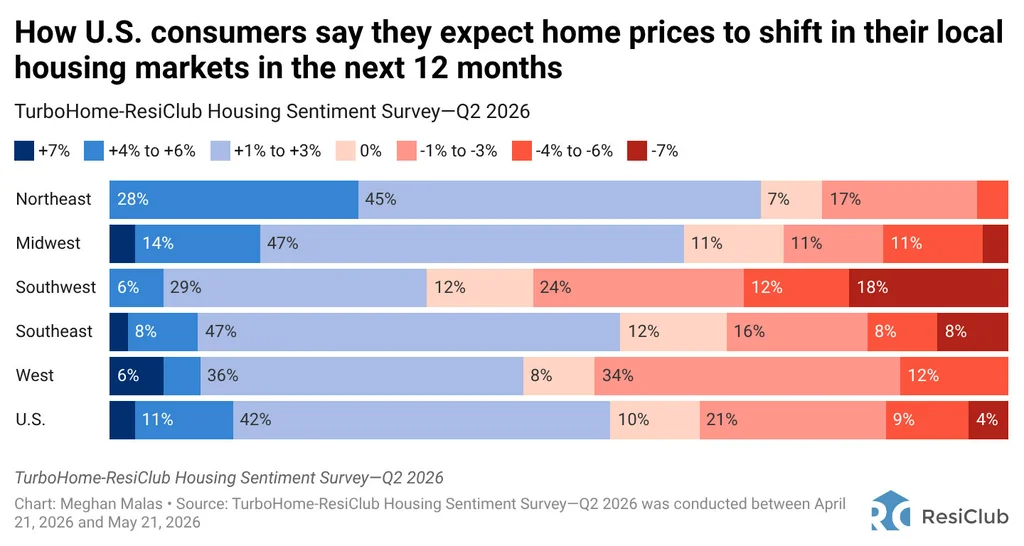
Nationally, 45% of U.S. adults—including homeowners, renters, and those who live with family or friends—expect prices in their local housing market to either stay flat or decline over the next 12 months. Regional sentiment was weakest in the Southwest and West, where respondents showed the highest shares expecting stagnant or falling prices.
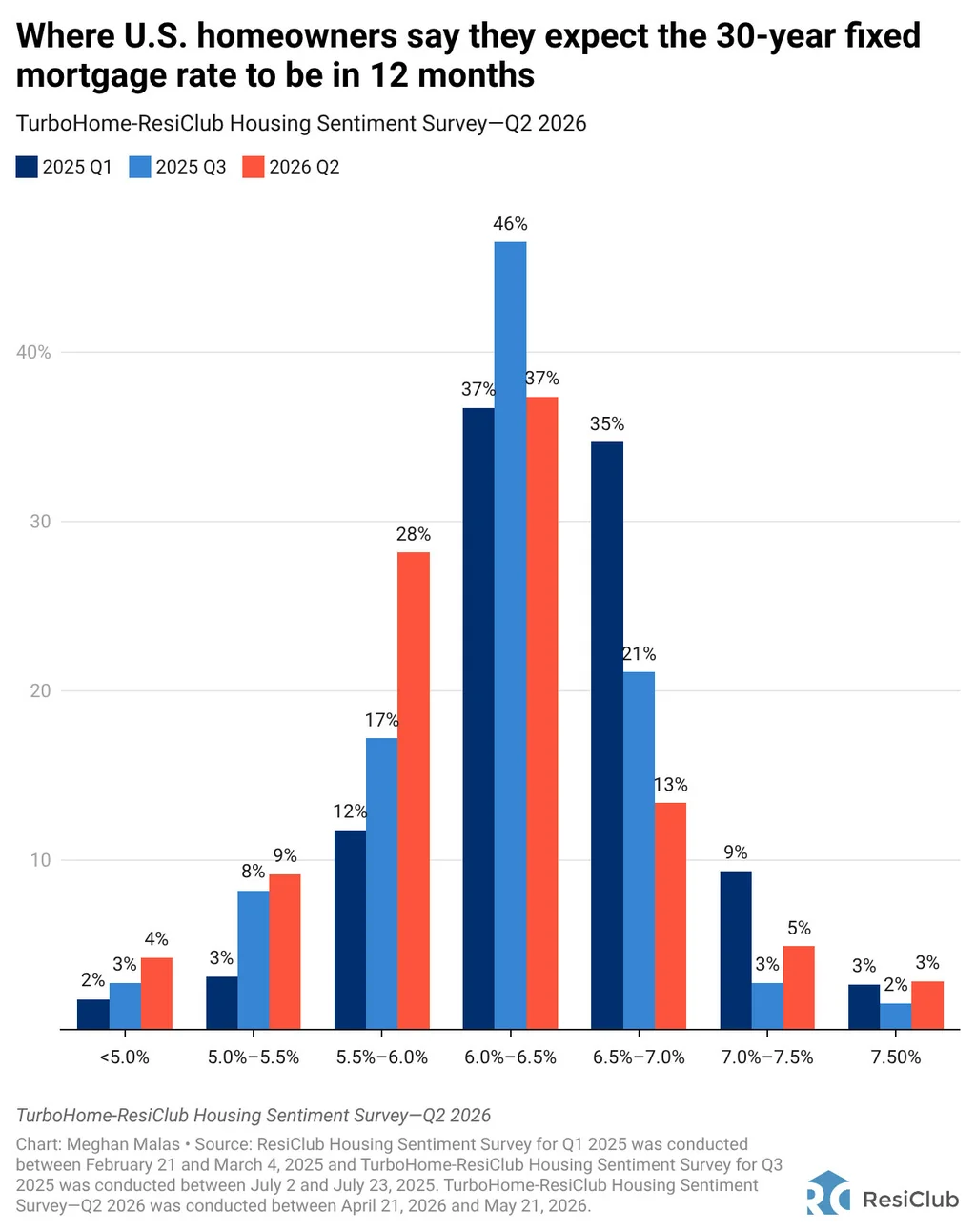
Homeowners also appear to be gradually adjusting their expectations for where mortgage rates will settle over the next year.
Among U.S. homeowners we surveyed, 50% expect the average 30-year fixed mortgage rate to be between 6% and 7% in 12 months. Meanwhile, 8% expect it to be above 7%, while 41% expect it to be below 6%.
Homeowners are slowly adapting to higher mortgage rates
Even as homeowners become somewhat more optimistic that mortgage rates could ease over the next year, many are still adjusting their own tolerance for higher borrowing costs.
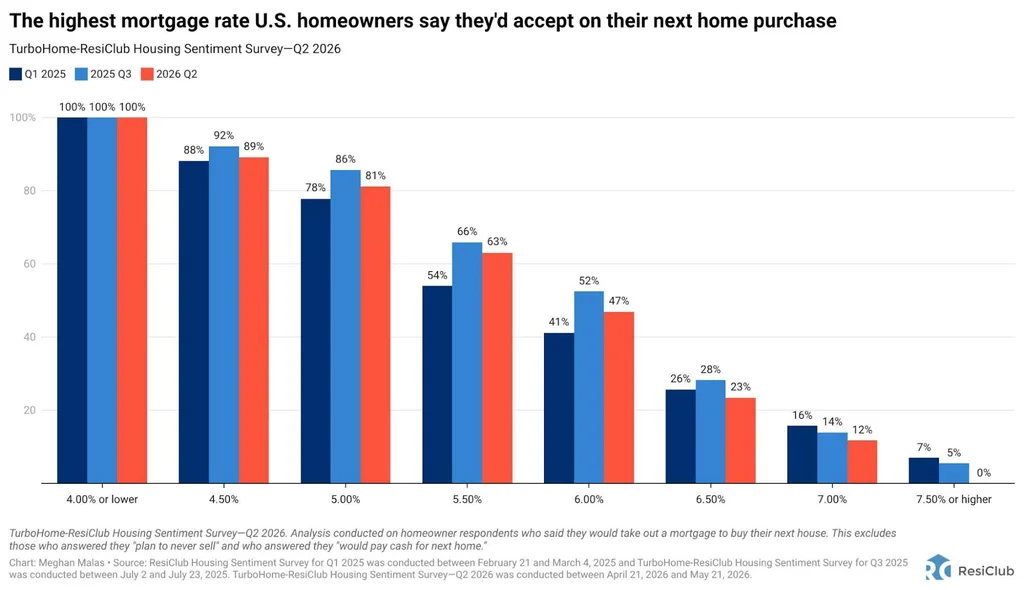
In Q1 2025, only 41% of homeowners surveyed said they would accept a mortgage rate up to 6% on their next home purchase. That share climbed to 52% in Q3 2025, then eased slightly to 47% in Q2 2026.
The broader trend still suggests that many Americans are very slowly coming to terms with the reality that their next mortgage rate will likely be materially higher than the one attached to their current home.
Acceptance of rates up to 5.5% also remains significantly above early-2025 levels. In Q1 2025, 54% of homeowners said they’d accept a rate up to 5.5%, compared with 63% in Q2 2026.
At the higher end of the spectrum, tolerance for very elevated rates continues to fade. In Q2 2026, no respondents said they would accept a mortgage rate of 7.5% or higher on their next purchase, down from roughly 7% in Q1 2025.
Homebuyers welcome more technology into the homebuying process
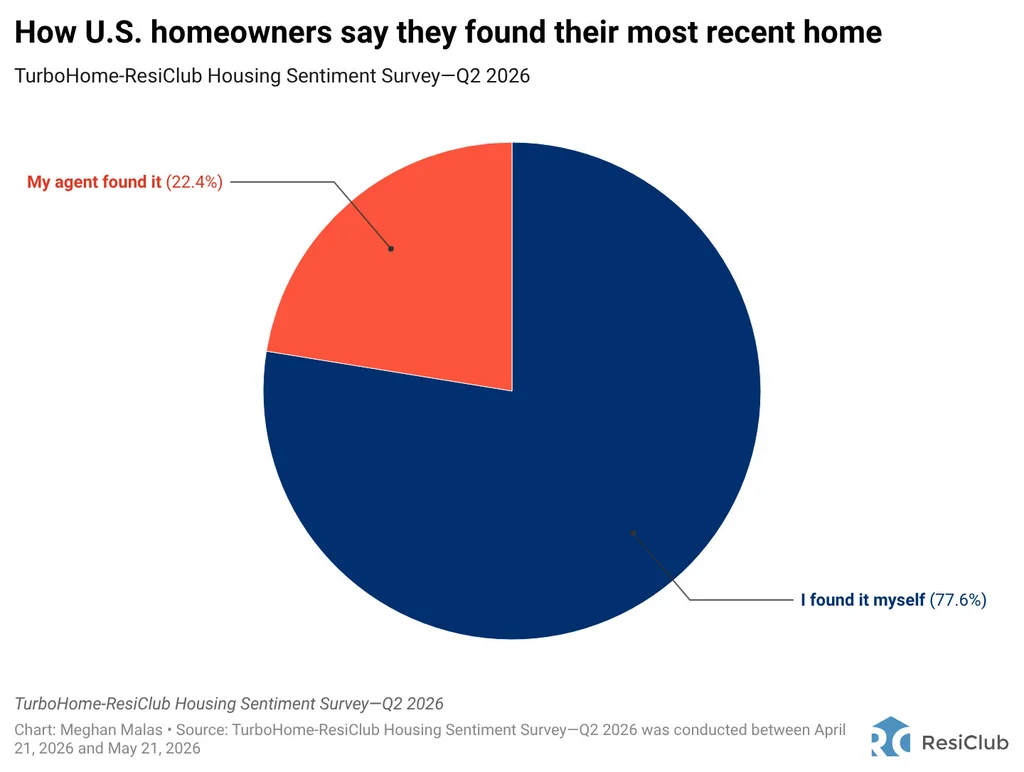
Among U.S. homeowners surveyed, 77% say they found their most recent home themselves, while only 22% say their agent located the property for them.
That finding reflects the reality of today’s housing search process. In the Zillow and Realtor.com era, consumers increasingly begin—and often complete—much of the home search independently before involving an agent.
In addition to openness to self-service on the search, prospective homebuyers are rethinking what they want from their real estate agents.
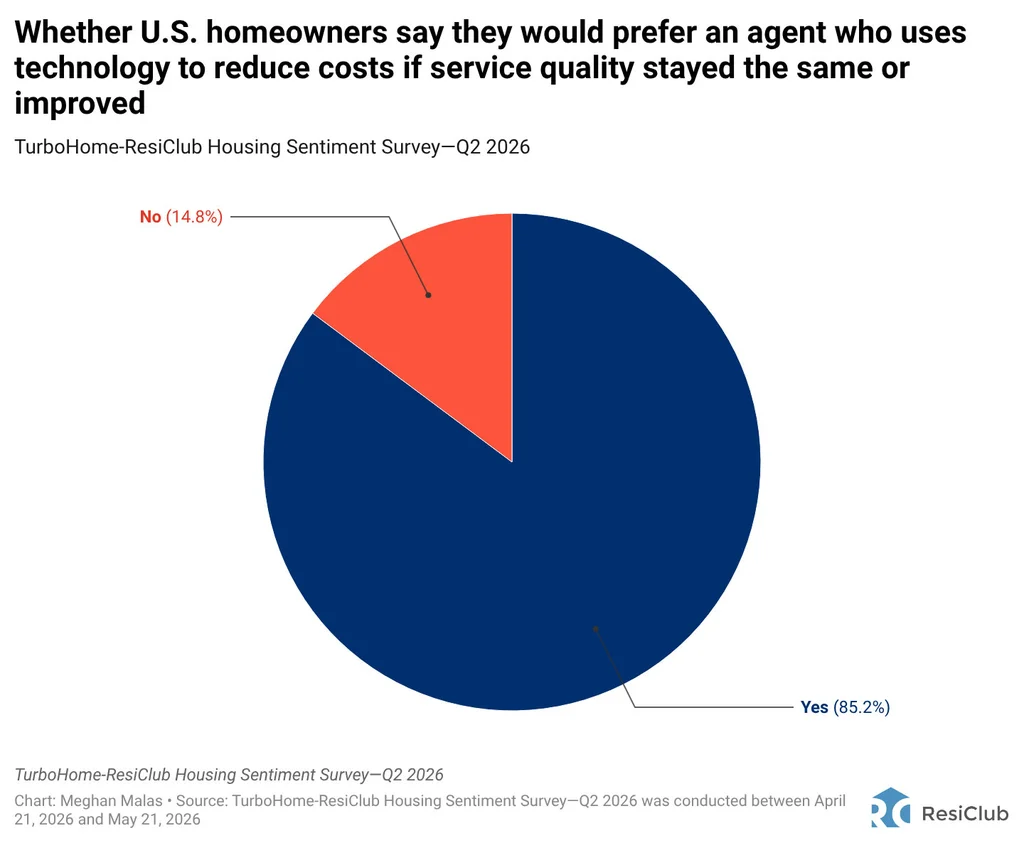
Among homeowners surveyed, 85% say they would prefer an agent who uses technology to reduce costs if service quality stayed the same or improved.
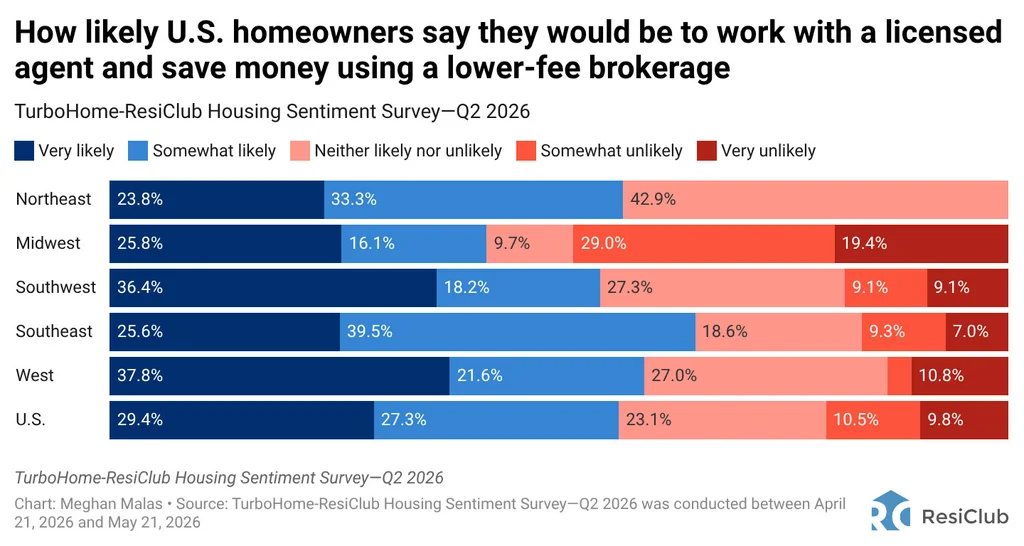
Additionally, 56% of U.S. homeowners surveyed said they would be either “very likely” or “somewhat likely” to work with a licensed agent and save money using a lower-fee brokerage.
Homeowners still see value in agents—even as commission skepticism grows
Despite broader concerns around commission structures, most homeowners still reported positive experiences with their most recent real estate agent.
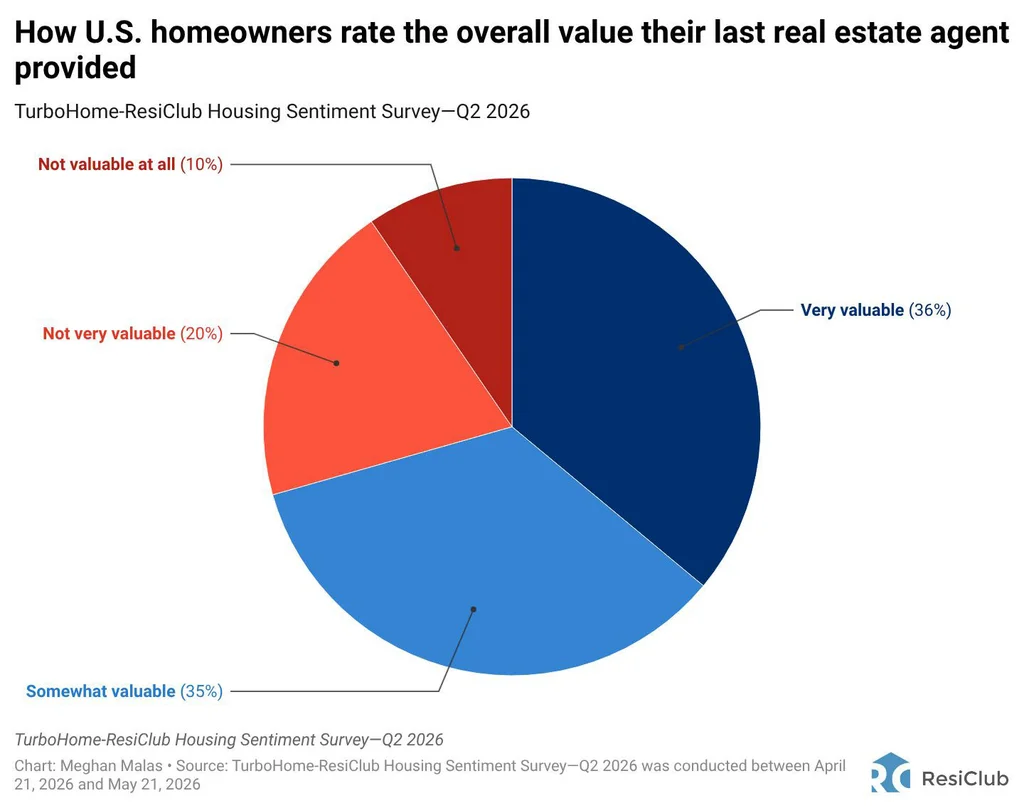
Among homeowners surveyed, 71% said their last real estate agent provided either “very valuable” or “somewhat valuable” services.
Still, many homeowners believe the broader industry compensation structure remains too expensive.
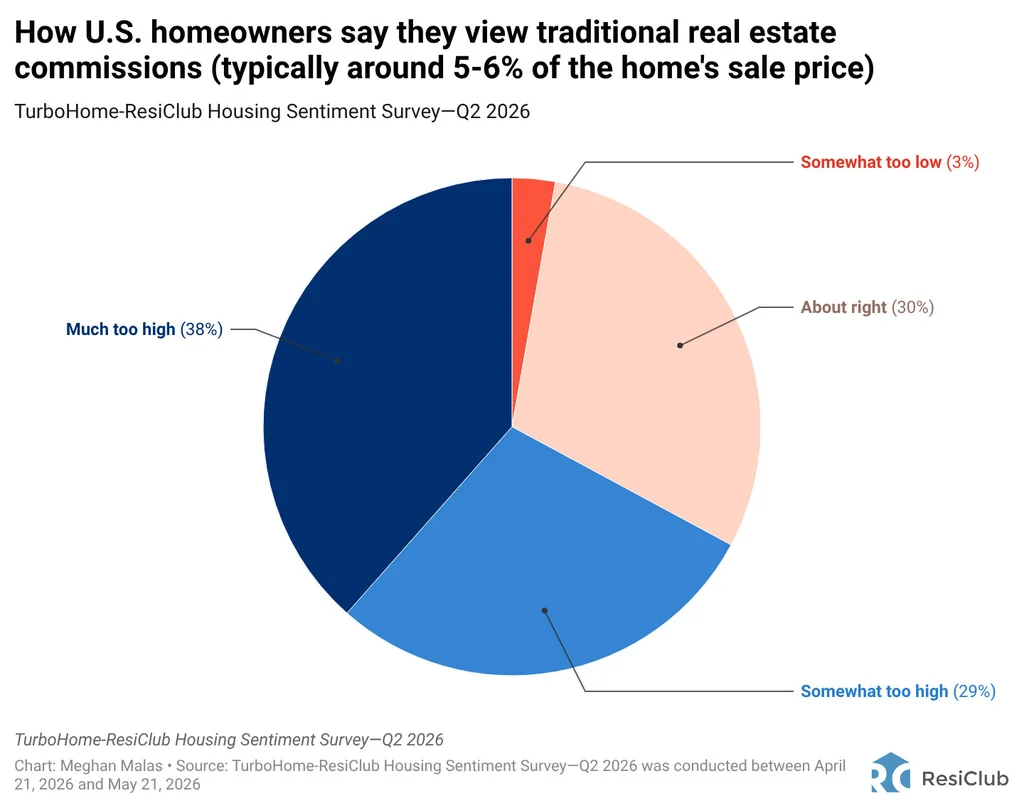
Nationally, more than two-thirds of homeowners surveyed say traditional real estate commissions—with the total typically around 5% to 6% of the home’s sale price—are either “somewhat too high” or “much too high.”
And that tension between appreciating individual agents while questioning the broader commission structure continues to show up throughout the survey results.
When asked specifically about compensation today, respondents in every region leaned toward believing agents are overcompensated rather than undercompensated.
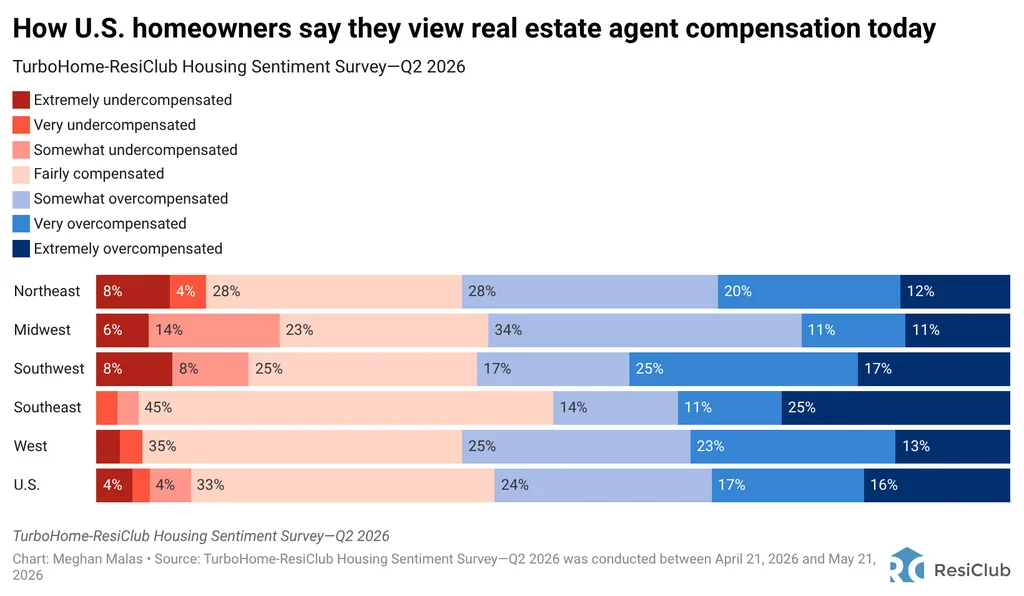
However, many homeowners still view agents as providing meaningful value overall.
Across all regions surveyed, a majority of respondents rated real estate agents as either “very valuable” or “somewhat valuable” today.
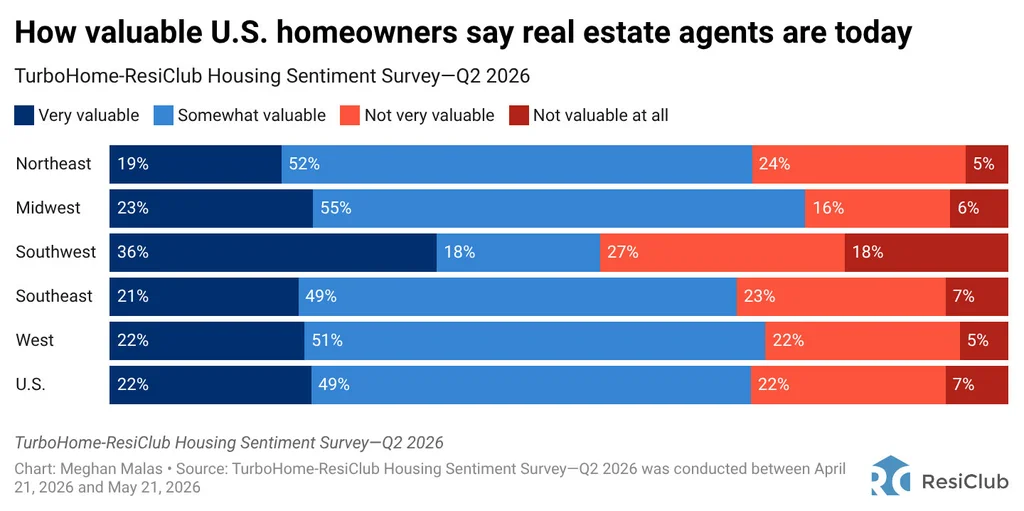
One reason homeowners may simultaneously value their own agent while criticizing commissions more broadly is that many appear to believe the industry pricing structure has remained high even as technology reshapes the transaction process.
That perception has become especially relevant in the wake of the National Association of Realtors (NAR) commission lawsuit settlement in 2024, which intensified public scrutiny around how buyer and seller agents are compensated.
Across all regions surveyed, a sizable share of homeowners said they believe real estate agent commissions in their local market are either unchanged or only slightly lower than they were three years ago.
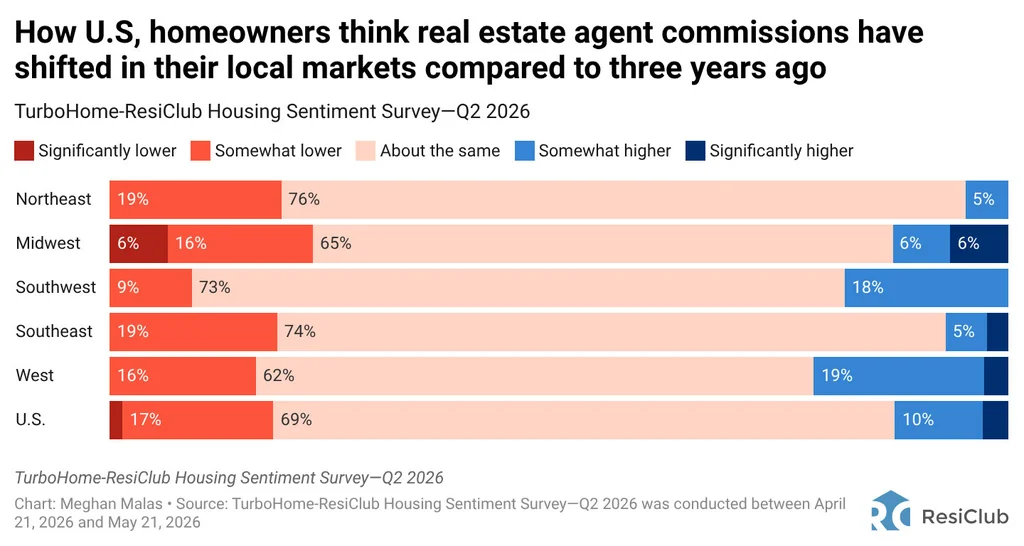
That perception may help explain why consumers are increasingly open to alternative brokerage models and technology-enabled agents that promise lower transaction costs.
Homebuyers want strong service—but increasingly expect more flexible pricing
For prospective buyers, service quality remains the most important factor when choosing an agent.
Among respondents surveyed, 62.5% said service and communication quality mattered most when selecting a real estate agent. Agent experience ranked second at 35%. Notably, 26.3% selected the lowest commission or fee as their top priority.
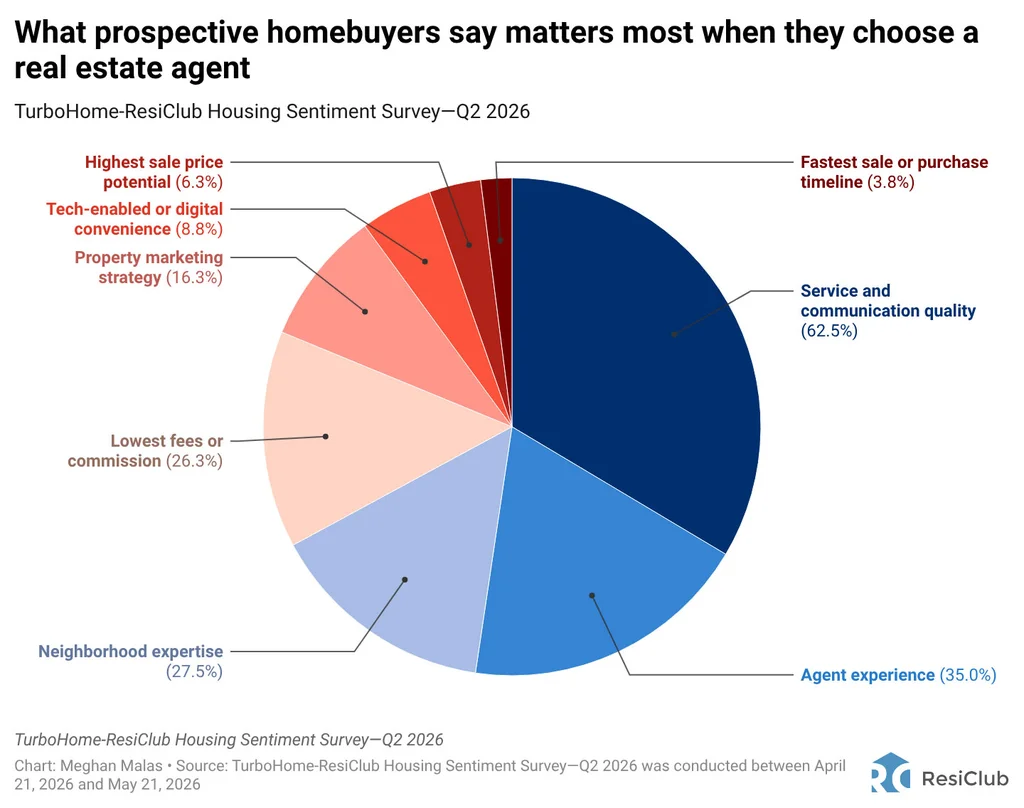
At the same time, many consumers appear increasingly open to alternative compensation models.
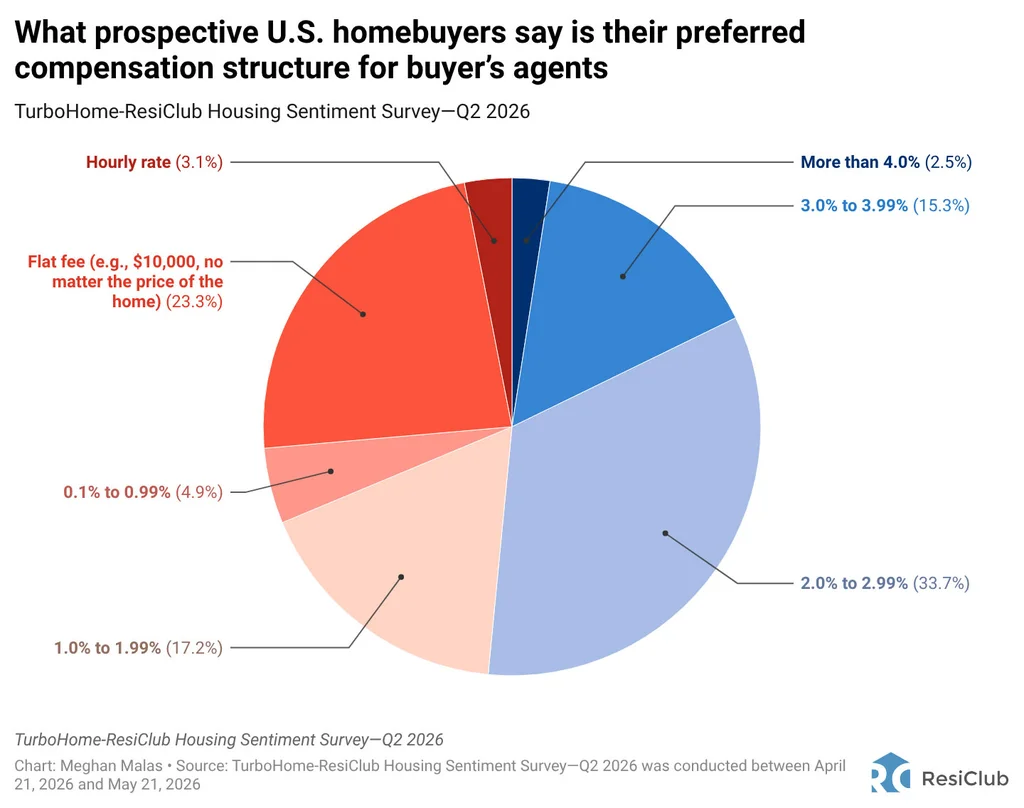
Among prospective buyers surveyed, roughly 34% said their most preferred compensation structure for buyer’s agents was a commission between 2% and 2.99%, followed by 23% who said they most prefer a flat fee structure.
Big picture
The latest TurboHome-ResiClub Housing Sentiment Survey suggests Americans are slowly adjusting to a housing market defined by elevated mortgage rates, softer home pricing expectations, and ongoing affordability strain.
At the same time, consumers increasingly appear open to technology-enabled real estate models—signaling that while buyers and sellers still value agents, expectations around how and what real estate services deliver are continuing to shift.