
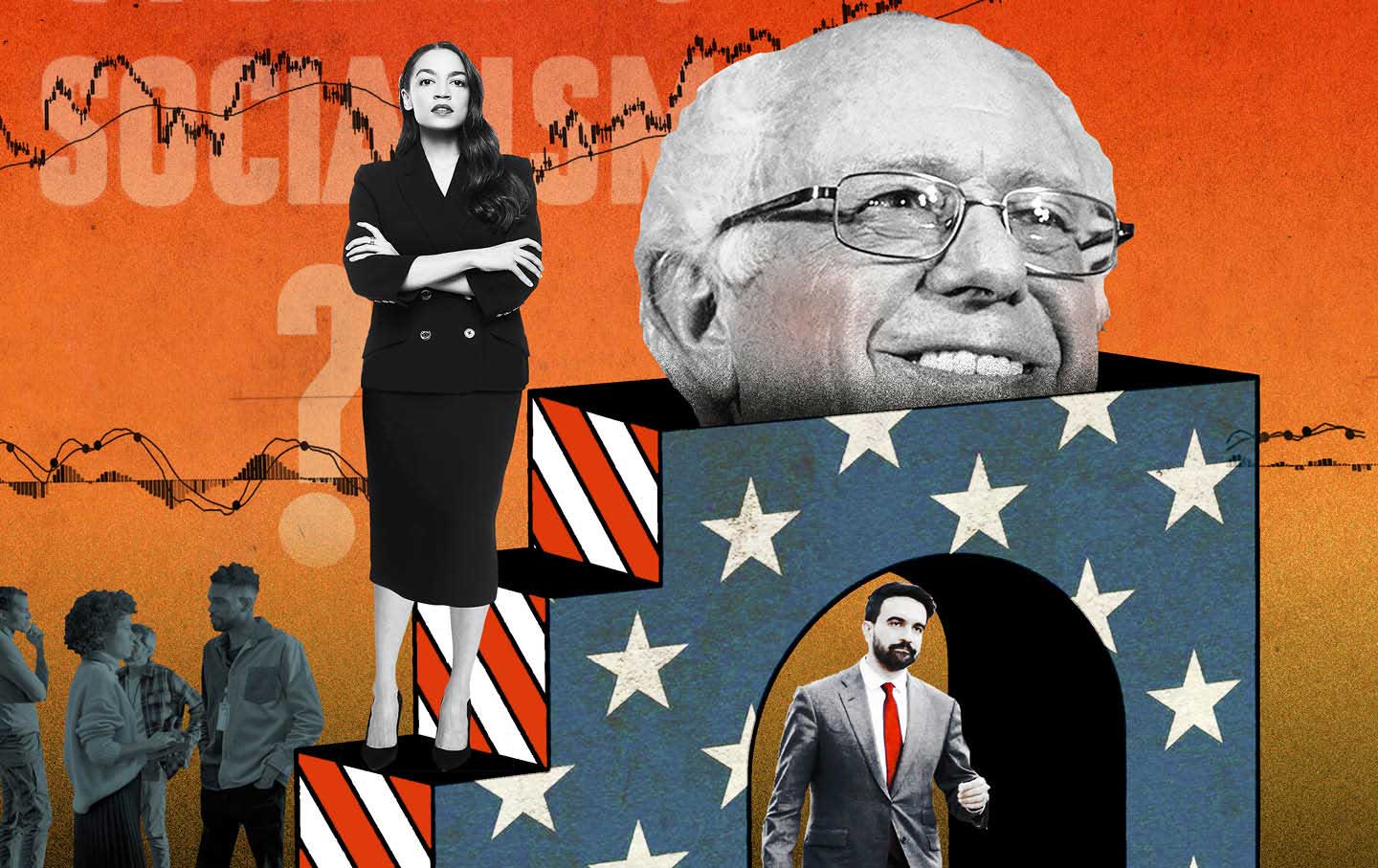
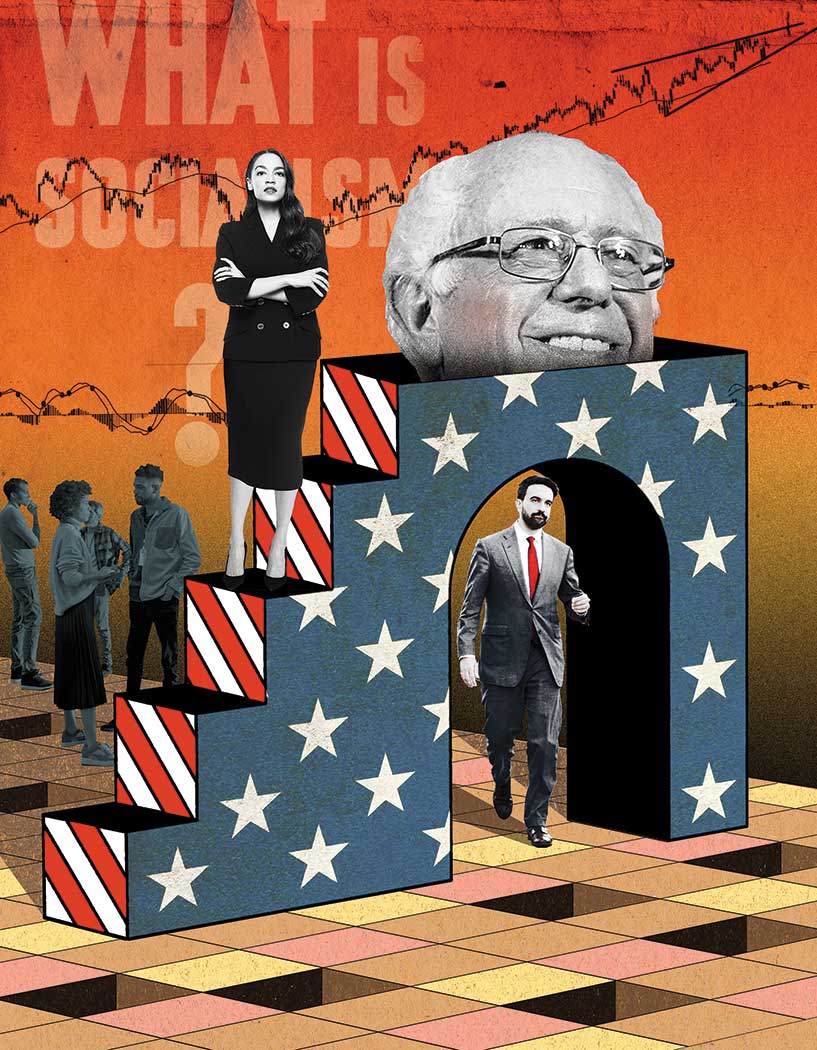
The American left has a growing list of victories—and an unfinished argument about the society it wants to build.
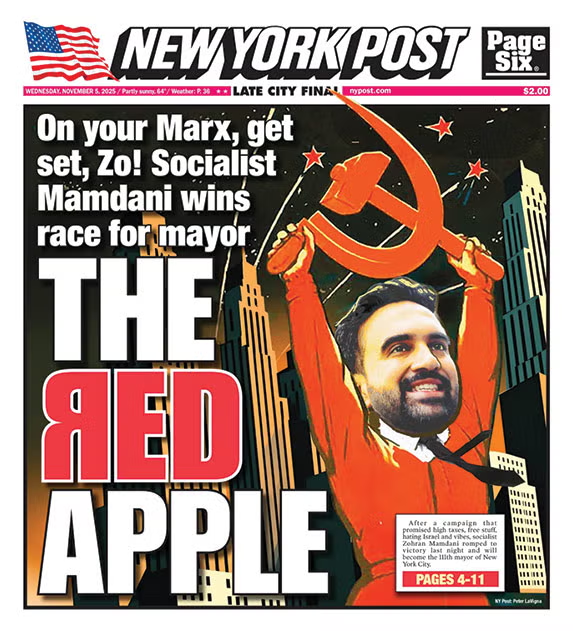
We’ve all seen the cover. some of us even have a copy of it hanging in our living room: “The Red Apple.” The New York Post marked Zohran Mamdani’s November 2025 election with a Soviet-inspired cover that featured the incoming mayor carrying a hammer and sickle high above his head.
It was an image that those of us who grew up in New York during the Rudy Giuliani or Michael Bloomberg era couldn’t have imagined. The larger global context made it even more remarkable, demonstrating socialism’s advance in the United States even as it’s in retreat in much of Europe and Latin America. And since last year, Mamdani’s election has helped catalyze a string of socialist victories in congressional races. The Democratic Socialists of America (DSA) has surged to over 120,000 members, and with the midterm results, the movement’s small congressional contingent is set to become dramatically larger.
What does socialism mean, though, to the socialists of our era? Their predecessors in early-20th-century socialist parties liked to talk about a “minimum program” of reforms within capitalism and a “maximum program” of reforms that go beyond capitalism entirely. Some even theorized a “transitional program” to bridge the gap between the two.
The “minimum program,” at least, is easy enough to see today. Socialist candidates for office talk about Medicare for All, jobs programs, and ending America’s wars overseas. In New York, Mamdani has conducted hearings on the misdeeds of negligent landlords, frozen the rent for millions of New Yorkers in rent-stabilized apartments, and established a Mayor’s Office of Worker Power to help people organize their workplaces. He’s worked to expand free childcare and taken the first steps to build public grocery stores in each of the city’s five boroughs. And through it all, the city’s economy has continued to boom.
To progressive allies of the DSA, these reforms are proof of the movement’s inherent pragmatism—in deeds, if not always in words. But others can reasonably ask if this generation’s socialists still believe in socialism at all.
When the leading DSA-affiliated politicians like Alexandria Ocasio-Cortez are asked to define socialism, they tend to talk about mitigating income inequality and giving everyone a dignified life. While these are certainly goals close to the heart of any socialist, it’s hard to see how they add up to socialism as a system, since they avoid the question at the core of socialism: the ownership of the means of production. Similarly, while the radicalism of some clauses of the DSA’s national platform—including the calls to abolish the Senate and to dismantle the carceral state—has been a lightning rod for criticism from the right, the document offers little detail about how a world beyond capitalism would work.
Appears In

The DSA platform calls for public ownership of the largest corporations and essential industries. That would be a major transformation, but it could still leave much of the economy organized around private employers and wage labor. Even the section titled “Democracy at Work” is about trade unions, not who owns the means of production. And although the DSA declares a classless society its goal, it offers little explanation of how its demands for change within capitalism would get us there.
This blurriness about the “maximum program” can’t be chalked up to a lack of radical commitment or to strategic coyness. It reflects a real problem. On the one hand, capitalism is a brutally unequal system in which many struggle to take care of their families and spend much of their waking lives in jobs they despise. There are many good reasons to find it abhorrent. On the other hand, especially after the failures of state socialism in the Eastern bloc, many people who are deeply critical of capitalism aren’t entirely sure what an economically viable alternative to it would look like.
In light of that uncertainty, many progressives, and surely many readers of The Nation, wonder if it’s better to drop the socialism talk entirely. Politicians like Zohran Mamdani should abandon the historical baggage associated with socialism, their thinking goes, and just embrace social democracy and the great effort to tame, rather than replace, capitalism.

On one level, it’s easy to see their point. Social democracies like Denmark, Norway, Sweden, and Finland really were, at their peak, the most livable societies that human beings ever built. If the United States adopted the Nordic model in the coming years, it would be the greatest triumph of the American left since the Civil War and Reconstruction. That much should be obvious to anyone with progressive values. What might be less obvious is that it would still be a woefully insufficient response to growing levels of inequality and discontent.
Admittedly, one reason that socialists like ourselves stubbornly refuse to limit our horizons to social democracy is purely ideological. Even in the most expansive social-democratic welfare states, like Sweden in the 1970s, most of the working-age population worked for capitalist employers. Democracy stopped at the factory and office doors.
In the places where most adults spend their working days, we do not interact with each other as equals. The working-class majority have to do what they’re told by bosses or risk becoming unemployed. Often, workers’ best recourse against unreasonable demands is the power of exit. But even if they’re able to exercise that option, they will still have to find a new boss to submit to. They can choose their masters, but they can’t choose not to have a master. Meanwhile, some of their fellow citizens, due to nothing but accidents of birth, can live off trust funds without having to work at all.
For egalitarians, this is a deep injustice, and one that remains even when extensive public provision and a powerful labor movement have sanded off some of the system’s worst effects.
Even if we were willing to swallow this imbalance of power at the heart of the economy, though, there’s also a practical objection to stopping at social democracy. Thinking that’s as far as we can go sounds realistic, but it’s far from clear that capitalism as it exists in the third decade of the 21st century can sustain ambitious pro-labor policies and deep welfare-state commitments that would enable full employment and the truly comprehensive provision of public goods.
Michał Kalecki identified the underlying problem decades before it came to the fore. In his 1943 essay “Political Aspects of Full Employment,” Kalecki argued that while sustained full employment might be economically achievable under capitalism, it was politically unstable. Individual capitalists might occasionally welcome state policies to these ends in the short term to help restore demand for their products, but over time they would come to resist them. Tight labor markets weaken workplace discipline, strengthen workers’ bargaining power, and erode employers’ social authority—an environment, the business leaders feared, that would undermine capital accumulation.
Much of today’s progressive discourse ignores this lesson entirely. Full employment, expansive fiscal policy, and ambitious state investment are often presented by American progressives as stable end points within capitalism. Yet these policies will be bitterly contested by capital and, inevitably, will provoke crises.
Governments, for their part, can sometimes sustain such policies against the immediate wishes of business, especially when public order is at stake. But this autonomy is limited, since states remain dependent on private investment for growth, employment, and tax revenues. In an era of intensified global competition, and with aging populations already threatening the existing welfare states, it’s unclear that the Golden Age advances of the middle 20th century, when both labor and capital grew stronger, can return.
All this, of course, might sound like the case for an even more moderate reform program, one that avoids burdening capitalist job creators with excessive interference from labor but rewards workers with reasonable wages and protections in return. We draw the opposite conclusion. We think that people have the right to both the security of a welfare state and a voice in their workplaces. Precisely for that reason, socialists must not shy away from maximal demands: doing away with capitalism altogether.
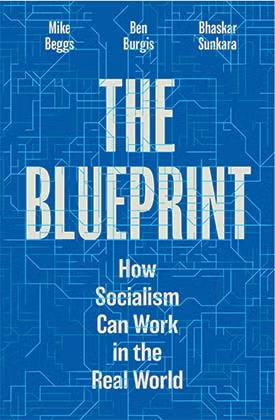
The socialism of central planning and administrative allocation was a failure in the Soviet Union and similar societies. Learning from that history requires rethinking how egalitarian production and distribution can actually work.
If we need market mechanisms in at least some sectors of the economy, it doesn’t follow that we need capitalist property relations and the deep inequalities of power that go with them. We know that worker-owned and democratically governed firms can operate efficiently. Spain’s Mondragon Corporation, a federation of dozens of autonomous cooperatives, employs around 70,000 people. Its worker-members elect their governing bodies and participate in strategic decisions. If we could have a market sector where every company worked that way—where it was all Mondragons and no Amazons—we could have a prosperous modern economy without workplace authoritarianism and labor exploitation.
One reason cooperatives are rare under capitalism is that even relatively well-off workers who could pool their resources to start a business would be making a risky bet. It’s not rational for people with very limited resources to put all their financial eggs in the single basket of a venture that could go belly-up and leave them with nothing. Apologists for capitalism conclude that capitalist employment relations are morally innocent and mutually beneficial. Capitalists assume the risk and get the power, while workers surrender their power but get the security of a biweekly paycheck. We think that a better society would offer workers better options than the choice between economic insecurity and economic oppression.
In our vision of socialism, a large state sector provides universal public services such as education and healthcare, while a regulated market sector composed of democratic, worker-controlled firms produces ordinary goods and services in response to consumer demand. This means that workers do not have to risk their personal savings; public banks finance the companies, which must pay their members regular wages that meet minimum benchmarks. Worker-members also share any profits remaining after wages and other obligations have been paid.
Our model retains markets because prices, competition, and consumer choice solve real coordination problems. But it rejects capitalism on egalitarian and democratic grounds: A dynamic economy doesn’t require a separate class of owners with authority over production, investment, and the lives of ordinary workers.
This is no utopia. It wouldn’t automatically eliminate all forms of inequality, and it certainly wouldn’t eliminate all sources of political conflict. It would, however, be the first dominant form of human social organization since the Neolithic Revolution that did not divide society into a class of subordinated producers and a class of rulers living off the fruits of those producers’ labor. That’s the North Star that past generations of socialists understood themselves to be striving toward. It’s the vision that many of them died for, whether killed by strikebreaking Pinkertons or fighting as internationalist volunteers in the Spanish Civil War. We still think humanity has a chance to achieve that future.
DSA founder Michael Harrington used to say that radicals had to “walk a perilous tightrope.” We had to “be true to the socialist vision of a new society” and also “bring that vision into contact with the actual movements fighting not to transform the system, but to gain some little increment of dignity or even just a piece of bread.”
Harrington is not often invoked in DSA circles nowadays, but almost every socialist in the country is still trying to walk that tightrope, judging reforms both by the relief they bring and by the strength they give working people to fight for more. Universal healthcare would weaken workers’ dependence on employers for medical coverage. More public housing would reduce tenants’ dependence on private landlords. Stronger unions would give workers more power over their jobs. But turning these gains into steps toward socialism requires organizing and political agitation. That transformation won’t follow automatically from a popular mayor or a well-run sanitation department.
The New York Post cover was meant to be a warning about the society that Mamdani wants to build. We owe its readers a clearer picture of that society than a hammer and sickle can provide.
More from The Nation

An interview with the data journalist about how she uses numbers and design to illustrate how class weighs on the lives of Americans.

Investigators are rapidly closing out claims of workplace discrimination so that they can search for the kinds of cases chair Andrea Lucas most wants to find.

If we follow the lead of billionaire team owners, toxic cable news channels, and misguided athletes, it’s a resounding no. That just means we need to forge our own path.

Peter Mancall’s new book reframes the history of the American continent as a zone of encounters between Native peoples, European empires, and African societies.

A strange case of prosecutorial misconduct during a murder investigation in the Oklahoma panhandle.