
Did you see Christian Dior’s “Night in Color” ad? It’s gorgeous. A dreamy, fantastical tale set in Paris featuring talking animals, inspired by the friendship of Monsieur Dior and German actress Marlene Dietrich. Directed by French animator Sylvain Chomet, the short film’s delicate illustrations come alive with the voices of stars such as Robert Pattinson and Rihanna. It is oh so pretty. A love letter to storytelling, craft, and art in the infinite stream of AI-generated video vomit. Dior even made a behind-the-scenes video to show how it aligns with the fashion house’s artisanal and design values.
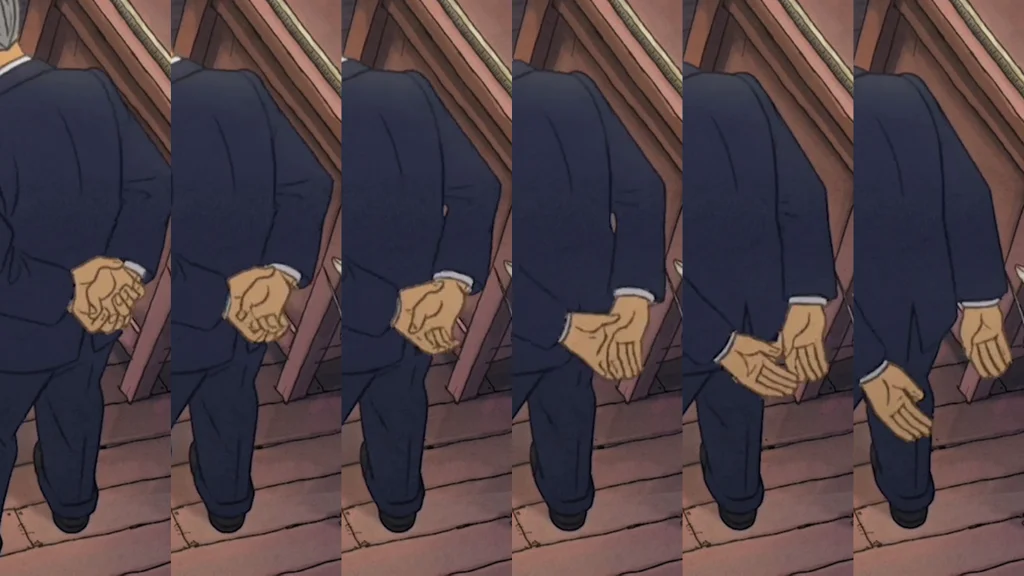
The only problem with this perfect brand narrative: The ad shows all of the signs of being made with AI assistance. Soon after it was released, internet commenters detected the telltales of AI use. Viewers spotted warped lettering, a lazy eye, and a misplaced finger bone—the kind of anatomical hiccup typical of generative AI. Different media outlets, from The Business of Fashion to Cartoon Brew, asked Dior about the controversy, but several days later have still not received a response. Fast Company has reached out to the press department at LVMH, Dior’s parent company, for comment and will update the story if we hear back.
The Dior “hand-drawn” animated commercial is just one example of the latest ad fad: In the age of AI slop, brands seem to have rediscovered the human hand. Nostalgia and artisanal values have become a luxury good.
Last year, Porsche released a holiday ad that used traditional hand-drawn animation and 3D animation. In August 2026, Apple released a Mac mini ad made with stop-motion, which required artists to move objects and clay a few millimeters at a time, photographing each step, frame by frame. Thousands of photos to create a few seconds of animation. The Cupertino company also released a stop-motion Apple Games ad a month ago. Even its Apple TV and Apple Music logos got remade, going from traditional computer design to 100% practical effects.
Prada’s hand-drawn holiday ad was directed by former Disney animator John Pomeroy. If you are not familiar with Pomeroy, he’s the genius behind masterpieces like The Secret of NIMH and All Dogs Go to Heaven. Other retailers are embracing the trend as well, with Levi’s rolling out a stop-motion film, Starbucks incorporating animated elements, and Anthropologie debuting a “handmade film.”
And that may be why Dior allegedly panicked when it heard that Prada was following suit with a legendary animation artist at the helm. According to Ben Wild—cofounder and CEO of a film studio whose clients include Netflix, HBO, Disney, and Gucci—“it was a rush job.”
In that LinkedIn post, Wild notes that two people who said they worked on the film explained it all to him after he shared a post on Instagram. He says that “the crew were tasked with creating something as they heard Prada was working with an animation legend.”
So why use AI?
Dior needed an animated ad, and fast. Unfortunately, speed is the enemy of animation. That’s why The Secret of NIMH or My Neighbor Totoro are gorgeous art pieces in motion, but Transformers’ cartoons suck. The former get carefully designed and drawn at 24 frames per second, while the latter are hastily put together, with poor drawing and a handful of frames.
If you want smooth, high-quality animation, like the Dior or the Prada ads, you need to draw lots of in-between frames. If there’s any high-speed motion, you animate on “ones,” which requires 24 hand-drawn frames per second. For standard movement, like people talking, you animate on “twos,” which requires 12 frames per second. And for very slow scenes, like panning the camera, you animate on “threes,” at eight frames per second or even less.
This is where AI comes in. Rather than having animators drawing all those frames, AI can fill in the blanks between the key frames typically hand-drawn by animators. While Studio Ghibli has banned artificial intelligence, studios such as Disney and Toei want to use AI for in-betweening. It is, as some business executives justify it, a way to cut production times and cost.
Wild’s sources say most of the motion and character movement in the Dior ad fits this use of generative AI. Worse yet is this accusation: The furniture and the bee characters were made entirely with it. They also claim other artists’ work was fed into the machine as direct reference.
The problem is the (alleged) lie
Animation studios are going to use AI. Just look at the French media company Animaj—owners of the atrocious kids cartoon Pocoyo—which has publicly said AI is a great way to cut costs, dressing it as a way to save animators from “tedious work,” and to achieve a “roughly 67% productivity gain.”
That’s fine. As long as companies disclose the use of AI and don’t misrepresent themselves, go forth. Let people decide if they want to watch. The problem with the Dior ad—if the use of AI is confirmed—is that the brand misrepresented it.
In a statement to WWD, Dior’s creative director Jonathan Anderson said: “The film we’ve created together for Dior is all hand-drawn using techniques that go back to the 1940s.” The company also published a behind-the-scenes film that suggested the short was made with the same careful handcrafted passion as its own products. Wild’s sources claim that this film was faked too, with animators hired just to appear on camera. The behind-the-scenes video shows only sketches. The end credits list a small group of animators. No mention of AI anywhere.
To add insult to injury, according to Wild, “Chomet released his anti-AI manifesto the day the Dior ad launched to hide the fact it was generative.” None of this has been confirmed by Dior, but Wild is celebrating anyway: “The AI bubble is officially popping, literally right this second.”
Other people are very angry, too. Some are accusing Dior of censoring commenters who denounce its use of AI. I wouldn’t be surprised if the French company is forced to pull the ad. At this point, however, it may be too late. As far as the audience goes, Santa already put Dior on the naughty list this year.