
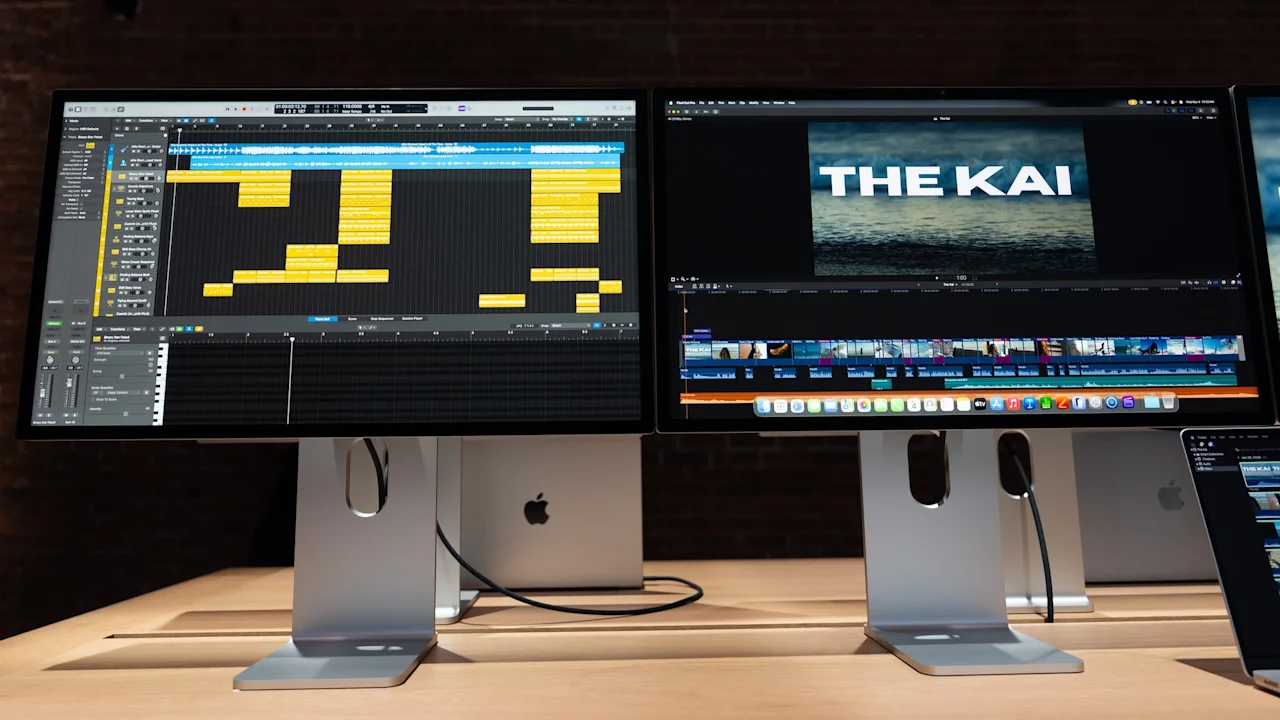
One of the more annoying things that could happen is that you spend $3,300 on a brand-new display, only to find out that, just after you’ve passed the return window, the price has dropped by $400. Nothing else has changed; just the price gets cheaper after you’ve already paid for it and can no longer return it to the store.
That’s what happened for customers who bought Apple’s brand-new Studio Display XDR, the company’s high-end mini-LED monitor targeted at professionals with a few grand to spend on a monitor. The company offered the Studio Display XDR with two stand options—a VESA mount adapter and what Apple calls a “tilt-and-height-adjustable stand.” Both versions were the same price until this week, when Apple dropped the price of the version with the VESA mount adapter by $400.
On Wednesday, Apple emailed customers who had purchased the Studio Display XDR with the VESA mount at the higher price, and let them know they would be refunded $400.
Thank you for your recent online purchase at the Apple Store.
Apple recently lowered the price of the Studio Display XDR—
Standard glass—VESA mount adapter configuration you ordered.
We are pleased to inform you that we will provide you with a refund for the difference between the price you paid and the new, lower price. For the most up-to-date information about your order, please visit online Order Status.
That’s it—just four sentences explaining that the price changed, here’s your refund. There’s something almost radical about that kind of directness from a company the size of Apple. Most brands in this situation would have buried the refund in three paragraphs of goodwill language designed to make you feel like they were doing you a favor.
A refund is obviously the right thing to do, but it made me think about how this could have happened in the first place.
After all, the non-XDR version of the Studio Display also has a VESA mount option, as well as a tilt-and-height-adjustable stand option. The latter is $400 more. (There’s also a tilt-only stand that is the same price as the VESA mount model.) It really makes no sense that Apple would charge a $400 premium for the VESA mount on the XDR version. You’re literally getting less product since you have to provide your own monitor arm.
So, why did Apple change the price?
I mean, there are only two possibilities here. The first is that Apple meant to sell the VESA mount for $400 less than the tilt-and-height-adjustable stand on both of the new Studio Display models. If that’s the case, then someone just forgot to put that in the order flow. That’s not great, but Apple is a big company, and it released a half-dozen products that week, so maybe somebody just got busy and missed that step. On the other hand, it does seem like a pretty important step.
The other possibility is that Apple meant to sell both XDR options for the same higher price. If that’s the case, it’s actually a lot worse because Apple is basically saying it thinks it can fleece customers willing to spend that much money on a display. Presumably, however, some of those customers complained, and Apple decided to reverse course.
I don’t think Apple will ever explain which of these two possibilities really happened, but I’m inclined to believe it was likely the first. I just don’t think Apple would have meant to charge different prices for the same stand options across the two displays. That just doesn’t make any sense. Also, I prefer to think that Apple wouldn’t have priced its products in a way that basically punishes its high-end display customers.
This isn’t the first time Apple has had to navigate the awkwardness of a post-purchase price drop. In 2007, just two months after the original iPhone launched at $599, Apple cut the price by $200. The backlash was immediate—people who had waited in line and paid the premium price felt burned.
Steve Jobs responded with an open letter and offered affected customers a $100 Apple Store credit. It wasn’t a full refund, and the $100 came with strings attached, but it was an acknowledgment that Apple owed something to the people who had trusted the original price. The Studio Display XDR situation is smaller in scale and arguably cleaner in execution—full refund, no store credit gymnastics—but the underlying dynamic is identical: A price drops, loyal customers feel taken advantage of, and Apple has to decide how much that goodwill is worth.
The lesson for other brands is simple: Pricing is a promise. In this case, Apple broke its promise because it wasn’t clear on its pricing. I think you can argue Apple should either admit it made a mistake or just be honest that it was willing to extract an extra $400 from customers who presumably wouldn’t push back. Neither option is a good look for a company that has spent decades building a reputation on the idea that its prices reflect its values.
The good news is that Apple did the right thing, even if it did it quietly. The price got fixed, and customers will get a refund. But the brands that come out of these situations with their trust intact aren’t the ones who fix problems the fastest—they’re the ones who build pricing systems carefully enough that the problem never makes it to a customer’s inbox in the first place. A $400 refund is the right move. Not needing to send that email would have been better.
—Jason Aten, tech columnist
This article originally appeared on Fast Company’s sister website, Inc.com.
Inc. is the voice of the American entrepreneur. We inspire, inform, and document the most fascinating people in business: the risk-takers, the innovators, and the ultra-driven go-getters that represent the most dynamic force in the American economy.