
Close Menu
    Facebook X (Twitter) Instagram
    TRENDING :
    • Watch out, Spotify: This free site is a music lover’s dream
    • Science says you can indeed buy happiness—for as little as $30
    • Zillow downgrades its home price forecast across 400-plus housing markets—see the data
    • The Pentagon says laser weapons are nearly ready for prime time
    • Student loan borrowers scramble after learning some repayment plans are disappearing
    • May full moon: A rare blue ‘micromoon’ will appear in the sky tonight. Here’s the best time to see it
    • Taking a trip this summer? Beware. These travel scams are now turbocharged by AI
    • Inflation is spreading through the U.S. economy beyond the pump
    Populist Bulletin
    • Home
    • US Politics
    • World Politics
    • Economy
    • Business
    • Headline News
    Populist Bulletin
    Home»Business»A study just found brain-eating amoeba in 2 popular U.S. national parks. Here’s what you need to know
    Business 3 Mins Read

    A study just found brain-eating amoeba in 2 popular U.S. national parks. Here’s what you need to know

    Business 3 Mins Read
    Share Facebook Twitter Pinterest LinkedIn Tumblr Telegram Email Copy Link
    Follow Us
    Google News Flipboard
    Share
    Facebook Twitter LinkedIn Pinterest Email

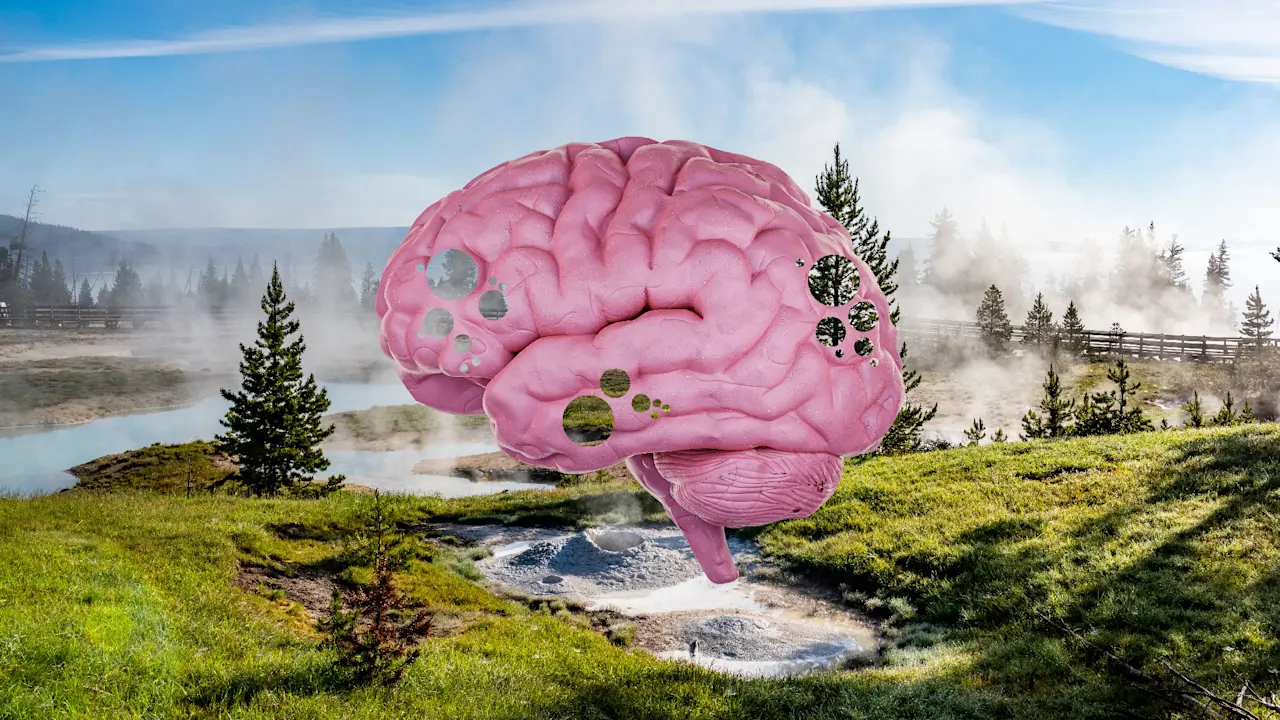
    Yes, you read that right: Brain-eating amoeba have been found in two popular U.S. national parks, according to a recent study from the U.S. Geological Survey, and a number of other institutions, published in the American Chemical Society’s journal, ES&T Water.

    Here’s what to know.

    What happened?

    Researchers took 185 water samples from five popular U.S. national parks, looking at “40 thermally impacted recreational waters” at Yellowstone National Park, Grand Teton National Park, Lake Mead National Recreation Area, Olympic National Park, and Newberry National Volcanic Monument over an eight year period from 2016 to 2024.

    What they found revealed widespread detection of Naegleria fowleri (dubbed “brain-eating amoeba”) in 34% of the samples, or 63 specimens, at Yellowstone, Lake Mead, and Grand Teton hot springs and thermally impacted waters. However, the brain-eating amoeba was not found at Olympic National Park or Newberry National Volcanic Monument.

    It’s important to note that no infections or deaths due to the brain-eating amoeba have been reported at the detection sites.

    What is Naegleria fowleri?

    Naegleria fowleri is a free-living amoeba, a one-celled organism that thrives in warm freshwater lakes, rivers, and hot springs. It’s called the “brain-eating amoeba” because it can infect and destroy brain tissue, according to the Centers for Disease Control and Prevention (CDC).

    While brain infections caused by Naegleria fowleri are quite rare, they are nearly always fatal, at a rate of 98%.

    If water containing the amoeba goes up a person’s nose into the brain, it can cause an infection called primary amebic meningoencephalitis, or PAM. Typically, fewer than 10 people a year in the U.S. get PAM. However, almost everyone who gets PAM dies from it, per the CDC: Out of 167 reported cases of PAM in the U.S. between 1962 to 2024, only four people survived.

    Exposure risks

    Brain infections caused by Naegleria fowleri usually occur after a person goes swimming or diving in a lake, river, or other fresh water in the summer after a prolonged period when it was hot, causing higher water temperatures but lower water levels.

    The CDC cautions you cannot contract the Naegleria fowleri infection simply by swallowing water containing the amoeba, nor can a person pass it to another person.

    How to reduce the risk of contracting a Naegleria fowleri infection

    The CDC suggests people hold their nose or wear a nose clip if they are jumping or diving into fresh water, and to keep their head above water in hot springs. Don’t dig in shallow water, because Naegleria fowleri is more likely to live there.

    Signs and symptoms of a Naegleria fowleri infection

    Primary amebic meningoencephalitis (PAM) progresses quickly, with early symptoms that can include headache, fever, nausea and vomiting, stiff neck, confusion, lack of attention to people and surroundings, loss of balance, and hallucinations.

    Most people with PAM die within 18 days after experiencing initial symptoms, with many entering a coma and dying after 5 days, per the CDC.


    Source link

    Share. Facebook Twitter Pinterest LinkedIn Tumblr Email

    Related Posts

    Watch out, Spotify: This free site is a music lover’s dream

    May 30, 2026

    Science says you can indeed buy happiness—for as little as $30

    May 30, 2026

    Zillow downgrades its home price forecast across 400-plus housing markets—see the data

    May 30, 2026
    Top News
    World Politics 4 Mins Read

    BREAKING EXCLUSIVE: Update on Rudy Giuliani – He Suffered Injuries Including a Fractured Spine – Still in a Trauma Center – Prayer Attached

    World Politics 4 Mins Read

    Rudy Giuliani was damage badly in a automotive crash final evening (Saturday) and is at…

    Mexicans Are Feeling The Economy Grow In Real-Time

    May 9, 2026

    Warner Bros. Discovery confirms offers to buy all—or part—of the company

    October 22, 2025

    10 Engaging Team Building Activities for Small Work Groups

    January 12, 2026
    Top Trending
    Business 4 Mins Read

    Watch out, Spotify: This free site is a music lover’s dream

    Business 4 Mins Read

    These days, music is everywhere. You can call up practically any recorded…

    Business 9 Mins Read

    Science says you can indeed buy happiness—for as little as $30

    Business 9 Mins Read

    When I was about 8 years old, in response to the ubiquitous…

    Business 3 Mins Read

    Zillow downgrades its home price forecast across 400-plus housing markets—see the data

    Business 3 Mins Read

    Want more housing market stories from Lance Lambert’s ResiClub in your inbox?…

    Categories
    • Business
    • Economy
    • Headline News
    • Top News
    • US Politics
    • World Politics
    About us

    The Populist Bulletin was founded with a fervent commitment to inform, inspire, empower and spark meaningful conversations about the economy, business, politics, government accountability, globalization, and the preservation of American cultural heritage.

    We are devoted to delivering straightforward, unfiltered, compelling, relatable stories that resonate with the majority of the American public, while boldly challenging false mainstream narratives that seem to only serve entrenched elitists, and foreign interests.

    Top Picks

    Watch out, Spotify: This free site is a music lover’s dream

    May 30, 2026

    Science says you can indeed buy happiness—for as little as $30

    May 30, 2026

    Zillow downgrades its home price forecast across 400-plus housing markets—see the data

    May 30, 2026
    Categories
    • Business
    • Economy
    • Headline News
    • Top News
    • US Politics
    • World Politics
    Copyright © 2025 Populist Bulletin. All Rights Reserved.

    Type above and press Enter to search. Press Esc to cancel.