
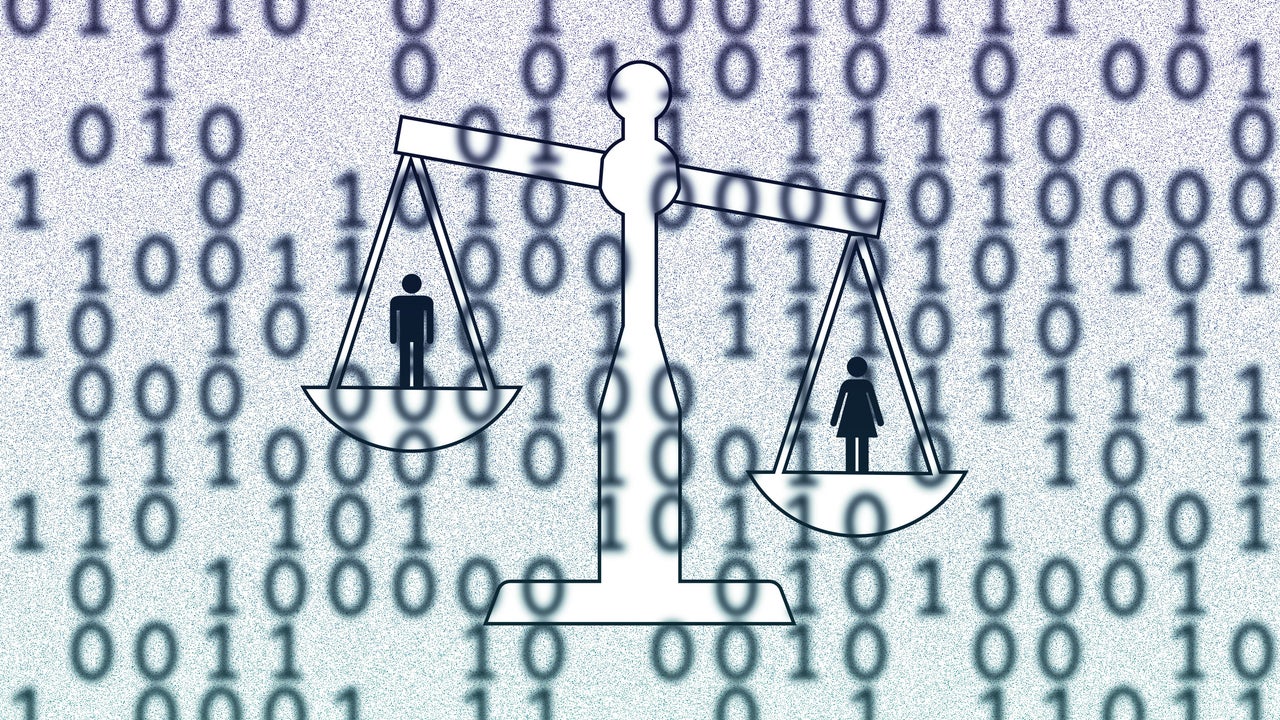
Men are more likely than women to leverage AI when launching or running a business, but female entrepreneurs who embrace the technology are more likely to see a productivity boost.
That’s according to a new study by online HR services provider Gusto, which found that 64% of men leveraged AI to launch a business in 2025, compared to 56% of women. Men were also more likely to turn to the technology to develop a business idea, build or test products and services, set up operations, and manage administrative or legal tasks.
An earlier study by Gusto also found that entrepreneurs who adopt AI outperform those who don’t. According to that 2025 study, 80% of small businesses using AI report productivity increases of 20% or more.
Even though female entrepreneurs adopted the technology at lower rates, those who did were more likely to see benefits. According to the latest Gusto study, 54% of women who use AI say the technology made it easier and cheaper to launch their business, compared to 47% of male entrepreneurs.
“Although there’s a discrepancy in the share of men and women starting businesses [with AI], the gap actually reverses itself when we look at who benefits from AI use,” says Gusto senior economist Nich Tremper. “More women than men said that once they were using AI, they saw efficiency gains—that it was easier or cheaper to start their business. So women are benefiting more, even though they’re less likely to use AI.”
Why female entrepreneurs have more success with AI
Though the data doesn’t pinpoint why women are using the technology less but benefiting from it more, Tremper suggests that the findings echo other studies that show higher rates of AI adoption among men more broadly.
“If folks aren’t using AI in their personal life or in the workplace, they’re likely not going to reach for that tool when they’re doing something as high-risk as starting a business,” he says. “Folks are reaching for the tools that they’re ready to use.”
The fact that fewer women express comfort with the technology overall could suggest that those who are using it are being more intentional than the average male user, Tremper says, noting, “If fewer people are using it, then the people who use it really believe in it. So they’re better at using it. I think that’s a plausible explanation. They’re more likely to be intentional users of the technology, and better at implementing it when they’re starting their business.”
How men and women view the same technology differently
Other research shows that men and women now use AI chatbots at equal rates. However, men tend to use the technology more regularly, are more likely to leverage it at work, and report that it led to greater productivity.
According to a recent study by the Pew Research Center, men initially took the lead on AI adoption, but women have since closed the gap. In 2024, 39% of men had used a chatbot compared to just 28% of women. But in the latest survey, half of both genders now say they have.
However, 27% of men say they interact with AI chatbots daily, compared to 20% of women. And 40% of men use AI at work, compared to 35% of women.
Men were also more likely to say that using AI improved their productivity and creativity: More than a third of male respondents say the tools have enabled them to be more productive, compared to a quarter of women, and 23% say it improved their creativity, compared to 19% of women.
“Men are more frequent users of chatbots than women. They’re more likely to use them for certain tasks—for example, at work—and they’re also a bit more confident in using them,” says Pew senior researcher Colleen McClain. “On the other hand, women are far more negative about the future of AI than men.”
Female respondents, for example, were twice as likely to say the technology will negatively impact them personally over the next 20 years. Furthermore, while 58% of men say the technology is advancing too quickly, that number jumps to 68% among women.
Could AI grow the wage gap among entrepreneurs?
The earnings gap between men and women tends to be smaller among those who are self-employed. But experts warn that AI has the potential to either even the playing field or grow the gulf in the years ahead.
According to a recent study conducted by international payments provider Remitly, female freelancers charge 19% less than men offering similar services globally, and about 17% less in the U.S.
“Clients have expectations that freelancers are using AI to do more with less, so this can impact how much work a client believes should be done in a day,” says Ankur Tiwari, vice president and general manager of Remitly Business. “Freelancers who have AI integrated into their workflow to reduce things like admin tasks are freeing up time to focus on more intensive, highly skilled work. So in that sense, AI could be widening an existing gender pay gap.”
Tiwari explains that AI is rapidly changing client expectations and freelancer capacity, and that those who don’t adapt are at risk of falling behind. If men utilize the technology at higher rates, as suggested by the Gusto and Pew studies, it could give them a competitive advantage and grow the earnings gap over time.
“It is also possible that AI will flatten the gender pay gap by providing a more level playing field for people to upskill and learn,” Tiwari says. “Upskilling will probably be the differentiator between whether the gap is going to continue to widen or whether it will close, because everybody’s expectation—at least of freelancers—is that they’re using AI.”