
Technology Reporter

 Meadow
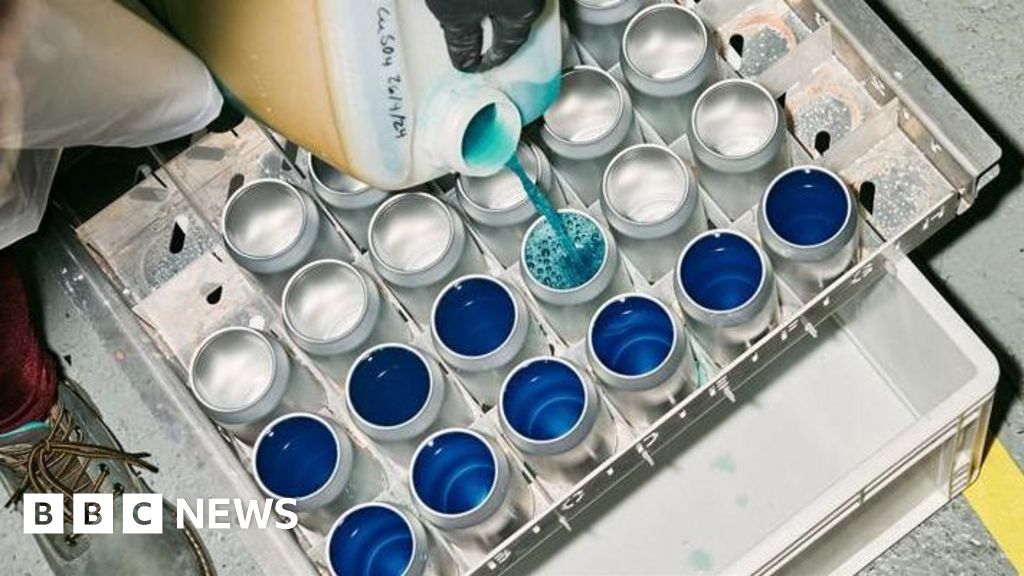
In front of me is a line-up of aluminium cans, but not a drink in sight.
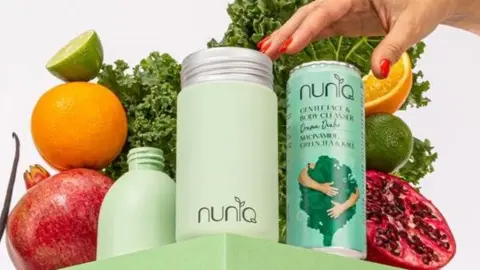
Instead, these cans have been designed to hold toiletries like shampoo, shower gel and hand wash, condiments like ketchup and household cleaning products.
I’m at the London research and development centre for Meadow, a start-up that has developed a new packaging system.
Their idea is to move products currently packaged in plastic to aluminium cans.
The founders believe it could be the next big step in reducing the amount of plastic packaging in the world, thanks to the high recycling rate of aluminium cans compared to plastic – 81% vs 52%, according to figures from the National Packaging Waste Database.
Meadow has taken the typical aluminium drink can and tweaked it, so that it will slot into a cannister, which can be equipped with all sorts of dispensing options.
So depending on the contents, you could have a pump, a squeeze top, spray nozzle, screw top lid or other options.
The can itself has a sealed top and crinkles at the edges to make it clear the contents aren’t to be drunk.
When the can is empty, it can be taken out for recycling, and replaced with a new one.
Aluminium can manufacturer Ball, which already offers recyclable aluminium packaging for shampoos and lotions, has invested in Meadow and will offer the system to the big personal care brands it works with.
“We realised the greenest container already exists – the aluminium can. So we thought, what do we need to do, to take it to new industries?” says Victor Ljungberg, Meadow’s co-founder and chief executive, who is based in Stockholm, Sweden.
 Meadow
Aluminium has strong recyclability credentials; it is considered to be infinitely recyclable, compared with plastic, which loses its quality after being recycled several times.
It is also lighter than glass, so the energy needed to transport aluminium cans is significantly less than glass bottles.
The wine industry has already trialled full size aluminium bottles, with organic brand Vinca rolling them out in March through Tesco. Aldi this year also launched an own-label wine in an aluminium bottle.
More industries are set to make the jump, as new EU packaging and waste regulations come into effect in January 2030, stating that all packaging should be at least 70% recyclable. By 2038, the minimum level of recyclability for packaging will jump to 80%.
 Getty Images
So what might hold back aluminium?
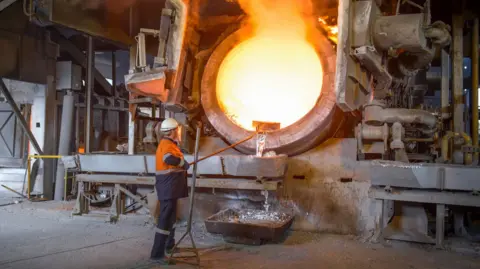
Producing new aluminium is energy intensive. It requires almost twice as much energy to produce as glass.
Calculating the environmental impact of aluminium versus glass is complicated and often the best choice depends on what is being shipped.
Price is definitely a factor, according to Mark Lansley, the owner and chief executive of Broadland Drinks, which supplied the aluminium-bottled wine to Aldi, and has another similar launch planned this year.
Aluminium, explains Mr Lansley, is a third lighter than glass, saving about 900 grams of CO2 emissions – but is four times more expensive.
He admits to absorbing the extra cost alongside Aldi in the name of innovation, but says that aluminium becoming more widely adopted relies on its cost coming down.
“We’ve got to get over this cost. We’ve got to sell the benefits and better spell out the lower carbon footprint that aluminium has,” says Mr Lansley.
Consumers will also need to adapt to different looking packaging.
Mr Lansley says the wine industry already tackled this challenge when it introduced screw tops, but when it comes to packaging, there are just some situations where only a glass wine bottle will do.
“Aluminium bottles are lighter and don’t shatter, so they are much better for a picnic, or by the pool. But then you’ve got tradition, and what folks are used to.
“You might be opening a bottle of wine to celebrate with friends, or as a reward and relaxation. A glass bottle of wine is embedded in that culture,” says Mr Lansley.
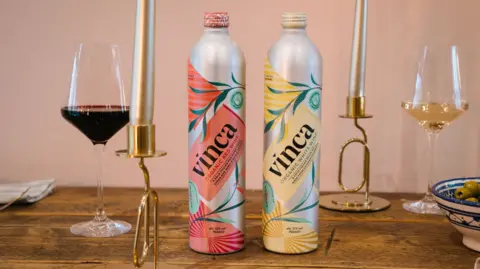 Vinca
VincaA lot of what consumers associate with their favourite brands has been intentionally driven by those brands, and changing that could take a lot of convincing too, notes Jamie Stone, packaging expert at global innovation consultancy PA Consulting.
“Big brands have spent decades and invested billions in educating customers on distinctive packaging – think of the iconic Heinz ketchup bottle, a bottle of Flash spray, or Kikkoman soy sauce,” Mr Stone, who is London-based, points out.
“Aluminium can’t easily make shaped packs. That’s a challenge when shape forms a key part of brand identity and consumer recognition. Think how many everyday products – like sauces, shampoo, washing up liquid, or moisturisers – rely on squeezable packaging. Aluminium, being rigid, removes that functionality.”
He adds: “In many categories, consumers want to see the product they’re buying, whether it’s the colour of a juice, the consistency of a lotion, or the thickness of a sauce. Aluminium’s opacity removes that visual connection.”
Mark Armstrong is a design director at creative agency Marks, which has designed packaging for Starbucks. He says one reason we haven’t seen aluminium packaging become the norm, is that manufacturers have long-established plastic packaging lines.
These would require significant modification or replacement to handle aluminium, at a high cost. And, most food-grade aluminium needs internal lacquer or polymer coatings, which must also meet recyclability guidelines, Mr Armstrong adds.
“Aluminium is arguably the champion of recyclable materials. But the options for dispensing and reseal-ability often rely on a secondary plastic material. This then compromises the recyclability for consumers if it requires them to separate out materials to be recycled, which greatly weakens the appeal,” says Mr Armstrong.
Innovations in plastic’s sustainability also can’t be ignored, from the development of ones that can be infinitely recycled, to those that are biodegradable.
For that reason, Jayne Paramor, sustainable packaging lead at sustainability consultancy Anthesis, argues that plastic may still end up as brands’ packaging of choice.
“Plastics remain highly suited to many packaging applications due to their durability, inertness and design flexibility,” says Ms Paramor.