
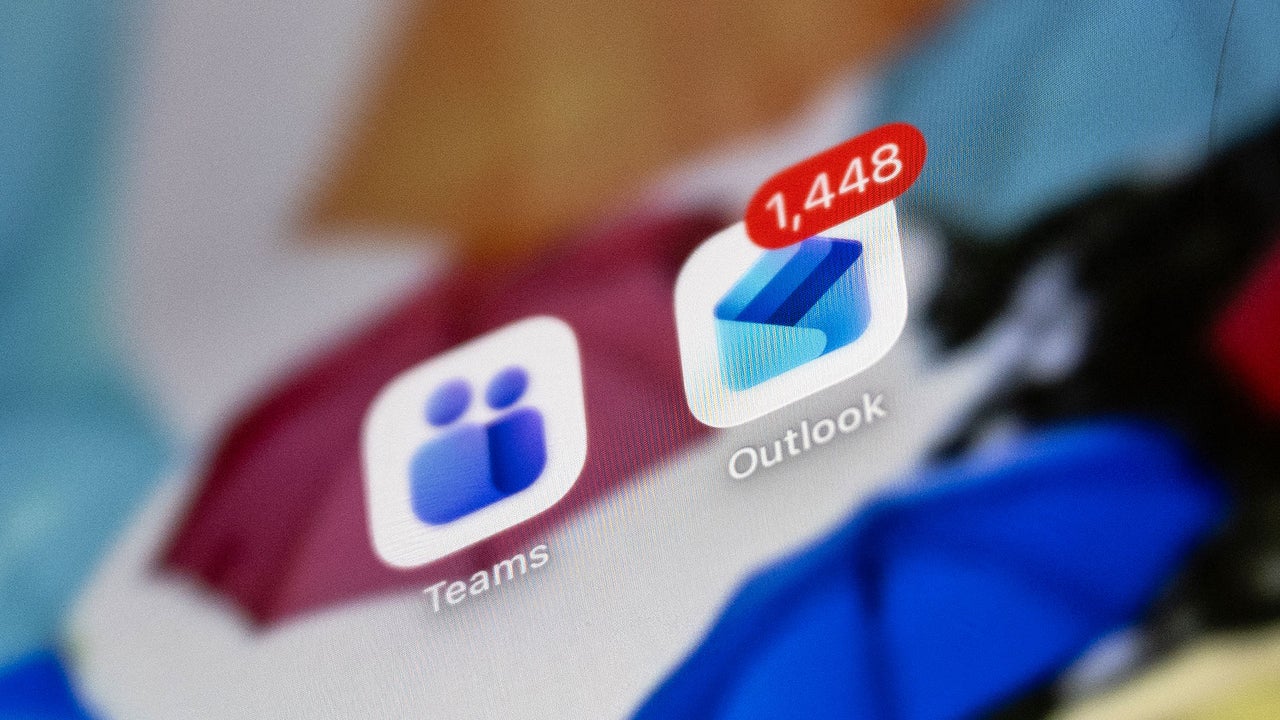
If you’ve checked Outlook email today only to find it unresponsive, you’re in good company.
Millions of people worldwide are waking up to find that, for a second day, Microsoft’s email platform and many of its other online services are still down. Here’s the latest on what you need to know about the global Microsoft outage.
What’s happened?
Shortly after noon ET yesterday, November 12, people around the world began reporting that they could not access the Outlook email service, as well as some other Microsoft services that interact with Exchange Online, like Teams.
For the first few hours, those on social media joked that this was a nice break from work. After all, Outlook is one of the largest business email platforms in the world, and when it goes down, a large part of an employee’s workflow goes down with it.
But as the hours dragged on with no Outlook access restored, the outage started becoming a major issue worldwide—and not just for businesses. Any entity that uses Outlook services, including government agencies, hospitals, emergency services, and schools, was also being impacted.
Fast forward to this morning, and Microsoft has restored access to some of its services (like Teams), but the Outlook outage is still ongoing.
Such a long service interruption is a rare for a platform as critical for communications and as large as Outlook—especially one run by a nearly $4 trillion company with nearly unlimited technical resources at its disposal.
What caused the outage?
The short answer is there isn’t a definitive one yet.
In a post on X yesterday, Microsoft’s Microsoft 365 Status account stated that “We’ve determined a portion of infrastructure is experiencing elevated load across multiple regions, which is likely contributing to the connectivity errors.”
However, that’s not a definitive explanation for the problem. Other reports point to a potential configuration change as the source of the issues. Still, that is also unverified.
In a follow-up post, Microsoft 365 Status stated that the company’s “investigation indicates the failed health checks may originate from a specific component that’s responsible for processing server health.”
Microsoft’s Service Health Status page has a lengthy entry about the outage, which it calls a “service degradation.” It confirms that multiple Microsoft 365 services “that interact with Exchange Online and email services are impacted.”
It says the current status of the outage is that “Traffic is being gradually restored” and “improvements in key customer scenarios, including mailbox access and delayed email processing” are being made.
However, the notice cautions, “some users may continue to experience intermittent issues.”
One potential cause of the outage that Microsoft has pushed back on is that the outage is being caused by some type of cyberattack.
“At this time, we have no evidence of malicious activity associated with this incident,” the company’s status page states
Fast Company has reached out to Microsoft for comment.
Microsoft’s updates don’t reveal much
During any serious outage like this, it’s important that the company communicates regularly with the public so businesses and other entities that rely on its services have some idea about what is going on.
Microsoft has done such regular communication, mainly through its Microsoft 365 Status account on X.
However, many have turned to social media to criticize that flood of updates, which they find so vague and hard to interpret that they’re nearly useless.
One Reddit thread speculates that the vague nature of the updates means Microsoft may still not have a good idea of the exact cause of the problem.
“Translation: We ain’t got the first clue WTF is going on but it doesn’t appear to be anything we have done (on purpose) and we don’t know when it will be fixed,” mocked Reddit user simAlity.
The criticisms were taking place on X too, where user @esrtweet wrote in response to one Microsoft 365 Status update, “Are you fucking kidding me? Did you just say, right out in front of Goddess and everybody, that it is unpredictable when your cloud servers will stop collapsing under load? I think you did.”
Are the layoffs and buyouts connected to the outage?
Microsoft isn’t only being criticized for how it’s handled and communicated the outage. It’s also being criticized for the business decisions that preceded the outage.
Specifically, people are dinging the company for being so willing to let go of human staff over the past several years in the midst of an AI transformation.
In July, Microsoft let go of around 4,800 employees. And just weeks ago, the company began offering buyouts to 60,000 workers—more than 25% of its workforce—to help fund its massive AI infrastructure plans.
“I have no doubt there’s a 60 year old engineer out there who took Microsoft’s buyout offer from last month that did a bunch of undocumented work his bosses didn’t know about to keep things running and could fix this in 2 minutes, but alas Microsoft needs more $$$$ for AI capex,” criticized X user @OldManFay12.
“Microsoft has laid off thousands of people while pouring billions into AI. Then Outlook goes down around the world, and for 10+ hours everyone is waiting on human engineers to bring it back,” noted X user @IAmSoleyman, adding, “Funny how companies keep talking about replacing people, right up until something breaks and they need people to fix it.”
It is currently unknown whether recent departures at the company contributed to the outage or to the time it is taking to resolve it.
How has MSFT stock reacted?
Microsoft’s stock price (Nasdaq: MSFT) is down in premarket trading as of the time of this writing. Shares are currently trading at around $515.06 per share, or down roughly 1.5% from yesterday’s closing price of $523.
However, while this decline may be in reaction to the outage issues, it should be noted that fluctuations of a few percent in either direction are fairly normal for a big tech stock, especially during the last few weeks, when the midterm elections and the Jensen Huang Nvidia scandal have sent tech stocks on a roller-coaster ride.