
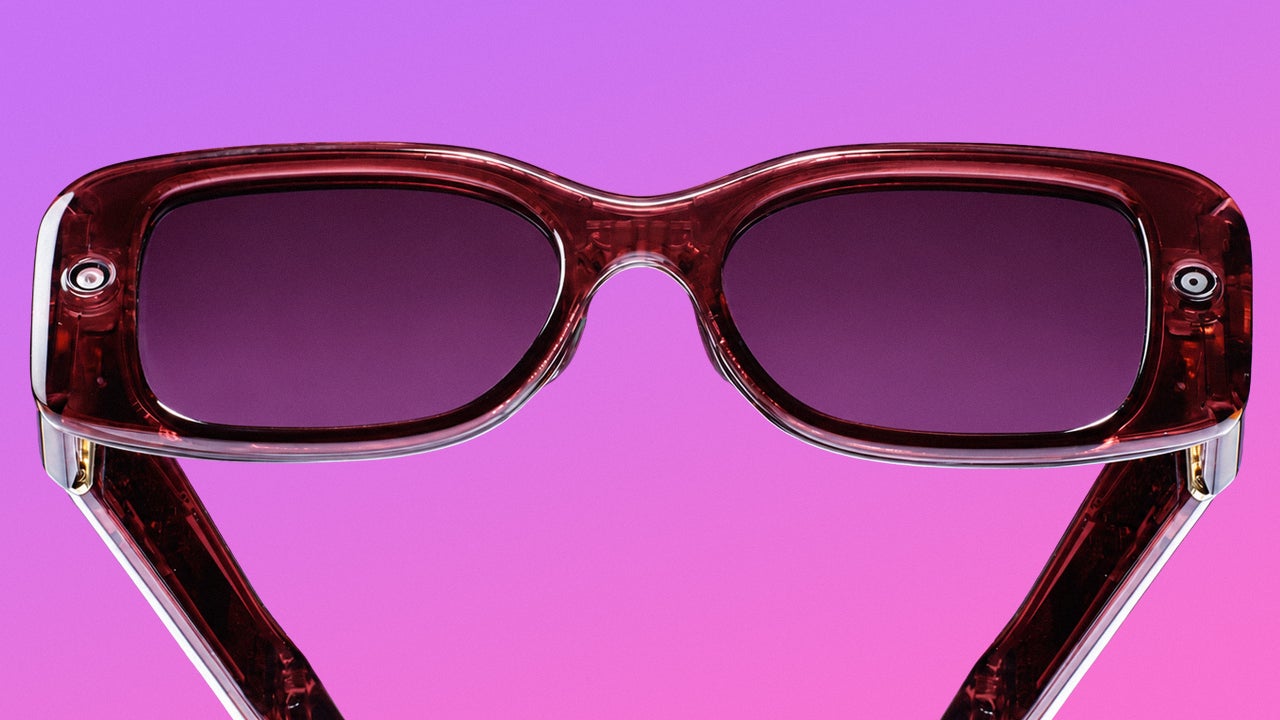
AI-powered smart glasses promise to keep your phone in your pocket, but their usefulness depends on how much work they can take off your day. Meta ties its glasses to its own AI services, while Google is courting eyewear makers with Gemini. As an AI assistant learns a wearer’s preferences, it can become more useful and harder to replace.
If that knowledge cannot move to a competing brand, choosing better glasses could mean starting over with an assistant that knows less about you.
Ash Saulsbury spent seven years as a systems architect at Apple before joining Meta, where he served as product lead for wearable reality products from 2017 to 2019 and helped incubate its smart-glasses technology. Although he left before Meta’s Ray-Ban products reached consumers, he describes the early project as an extension of the company’s advertising business; making content easier to create would encourage engagement and generate more advertising opportunities.
He later became vice president of architecture for Microsoft’s mixed-reality products, where his team worked with Qualcomm to develop chips capable of operating within eyewear’s power and thermal constraints.
His startup, Awear AI, wants consumers to be able to switch eyewear brands without losing the information their AI assistants have accumulated about them. The company emerged from stealth at Qualcomm’s Snapdragon Summit on September 23, introducing Agentic System One (AS-One), a software platform that eyewear makers can integrate into their products, beginning with glasses powered by Qualcomm’s Snapdragon AR1+ processor.
“You’ll see many companies go to enormous lengths to make it extremely difficult for their competitors to access your data,” Saulsbury tells Fast Company. “We make it extremely difficult for anyone, including ourselves, to access your data.” Rather than profiting from access to consumer information, he says Awear wants to make money by providing services people find valuable.
His cofounders include Lila Tretikov, Microsoft’s former deputy chief technology officer and former CEO of the Wikimedia Foundation, and Jan Eißfeldt, the foundation’s former global head of trust and safety. Together, they oversee Awear’s privacy and trust architecture. Its COO, Jennifer Van Beek, brings experience in luxury branding through her agency work with LVMH and other prestige houses.
MAKING PERSONAL AI WORK ACROSS DEVICES
Awear develops the technology eyewear companies need to bring personal AI assistants to their products. Its partners would design and sell the glasses, while Awear provides the underlying software, connected services, and adaptable hardware designs.
AS-One includes an encrypted communications network where AI agents can interact with people and one another. A separate memory vault is designed to preserve information across personal devices and cloud storage, although Saulsbury says photographs can remain on the devices where they originated.
“The agents you use should work for you, not for somebody else. Even if you decide to leave, you can take all that information with you and move it somewhere else,” he says. “You will always have visibility into what the agentic system knows about you.”
For example, a wearer could ask their glasses to arrange dinner. AI agents would use their preferences from previous interactions to make a reservation and send the details to their phone. Saulsbury envisions that interaction eventually extending to a car that could take the wearer to the restaurant. He says the booking capability already works, but provided no details about the vehicle integration such a handoff would require.
The platform also combines its own AI models with those from external providers, which Saulsbury declined to identify. He says Awear anonymizes those transactions, while its ability to switch between models could help eyewear brands operate across different countries.
PERSONAL AI NEEDS MORE THAN PRIVACY
Saulsbury says consequential actions, such as purchases, would require explicit user confirmation, with safeguards that do not rely entirely on a language model’s judgment.
“We don’t allow the AI agent to make a purchase without your direct authorization,” he says. “We want to make sure that even if you purchase something and later change your mind, or perhaps forget that you made the purchase in the first place, those decisions remain reversible and you have a way to recover from them.”
For Tretikov, the cofounder, protecting users also means ensuring those safeguards survive changes in ownership or management. She argues that users should retain control of their encryption keys, preventing even a future owner of Awear from accessing or exploiting the personal histories its agents have accumulated.
She says encrypted channels would protect information moving between devices, but emphasizes that portability does not mean every agent automatically gains access to everything another knows.
“Think of it much like the relationship between your doctor and your insurance agent,” she explains. “They have different responsibilities, and that does not mean they should automatically share everything they know about you.”
Apple’s reported plans to introduce privacy-focused smart glasses in 2027 add another dimension to Awear’s challenge. Saulsbury expects Apple to deliver a polished product, while Tretikov acknowledges the strength of its privacy protections. Her concern is that privacy within a tightly controlled ecosystem still leaves consumers dependent on the company operating it.
To address that limitation, she plans to make Awear’s memory-transfer format and data-sharing rules openly available. She draws a parallel with her experience leading the Wikimedia Foundation.
“One of the most important lessons from that experience is that Wikipedia is not trusted simply because people trust the Foundation. It is trusted because the content is structurally protected, because its licensing allows anyone to take all of that content and leave,” she says. “That is the same standard I want us to apply to personal memory.”
Asked whether opening parts of the platform would make it easier for competitors to copy, she responds: “Easier to copy? Partly. Good. If competitors adopt our export format, users win and the standard spreads. We win. Trust is the standard.”
For now, however, Awear has not identified a published technical specification or a competing service capable of accepting and using a person’s complete AI memory. Encryption could protect that information if the company is acquired, but ensuring continuity if Awear shut down would require more than secure storage or an export option.
CAN SMART GLASSES PROTECT BYSTANDER PRIVACY?
Eißfeldt, the other cofounder, says Awear’s “triple-lock” approach protects personal information in an encrypted vault, with users controlling the keys and deciding who can access their data.
Those protections would be built into Awear’s software, beyond the control of eyewear manufacturers using its platform.
“The manufacturer locks sit in the runtime we ship, below the brand’s layer. A brand configures the experience above it and doesn’t get a switch to turn off the protections,” he says. Devices that bypass the safeguards would lose their “Awear Certified” designation and access to the network. He says the company also intends to publish independent audit results.
That gives Awear a way to enforce its privacy commitments, while also placing the startup in the position of gatekeeper for the very ecosystem it wants to offer as an alternative to Big Tech.
The system also prohibits identifying people who are not public figures, Eißfeldt says, while recordings require explicit consent.
But what about people who aren’t wearing the glasses? Asked how the devices would avoid capturing a bystander’s private conversation, Eißfeldt points to the conditions required to activate the assistant, including voice recognition and a wake-word system.
“The AS-One-operated microphone on the eyewear on the user’s head would need to be very close to your example’s private conversation, and the voices would need to be ones the system recognizes and can recognize valid consent from,” he says. “There’s also a keyword spotter, and until you say your assistant’s name, it’s deaf.”
The glasses would also feature indicator lights facing both inward and outward, alerting the wearer and nearby people when the assistant is listening. Whether those safeguards can reliably prevent unwanted recordings remains to be demonstrated.
THE FIGHT FOR CONTROL OF AI EYEWEAR
Van Beek, Awear’s COO, sees an AI assistant’s behavior as an extension of a brand’s identity, something luxury eyewear makers may be reluctant to surrender to a technology company.
“Clients of these brands can see a product or campaign and recognize the brand in an instant, without needing to see their logo,” she says. “We’re giving brands the agency to ensure they don’t just exist on the outside of the product but are carried through on the inside as well.”
Her approach begins with the product a brand wants to create, rather than the technology it needs to accommodate.
But Awear is entering a market where larger competitors already have significant advantages. According to Counterpoint Research, Meta accounted for approximately 84% of global smart-glasses shipments in the first half of 2026. Google, meanwhile, offers eyewear partners access to Gemini and financial support, the latter including a reported investment in Gentle Monster, a Korea-based eyewear brand.
“We’re not asking them for their clients; we’re asking them to help shape their process,” Van Beek says, so brands can bring their own identity to the technology.
Competition could also come from companies closer to Awear’s technology stack. Qualcomm’s Snapdragon START offers software designed to support multiple AI models and shared memory, while Liquid AI is developing ways for agents to use personal context with user permission.
Saulsbury positions Awear as a bridge between the chipmaker’s technical expertise and the fashion industry’s design priorities. But Qualcomm’s expanding software ambitions could eventually narrow the opportunity Awear hopes to capture.
The startup has not disclosed its pricing or funding details, and the identities of its eyewear partners and their product release dates remain confidential.
If Awear succeeds, choosing a new pair of glasses could become a decision about the glasses themselves. Consumers could weigh comfort and capabilities without calculating how much their assistant would forget. Getting there requires other companies to support that continuity, even when it helps a customer buy from a rival.
Saulsbury has spent years helping build technology inside powerful ecosystems. Now his company’s prospects depend on making the knowledge accumulated inside one useful beyond its boundaries.