
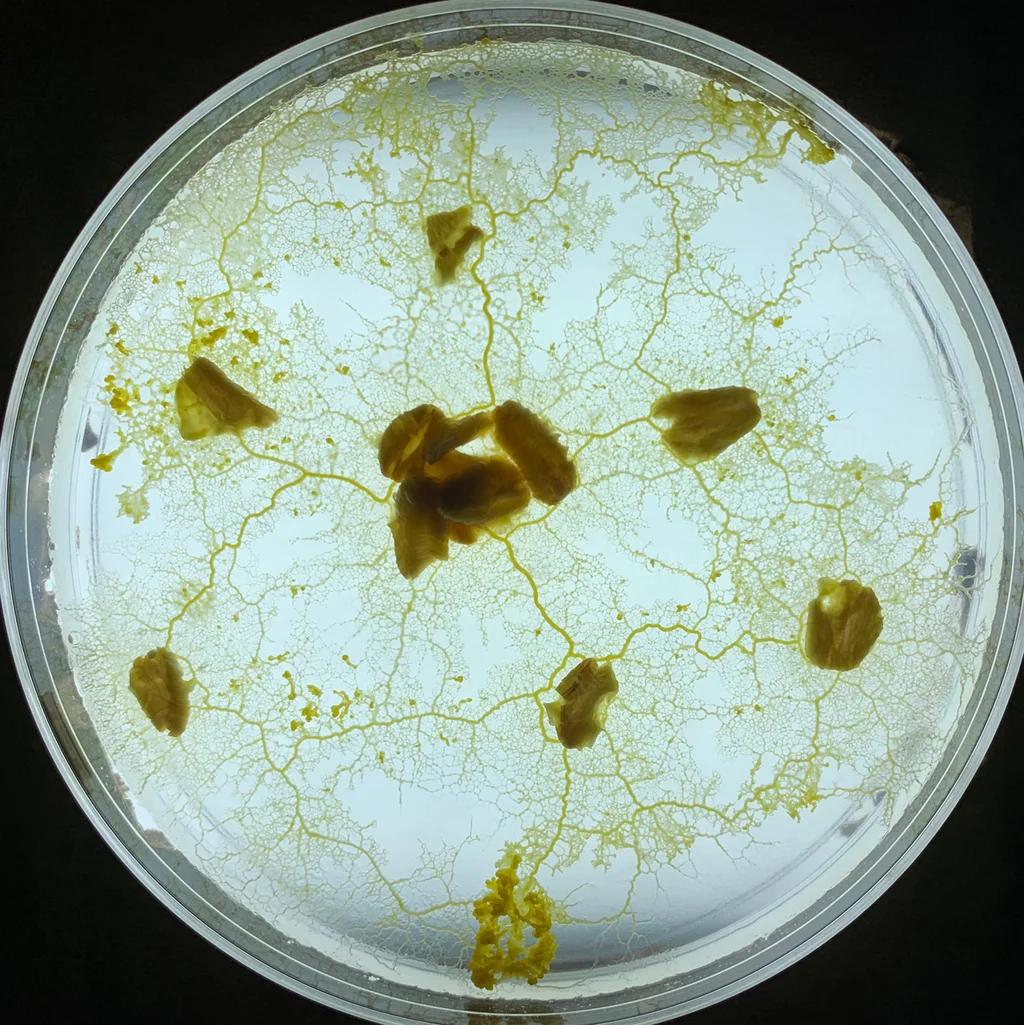
In a classic experiment more than a decade ago, researchers in Japan gave a slime mold—a single-celled organism known for forming efficient networks—a “map” of the cities around Tokyo. They represented each municipality with an oat flake, the organism’s favorite food, and watched as it created a network that looked eerily similar to the Japanese rail system.
The takeaway was clear: Slime mold is surprisingly good at creating complex and efficient paths. A startup called Mireta Urban Dynamics is now using the same basic approach in software designed for urban planners.
“Very early on in my architecture degree, I was fascinated with strategies that nature and biology evolved for solving challenges,” says Mireta cofounder Raphael Kay. Humans have been designing transportation networks for thousands of years, but some organisms “have been solving analogous challenges for hundreds of millions, if not billions, of years,” he says.
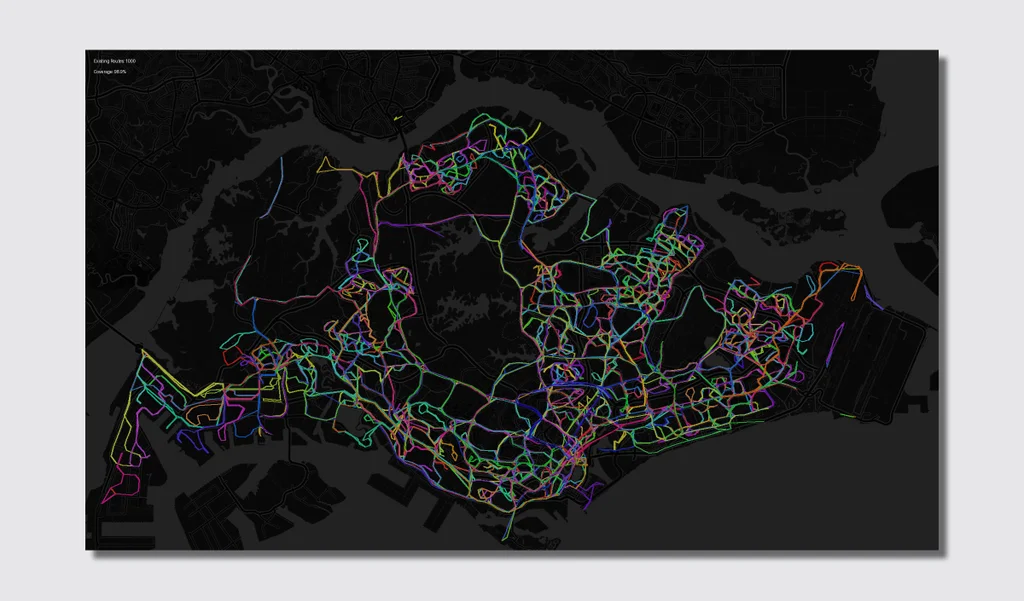
Instead of training AI on the slime mold, the software copies the basic way the organism grows. “This is already a form of intelligence that has been evolved over a large number of evolutionary cycles,” Kay says.
Then the software adds in multiple other layers. For example, a city planner looking at a subway network could add details about the city’s population distribution—so the tool prioritizes certain areas—and a flood map that helps it avoid other areas. (AI can help build these other features, though the core of the tool is based on biological intelligence, not AI.)
The tool can be used either to design transportation networks from scratch or to suggest small changes to existing networks. Mireta has begun working with design firms on a handful of projects, from a road network on a college campus to a new metro network. So far, those designs are still in the proposal stage with clients, though Kay expects them to move forward.
There’s already evidence that the tool works. In the pilot projects, the company says that the tool has created networks that are 20% to 30% more resilient for the same unit cost as alternatives. Resilience, in this case, means that if a disaster shuts down some part of a transportation network, people still have other ways to get around. That’s a challenge that slime molds know how to address.
“There’s this beautiful naturally evolved trade-off between cost and resiliency that I think biology has had to solve because there’s a huge penalty for dying,” Kay says. “They’ve evolved strategies for strategic redundancy.”
As climate change increases disaster risk, from wildfires to flooding, planners are looking for ways to build more resilience into design.
“It’s only recently that the winds have shifted, where municipalities are starting to really pay attention to and pay for long-term resiliency solutions,” Kay says. “What’s emerged is that there’s a lack of tooling and quantitative approaches to meet the demand of resiliency planning and network design. What’s really fascinating is that these organisms have been solving this challenge for so long.”