
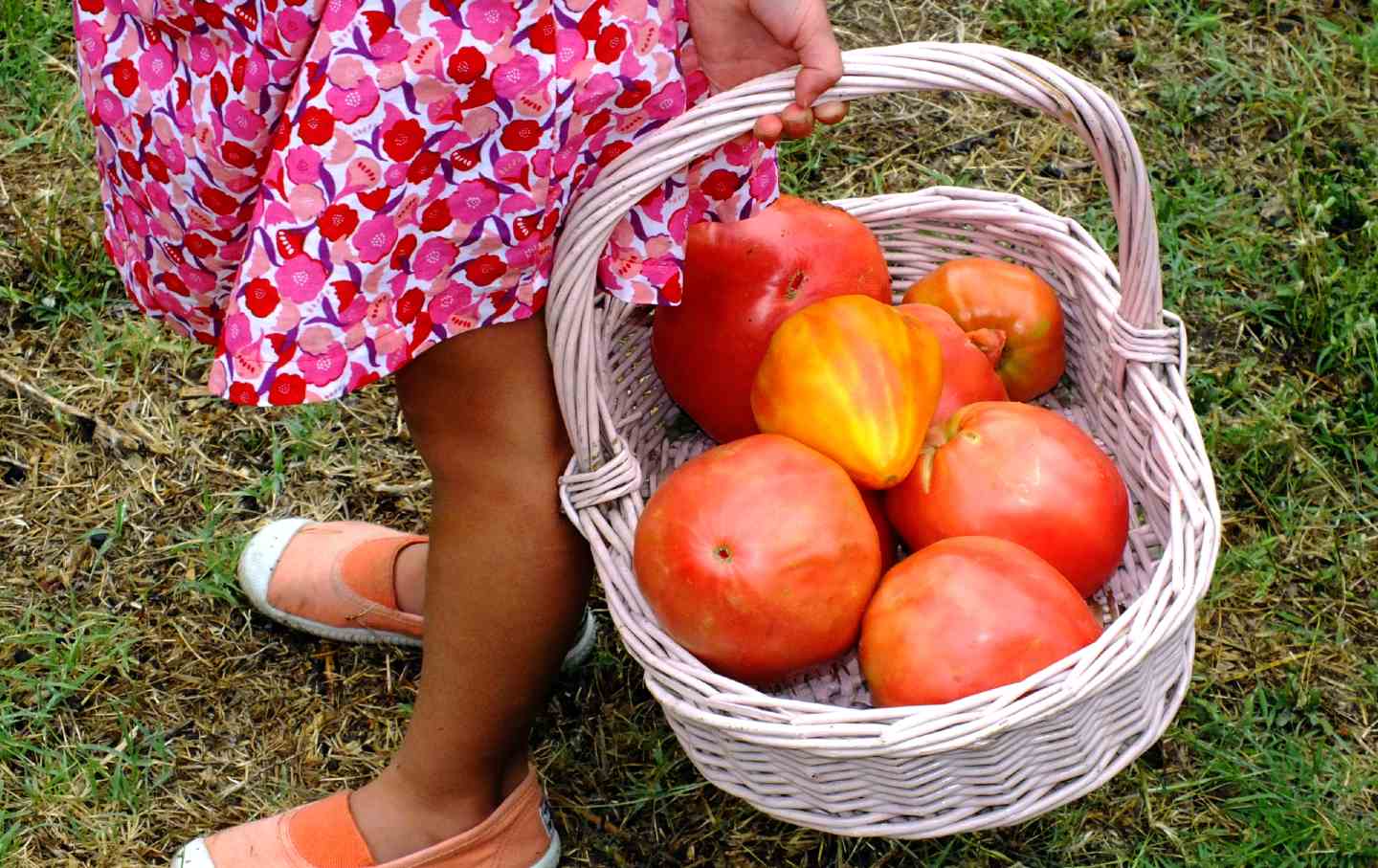
SNAP-Ed helped children in food-insecure Los Angeles neighborhoods grow fresh produce. Trump’s Big Beautiful Bill cuts have ended the program that made those gardens possible.
SNAP-Ed funded programs that helped children living in LA food deserts grow fresh produce. Trump’s Big Beautiful Bill cuts have ended the program that made those gardens possible.
(BSIP / Universal Images Group via Getty Images)
The children were clear from the beginning that they did not like tomatoes. They were excited to be outside, happy enough to kneel in the dirt and plant them—but few had any intention of actually eating one. They were students at a Los Angeles elementary school and had spent their lives in neighborhoods where fresh produce was scarce, and canned fruits and vegetables were not. Still, the children knelt down in the garden and planted the tomatoes anyway.
One of the students, puzzled by the curious act, asked, “Why are we even growing these?”
Despite protestations, Anton van Schaik, 25, kept at it anyway. Van Schaik, an urban agriculture assistant with the CalFresh Healthy Living program at Catholic Charities of Los Angeles, had driven from his apartment in Los Angeles that morning to teach those children how to grow fresh vegetables. Van Schaik had learned, over three years of this work across a sprawling geography of the most under-resourced LA neighborhoods, that the students’ resistance was part of what he had signed up for. The purpose of the program was to soften skepticism about nutritional foods held by students living in under-resourced neighborhoods from Highland Park to the food deserts of South Central, Inglewood, and West Athens.
South LA has long had one of the poorest food-resource environments in the county. A report by the nonprofit Community Health Councils found that the area’s roughly 60 full-service grocery stores each served an average of more than 22,000 residents—twice the load carried by grocery stores in wealthier West LA—and that, according to the LA County Department of Public Health, just 12.7 percent of adults in South LA consumed the recommended daily amount of fruits and vegetables, compared to 22.7 percent in West LA and 14.7 percent countywide. The neighborhoods where van Schaik worked are not places where children grow up eating tomatoes from a vine.
The students were doubtful, and for good reason. Van Schaik, hoping to change that, knelt in the dirt with them.
Weeks passed, the tomatoes grew, and when it came time to try them, many of the kids asked for seconds. “To watch the kids confront not only their own prejudices against fruits and vegetables,” van Schaik told me, “but to be able to facilitate them interacting with produce that they personally grew for the first time ever in their lives—that was a real privilege.”
Current Issue

That moment, the garden where it happened, and the program that made both possible are now over. This week, Catholic Charities of Los Angeles formally ended its urban gardening and nutrition education program. The garden project began in 2018 with a single school site and grew to operate across school sites, food banks, food pantries, community centers, and a senior center throughout Los Angeles County and Santa Barbara County.
The staff, once as many as 13 workers, is now zero.
Soon, weeds will overtake the agricultural classrooms and the students, when they return in the fall, will find none of the workers or community members there to teach, help them tend the plants, or push them to try tomatoes and encourage them to pick enough for seconds.
The now-halted program ran through CalFresh Healthy Living, the California branch of SNAP-Ed, the education arm of the Supplemental Nutrition Assistance Program. In 2025, on Independence Day, a federal bill signed by President Trump ended funding for SNAP-Ed programs across the country. As a result, CalFresh Healthy Living ended on June 30, 2026. In previous years, California received about $132 million in federal funding annually to support nutrition education activities.
Now that money and the programs it funded are gone.
With a budget of $536 million in fiscal year 2025, SNAP-Ed’s elimination is expected to cut about $5 billion from the federal budget through 2034. It was easy to overlook at first, swallowed by the scale of what surrounded it: The One Big Beautiful Bill enacts the largest cut to federal food assistance in history. The Congressional Budget Office estimated that the bill’s nutrition provisions would reduce federal spending by almost $187 billion over 10 years.
The cuts will have compounding consequences.
In 2024, CalFresh Healthy Living reached 174,380 people with education materials and distributed 1.68 million pounds of produce countywide. Becky Schlikerman Sernik, a spokesperson for the LA County Department of Public Health, told LA Public Press that the cuts risk reversing years of progress on diet-related chronic disease in a county where food insecurity is already widespread, and that CalFresh Healthy Living programs “play a key role in preventing diet-related chronic diseases such as obesity, diabetes and heart disease, especially among communities of color and lower-income families.” Based on the governor’s projection that 14 percent of California’s CalFresh recipients are at risk, an LA Public Press analysis suggests that approximately 210,000 LA County residents could lose benefits.
At El Santo Niño, a community center in Los Angeles, van Schaik and his colleagues had built something that was less like a class and more like a community group. There was already a walking club, part of the program’s physical education component. So they built on top of it: nutrition classes and gardening sessions, all running concurrently. One nutrition class, for example, focused on cutting processed sugars from one’s diet. Participants went out to the garden and planted corn.
A couple of months later, one of the participants harvested the produce and made a Mexican street corn-inspired meal.
“Creating a culturally sensitive and inclusive space while also teaching important nutrition and gardening information,” van Schaik said, “really allowed the space to feel more unique, important, and genuinely relevant.” The program, at its best, met participants where they were—across ages, races, incomes, and immigration statuses, in their food traditions, in their languages, in their lives—and built from there.
Van Schaik described precisely what research says about what makes nutrition education effective, and what cannot be replicated overnight by volunteers or hastily reassembled after defunding. Cindy Leung, an associate professor of public health nutrition at Harvard T.H. Chan School of Public Health, explained in a Q&A published by the school that SNAP-Ed “basically paid for people…to hold nutrition education workshops, develop nutrition education materials and teach participants how to cook and shop for healthy meals so that participants could better adhere to a healthier diet.”
Popular
“swipe left below to view more authors”Swipe →
The people these programs served are now navigating a safety net being dismantled from multiple directions at once. Between the bill’s July 2025 enactment and March 2026, SNAP participation dropped by more than 4 million people, or 10 percent, nationwide; in the 17 states with available data, the number of children receiving SNAP has fallen by about 1 million. The declines are not being driven by reduced need—unemployment has remained flat—but by administrative barriers and a system that the Food Research and Action Center describes as deliberately designed to make maintaining eligibility harder.
Researchers worry that the SNAP cuts will prevent millions of kids from accessing a steady diet of nutritious food. A 2025 study published in JAMA Cardiology by Emily Lam and colleagues, following 1,071 U.S. children into adulthood across 20 cities, found that food insecurity in early childhood predicted worse cardiovascular health in young adulthood—but that participation in SNAP mitigated those risks. Nearly one in five households with children were food insecure in 2024, before the largest cuts in the program’s history had taken effect. The USDA has since canceled the annual survey that would track what happens next, eliminating the data that would measure whether hunger is rising.
The communities Catholic Charities served in Los Angeles were already among the most vulnerable. Some of the children van Schaik worked with were undocumented, or the children of undocumented parents, a population facing additional exposure under the new law. The bill’s restrictions on SNAP eligibility for lawfully present immigrants took effect on enactment—California removed CalFresh eligibility for asylees, refugees, parolees, and other humanitarian-status immigrants on April 1, costing 10,860 LA County residents their benefits—and its Medicaid restrictions take effect on October 1, 2026. The community centers that hosted the CalFresh Healthy Living program will also lose grant eligibility they held precisely because they could demonstrate an active, federally backed nutrition initiative on their premises.
Van Schaik left on June 12, a few weeks before the official end, as school sites closed for summer and the remaining staff turned their attention entirely to end operations, training on-site volunteers to maintain the gardens, identifying community champions who might keep the walking clubs and nutrition conversations alive without a funded educator to lead them. “The goal of the program wasn’t to be temporary,” he told me. It was designed to embed itself in communities over time and to become part of the infrastructure of neighborhoods that have historically had the least access to fresh food and green space.
When the children do finally return, it is possible that the tomatoes will still be growing, right where they had planted the seeds. But the person who knelt in the dirt with them, who coaxed them into eating a fruit they swore they hated, won’t be. Van Schaik had cared about them, and he had helped them grow enough for seconds, despite all of the skepticism that had kept the children from ever trying tomatoes in the first place.
More from The Nation

Trump’s attacks on Somali kindergarteners, immigrants, and the rule of law form a coherent authoritarian project. But voters and the courts are pushing back.
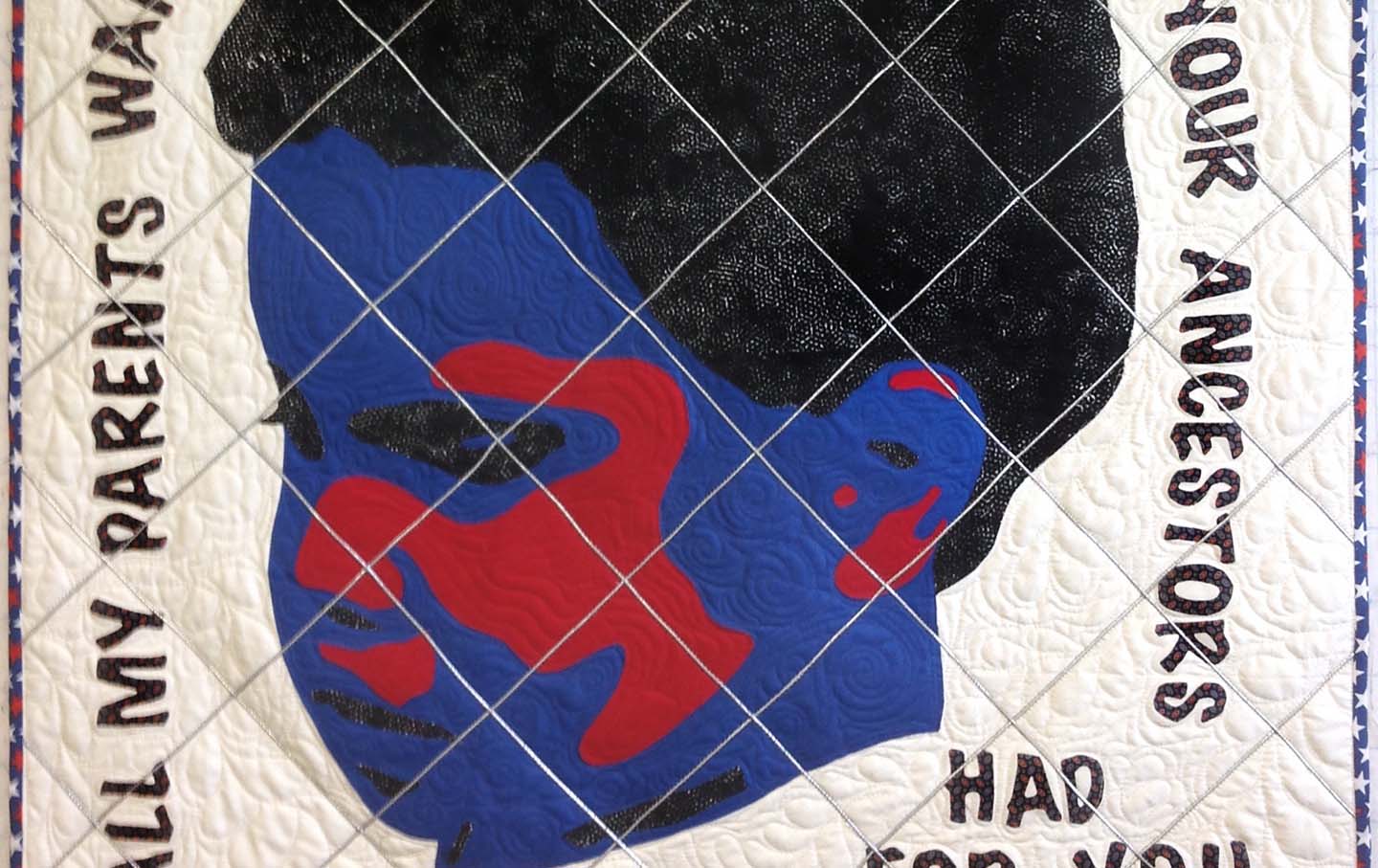
ICE enforcement actions continue to separate families, disrupting lives and communities across the country.

The broad swath of centrist Democrats and conservatives who have hoped to wound Mamdani enough to sap him of political capital are still figuring out how to land real blows.