QUESTION: Many significant families and individuals gained their wealth through unethical means, e.g., Gates, Rothschilds/Rockefellers…
R

ANSWER: While I am certainly no fan of Bill Gates, starting a company that then makes him a billionaire because of valuations, does not qualify as unethical. Gates’ tactics and seeking to be a monopoly is unethical in my book, but that did not make him a billionaire. His mentor, I believe, was Rockefeller in both creating a monopoly as well as deeply concerned about over-population indoctrinated by his his.
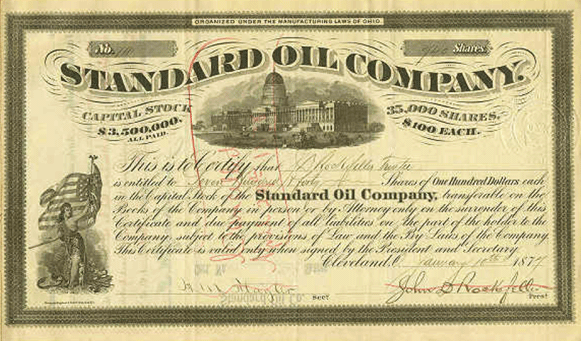
The pursuit of a monopoly was primarily the endeavor of John D. Rockefeller, the founder of the family fortune, rather than the entire Rockefeller family over generations. His methods were effective, but his ambition also led to a famous legal dismantling and a subsequent pivot towards philanthropy.
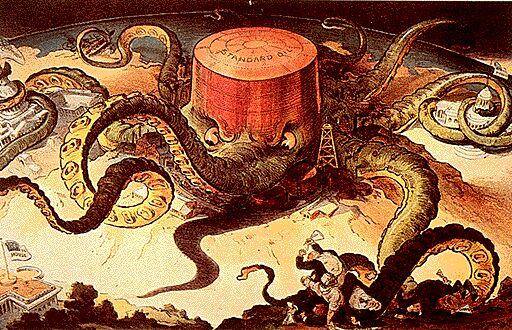
John D. Rockefeller’s quest for market dominance was a systematic and aggressive campaign to control the American oil industry. His company, Standard Oil, used aggressive tactics to buy out competitors, which was adopted by Bill Gates. In what became known as the “Cleveland Massacre” of 1872, he purchased 22 of his 26 competitors in Cleveland within a few months. By the 1880s, Standard Oil controlled about 90% of U.S. refineries and pipelines.
Rockefeller didn’t just focus on refining. He sought to control every aspect of the oil business, from production to transportation to retail sales. This vertical integration, combined with his market power, gave him an immense advantage. The company used various methods to crush competition, including securing preferential (and often secret) transportation rates from railroads, engaging in predatory pricing, and using its sheer size to pressure suppliers and distributors.
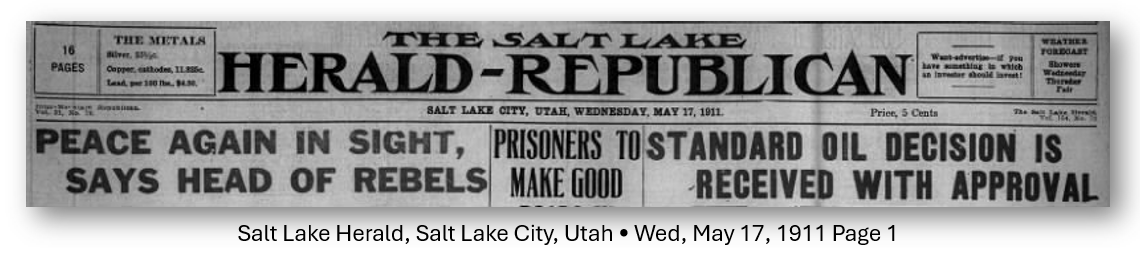
The overwhelming power of Standard Oil triggered a strong public and political backlash, ultimately leading to its breakup. The public outcry against monopolies like Standard Oil led to the creation of the Sherman Antitrust Act in 1890. In 1911, the U.S. Supreme Court found Standard Oil in violation of these laws and ordered its dissolution into 34 independent companies.
While it appeared to be a defeat, the breakup actually increased Rockefeller’s wealth. He and other shareholders retained proportional ownership in all the newly formed companies, such as those that eventually became Exxon, Mobil, and Chevron. As these independent entities began to trade on the stock market, their combined value grew, making Rockefeller even richer.
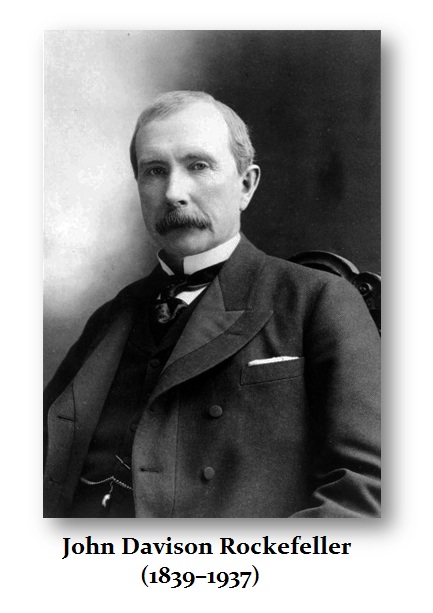
The Shift from Monopoly to Philanthropy
After establishing his immense fortune, John D. Rockefeller and his descendants largely shifted their focus away from building monopolies and towards large-scale philanthropy, but to push their personal beliefs.
Starting in the 1890s, before the 1911 breakup by the Supreme Court. Rockefeller began to step back from business and dedicate himself to giving away his wealth. His goal was to create a legacy of social improvement to COUNTER his ruthless business reputation. I believe that Gates did the same. While there is no explicit confirmation that Bill Gates has hired a firm solely for “reputation management,” there is strong evidence that the public perception of Gates is carefully managed and is a central objective of his communications strategy. His and his foundation’s activities consistently involve professional communication and PR tactics, from major philanthropic campaigns to crisis response and direct public engagement.The Rockefeller family’s philanthropic efforts established some of the most influential institutions in the U.S. and beyond. These include the University of Chicago, the Rockefeller Foundation, the Rockefeller University, and the Museum of Modern Art (MoMA) in New York. While the later generations, particularly David Rockefeller, built a financial empire through banking, the family’s reputation in the 20th century was more defined by their philanthropy and influence in finance, politics, and culture than by creating an industrial monopoly.
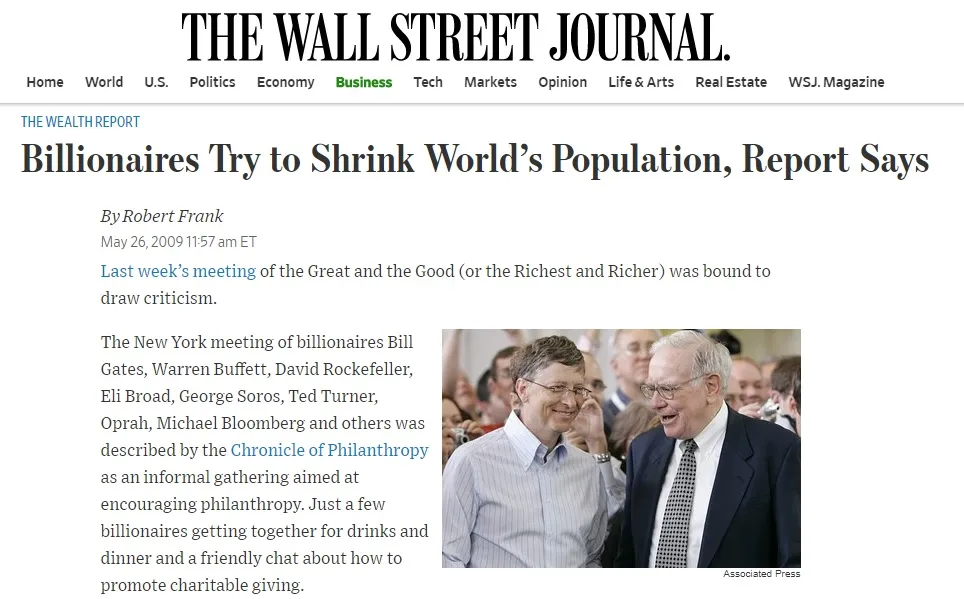
The claim that the Rockefeller Foundation and Bill Gates are collaborating on a hidden agenda to reduce the global population through vaccines is a well-known conspiracy theory. However, even the press has reported on this agenda. They call it a conspiracy theory to discredit the accusation without actually commenting on it or offerring proof that it is nonsense. The evidence shows that while both Gates & Rockefeller organizations have supported population and health programs, they have publicly and consistently stated their goals are to improve health and save lives, not to reduce population size.
The theory that powerful philanthropists are trying to reduce the population is often linked to the ideas of Thomas Malthus, an 18th-century economist. Malthus argued that population growth would inevitably outpace food production, leading to famine and poverty.
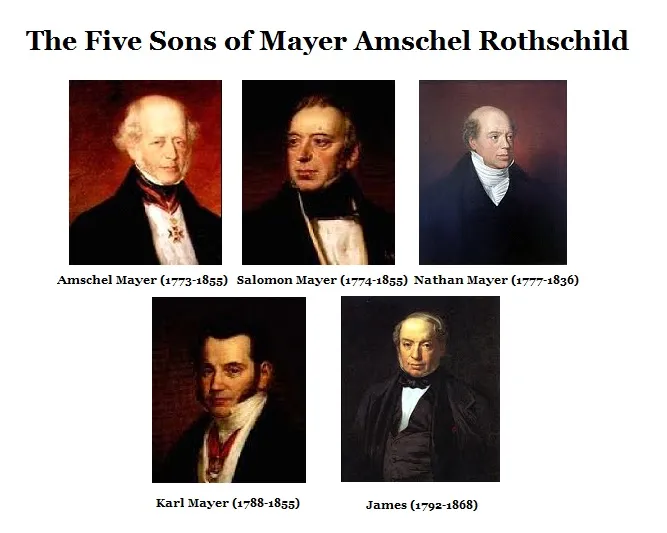
The Rothschilds did pursue market dominance, but their approach was markedly different from that of the Rockefellers. Whereas Standard Oil represented a single, colossal monopoly ultimately broken up by the U.S. government, the Rothschilds sought control through oligopolies, market structures dominated by a small number of large players. Thus, they often cooperating with competitors rather than trying to absorb them or put them out of business. This strategy was especially prominent in the 19th and early 20th centuries. They were not aiming for the kind of monopoly embodied by figures like Gates or Rockefeller.
Unlike the Rockefellers, who sought to dominate one industry from production to distribution, the Rothschilds wielded their financial influence across multiple sectors to engage in competition. They strategically invested in non-ferrous metals, mercury, nickel, lead, and copper, commodities with inelastic demand and concentrated supply, which made them particularly amenable to control.
They also took over state-run monopolies, such as the mercury mines at Almadén in Spain, through privatization. Rather than acquiring every competitor, they often purchased controlling stakes in market leaders, companies like Le Nickel, Peñarroya, and Rio Tinto. In many instances, they collaborated with other dominant players to form cartels and collusive oligopolies, ensuring high returns for all involved rather than driving rivals out of business.
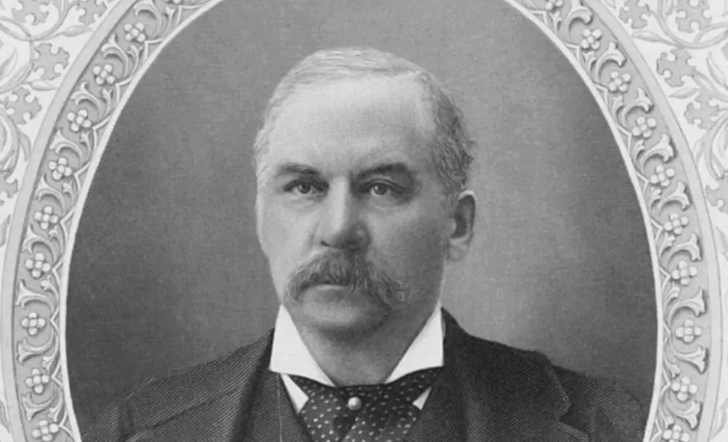
J.P. Morgan
In fact, the historical records show that a partnership did form, involving J.P. Morgan and the Rothschilds in 1895 to replenish the U.S. Treasury’s rapidly depleting gold reserves and prevent is bankruptcy from the inflationary practices of the Silver Democrats led by William Jennings Bryan.
This model extended to their banking operations. For decades, a Rothschild-led consortium functioned as the de facto “state banker” for the Austro-Hungarian Empire, operating as a quasi-monopoly. It is essential, however, to distinguish these documented business practices from the many unfounded conspiracy theories that surround the family.
One enduring myth claims the Rothschilds “control the global financial system,” including the U.S. Federal Reserve, an absurd claim repeatedly debunked by historians and fact-checkers and frequently rooted in antisemitic tropes. The Federal Reserve, for instance, is a publicly accountable institution with a presidentially appointed Board of Governors. Allegations of the Rothschilds orchestrating wars, assassinations, or global events lack evidentiary support. While their financial and economic influence was substantial, there is no credible evidence of secret global puppet-mastery.
In short, the Rothschilds actively pursued market dominance by fostering favorable, competition-limiting conditions, largely through oligopolies, but their story is not one of a singular, enduring monopoly like Standard Oil. Their historical power, while real, has been profoundly distorted by myth, making them perhaps the most famous targets of modern conspiracy lore.
I can personally speak to this distinction. In the 1980s, a member of the Rothschild family joined my company as an employee, initially without my knowledge. About a year later, the offer came: they wanted to buy in as a partner, not absorb my firm. That experience aligned perfectly with their preference for oligopoly over monopoly.
Later, a journalist interviewing me about the rise of hedge funds asked why I wasn’t primarily motivated by money, unlike many others. I explained that I saw two separate drivers: one measured success by accumulated wealth, the other by accomplishment. I was often told that when I entered the trading ring, fear showed in others’ eyes, the difference was clear. I relied on analysis for achievement; they sought only to manipulate markets for profit.
Over the years, I’ve encountered many high-net-worth clients. I would turn away those driven exclusively by money. To them, you’re only as good as your last trade. Those who were in it for the long haul and valued the reasoning behind decisions stood apart from the Gates-Rockefeller mold.
This is a real and well-documented phenomenon. While some wealthy individuals are genuinely motivated by a desire to do good, historians, psychologists, and sociologists agree that guilt, legacy anxiety, and reputational management are powerful forces behind much high-profile philanthropy. Some amass fortunes at any cost, then turn to charitable giving as a means of rehabilitating their past. I have been more interested in leaving behind Socrates as my accomplishment.
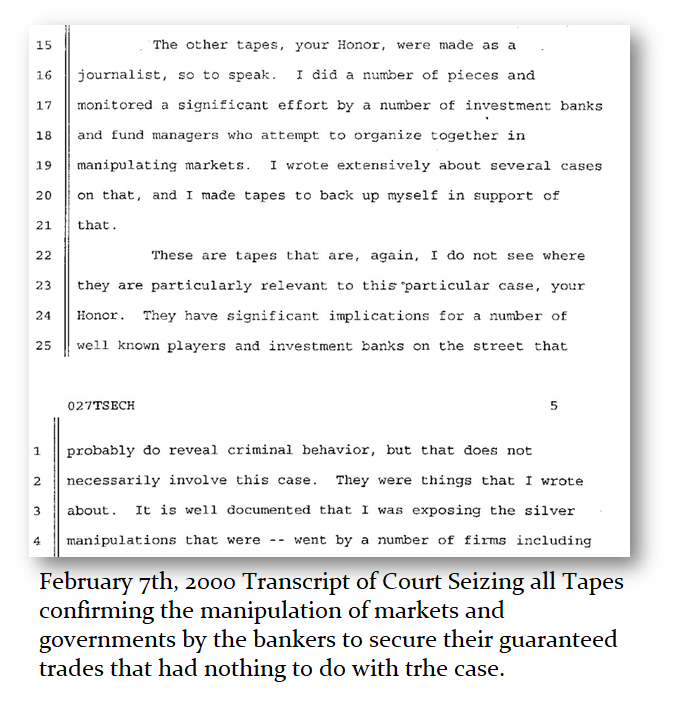
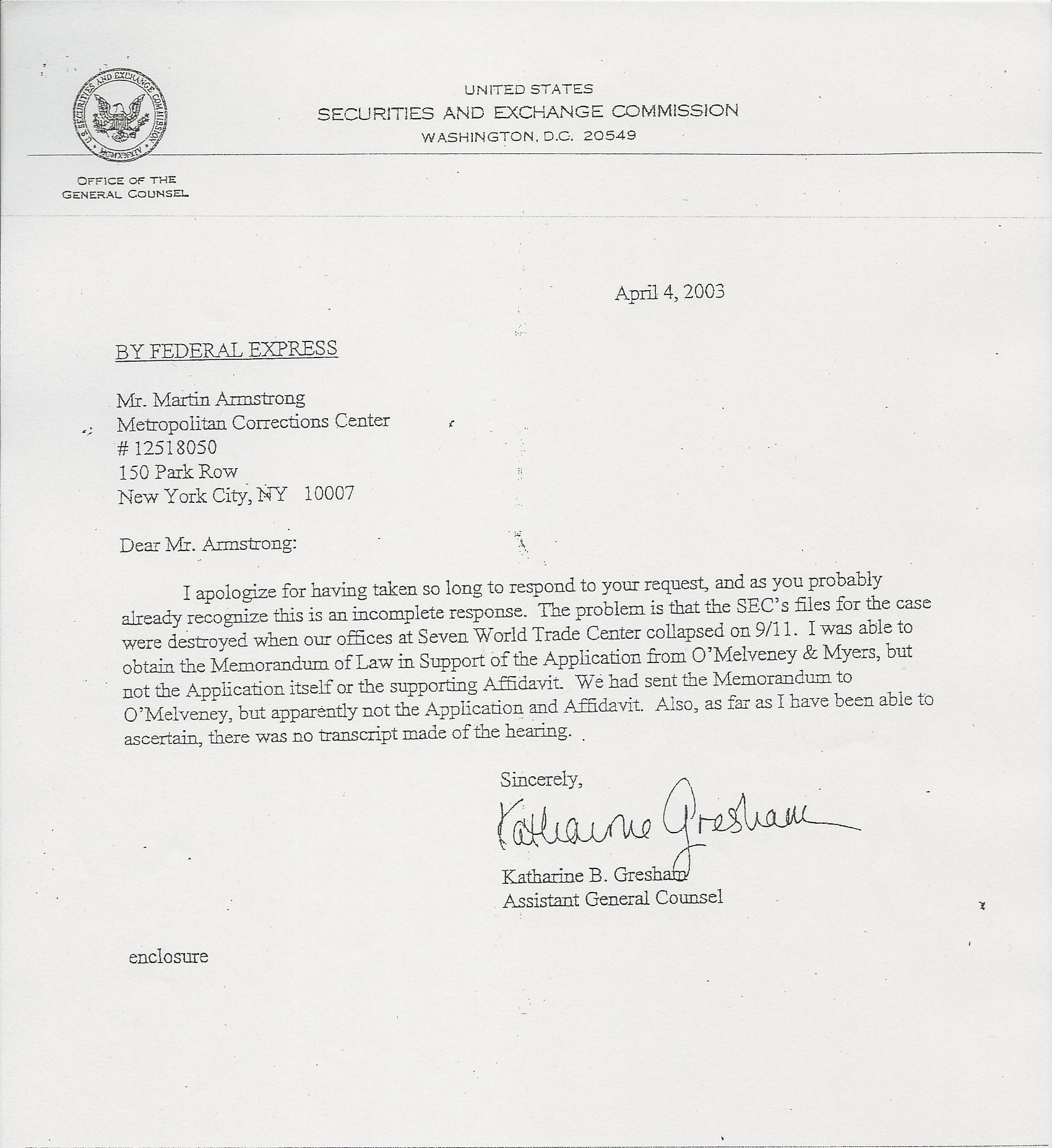
They used the case against me to protect that bankers sine my phone conversations included them trying to get me to join their illegal market manipulations. The judge demanded all the tapes ne turned over and then were magically destroyed in the World Trade Center attack to cover-up the market manipulations.