
Close Menu
    Facebook X (Twitter) Instagram
    TRENDING :
    • The personal brand trap: Why humans shouldn’t think of themselves as brands
    • Why the founder of David protein bars says controversy can be good for business
    • Women could solve the AI trust gap, but they aren’t in the room
    • US Strikes Deal For Kenya’s Rare Earth Minerals
    • Gloria Steinem talks parental leave, women in leadership, and saving democracy
    • Japan: The First Domino In The Sovereign Debt Crisis?
    • Pete Hegseth got a live look at the Pentagon’s laser weapons
    • The Death Of Homeownership For The Next Generation
    Populist Bulletin
    • Home
    • US Politics
    • World Politics
    • Economy
    • Business
    • Headline News
    Populist Bulletin
    Home»Economy»Japan: The First Domino In The Sovereign Debt Crisis?
    Economy 3 Mins Read

    Japan: The First Domino In The Sovereign Debt Crisis?

    Economy 3 Mins Read
    Share Facebook Twitter Pinterest LinkedIn Tumblr Telegram Email Copy Link
    Follow Us
    Google News Flipboard
    Share
    Facebook Twitter LinkedIn Pinterest Email


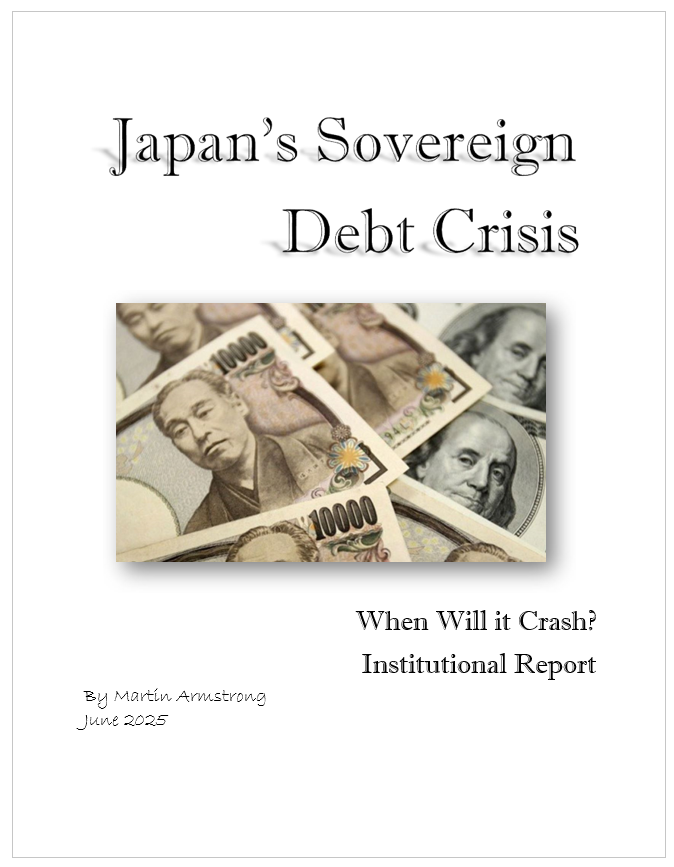
    The Japanese government is now openly admitting what I have been warning about for years. Rising interest rates are beginning to dramatically increase the government’s debt-servicing costs. For decades, Japan survived by suppressing interest rates to nearly zero while endlessly rolling over debt. That strategy only works so long as rates remain artificially low. Once rates begin to rise, the mathematics become impossible to hide.

    Japan’s government debt exceeds 230% of GDP, the highest ratio in the developed world. Politicians, academics, and central bankers have spent years arguing that Japan was different because most of the debt was held domestically. I repeatedly rejected that argument. Debt is debt and whether the creditor lives in Tokyo, London, or New York does not change the obligation. The real issue has always been confidence. Once investors demand higher yields to compensate for risk, interest expense explodes and governments enter the classic sovereign debt spiral.

    The Bank of Japan has now raised rates to 1%, the highest level since 1995. That may sound insignificant compared to rates elsewhere, but Japan built its entire fiscal structure around the assumption that rates would remain near zero forever. The government became addicted to cheap money. Every welfare program, subsidy, and stimulus package rested on the ability to borrow endlessly at virtually no cost. That era is ending.

    What many fail to understand is that sovereign debt crises never begin because governments run out of money overnight. They begin when interest costs consume an ever-larger share of tax revenue. Governments then borrow more simply to pay interest on previous borrowing. Japan crossed that line years ago. The entire system has been held together by the Bank of Japan purchasing enormous quantities of government debt. Once the central bank attempts to normalize policy, the market immediately begins questioning the sustainability of the entire structure.

    This is why I have long argued that Japan would likely be the first major developed nation to face the sovereign debt crisis head on. The population is aging, the tax base is shrinking, and social obligations continue to rise. There is no realistic path to paying down the debt. Governments always believe they can borrow forever until suddenly they cannot. History has demonstrated this repeatedly, from ancient Rome to modern Europe.

    The significance extends far beyond Japan. Every major government has followed the same path. The United States, Europe, Britain, and Canada all expanded debt under the assumption that central banks could permanently suppress rates. Japan simply arrived at the end of the road first because it accumulated debt faster than everyone else.

    Our models continue to show that the period into 2032 remains the critical phase for sovereign debt. The crisis was never about private debt. Governments became the largest borrowers in history. The next monetary restructuring will emerge not because of banks or corporations, but because governments have accumulated obligations that can never realistically be honored in full. Japan is merely the first warning shot. The sovereign debt crisis has begun, and once confidence starts to crack, governments everywhere will discover that there is no such thing as endless borrowing.


    Source link

    Share. Facebook Twitter Pinterest LinkedIn Tumblr Email

    Related Posts

    US Strikes Deal For Kenya’s Rare Earth Minerals

    June 24, 2026

    The Death Of Homeownership For The Next Generation

    June 24, 2026

    Market Talk – June 23, 2026

    June 23, 2026
    Top News
    World Politics 8 Mins Read

    Trump Moves to Fire Fed’s Lisa Cook–Here Are 4 Takeaways

    World Politics 8 Mins Read

    This article was originally published  by The Epoch Times: Trump Moves to Fire Fed’s Lisa…

    U.S. and European stocks rebound as oil prices retreat despite escalating war with Iran

    March 4, 2026

    The AI credibility gap is real

    June 18, 2026

    Why isn’t the day after the Super Bowl a national holiday?

    February 10, 2026
    Top Trending
    Business 7 Mins Read

    The personal brand trap: Why humans shouldn’t think of themselves as brands

    Business 7 Mins Read

    When I was a wee little boy growing up, I wanted to…

    Business 8 Mins Read

    Why the founder of David protein bars says controversy can be good for business

    Business 8 Mins Read

    David protein bars went from startup to one of the hottest consumer…

    Business 5 Mins Read

    Women could solve the AI trust gap, but they aren’t in the room

    Business 5 Mins Read

    When I was offered the CEO role at Smart Communications, a digital…

    Categories
    • Business
    • Economy
    • Headline News
    • Top News
    • US Politics
    • World Politics
    About us

    The Populist Bulletin was founded with a fervent commitment to inform, inspire, empower and spark meaningful conversations about the economy, business, politics, government accountability, globalization, and the preservation of American cultural heritage.

    We are devoted to delivering straightforward, unfiltered, compelling, relatable stories that resonate with the majority of the American public, while boldly challenging false mainstream narratives that seem to only serve entrenched elitists, and foreign interests.

    Top Picks

    The personal brand trap: Why humans shouldn’t think of themselves as brands

    June 24, 2026

    Why the founder of David protein bars says controversy can be good for business

    June 24, 2026

    Women could solve the AI trust gap, but they aren’t in the room

    June 24, 2026
    Categories
    • Business
    • Economy
    • Headline News
    • Top News
    • US Politics
    • World Politics
    Copyright © 2025 Populist Bulletin. All Rights Reserved.

    Type above and press Enter to search. Press Esc to cancel.