
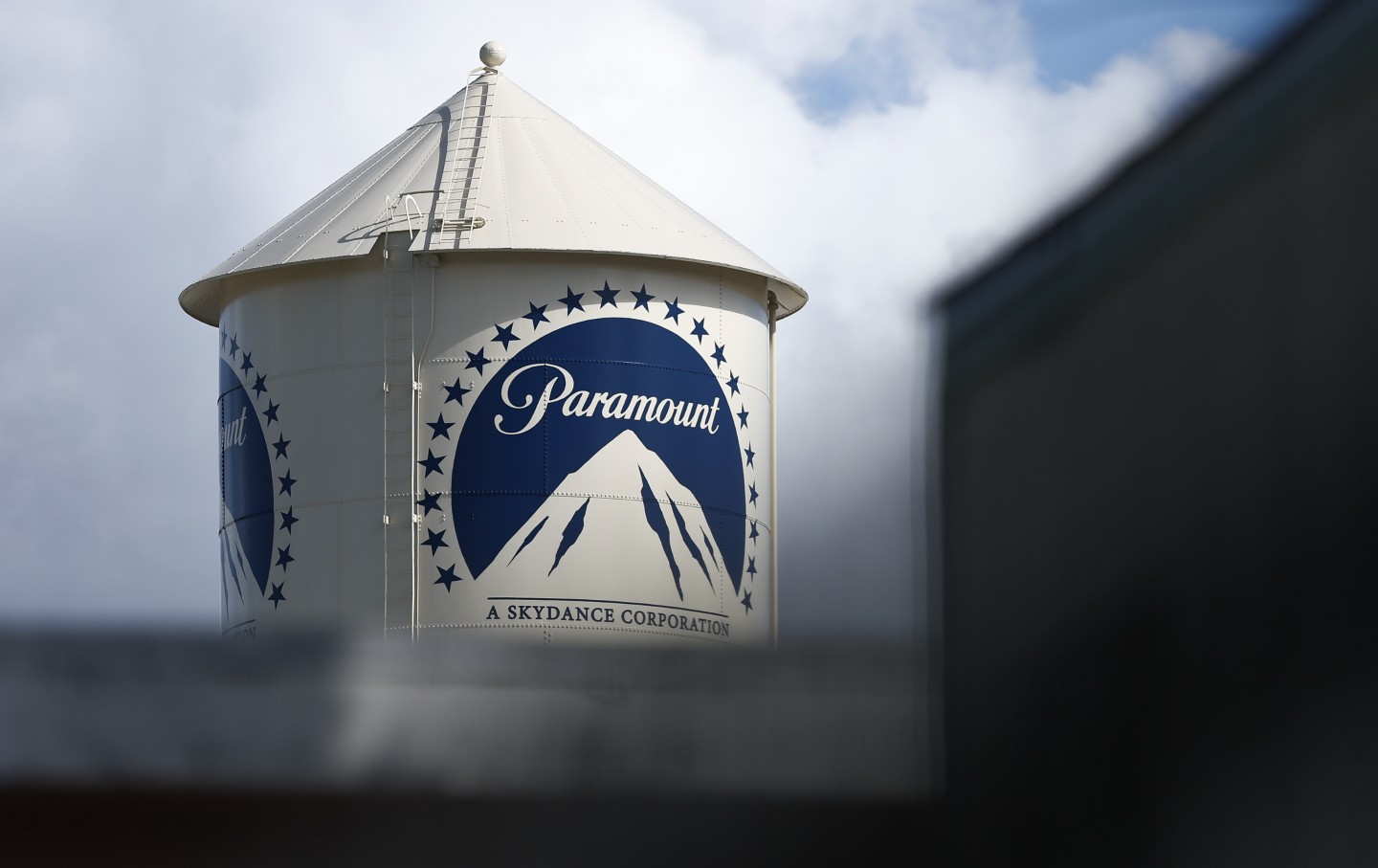
This is an all-hands-on-deck moment to save cultural and press freedom.
Every state attorney general in America should sue to block the multibillion-dollar Paramount-Warner deal. And then, they should sue to unwind the prior deal in which Paramount bribed Trump in order to buy Skydance. These are the fruits of Trump’s blatant corruption.
While Trump’s corruption is widely known, it is rare that state attorneys general have as much power to thwart it. The pending merger threatens the most fundamental freedom we have in this country, a free press. Stopping a corrupt president from gathering power and censoring dissent should be an all-hands-on-deck moment.
Let’s go back to how we got here to better understand why state AGs are potentially so central. In 2024, Donald Trump sued CBS and Paramount, saying that the way 60 Minutes edited a Kamala Harris interview caused him “mental anguish” and constituted election interference. It was a ridiculous, patently frivolous suit. No lawyer took it seriously on the merits or as anything but a stunt and a shakedown.
But in 2025, the CEO of CBS/Paramount wanted to buy Skydance. He knew Trump wanted two things: cash, and loyalty. He offered both. Paramount offered $16 million in what was called a “settlement.” But it had all the hallmarks of a bribe. The lawsuit wasn’t grounded in a real legal theory, and big media companies know they can’t settle whenever anyone howls over coverage—or they’d go out of business.
Senators Elizabeth Warren, Bernie Sanders, and Ron Wyden sent a formal letter to CBS/Paramount noting that settling a lawsuit that the company’s own lawyers called “completely without merit” in exchange for regulatory approval “may be engaging in improper conduct” under 18 U.S.C. § 201 (the federal bribery statute), which bars giving anything of value to a public official to influence an official act. Warren said, “This looks like bribery in plain sight.” Stephen Colbert called it “a big fat bribe.”
The other half of the payment, far more valuable to Trump, was editorial loyalty at CBS. Days after Colbert’s “bribe” comment, CBS canceled The Late Show with Stephen Colbert, its top-rated late-night program, starring one of Trump’s most persistent critics. Simultaneously, the destruction of 60 Minutes began. Its longtime executive producer left over inappropriate pressure over coverage decisions, and the program’s leadership signaled that it would avoid controversy around stories involving the administration.
Current Issue
And now Paramount, hungry for more power, is on the verge of closing a merger with Warner Bros. On Friday, the Trump administration’s Justice Department announced that it saw no antitrust problems with the merger.
The merger would be disastrous for American cultural life, and a free press. The combined company would mean a unified editorial voice at CBS, Paramount Pictures, Nickelodeon, MTV, Comedy Central, CBS News, Warner Bros., HBO, CNN, TNT, TBS, and the DC film/TV library. It would merge two of the last major independent news operations (CBS News and CNN) under one owner with clear loyalty to a White House that has already extracted editorial concessions, with a pattern of corrupt dealmaking. It would give a president editorial influence over a huge fraction of American film, television, and news production.
The scope of the potential carnage is almost unthinkable. As Matt Stoller, a journalist and monopoly critic who has been organizing against this merger, says, “Consolidation in Hollywood has been a disaster, and has led to the weak state of the industry. If we want to continue to even have a TV or film industry, this merger needs to be blocked.”
The same can be said for free speech. The existing media environment is already calamitous for expression. The critically acclaimed documentary No Other Land, an Oscar-winning film about Palestine, couldn’t find a major distributor; the big guys don’t want to annoy the chief. A post-merger documentary distribution system would have one corporate owner controlling CBS, Paramount Pictures, Warner Bros., HBO/Max, and CNN, and the DC library—all key documentary channels that acquire, fund, or distribute documentaries—answering to a single company with demonstrated willingness to avoid content that angers the administration.
Attorneys general can stop the merger. They can sue to block the merger under the federal Clayton Act, which prohibits mergers where the effect “may be substantially to lessen competition,” and their own state antitrust statutes (e.g., New York’s Donnelly Act, California’s Cartwright Act) regardless of what the federal DOJ does. Multiple states are reportedly preparing such a challenge. California AG Rob Bonta has been the most publicly vocal critic and is running an active investigation. The entertainment industry is headquartered in California; most creative workers affected live there. But Paramount, CBS, and WBD all have major New York operations, and New York Attorney General Letitia James has strong subpoena power and a history of aggressive media investigations. Texas, Illinois, Florida, and others also have strong jurisdictional hooks.
State AGs were long second fiddle in antitrust, although they occasionally challenged federal approval. When the DOJ made a decision, that basically was the decision. But in 2026 there has been a sea change in antitrust law.
After Trump’s DOJ dropped its major antitrust lawsuit against Ticketmaster, New York, Tennessee, and other states refused to pretend Ticketmaster wasn’t breaking the law, and won a major jury verdict.
More to the point, the Trump agencies blessed Nexstar’s merging with Tegna, a deal that created the largest local TV station owner in the country, including 256 stations reaching nearly 80 percent of US households. But California’s Rob Bonta, using outside counsel, sued to block the deal, and a federal judge granted Bonta an injunction. The deal is on hold. If California can block Nexstar, Illinois can block Paramount. As of 2026, no one should treat a federal decision on antitrust as the end of the story.
To take on a challenge so large, the states may need to use outside counsel, as they did in Ticketmaster and Nexstar. We should cheer this on—the resources they have in house are not sufficient to take on the full burden of enforcing federal antitrust law in the face of corrupted federal agencies.
Popular
“swipe left below to view more authors”Swipe →
Along with using antitrust law, states and district attorneys should also look at criminal law. Local DAs with jurisdiction could investigate criminal activity in the settlement. CBS Broadcasting and Paramount Global are incorporated and headquartered in New York County. The executives who authorized the settlement were in Manhattan. The Manhattan DA can investigate under New York bribery law, which forbids “conferring a benefit upon an employee or agent of another person with intent to influence conduct.”
NY AG James can also investigate and prosecute persistent fraud or illegality by any business operating in New York, and if there’s a pattern including the settlement plus any editorial interference at CBS, could use New York’s “Enterprise Corruption” law, a statute that targets a pattern of criminal acts conducted through a legitimate business. While Trump enjoys substantial immunity after Trump v. United States (2024) for official acts, the AG and DAs could focus on the corporate side.
The Paramount-Warner deal is planned just at the moment of the 250th anniversary of the Declaration of Independence from monopoly-rotted England. State AGs owe it to the past and future of democracy to block this corrupt deal from being consummated.
With the midterm elections now firmly upon us, the question is whether Democratic candidates will do more than merely occupy ballot lines as mild alternatives to the red-hot crisis that is Donald Trump.
As Trump spends over $1 billion a day on a globally destabilizing war on Iran and admits that he doesn’t “think about Americans’ financial situation,” millions across the country are struggling with the surging costs of essentials. Democrats must seize this moment and advance bold, small-“d” populist ideas—not settle for cynical caution that once again snatches defeat from the jaws of victory.
The Nation elevates progressive ideas, movements, and elected officials achieving real change across the country into the national conversation. At the same time, our journalists are exposing how crypto and AI-funded super PACs are spending hundreds of millions of dollars to knock out candidates they oppose, reporting on the devastating impact of the Supreme Court’s evisceration of the Voting Rights Act, and sounding the alarm on attempts by red states to quickly redraw electoral maps, disenfranchising Southern Black voters.
We can play this critical role because of support from readers like you. This June, we’re raising $20,000 to power The Nation’s independent journalism in the run-up to November’s immensely consequential elections.
It’s in our power to build a more just society, and your support at this critical moment brings us closer to that bold vision. I hope you’ll donate today.
Onward,
Katrina vanden Huevel
Editor and Publisher, The Nation
More from The Nation
The negotiations are a stark symbol of the president’s failure. But any deal is better than endless, foolish war.

In this week’s Elie v. US, our justice correspondent warns of a potential ICE invasion of New York. Plus: The administration escalates its assault on trans rights.
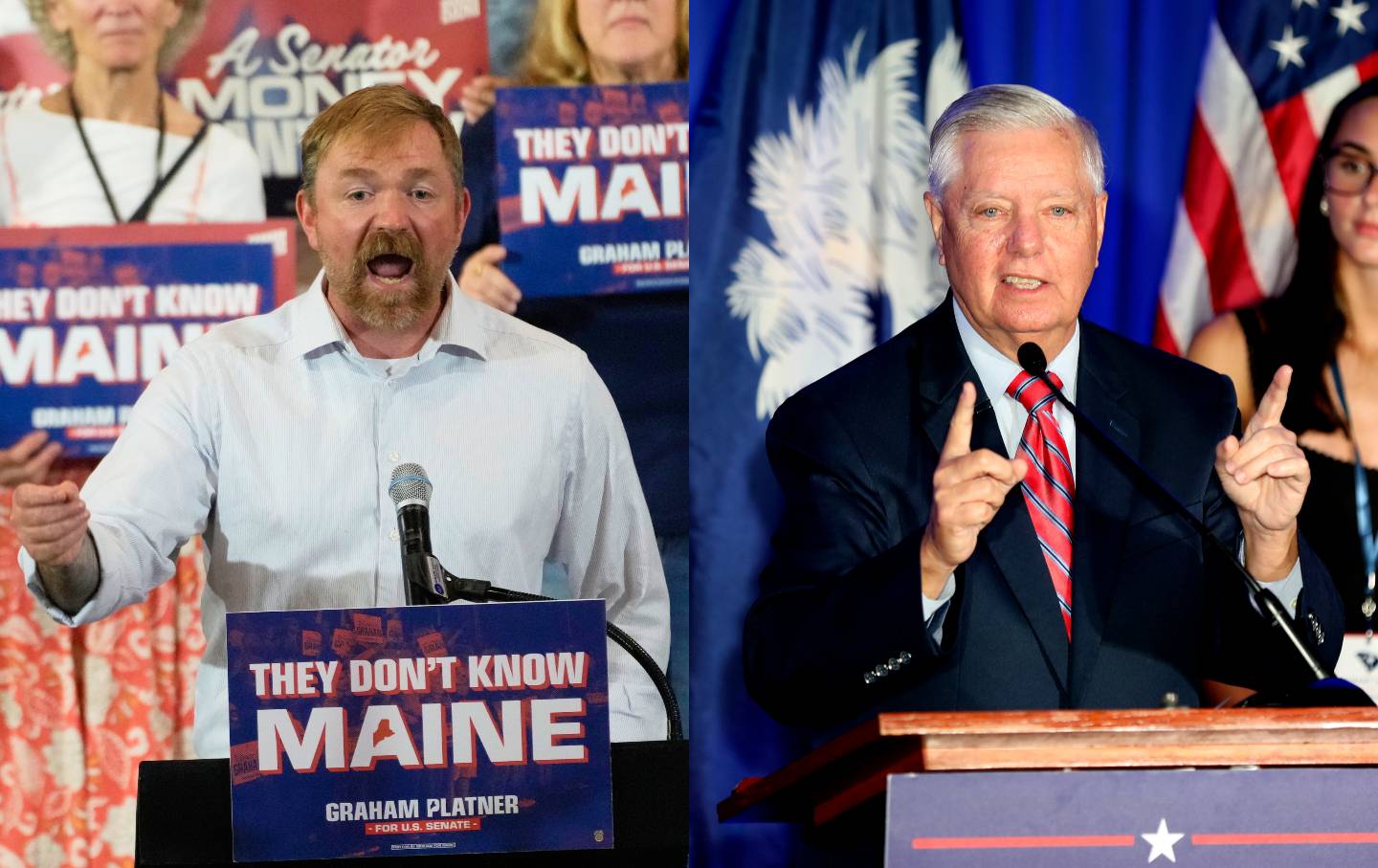
The anti-establishment Democrat in Maine won much bigger than the establishment Republican in South Carolina.
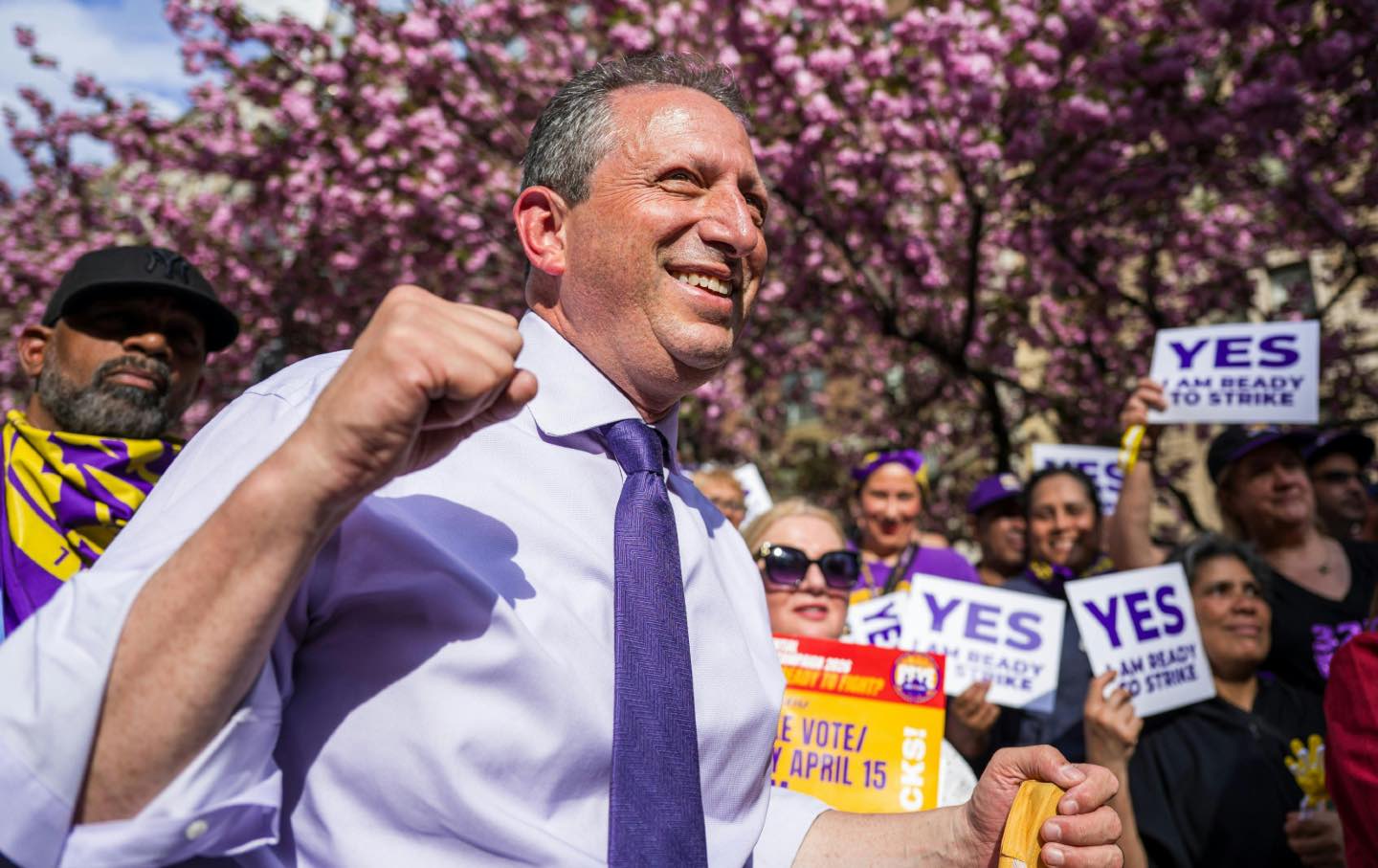
“The Nation” backs the NY-10 candidate who has the experience, financial expertise, and progressive vision to be an essential leader in the House.