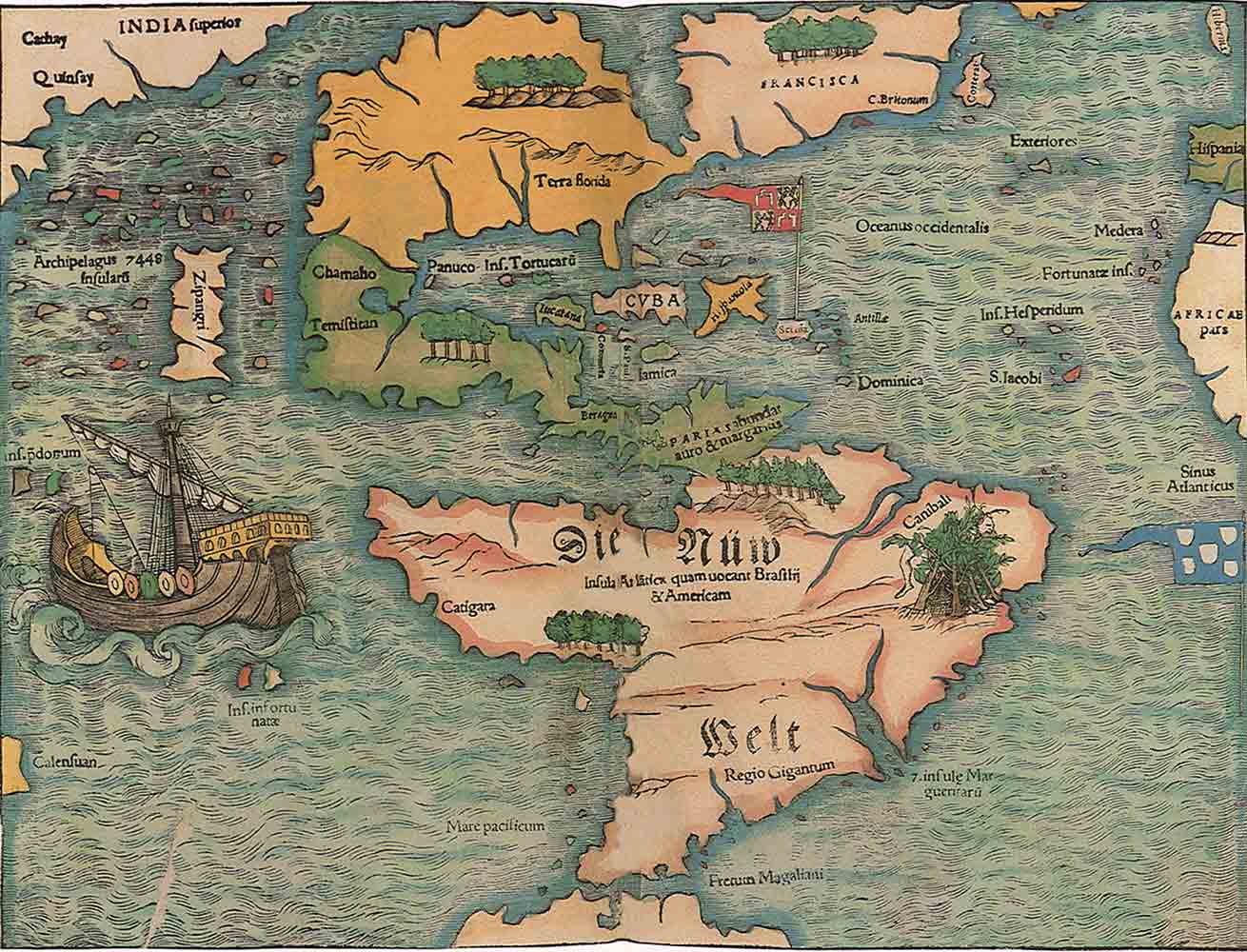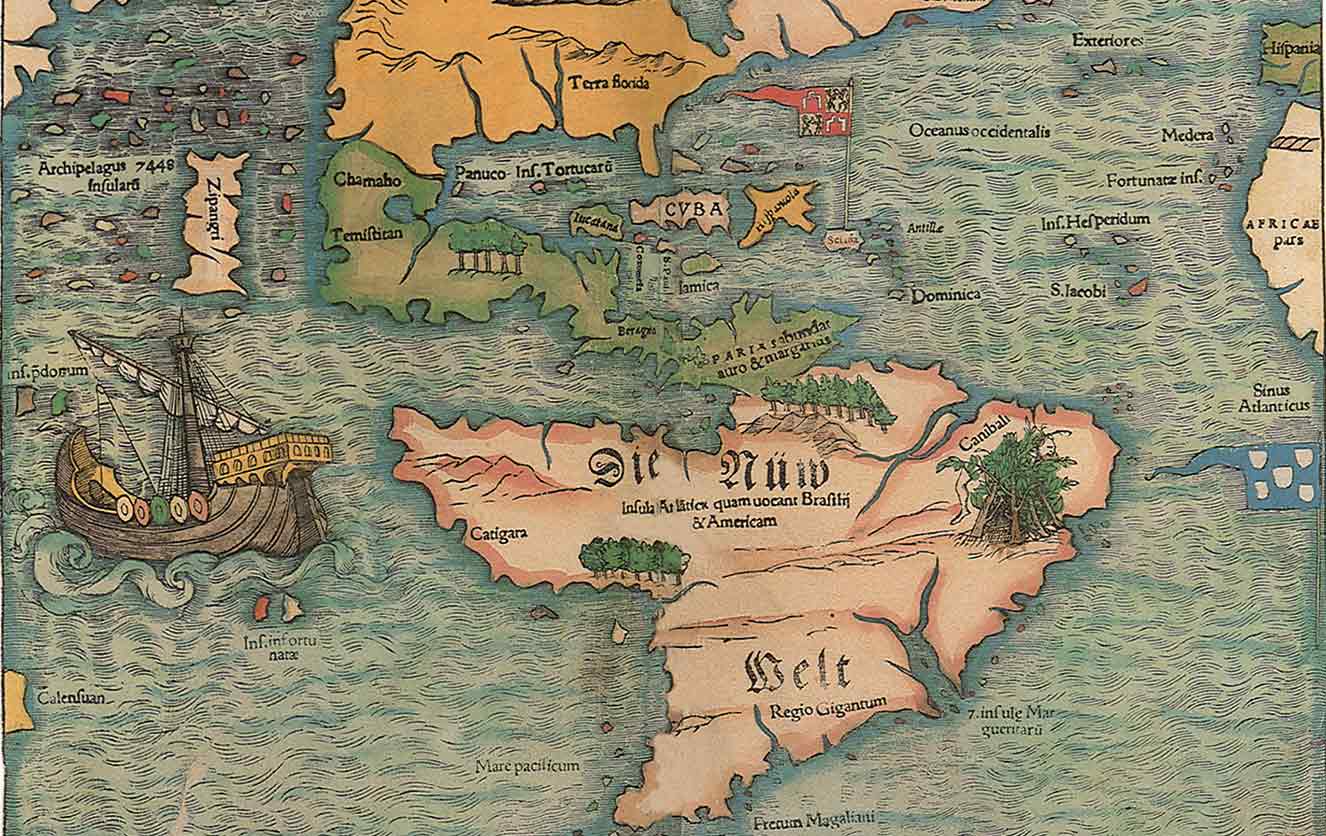
Better to start the history of the United States in 1492 than in 1776.
I have grappled with the relationship between capitalism and race since I became a leftist. My path was far from direct, starting with developing an interest (and later becoming an activist) in the Black Freedom movement and then being exposed to the thinking of Malcolm X, whose autobiography I first read at the age of 13, in the fall of 1967. Both he and, later, the Black Panther Party refuted the notion that the development of “race” and capitalism were two fully independent processes, and they noted, significantly, that the resolution of racist (and national) oppression could not be accomplished in the absence of a direct confrontation with capitalism. That increasingly made sense to me, but an important unanswered question revolved around the strategic implications of such an understanding.
Books in review
Capital and Race: The History of a Modern Hydra
Several years ago, I stumbled across a formulation by George Padmore, the onetime communist and leading member of the Communist International who would eventually become a noncommunist Pan Africanist, that captured both my concerns and my criticisms regarding how too much of the left failed to appreciate the strategic and practical implications of the link between race and capitalism. In 1937, Padmore was asked by the prominent socialist magazine Left Review to contribute to a symposium on the Spanish Civil War. Padmore stated without hesitation his solidarity with the Spanish Popular Front and the struggle against fascism, but he also expressed his frustration that his Spanish comrades had not included or recognized the centrality of what was then known as the “national-colonial question” in the context of fighting the fascist coup led by Gen. Francisco Franco. Specifically, Padmore took issue with Spain’s colonization and racialization of parts of Africa. “The sympathy of Africans and other colonial peoples naturally goes out to the toiling masses of Spain in their heroic struggle against Fascist-barbarism, for they have not forgotten Abyssinia,” he noted (referring to the Italian invasion of what is now Ethiopia under Mussolini). But “precisely because of this, it is so regrettable that democratic Spain, by failing to make an anti-imperialist gesture to the Moors, played into the hands of Franco. This should be a reminder to the European workers that: ‘No people who oppress another people can themselves be free.’”
Since discovering this quote several years ago, I have remained haunted by the larger story that it tells about radical politics. Linking the struggle against fascism to the struggle against empire and colonialism, Padmore made it clear that progressive forces had no choice but to engage with a politics of both anti-capitalism and anti-colonialism—a struggle for racial and national emancipation as well as an emancipation from the forces of exploitation and dictatorship. I have found few other statements that so succinctly summarize the dilemma facing much of the left in the Global North—a statement that kept returning to me as I read the compelling new book by Sylvie Laurent, Capital and Race.
The debate over the relationship between race and capitalism, anti-colonialism and national liberation, has been ongoing ever since the left was first called the left. Within socialist and progressive movements, the matter regularly emerges in late-night bull sessions and in white papers and policy programs. Is it possible to develop a unifying and universal class politics that focuses on emancipating all of the oppressed around the world that does not ignore or marginalize in some way the specific concerns of race, national oppression, and sex? Should class politics and economic programs be the priority, or should we focus on other injustices? And what are we to do about those movements of national liberation that uplift some groups within a region but not others? How does a politics that seeks to establish nation-states accord with socialism’s internationalist ambitions?
In the United States, this debate has existed, in effect, since the colonial era. It has also perplexed and divided the left around the rest of the world as republican and anti-colonial movements emerged, in particular in the Southern Hemisphere. The debate is integrally connected to larger themes, especially one that periodically arises as a source of controversy: the role that the European conquest of the Americas and the slave trade in Africans played in the development of capitalism as a global system. To paraphrase Padmore: To what extent can progressive movements in the so-called Global North be truly progressive, egalitarian, and committed to working-class emancipation if and when such movements ignore—or worse—national, anti-racist, and anti-colonial struggles in the places oppressed by their own governments?
It is for this reason that Capital and Race is such an invaluable text. In many respects, its importance resides in the centrality placed by the author on the year 1492. Laurent does not claim that 1492 marked the beginning of capitalism; in fact, she describes capitalism as a process unfolding over hundreds of years and going through various stages, including agricultural, mercantile, and industrial. But it is in and around 1492, with the Spanish victory in the Reconquista (defeating the Moors and driving the Jews out) and the commencement of the invasion of the Western Hemisphere, that we see dramatic changes in the scale and pace of capitalist development that could have occurred only as a result of the conquest of the Americas and the introduction of the African slave trade.
Current Issue
Although Laurent appears to cautiously accept the notion that the construction of race preceded the rise of capitalism—a point with which I disagree—she correctly identifies an early expression of it (one could even call it a proto-racism) in Europe in connection with the persecution of certain populations: for example, Jews, who were racialized as “others” prior to the full development of capitalism with the enslavement of Africans and the Spanish conquest of the Americas. Laurent doesn’t address whether such tendencies of racialization existed in other parts of the world—or, if so, why they didn’t play a similar role to what we saw in the construction of European (and later North American) capitalism. But she does demonstrate that the system we have come to know in the post-1492 period as race and racism emerged in direct connection with the development of capitalism and the expansion of empire. The slow evolution of the religious persecution of European Jews into a form of racialization; the expulsion of the Moors from Spain and the claim by the monarchy of seeking an alleged purity of the blood; and the enslavement of Africans and the genocidal destruction of Indigenous civilizations in the Americas—all were part of a larger program that focused on the justification of horrific oppression, along with the creation of systems of social control, in order to serve the growth, expansion, and political stability of the developing capitalist states.
For Laurent, this intertwined development of capitalism and race became more pronounced as the European empires began to enslave Africans and to conquer parts of North and South America. The formal racial constructions that Europe installed were part of the violent period of conquest and slavery that some have described—following Karl Marx—as “primitive accumulation” and others have called “war capitalism.” To put it another way (and borrowing from Eric Williams), slavery did not happen because of racism; rather, racism emerged as the direct result of slavery and how it allowed some to profit off the labor—and land—of others. The dispossession of the Americas, and later Africa and Asia, put into place a global system of capitalism despite the fact that the initial conquerors—Spain and Portugal—were still in late-stage feudalism at the time of the conquests. Here, Laurent makes a critical point, noting that much of the wealth gained by Spain and Portugal did not remain in those countries but went to banks in the Netherlands—capitalism’s first real financial center—and then were used in other parts of Europe to help finance capitalist development. Capitalism, therefore, must be understood as having started as a global system rather than one that began, for example, with the factories of Britain, as some on the left would have it.
One great advantage to Laurent’s book is the way she deftly shows that the construction of race and racism was always a political and economic project that served two interrelated purposes: the justification of oppression and dispossession, on the one hand, and control over the labor and produce of the oppressed, on the other. The successful plunder of much of the world in order to enrich Europe and, later, North America and to advance capitalism necessitated the construction of a system of racial differentiation. As Laurent notes, elements of this system could be seen in the persecution of Jews—which certainly had become, by the 19th century, an anti-Jewish racism—and the “othering” and racialization of various ethnic populations, but it became an integral part of the capitalist system ever after.
Under capitalism, “race” becomes a defined set of categories and takes on a qualitatively different aspect from anything that preceded it—i.e., by condemning entire populations for eternity to a status of subordination to and incompatibility with the dominating race, with no means for achieving freedom outside of collective struggle. Laurent notes that in the colonial era beginning with 1492, the colonial oppressors held different and often contradictory views vis-à-vis the populations they dominated or sought to dominate. By way of example, Spain and Portugal debated the “right” to enslave the Indigenous peoples of the Americas while not debating the legitimacy of seizing their land and riches. Yet there was no debate about the “right” to enslave Africans!
Though racism can be perpetrated against different populations around the globe, this does not mean that its various forms are similar or that its various justifications are in line with the rest. The antisemitism that became an anti-Jewish racism in the 19th century was markedly different from the anti-Black racism of the same and later periods. The psychiatrist and revolutionary Frantz Fanon, cited by Laurent in her book, distinguished between the two because European Jews could conceal themselves among non-Jewish Europeans, while for those of African descent, concealment was virtually impossible. Yet the ability of European Jews to “conceal” themselves became central to the racist and capitalist myth of the all-powerful and manipulative Jew.
The centrality of racism in the construction of capitalism has had several implications. Though the South African revolutionary movements, in their fight against apartheid, developed the notion of “racial capitalism” to designate the particular convergence of racism, colonialism, and capitalism found in their country, Laurent reminds us that it is inaccurate to suggest that there was ever a capitalism that was not also racial. The issue is not whether a particular variant of capitalism in the current era is racial, but rather how it is racial—or, to put it another way, what are the racial characteristics of the actually existing capitalist social formation being considered? Laurent offers multiple examples that are helpful in understanding the breadth of the role played by race and racist oppression in the capitalist system.
Laurent notes as well that the combination of racism and capitalism that emerged in Northern Ireland did so under circumstances that were remarkably similar to those faced by African Americans, even if the form of racial and national and capitalist oppression experienced by the Irish did not rely on skin color and had a very different origin. A look at the history of the characterization and caricaturizing of Irish Catholics, along with the systemic or institutional structures created to enforce racial and national oppression against them over hundreds of years, clearly demonstrates how such racial and national forms of oppression were analogous to those experienced by African Americans. But again, although they were similar, they were not identical, as no two systems of racist or national oppression ever are.
Popular
“swipe left below to view more authors”Swipe →
The commonality between the struggle of the Irish and that of African Americans became apparent on both sides of the Atlantic during the 19th century with, for example, the Colored Convention Movement’s repeatedly speaking in favor of the Irish freedom struggle, and many in the Irish struggle reciprocating.
At the same time, the differences between the racist and national oppression experienced by various populations remain essential to identify. The struggles of the Indigenous in the Americas against dispossession became a fight, in effect, against European-imposed property rights. The struggles of those of African descent became a different sort of emancipatory fight. In North America, the creation of the category “Black” was intended to convey not only that one had African ancestry but also that one could be legally enslaved and have their labor exploited without even a wage or some other form of payment. Similarly in North America, racism and capitalism also emerged in how European settlers viewed the Indigenous populations. In South America, racist and national oppression emerged as well, albeit in other ways. In Latin America, the categories of racial differentiation worked differently: To be “Black,” to mention just one, did not mean simply having African ancestry. Due to the differences in Spanish and Portuguese settlement patterns in the Americas and the resulting demographics of colonial Latin America, those of African descent—depending on the other “blood” they possessed—could be found across a range of social categories.
The strategic implications that arise from Laurent’s analysis return us to the words of George Padmore. To the extent that race and the “national-colonial question” are intrinsically linked to the development of capitalism, rather than serving a merely ancillary role, the left—and all progressives—must understand how racist and national oppression have an impact on the consciousness, identity, and practices of all subaltern classes, as well as how central they are to the making and the persistence of capitalism. What Padmore argued in 1937 was that the short-lived Popular Front government in Spain should not have traded silence on the question of Spanish colonialism in Morocco and the Western Sahara for a broader unity against the fascists, not only as a matter of principle but also as a matter of practical politics. “Liberal” imperialism and colonialism are still imperialism and colonialism.
Time and again, progressive forces have witnessed how their efforts at a broader unity are consistently undermined by a failure to address racism and empire. Addressing racist oppression and the oppression of colonized peoples necessitates a far broader notion of the “oppressed” than is often understood by the left. That the Spanish Popular Front did not see the colonized peoples of Morocco and the Western Sahara as part of the population it needed to fight for to win and secure democracy was more than just a transgression of its own ideals. It would, in the years to come, prove to be a fatal mistake. Indeed, the Spanish Popular Front fell into the trap of perceiving anti-fascism as being an exclusively domestic concern.
In light of our current situation, with the rise of right-wing authoritarianism and neofascist movements across the world seeking to preserve and redirect global capitalism, we cannot afford to make the same mistake.
With the midterm elections now firmly upon us, the question is whether Democratic candidates will do more than merely occupy ballot lines as mild alternatives to the red-hot crisis that is Donald Trump.
As Trump spends over $1 billion a day on a globally destabilizing war on Iran and admits that he doesn’t “think about Americans’ financial situation,” millions across the country are struggling with the surging costs of essentials. Democrats must seize this moment and advance bold, small-“d” populist ideas—not settle for cynical caution that once again snatches defeat from the jaws of victory.
The Nation elevates progressive ideas, movements, and elected officials achieving real change across the country into the national conversation. At the same time, our journalists are exposing how crypto and AI-funded super PACs are spending hundreds of millions of dollars to knock out candidates they oppose, reporting on the devastating impact of the Supreme Court’s evisceration of the Voting Rights Act, and sounding the alarm on attempts by red states to quickly redraw electoral maps, disenfranchising Southern Black voters.
We can play this critical role because of support from readers like you. This June, we’re raising $20,000 to power The Nation’s independent journalism in the run-up to November’s immensely consequential elections.
It’s in our power to build a more just society, and your support at this critical moment brings us closer to that bold vision. I hope you’ll donate today.
Onward,
Katrina vanden Huevel
Editor and Publisher, The Nation
More from The Nation
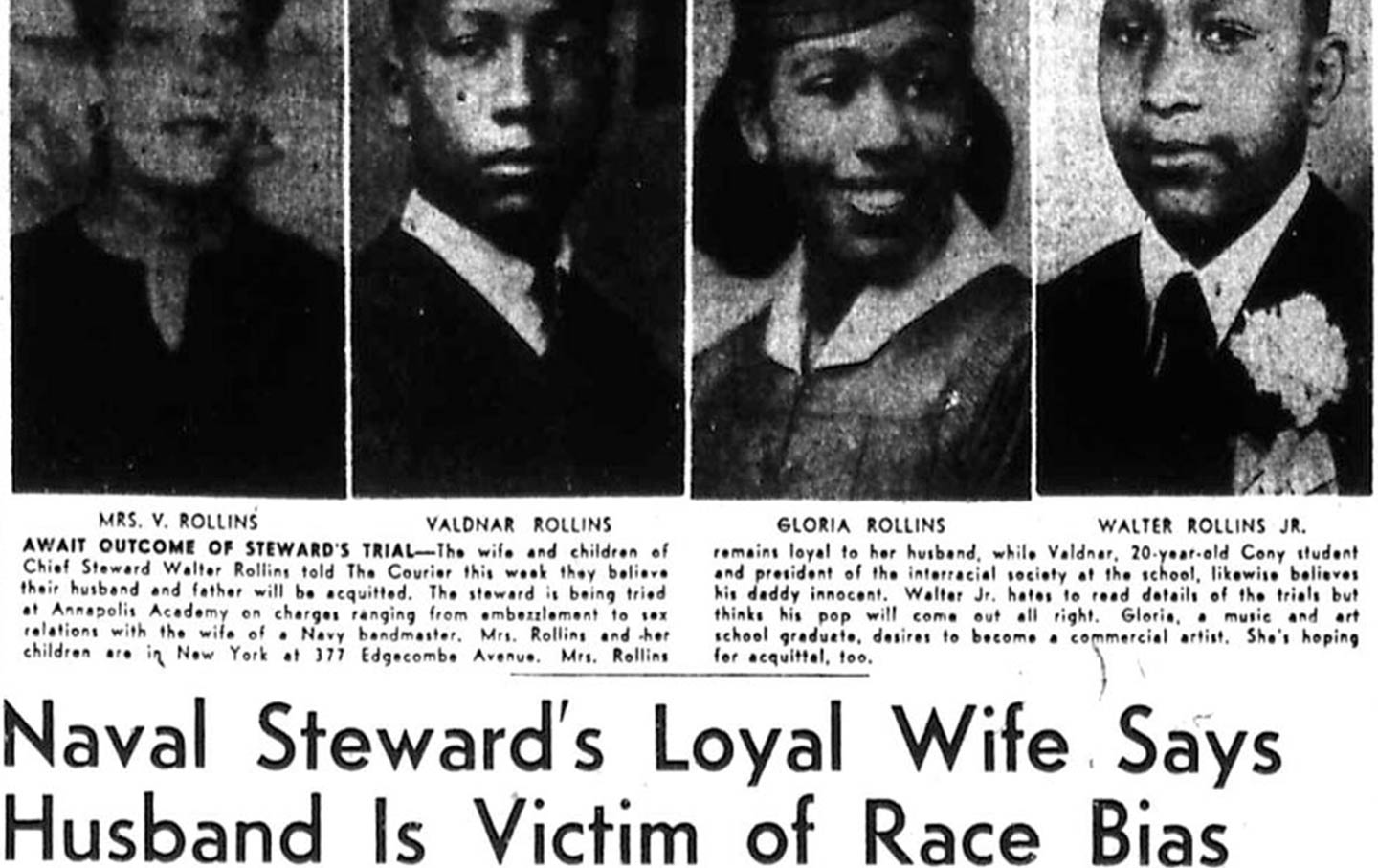
The jazz legend fought for nearly 80 years to clear his father of racially motivated charges.
The promise of democratic governance was stolen from the people. We must win it back.