

“The gyoza needs to look a little whiter. It’s too pink.”
Nigel Ng is genially micromanaging the look and feel of Fried, an animated series that will premiere on YouTube later this year. His feedback comes during an early planning session at Toonstar, the company producing the show, which is headquartered in a former furniture warehouse in downtown L.A.’s arts district.
Ng has every right to be fussy about Fried’s world. The show represents the cartoon debut of Uncle Roger, the volatile middle-aged Chinese guy he has portrayed in live-action YouTube videos since 2020. They famously depict the character growing agitated as he watches western chefs—such as Gordon Ramsay, Jamie Oliver, and Nigella Lawson—botching, by his estimation, the preparation of Asian food. (Especially fried rice.)
In his own idiosyncratic way, Uncle Roger is a perfectionist. So is Ng.
“People follow my YouTube channel because they like Uncle Roger,” Ng tells me during a break. “They like how he thinks, they like how he talks, and the jokes he makes. People can tell it’s not a decision made by a committee. It’s this one person’s sense of humor. Probably not the best sense of humor, but it’s his sense of humor. Doing this animation, I need to bring that ethos into this.”
During the planning meeting, as Ng’s critiques of Fried’s visuals keep coming—spanning subtle details of characters, settings, and other aspects of the production—Toonstar staffers swiftly incorporate them into updated artwork. In many ways, it’s not a radically different process than animation studios employed decades ago. But there’s one crucial new element: The closer the show gets to completion, the more AI will perform much of the heavy lifting.
That’s the not-so-secret ingredient at Toonstar, which Hollywood veterans John Attanasio and Luisa Huang cofounded in 2017 after working together at Warner Bros. As much a platform as a studio, it built two proprietary pieces of software that it uses in all its productions. One, Ink & Pixel, uses generative AI to produce much of the art that—once upon a time—would have been handled entirely by humans with pencils and paintbrushes. The other, Spot, uses analytics to help the company figure out how to turn raw ideas into stories that people will actually watch. “It sounds cliché, but it’s part art, part science,” says Attanasio, Toonstar’s CEO.
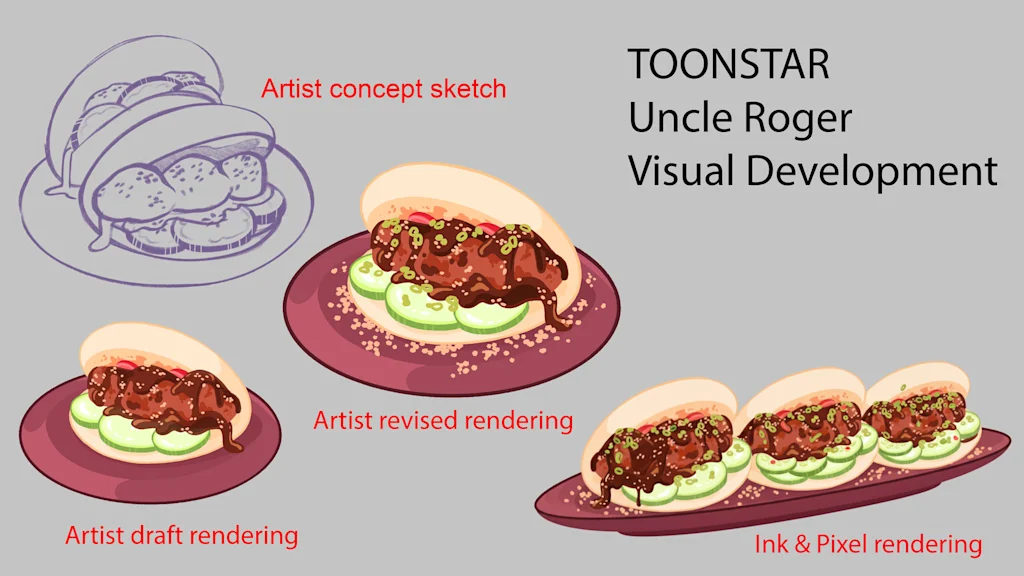
Now is as good a moment as any to confront an inescapable fact: Many in Hollywood are instinctively repelled by the very notion of mixing the art of entertainment with the science of AI. They regard it as robbing creative people of jobs and the work of its soul. The web is already bulging with AI slop that confirms their worst fears.
But Fried, and other Toonstar properties such as StEvEn & Parker, belie AI-assisted media’s sketchy reputation. They’re hardly mass-produced: Fried’s first season consists of just 12 eight-minute episodes. They’re written by creators, not algorithms. Voices are recorded by actors in a studio (with some use of AI-synthesized dialog for purposes such as filling in pickup lines).
Perhaps most important, the shows’ visual identities are their own, not LLM-produced offal. Judging from Fried’s preliminary art—I haven’t seen any final footage—it will owe its greatest stylistic debt to hand-drawn TV animation of the Saturday morning sort, leavened with a dash of anime.
It’s undeniably true that tiny Toonstar, which employs just 20 people, is using AI to create more animation faster and with fewer staffers. The company sees its technological bent as reflecting a time-honored tradition for the medium, dating to when Walt Disney himself adopted innovations such as sound and Technicolor. The cartoon business also has a long history of shrinking headcounts to control costs, historically by offshoring much of the production to Asian studios as contract labor.
Today, Hollywood’s titans are ever-more skittish about gambling on properties that aren’t already household names. Toonstar argues that its efficiencies—which include using YouTube as its primary streaming venue—permit it to take greater creative risks. Without the company’s ability to do a lot with a little, something like Fried might never have gotten greenlit in the first place.
In other words, Toonstar’s goals do not involve wringing the humanity out of its shows. “Fundamentally, storytelling is a team effort,” says COO Huang. “It’s about putting together a band.” In this case, it’s one that’s unafraid to use technology as an accelerant.
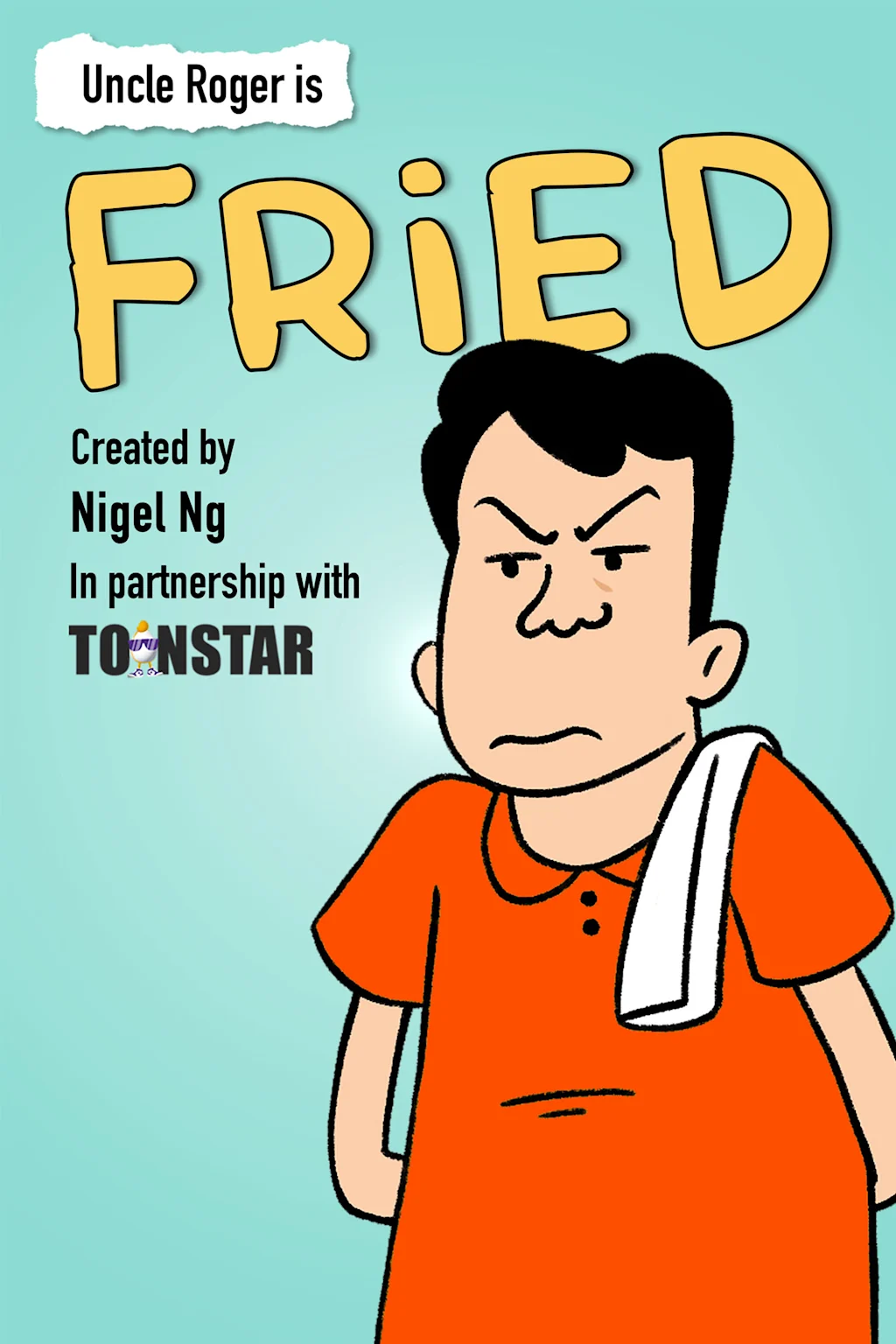
YouTube—and beyond
Backed by investors such as Founders Fund, Greycroft, and Snap, Toonstar has gone through several iterations of what it means to be a tech-forward cartoon maker. They have included using NFTs to let fans get involved in shaping stories. But its current modus operandi came into focus with StEvEn & Parker, the family-friendly saga of two silly young blond-haired brothers.
Derived, like Fried, from the live-action bits of a social-media comedian—Texas-based TikTok star Parker James—the show became “a bona-fide YouTube hit—it’s in five languages,” says Attanasio. Now, with 3.29 million subscribers, it’s a franchise capable of conquering other media. They include an upcoming smartphone game and, starting next spring, a graphic novel series from Random House.
Distributing StEvEn & Parker on YouTube let it reach an audience without Toonstar needing to cut a deal with a megastreamer such as Netflix or HBO Max. Spinning off games and books gave the property a business model bigger than subsisting on YouTube ad revenue, though Attanasio stresses it’s making good money there. If the company could replicate that formula, it might end up with many multi-platform properties. “That’s the blueprint,” says Huang.
With StEvEn & Parker as precedent, Toonstar grew even keener on identifying creators whose existing ideas held promise as fodder for new shows. Last June, it announced that it was teaming up with WME to find them.
The giant talent agency has “an incredible roster of digital creators,” says Attanasio. “They’ve also got an incredible roster of traditional writers and showrunners. And so the combination of that is really supercharging the creative pipeline and projects that are going to be coming” from Toonstar. Fried is up first.
The idea of cartoonifying Uncle Roger originated at Toonstar, but when WME brought it to Ng’s attention, he was instantly amenable. “I’ve always wanted to do something in the animation world with Uncle Roger, because I feel the character itself lends itself well to being in cartoon form,” he says. “So when they reached out, I was like, ‘Oh, perfect.’” Like Toonstar, he saw potential for his character to become a business empire unto himself: Already, there are Uncle Roger restaurants in Malaysia.
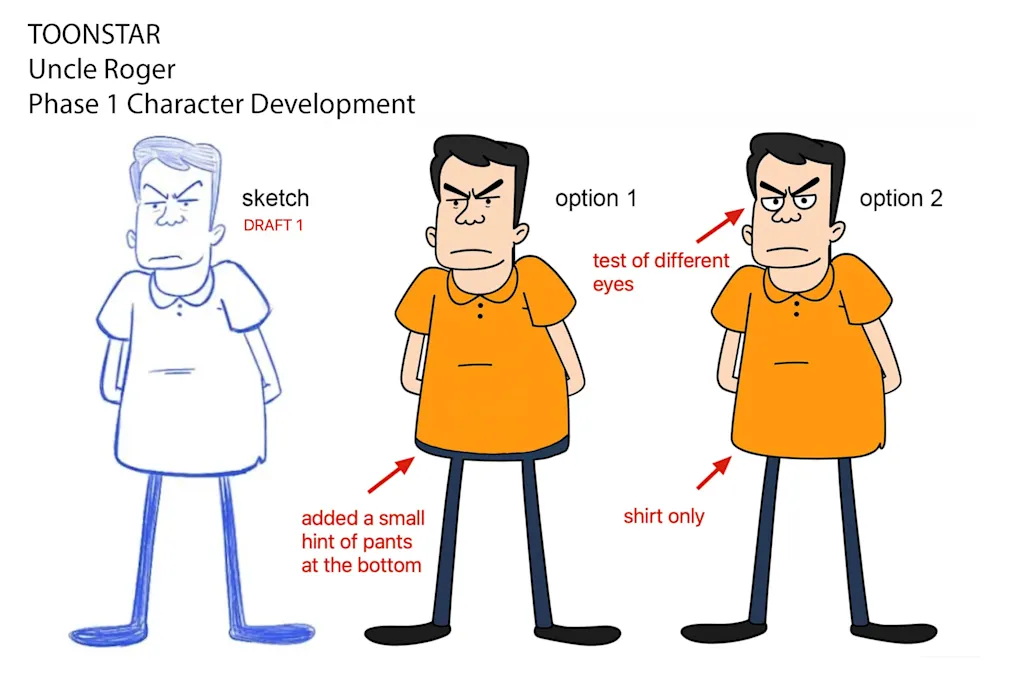
Ng grew up watching cartoons. But he knew enough about animation to realize he didn’t know that much about animation. So he studied up on its techniques. “I watched a lot of these YouTube explainers,” he recalls. “I had to read what makes good character design, what makes bad character design. And then there’s that Disney handbook, the 12 rules of animation thing.”
Fortified with this crash course, he was ready to take an active hand in imagining the show. That was a major undertaking. After all, until now, Uncle Roger has basically been Ng wearing an orange polo shirt, ranting at cooking shows, and using catch phrases such as “Haiyaa!” and “Fuiyoh!” (His accent has occasionally led people to accuse Ng, who was born in Kuala Lumpur, of stereotyping, and was the subject of a scholarly paper.)
On Fried, Uncle Roger has a rich backstory. He’s a restaurant owner. His ex-wife, Auntie Helen—oft-referenced in Ng’s comedy—is not yet his ex; the show is set before they split. He has an arch-rival, fellow restaurateur Olivier. There’s a cat named Lucky. Eventually, all of these characters and the environments they inhabit will be rendered by AI, with human oversight and polishing. But first they had to be designed.
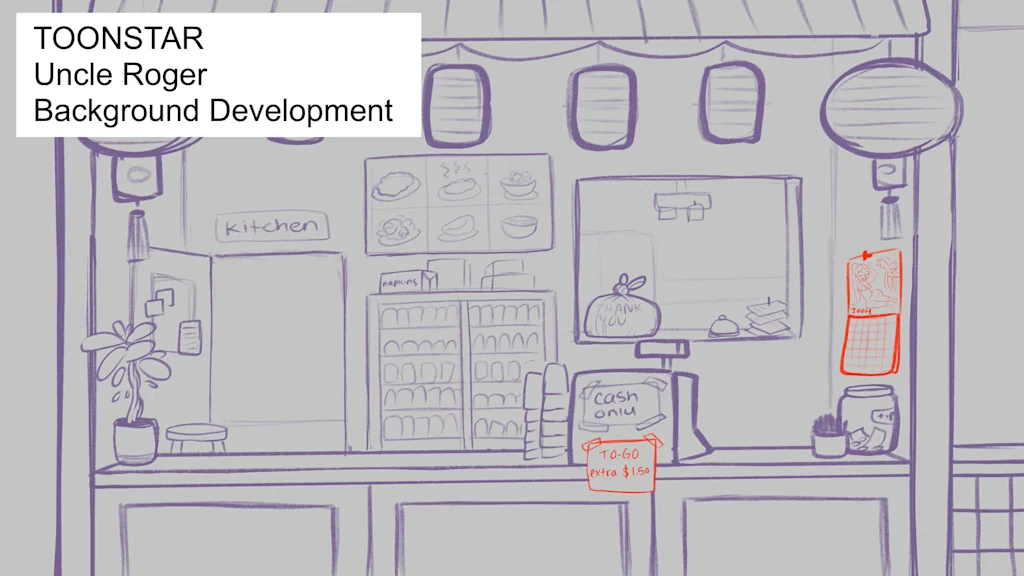
That involved a million little decisions. For instance: Should Uncle Roger’s eyes have whites? (No.) Should his trademark polo cover his entire torso, or leave a skosh more of his pants visible? (The longer-shirt version made him look too much like a bell when he walked, says Huang.) How should the food look at Olivier’s eatery? (Healthier than it does at Uncle Roger’s place.)
AI came in handy during these deliberations, because it let Ng and his collaborators quickly look at several options, even in animated form if it helped. At least when I spoke to Ng early in the production process, he claimed not to notice the technology playing much of a role. “They either beam up some drawings to the screen or they print it out for me,” he explained. But he did find progress happening far quicker than with another proposed Uncle Roger project, a now-shelved live-action sitcom: “That got optioned in 2021, and then we’d do a draft a year.”
If Ng doesn’t feel like there’s a layer of AI between him and his show, that’s kind of the point. With any luck, his experience will bolster Toonstar’s reputation among creators who start out skeptical about the company’s process. “We’re very artist-first and story-first,” says Attanasio. “There’s this compounding effect of creators like Nigel that won’t work with other AI tools or studios, but he’ll work with us.”
Even as Toonstar gets ready to release Fried, Attanasio and Huang say they’re poised to expand further—and faster than they ever could sans AI. Another dozen shows are in various stages of production, with a couple dozen more in the pipeline. “We have folks that we’re working with who are very interested in horror as a category,” says Huang. “Suspense thrillers are another. There’s young adult, maybe more female-led voices.”
Also on the horizon: distribution beyond YouTube, which could become another component of the company’s multipronged business strategy. Already, three different streamers have inquired about the possibility of a longer-form StEvEn & Parker series.
Whatever happens, entertainment is headed into a period of disruption, and Toonstar intends to lean into it. Depending on your frame of reference, the company could be the moment’s Disney, Hanna-Barbera, or Pixar. It will accept any of those comparisons. Yet even at its present scale, it has certain advantages that the iconic cartoon factories of yore couldn’t have imagined.
”Historically, animation has taken a very long time to produce and it’s been very expensive,” says Attanasio. “Those have been the reasons why there hasn’t been as much produced as we believe there’s a market for. There’s an audience for more. There are more genres you can do. There’s just a lot more to be done.”