
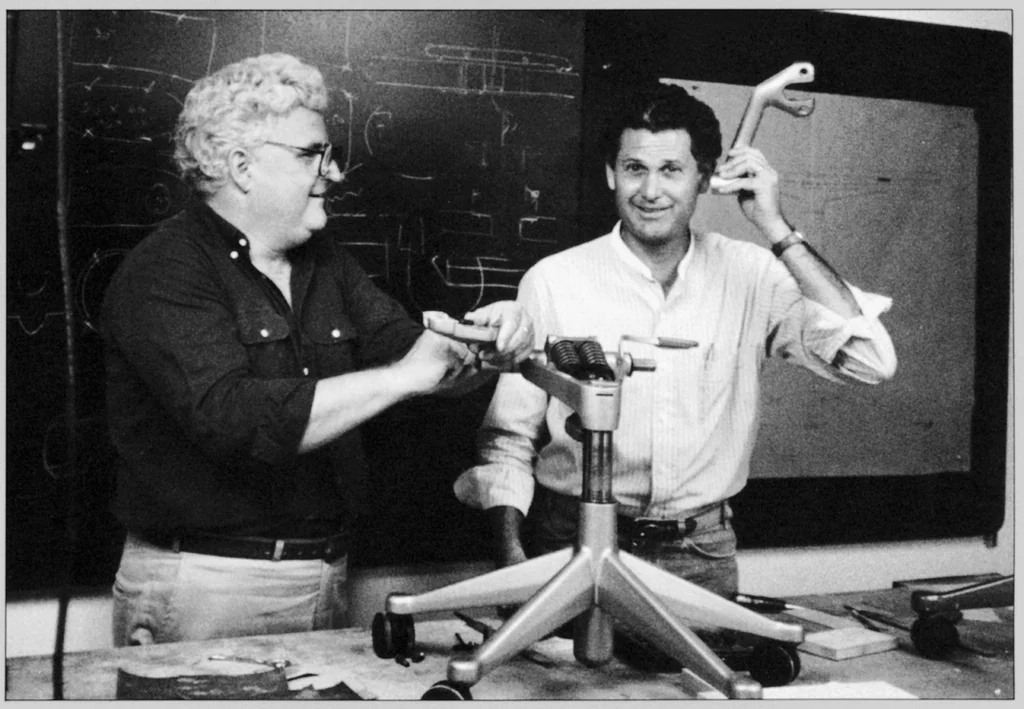
When Herman Miller launched the Aeron chair in 1994, almost nothing about it made sense. Unlike other chairs of that era, it wasn’t made of leather or full of plush foam. Instead, its frame was exposed, its mesh was transparent, and it cost double what buyers expected to pay for an office chair.
“Most ergonomic chairs have misunderstood the human form,” says Don Chadwick, who co-designed the chair with the late Bill Stumpf.
Some industry observers had doubts about whether the Aeron would succeed. Those skeptics were wrong. More than nine million Aerons have sold since launch. The Aeron quietly became a powerful status symbol over the next two decades. MoMA added the chair to its permanent design collection. And it became the default chair to find desk side at hedge funds, ad agencies, and Silicon Valley startups that were transforming the future of work, thanks to the computer. “Technology had taken over the office environment,” says Chadwick. “Office chairs needed to reflect the needs of comfort and adjustability consistent with the office revolution.”
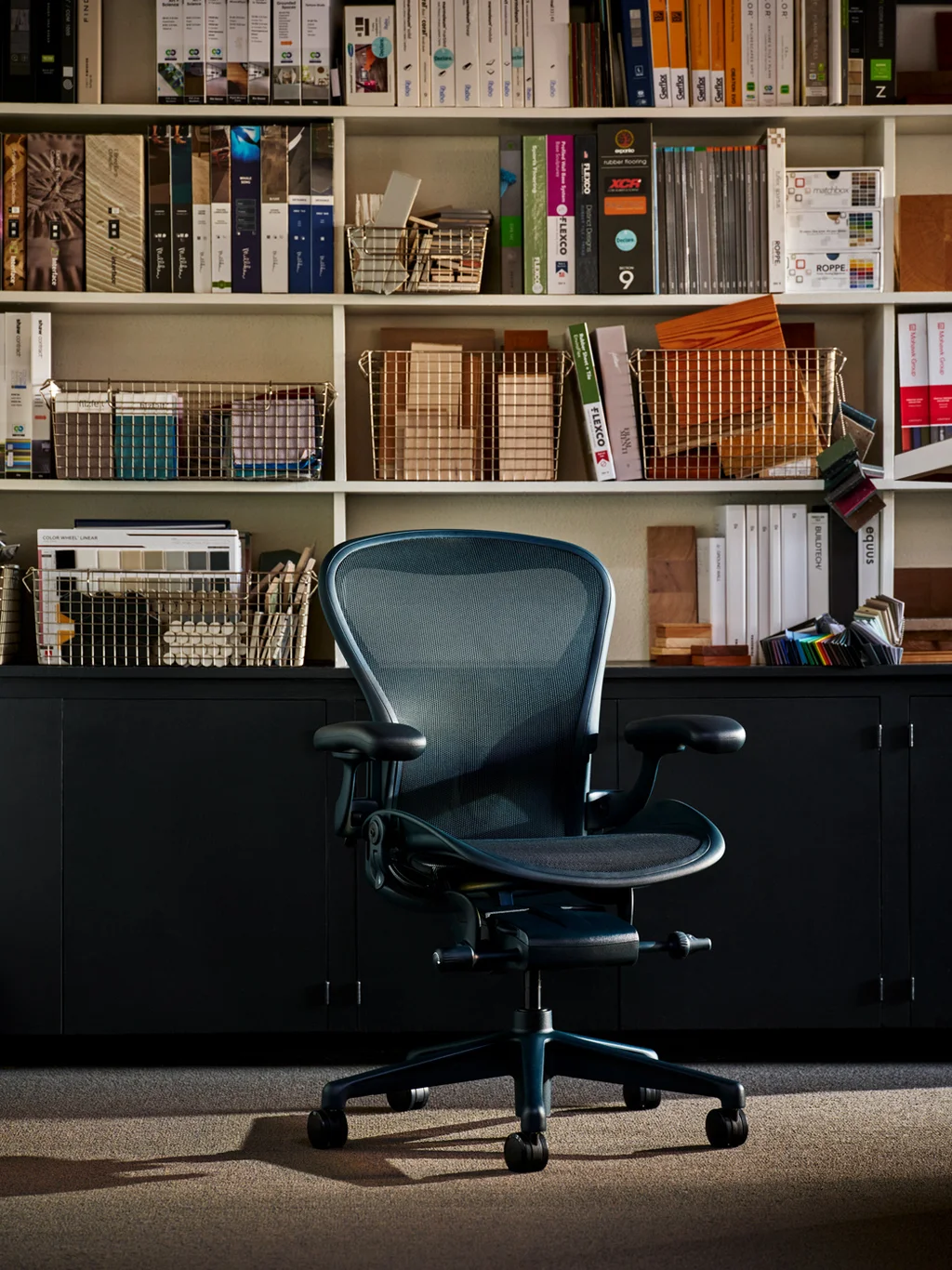
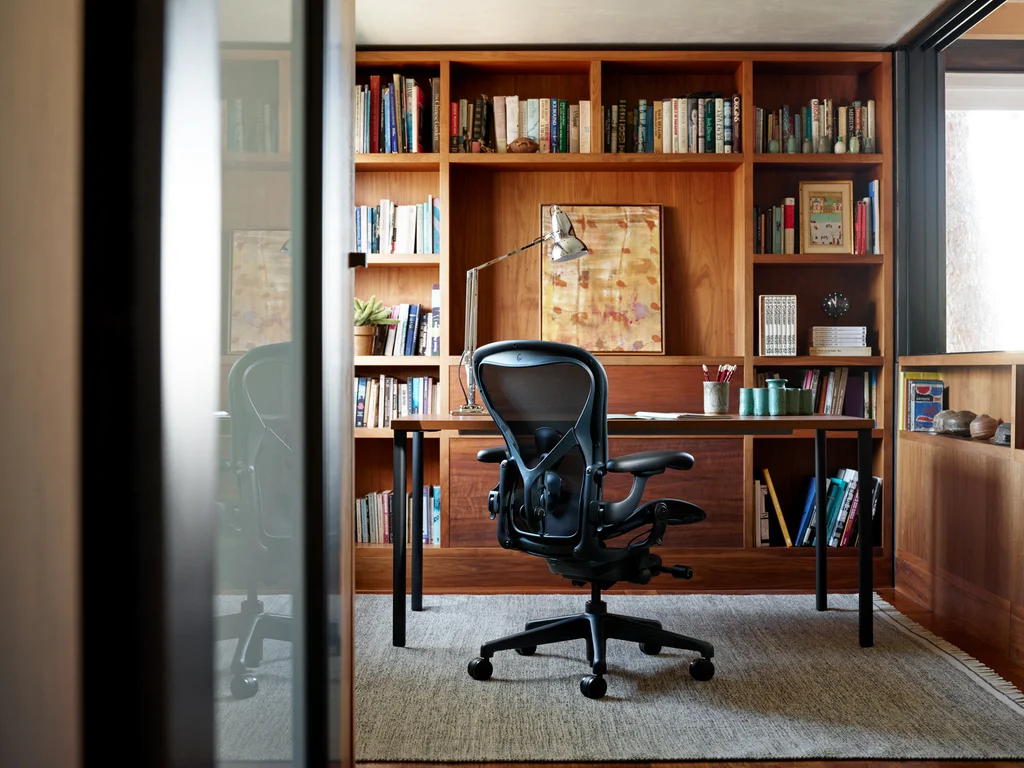
The Aeron, by any reasonable measure, does not need improving. But Herman Miller has updated it anyway. This month, the company is rolling out a version of the Aeron that takes the chair apart at the molecular level and rebuilds it around a more sustainable supply chain. Together, these changes are projected to reduce the Aeron’s global average embodied carbon by 12%, on top of years of previous reductions.
“The sustainability investments we’ve made in this particular product is like compounding interest,” says Gabe Wing, vice president of sustainability at MillerKnoll, Herman Miller’s parent company. “It keeps adding up over time.”
Rebuilt at the molecular level
At Herman Miller, Wing’s team had an important insight: The weight of a product has a direct impact on its carbon footprint. So the team mapped where the Aeron carried the most weight and tried to improve these components with lighter, more sustainable materials.
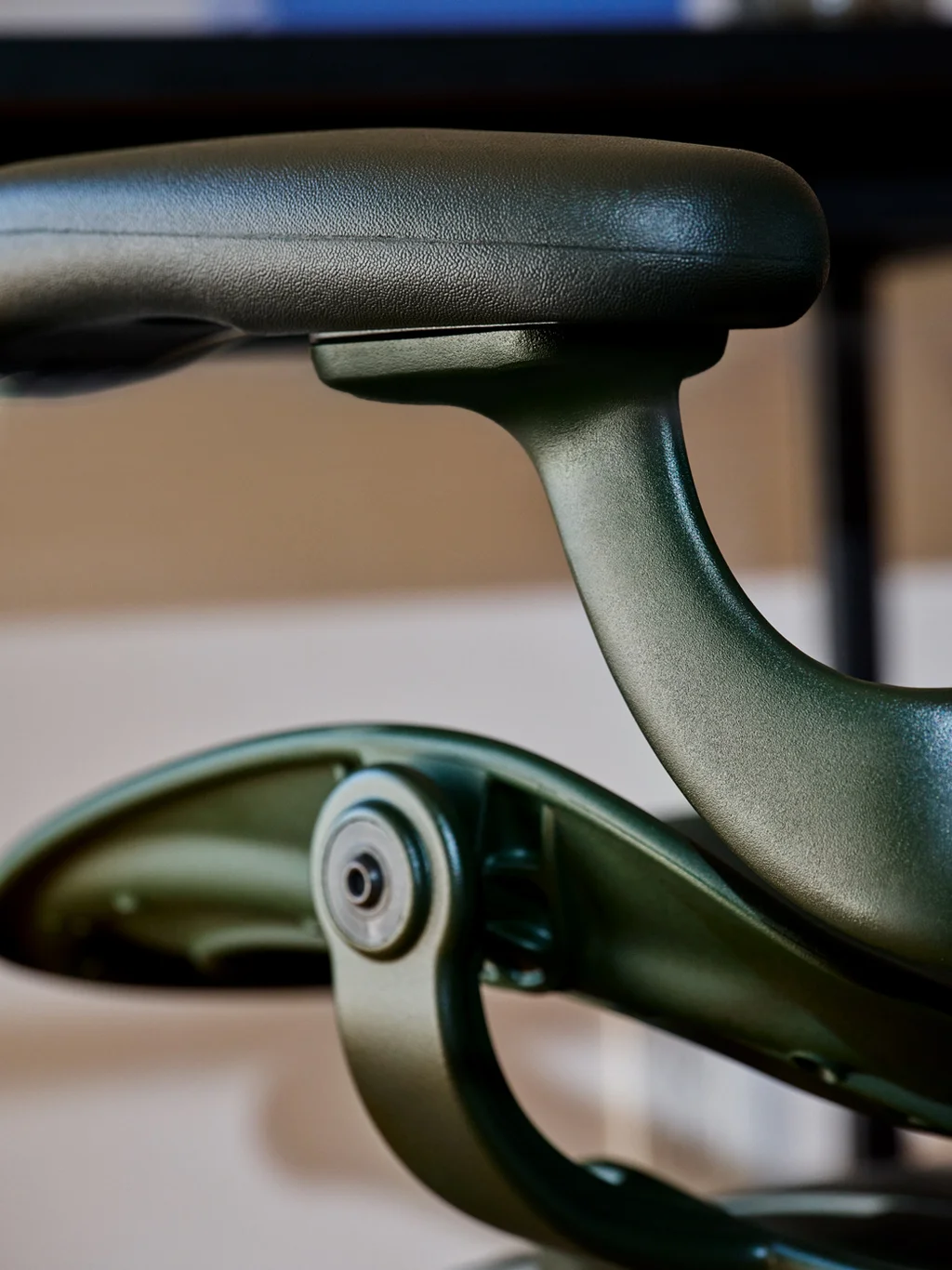
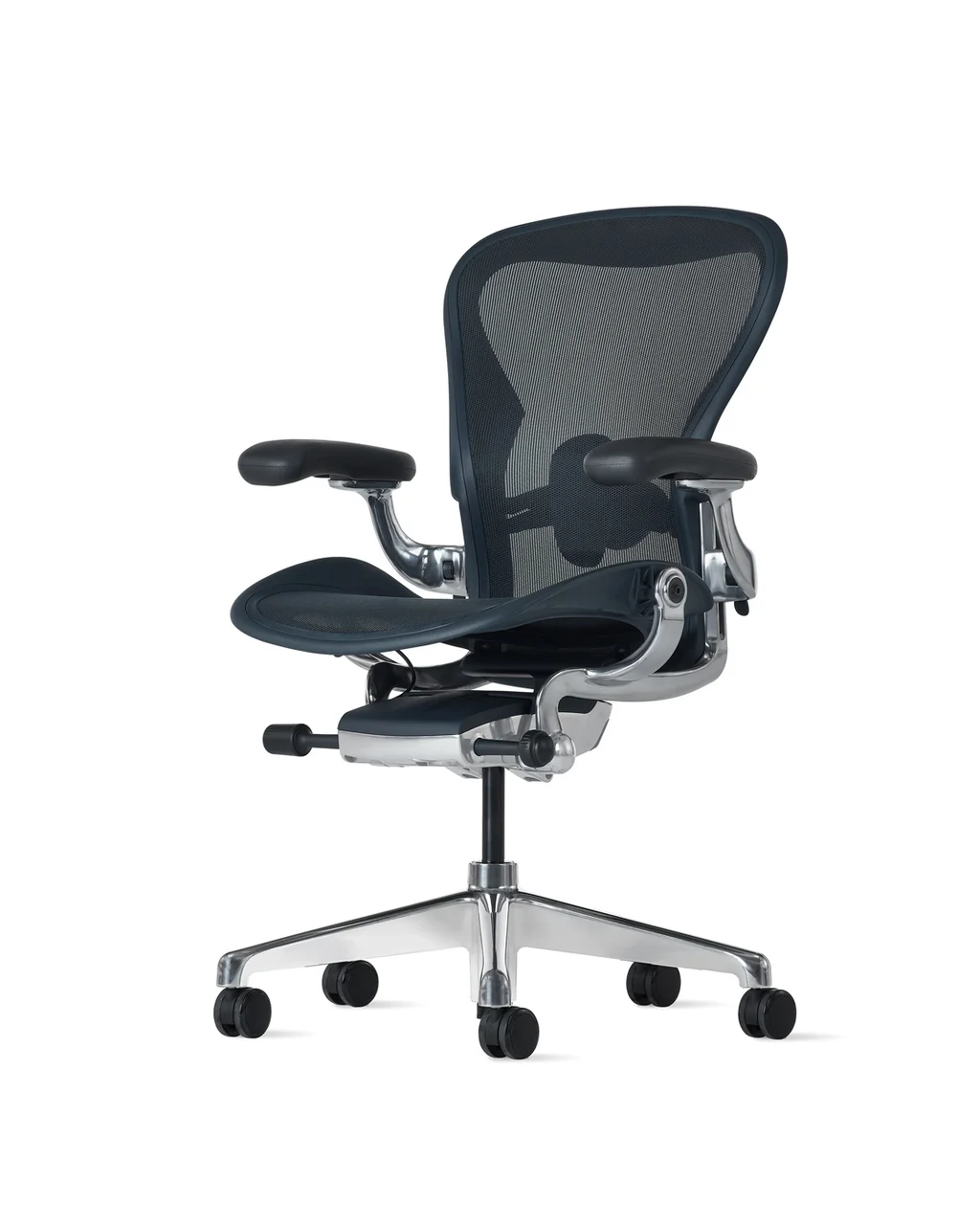
The seat and back frames are now made from a combination of recycled nylon and bio-based “biomass balance” nylon. The aluminum base has been reengineered to shave 1.85 pounds off its weight without sacrificing stability. The chair is also now built with plastic that would otherwise have ended up in oceans or landfills—a program first introduced on the Aeron in 2021.
As of June 2026, Herman Miller has diverted more than 660 metric tons of plastic through that initiative, the equivalent of about 79 million water bottles. When Herman Miller first measured the Aeron’s carbon footprint, the chair came in above 100 kilograms of embodied carbon. Today, it sits in the low 60s.
Making these changes was complicated. Substituting recycled or bio-based nylon for virgin nylon isn’t a drop-in swap. Recycled materials behave differently in manufacturing—they absorb color differently and they often show more lot-to-lot variation than virgin material. Some suppliers couldn’t actually produce at the volume Herman Miller needed. The environmental data backing many of these new materials has had to be validated in real time.
“It’s kind of like we’re flying the airplane and building it at the same time,” Wing says.
And throughout the process, Wing says the company has been laser focused on durability because Herman Miller expects the chair to outlast almost everything in the office. Of the more than nine million Aerons sold since 1994, only 0.055% have ever required full replacement.
“The most sustainable product is the one that lasts a long time,” Wing says.
For Chadwick, these changes to materials are exciting. He would have loved to focus more on sustainability back in the early ’90s. “In hindsight, I would have pushed further and earlier on the development of more sustainable materials, particularly alternatives to fossil fuel–based plastics,” he says. “That’s an area where the industry has made meaningful progress, but it continues to require innovation to reach its full potential.”
Part of why this kind of progress is now achievable, Wing argues, is structural. After 25 years working with industrial manufacturers, he says, the supplier base has finally caught up to what designers have been asking for. “For the first time in my career, it feels like the supply chain is set up to deliver what we’ve been asking for, and they’re ready,” he says. “I don’t think we’re over the hill yet, we haven’t crossed that mountaintop, but I think the pieces are now in place.”
The other tailwind is regulation. Consumers have been more quiet over the past few years when it comes to climate change and sustainability. But behind the scenes, Wing says, sustainability is moving “from voluntary to regulatory.” He points to Portland’s extended producer responsibility laws on packaging and the EU’s new reporting requirements that increasingly bind global manufacturers regardless of where they’re headquartered. And even the companies that have stopped talking publicly about sustainability are still requiring it from their vendors.
“Sustainability shows up in 99% of our client requests,” Wing says.
Breaking the masculine mold
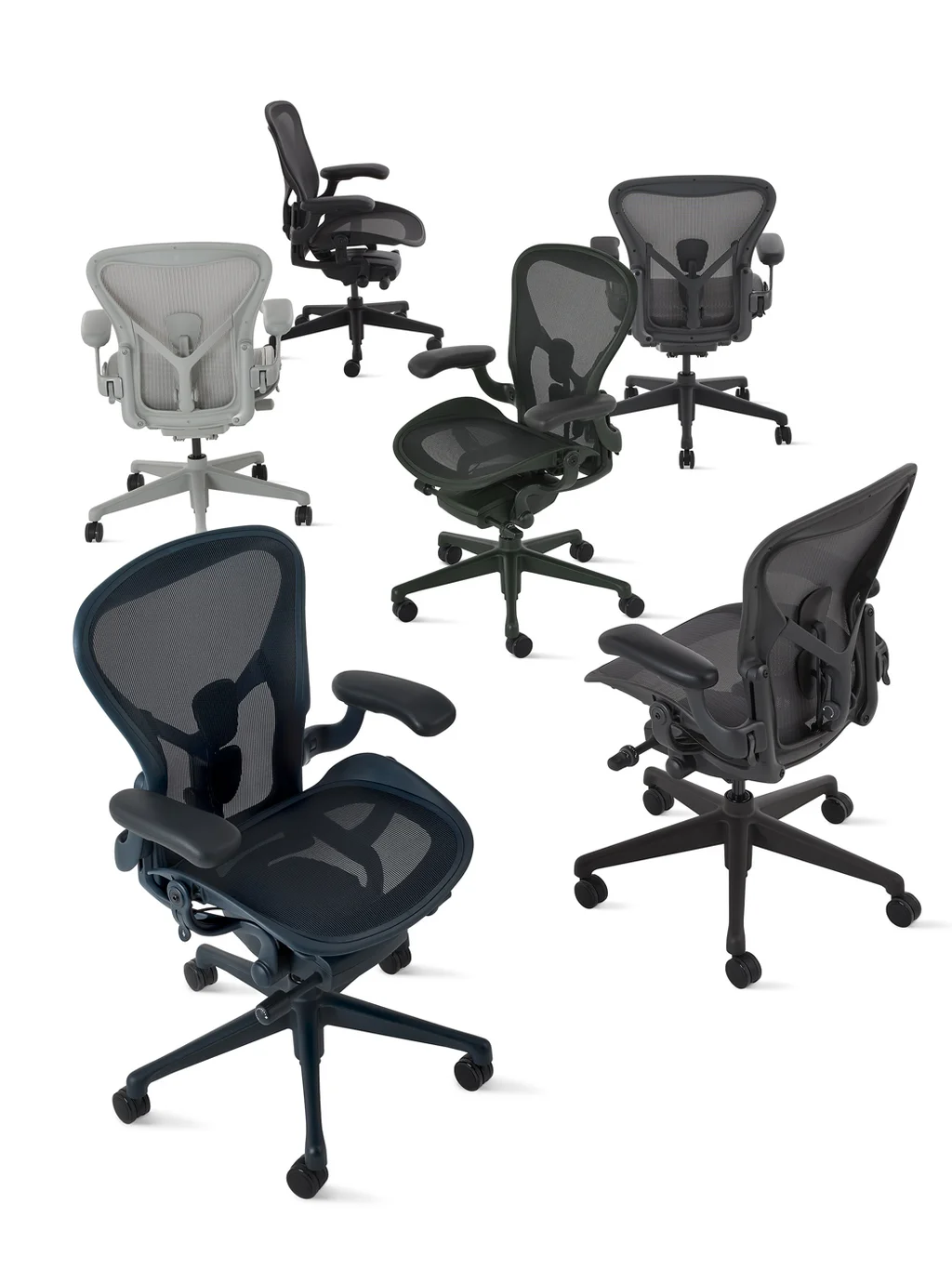
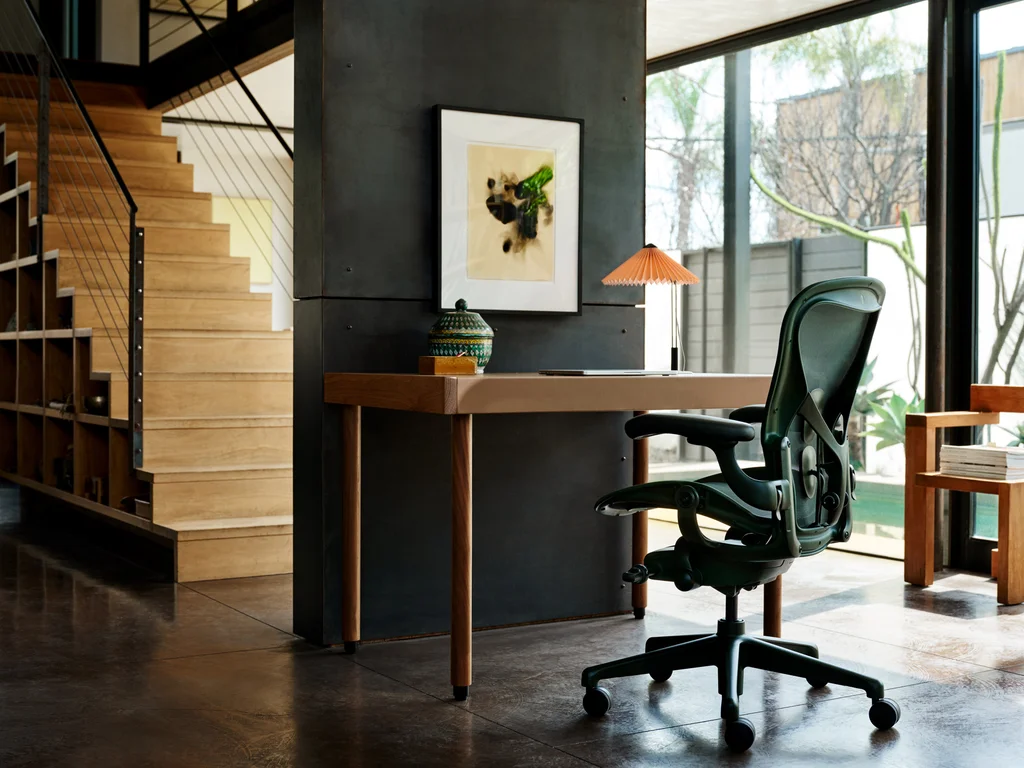
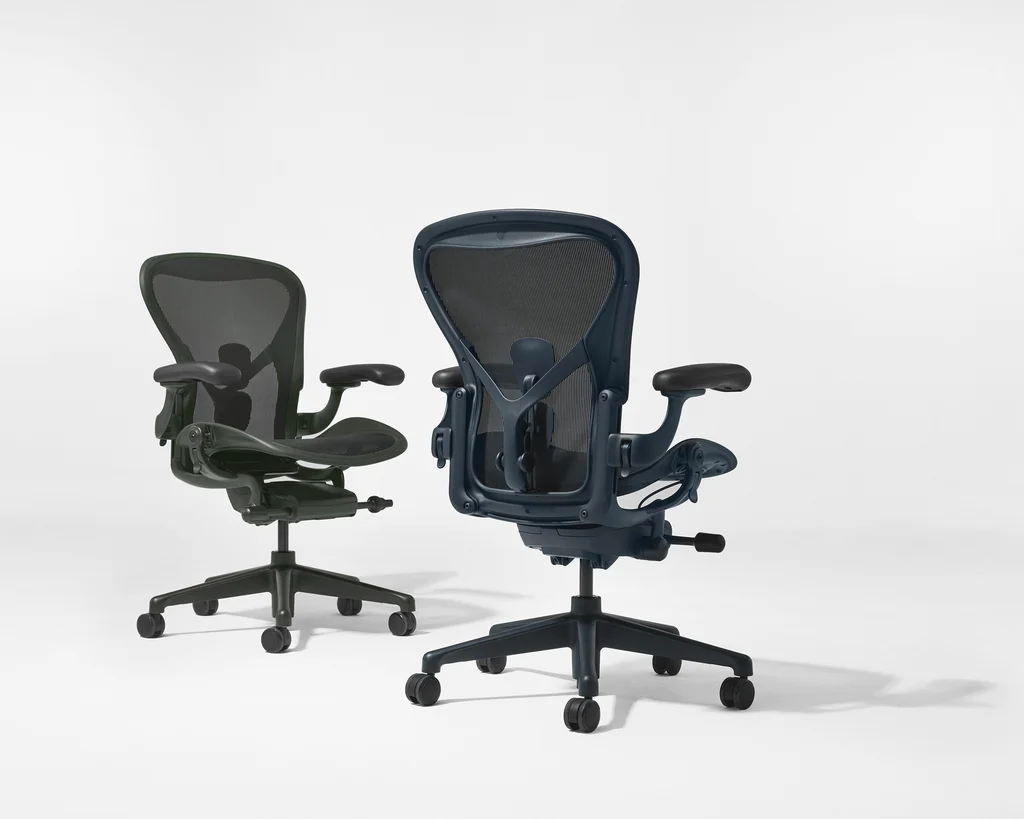
Alongside the material changes, the Aeron is also getting something it has mostly avoided in the past: color. Two saturated new shades—a deep midnight blue called Nightfall and a grounded olive green called Jasper—join the existing palette of neutrals. Both are tied to research Herman Miller has been doing on color psychology and what the design industry now calls neuroaesthetics, the study of how built environments shape cognitive and physiological response.
“Our research suggests that strategic use of color can have a powerful effect on workplace engagement and individual productivity,” says Joseph White, director of design strategy at MillerKnoll. “Saturated colors in cohesive environments have the capacity to change our respiration, our blood pressure, and even our body temperature.”
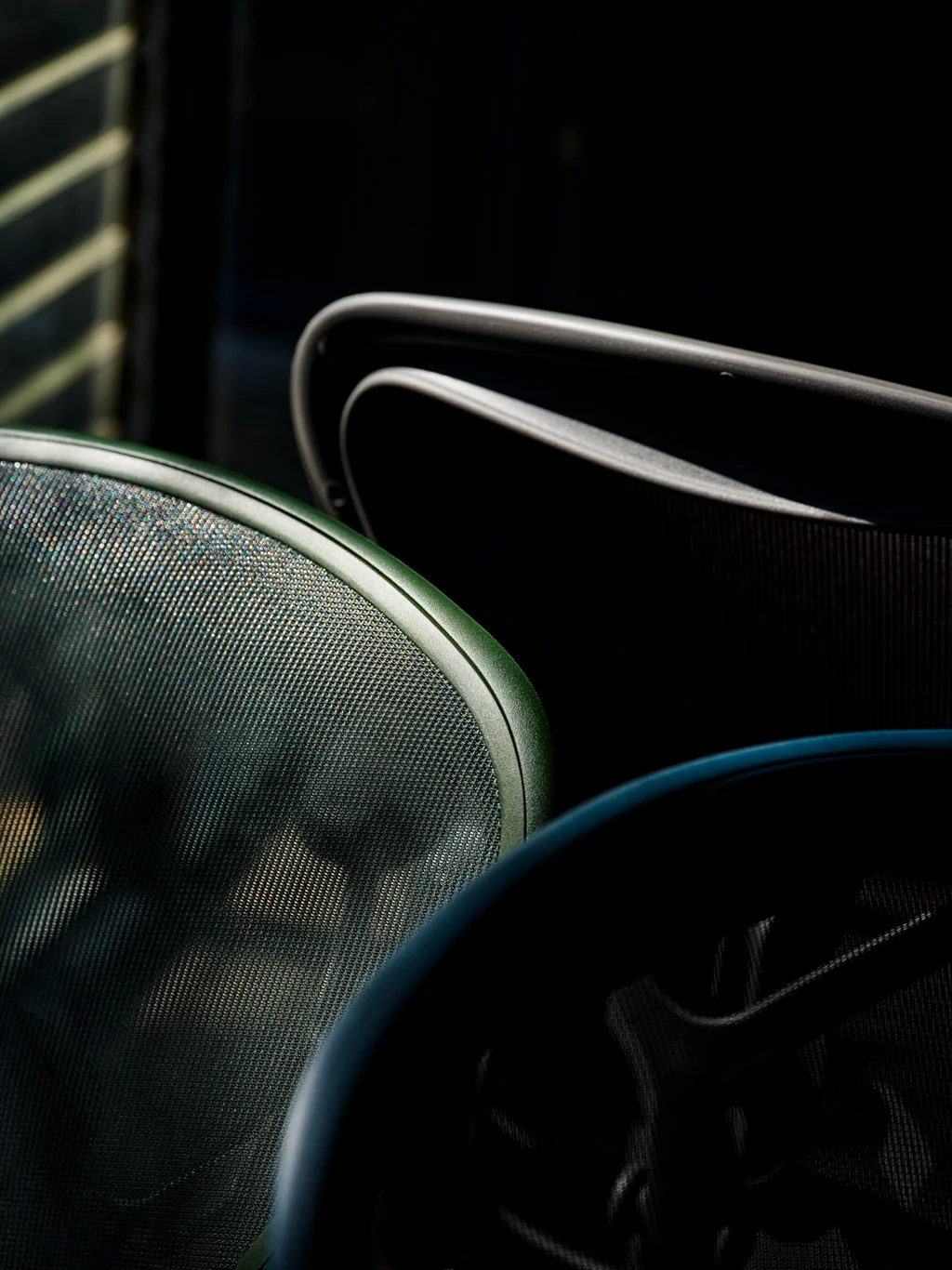
The Aeron has long carried a particular cultural weight, White notes. “It’s a symbol of industry,” he says, “but it can also be very tightly aligned with this kind of overly masculine vibe and aesthetic.” Introducing color into the Aeron line, he argues, “starts to break into that.” Both Nightfall and Jasper were calibrated to read as “near neutrals,” which are saturated enough to register but tonal enough to sit alongside the existing Aerons already populating an office floor.
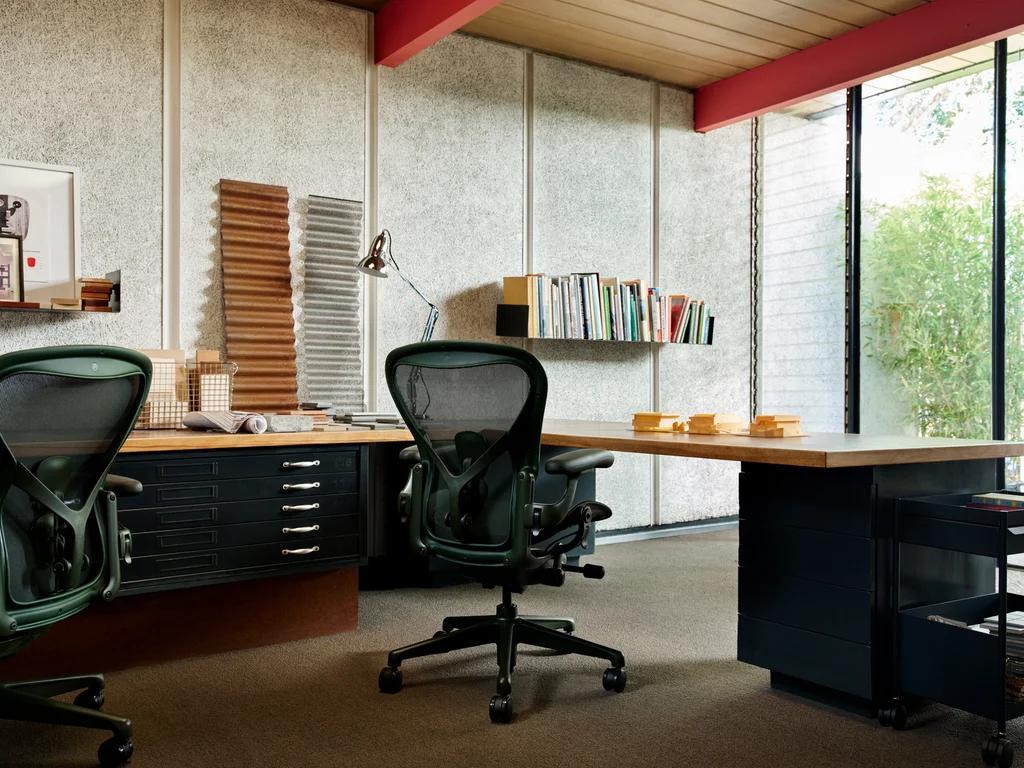
The broader point—across the materials, the geometry, the regulatory backdrop, and the new color story—is that the Aeron must continually prove its relevance as the world evolves. The 1994 chair had to answer a question about how to sit in front of a computer all day. The 2026 chair has to answer a question about how to manufacture a durable object in the era of climate change.
“That understanding of the body,” Chadwick says of the original design, “combined with the ability to adapt over time, has allowed Aeron to evolve with changing ways of working rather than becoming tied to a specific moment.”