
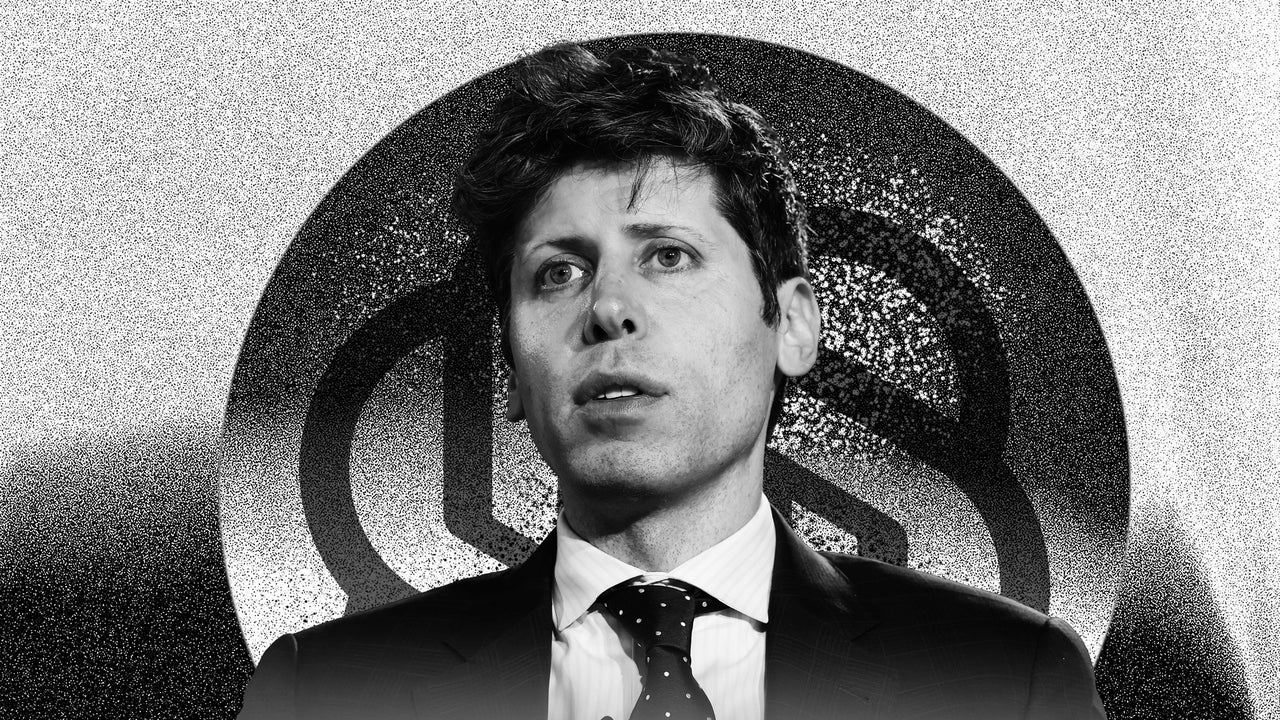
Reports of an AI-led “jobs apocalypse” are greatly exaggerated. Or at least that’s what Sam Altman now claims.
During the Commonwealth Bank of Australia conference last week, the OpenAI CEO admitted he may have been wrong about some predictions—namely the speed with which articial intelligence would feed a substantial chunk of office jobs into the digital wood chipper.
“I’m delighted to be wrong about this,” Altman said. “I thought there would have been more impact on entry-level white-collar jobs being eliminated by now than has actually happened.”
Anyone worried about their future employability, however, might not want to stop refining their résumé just yet. Altman tends to make a lot of wild tech predictions, several of which he’s already had to walk back. It’s still entirely possible that layoffs will ramp up soon, forcing him to walk back the walk-back.
The problem is that, unlike some of his more bombastic peers, some of Altman’s loftier predictions have ended up proving accurate. Just how seriously should observers take the next forecast, as OpenAI prepares to follow its chief competitor Anthropic in filing an initial public offering?
Perhaps the best way to decide is by taking a close look at his track record so far.
Predictions that proved accurate
If Altman has a penchant for grandiosity, he’s at least somewhat entitled. Historically, few people have lived to see the grandness of their vision so thoroughly realized.
“In the next five years,” he wrote in a 2021 blog post to a pandemic-addled public, “computer programs that can think will read legal documents and give medical advice.”
Whether what AI chatbots do can accurately be described as “thinking” remains the subject of debate, but Altman was 100% right about the mass adoption of AI that would follow the release of ChatGPT in 2022. In the years since, it’s become a general-purpose digital tool for millions of users—a Google that can also write a book report, or lines of code, on a user’s behalf. (Something Google itself has since become as well.)
“Eventually, you’ll just ask the computer for what you need and it’ll do all of these tasks for you,” Altman told the audience at OpenAI’s inaugural developer conference in November 2023. He probably should have stressed the essential importance of double-checking AI’s work on those tasks, but he was not wrong about the impending scale and scope of adoption.
Around the same time, he issued one of his more ominous predictions—that AI would become capable of “superhuman persuasion” well before the arrival of artificial general intelligence (AGI) or artificial superintelligence (ASI).
Sadly, this one has also allegedly come to pass. The families of several people who have died by suicide now claim that ChatGPT assisted in their deaths, with lawsuits pending.
Only time will tell which other ways AI’s superhuman persuasiveness will take hold in society.
Predictions that fell short
Some of Altman’s predictions come across as intentionally vague. Whether advancements in AI capabilities between 2025 and 2027 end up surpassing those between 2023 and 2025, for instance, won’t be easy to prove—which means it won’t be easy to disprove either.
Of course, some of his other predictions have had quantifiable outcomes that came and went.
In October 2015, while he was still president of Y Combinator, Altman appeared at Vanity Fair‘s New Establishment Summit alongside future nemesis Elon Musk. During their time onstage, the tech titans discussed many topics, including the supposedly imminent arrival of self-driving cars, which Altman claimed were coming “much faster than people think.” Unfortunately for Altman, he did not stay safely vague about the timeframe, instead adding that self-driving cars were a mere “three to four years” away. It ultimately took nearly a decade for fully autonomous vehicles to emerge, and for now at least they’re carefully geofenced to limited areas.
While self-driving cars still have a lot of kinks to work out, they seem to be much further along than artificial general intelligence.
Altman first publicly mentioned AI that matches or exceeds human intelligence during the launch of OpenAI in 2015, wisely concluding “it’s hard to predict” when the tech might be within reach. By 2024, though, he would refer to it as possibly coming in the “reasonably close-ish future,” only to later bizarrely ground the idea in a concrete, near-term timeframe the following year.
“We are now confident we know how to build AGI as we have traditionally understood it,” Altman wrote in a January 2025 blog post. “We believe that, in 2025, we may see the first AI agents ‘join the workforce’ and materially change the output of companies.”
Agentic AI did in fact hit the workforce in 2025, but the tech remains plagued with reliability issues and falls well below the bar of AGI.
No wonder Altman pivoted in August to claiming that AGI is “not a super useful term.”
Perhaps he’ll have more luck around his predictions for ASI, which he claimed in a 2024 blog post might be coming in the comfortably distant timeframe of “a few thousand days.” (Also known as 10 “Soras,” a term I just invented to describe the mere 10 months OpenAI’s text-to-video model lasted before it was discontinued earlier this year.)
The jury’s still out on these predictions
As much as Americans have happily integrated AI into their lives, they’ve also demonstrated a lot of mixed feelings about it. According to a recent poll from NBC News, for instance, 57% say the risks of AI outweigh its benefits, compared with 34% who said the opposite.
That 57% is not going to like what the future has in store if Altman’s predictions come true.
In a much-discussed blog post last summer, the CEO claimed “robots that can build other robots (and in some sense, data centers that can build other data centers) aren’t that far off.” It might even happen around the time Altman predicts intelligence will become “a utility, like electricity or water, and people buy it from us on a meter.” Altman hasn’t offered any predictions, however, about how Americans might react when more of them learn the expansion of data centers is part of what’s been driving up utility bills lately. (The 70% of Americans who already oppose the construction of an AI data center in their area won’t be pleased with these predictions either.)
When AI does surpass human intelligence by 2030, according to Altman, despite some “strange and scary moments,” society won’t change as much immediately as one might expect. It’s probably for the best that he hasn’t said much more about just what will be strange and scary in those moments, whether it will involve environmental calamity or the inability to earn a living.
As for Altman’s critics in the tech world, well, they have some predictions of their own.
According to a recent New Yorker piece, several colleagues of Altman’s allege he has a penchant for lying—including an unnamed Microsoft exec who predicted there is a “small but real chance” the OpenAI CEO might ultimately be remembered as a “Bernie Madoff- or Sam Bankman-Fried-level scammer.”