

The European Commission has now openly published a two-volume study examining “net wealth taxes,” “capital taxes,” and perhaps most alarming of all, “exit taxes.” They are no longer hiding the agenda behind slogans about “fairness” or “solidarity.” The report openly discusses how to tax wealth, how to monitor ownership, how to close compliance gaps, and how to prevent capital from escaping. This is precisely what I have warned was coming as governments across Europe enter the terminal phase of a sovereign debt crisis.
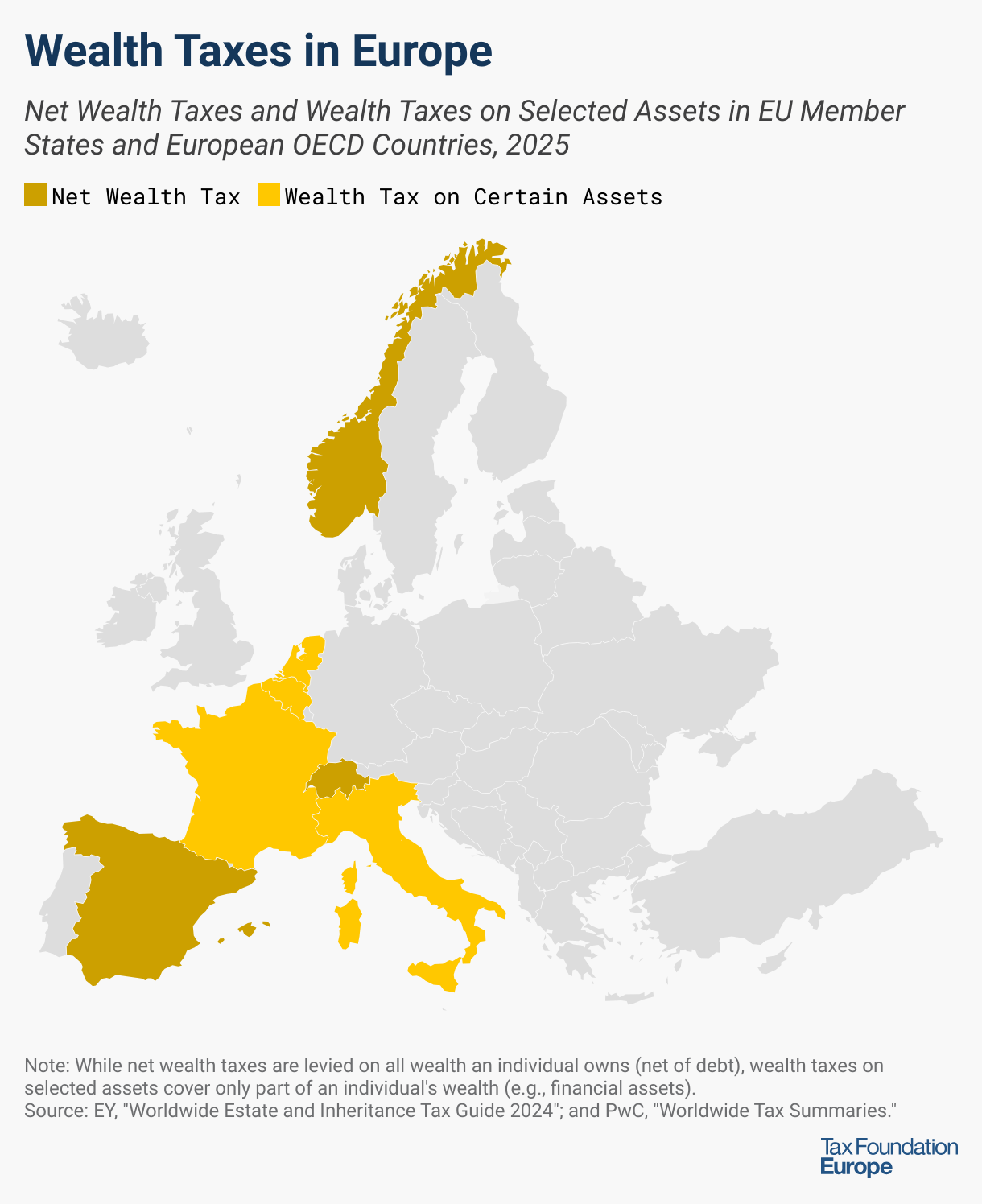
The study was commissioned by the European Commission’s Directorate-General for Taxation and Customs Union and examines wealth taxation systems across Europe and beyond, including France, Germany, Spain, Norway, Switzerland, and Colombia. The report specifically focuses on recurring wealth taxes, inheritance taxes, capital gains taxes, and exit taxes designed to capture wealth before individuals relocate outside the jurisdiction.
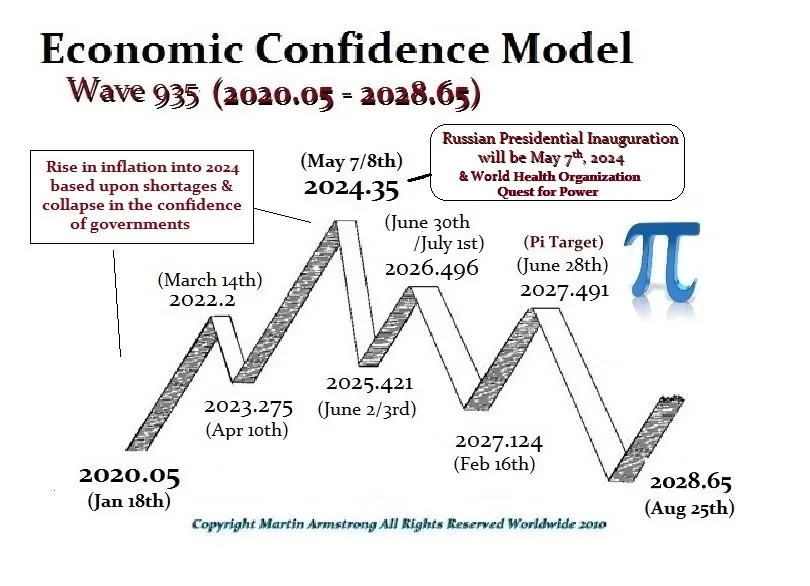
The timing is everything. Europe’s economy is collapsing into what our Economic Confidence Model has projected would become a prolonged depressionary period into 2028. Manufacturing across Germany has been imploding, energy prices remain structurally elevated because of the self-inflicted sanctions war and Net Zero agenda, and capital has been fleeing Europe into the United States for years. The EU knows this. They see the money leaving. They understand that confidence in European governments is collapsing, and instead of reforming policy, they are moving toward containment.

The report openly admits that wealth taxes historically have not generated substantial revenue because the wealthy either legally restructure assets, move wealth offshore, or physically leave the jurisdiction altogether. In essence, they’re admitting capital flight is the central problem.
This is why exit taxes are becoming so important to Brussels. An exit tax is effectively a confiscation mechanism imposed when someone attempts to leave a country or transfer assets abroad. Governments tax unrealized gains before assets are sold. In other words, they tax theoretical paper wealth simply because someone wants to escape the jurisdiction. The report discusses the importance of tracking beneficial ownership, real estate registries, digitalized tax systems, and international information sharing.
That is the real objective here. This is not about “tax fairness.” This is about trapping capital inside Europe before the sovereign debt crisis accelerates. I have warned repeatedly that governments always begin with taxation but eventually transition toward outright restrictions on capital movement. Once governments become desperate enough, taxes alone no longer suffice. They require surveillance, digital tracking, asset registries, CBDCs, and eventually capital controls. Europe is moving down that road faster than anywhere else in the world.
The ECM has consistently shown that Europe faces the greatest structural risk heading into this cycle because Brussels destroyed competitiveness through regulation, climate extremism, and endless war spending. Germany, once the industrial engine of Europe, has seen factories shutting down while energy-intensive industries relocate abroad. France is drowning in debt and social unrest. The UK is outside the EU politically but remains economically tied to the same collapsing European model. Youth unemployment across parts of southern Europe remains catastrophic even before the next recession fully arrives.
Meanwhile, the EU continues funding Ukraine endlessly while demanding military expansion under NATO pressure, despite already carrying unsustainable sovereign debt burdens. They cannot finance pensions, healthcare, migration costs, green subsidies, military spending, and debt servicing simultaneously. The mathematics simply do not work anymore.
This is where the wealth tax discussion enters the picture. The report repeatedly references growing wealth concentration and the desire for “greater roles” for wealth-related taxes in generating revenue. The political class sees private savings as the solution to public insolvency. They do not intend to cut government. They intend to harvest private capital.
We have seen this pattern throughout history. Governments facing debt crises always move against private wealth. Roosevelt confiscated gold in 1933. Capital controls spread across Europe repeatedly throughout the 20th century. Cyprus seized bank deposits in 2013. During every major sovereign crisis, governments eventually redefine ownership rights.
The danger today is that technology now allows governments to track nearly every transaction digitally. The EU report specifically highlights “effective exchange of information on beneficial owners,” asset registration systems, and the “digitalisation of tax administrations.” In plain English, they want total visibility over wealth.
One section states the importance of “effective exchange of information on beneficial owners.” That is bureaucratic language for cross-border financial surveillance. They want governments sharing ownership information internationally so assets cannot disappear outside the system. There is discussion of “real estate and asset registration.” This is why governments worldwide are pushing centralized digital registries. They want a complete inventory of who owns what before the sovereign debt crisis fully erupts. “Effectiveness depends on administrative capacity, data availability, enforcement and international cooperation, including exchange of information.” Again, this is why we are seeing extreme data harvesting measures globally.

People still do not understand where this is heading. They assume wealth taxes only target billionaires. That is how every confiscatory system begins. Then thresholds decline over time because governments discover there are not enough billionaires to finance the welfare state. France’s wealth tax experience already demonstrated this problem. Wealth taxes often drive entrepreneurs, investors, and productive capital out of the country while generating far less revenue than projected. Even the EU study acknowledges design flaws, exemptions, compliance problems, and mobility responses.
This is exactly why our models projected Europe entering a depressionary cycle into 2028 while capital continues concentrating in the United States despite all the political chaos in Washington. Capital always seeks the least-worst alternative during sovereign debt crises. Europe has become hostile toward capital formation itself. They tax productivity, regulate energy, suppress agriculture, destroy industry, and now openly discuss how to prevent wealth from leaving.
The combination of wealth taxes, exit taxes, digital IDs, CBDCs, beneficial ownership registries, and expanding surveillance powers should terrify anyone with assets inside Europe. Once capital controls formally arrive, it will already be too late. Governments never announce confiscation in advance. They implement it during emergencies.
The EU depression into 2028 is not merely an economic downturn. It is a political transformation phase where governments become increasingly authoritarian as confidence collapses. Civil unrest rises, taxation intensifies, and restrictions on movement and capital expand simultaneously. That is precisely what our ECM has been warning about for years.
If you are sitting in Europe waiting for politicians to reverse course, you are gambling with your future. Get your money out of Europe while you still can.