
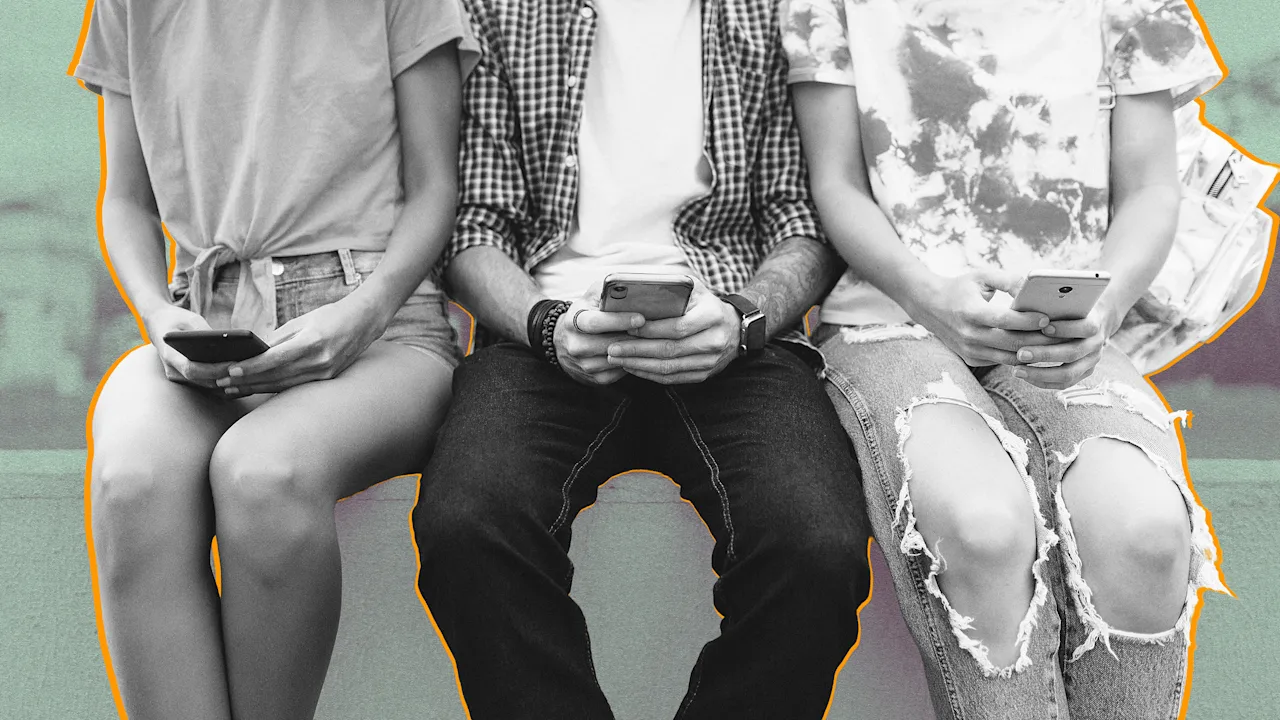
When social psychologist Jonathan Haidt published The Anxious Generation in March 2024, his core proposal—that children should be kept off social media until at least age 16, with tech companies bearing the burden of enforcement—was treated by many as aspirational, even quixotic. The tech industry dismissed it. Libertarian critics called it paternalistic overreach. Skeptics questioned the evidence base.
That was then.
In barely two years, Haidt’s “radical” idea has become something close to a global consensus—a textbook example of what political scientists call the “Overton Window”—one that’s shifted at extraordinary speed.
The Overton Window describes the range of ideas that are considered politically acceptable at any given time, ranging from unthinkable to popular and eventually to policy. Ideas outside the window—no matter how sensible—get dismissed as too extreme, too impractical, or too politically risky to touch. But when conditions change, the window can move, sometimes gradually and sometimes with startling speed, pulling yesterday’s fringe idea into today’s mainstream. That is exactly what has happened with children and social media. Politicians everywhere are now racing to get on the right side of a window that has moved decisively.
The Floodgates Have Opened
Consider what has happened just since late 2025. Australia led the charge, enacting an outright ban on social media for children under 16 that took effect in December 2025, with monetary penalties falling squarely on the platforms—not on parents or kids. France has passed a bill banning social media for children under 15. Denmark secured cross-party support for a similar ban, expected to become law by mid-2026. Spain, Germany, Malaysia, Slovenia, Italy, and Greece are all moving in the same direction.
In the United States, where bipartisan agreement on anything feels miraculous, the Kids Off Social Media Act has attracted co-sponsors from both parties—Sen. Brian Schatz (D-HI) alongside Sen. Ted Cruz (R-TX), and Chris Murphy (D-CT) alongside Katie Britt (R-AL). Virginia enacted a law effective January 2026 limiting under-16 social media use to one hour per day unless parents opt in. Over 45 states have pending legislation.
And in the U.K., a January 2026 government consultation is explicitly considering a social media ban for children, after the House of Lords defeated the government to insert an under-16 ban into the Children’s Wellbeing and Schools Bill.
This is no longer a debate about whether to act. It’s a debate about the details.
Why the Window Moved So Fast
Several forces converged to make this shift possible.
First, mounting evidence. Haidt marshaled data showing that since the early 2010s—precisely when smartphones and social media became ubiquitous among teens—rates of anxiety, depression, self-harm, and suicide among young people have surged across the developed world. The patterns are strikingly consistent across countries and cultures. As Haidt puts it: We “over-protected children in the real world and under-protected them online.”
Second, personal stories that broke through the noise. Australia’s ban originated partly from a mother’s letter to Prime Minister Anthony Albanese about her 12-year-old daughter’s suicide following social media bullying. At the U.N. General Assembly in September 2025, a mother’s speech about her daughter’s “death by bullying, enabled by social media” won support from world leaders across continents. Data persuades policymakers; stories move publics.
Third, the collective action problem became too painful to ignore. Haidt nailed this insight: Individual parents feel powerless against platforms engineered by billions of dollars of design expertise to maximize engagement. No single family can opt out without socially isolating their child. This is precisely why governments need to shift the responsibility to the platforms. When enforcement becomes the tech companies’ problem—not the parents’ problem—the collective action trap breaks.
Fourth, early results from related interventions are encouraging. Arkansas’ phone-free-school pilot program showed a 51% drop in drug-related offenses and a 57% decline in verbal and physical aggression among students within the first year. Results like these give politicians the cover they need to act boldly.
The Strategic Lesson
For those of us who study how change happens, this is a master class. An idea that seemed politically impossible in early 2024 has become politically inevitable by early 2026. That’s the speed at which Overton Windows can move when lived experience, accumulating evidence, moral urgency, and a clear articulation of the problem all align.
Note, too, where the burden of proof has shifted. Two years ago, advocates for restricting children’s social media access had to justify intervention. Today, it is the tech companies and their defenders who must explain why children should continue to have unrestricted access to platforms designed to be addictive. That reversal—the shift in who must justify what—is the surest signal that an Overton Window has decisively moved. It is further set against the backdrop of the first set of legal challenges to the platform’s business models, arguing that their designers have deliberately designed their products to be harmful to maximize their profits.
What Comes Next
Haidt, a professor of ethical leadership at New York University, didn’t create this movement alone—millions of anxious parents, grieving families, and alarmed educators did. But he gave it a framework, a language, and a set of actionable proposals. And now, politicians everywhere are scrambling to catch up with what parents already knew in their bones: that we handed our children’s attention, self-worth, and mental health to companies that optimize for engagement, not well-being—and that better guardrails, uniformly enforced, are essential.