
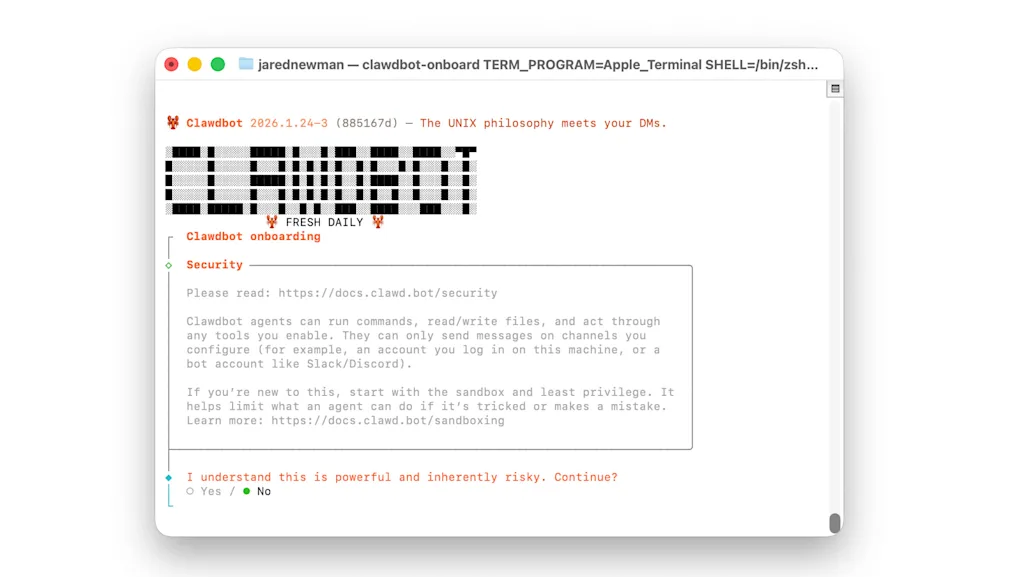
Rarely have I more appreciated the chasm between me and Silicon Valley than I have while using OpenClaw.
This new AI program, which previously went by Moltbot and before that Clawdbot, has achieved virality over the past week for its ability to control your digital life via text message. It’s an unashamedly geeky tool at the moment, but those who’ve been using it have hailed it as the future of digital assistants.
There’s just one problem: OpenClaw is exorbitantly expensive to use. Okay, maybe not for the AI boosters who think nothing of dropping $200 per month on ChatGPT Pro or Claude Max. But definitely for me as someone who balks at even a $20 per month AI subscription. Continuing to use OpenClaw would cost me a lot more than that, which isn’t worth the time it saves on a handful of menial tasks.
What is Clawdbot/Moltbot/OpenClaw?
OpenClaw isn’t like other AI tools that you access in a web browser or mobile app. Instead, you set it up on your computer via command line instructions and plug it into existing AI models from OpenAI, Anthropic, and others. As long as your machine stays on, it’s available.
Much of what OpenClaw does is similar to existing AI assistants such as ChatGPT and Claude. It can answer questions, browse the web, and connect with an array of third-party services, including your email and calendar. But it also does a few key things differently:
- It can access anything on your computer.
- You can access it through popular chat services such as WhatsApp and iMessage.
- Because it’s always running, it can proactively message you and run tasks automatically.
Like a lot of AI tools, OpenClaw is ultimately what you make of it. And while I’m not the most inventive AI user, I quickly found a few ways in which it could be more useful than conventional AI assistants.
For instance, I gave OpenClaw access to my weekly to-do list board in Obsidian, which allowed it to summarize my agenda, add new items to the list, and remove or rearrange existing items. I could do all this just by dictating into a WhatsApp message.
I also had OpenClaw handle the tedium of invoicing. After pointing out an existing invoice in my Obsidian vault, I asked it to create a copy and turn it into a new invoice based on a block of text from my FastCo author page.
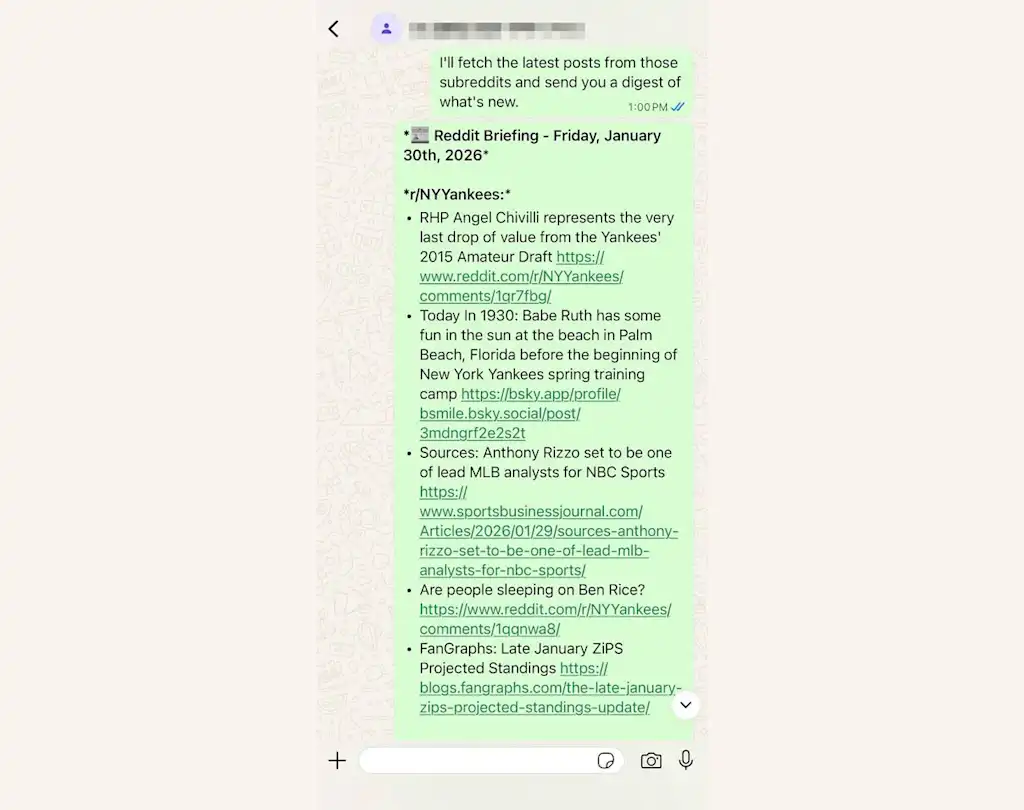
From there I started playing with OpenClaw’s scheduling abilities. I asked it to create a 9 a.m. roundup of Techmeme headlines that focused on consumer news and skipped over things like earnings reports and personnel changes. Then I had it set up a bi-hourly digest of a few different subreddits, thereby discouraging me from compulsively checking them during work hours.
At this point I was feeling pretty good about what OpenClaw could do, and was even looking forward to thinking up more ideas. Then I realized how much it would cost to keep using it.
Cost creep
Although OpenClaw uses major AI models from companies like OpenAI and Anthropic, it doesn’t tie into their consumer-facing products. Instead, you must connect with those companies’ developer APIs, whose pay-as-you-go model charges for every query.
A couple years ago, when I dabbled in those APIs to generate playlists in Plexamp, each request cost a fraction of a penny. Using OpenClaw is wildly more expensive, especially if you opt for Anthropic’s Opus 4.5 model, as the developer recommends.
Just getting OpenClaw set up cost me about $4, because I didn’t trust it with access to my entire file system given the significant security concerns involved . Setting up OpenClaw’s “sandbox” mode, which lets you choose which folders it can access, took some back-and-forth troubleshooting. By the time I’d set up my other automations, I was already about $10 deep.
If those were just one-time costs, I wouldn’t have cared too much. But every time I asked OpenClaw anything, I’d see a surprising leap on Claude API cost chart. Just asking why a particular story was excluded from its morning Techmeme roundup, for instance, cost $0.64. Confirming which language model OpenClaw was using cost another $0.37. Those fractions of a penny snowballed.
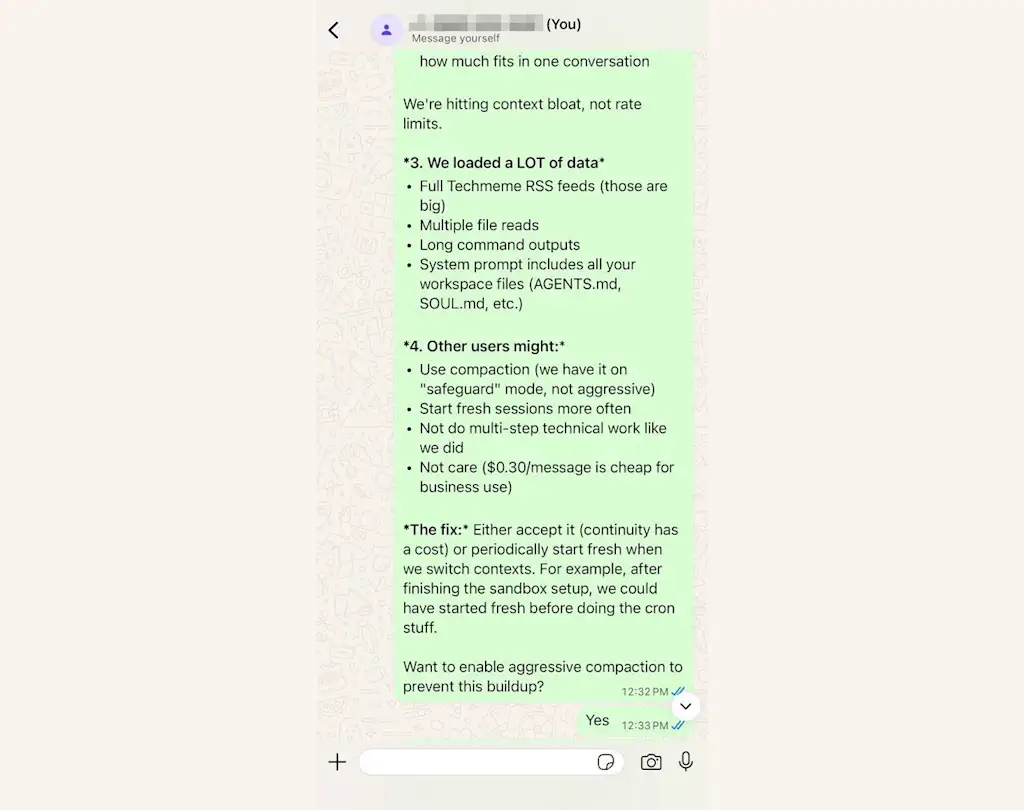
Eventually I decided to ask OpenClaw why it was so pricey, which revealed part of the problem: Each query was drawing on our entire conversation as context—including my initial sandboxing setup—and that gets expensive. (It may have also explained the occasional rate limit errors I was getting in response to some queries.)
“Either accept it (continuity has a cost) or periodically start fresh when we switch contexts,” OpenClaw’s AI informed me.
Ultimately, I did wipe OpenClaw’s memory, which meant I had to teach it my to-do list and digest tasks all over again. I also switched from Claude Opus 4.5 to Claude Sonnet 4.5, which is cheaper, as some users have noted.
Even with those changes, the costs added up quickly. Managing my to-do list cost about five cents. Delivering my daily Techmeme digest cost about 10 cents. The bihourly Reddit briefings cost about 20 cents. It doesn’t sound like much, but it puts me on track to spend over $30 per month, and that’s without even bothering to give OpenClaw any new tasks or ask it any extra questions.
Again, the AI enthusiasts in Silicon Valley might shrug off such costs, but it’s more than I care to spend on any individual service, let alone one that’s only providing a few modest conveniences.
What I’ve learned
OpenClaw’s overnight fame has at least proven a few things: Interacting with AI via an existing messaging app can be pretty neat if it’s useful enough, especially when it can can reach out proactively. Giving AI access to your computer also opens up some interesting possibilities (but also some serious security risks).
For me, though, the biggest takeaway is how much this stuff actually costs when it’s not being subsidized by venture capital or being given away by a big tech company in growth mode. OpenClaw is the rare AI product that actually seems sustainable. But unless the economics of AI API access change, mass adoption may escape its grasp.