
Key Takeaways
- At 18 years old, Wang worked at Apple as an engineering product manager.
- He left the role to attend Harvard, then dropped out of college to build Dub.
- Dub boasts $2B in trades and just launched its AI investing assistant Arlo.
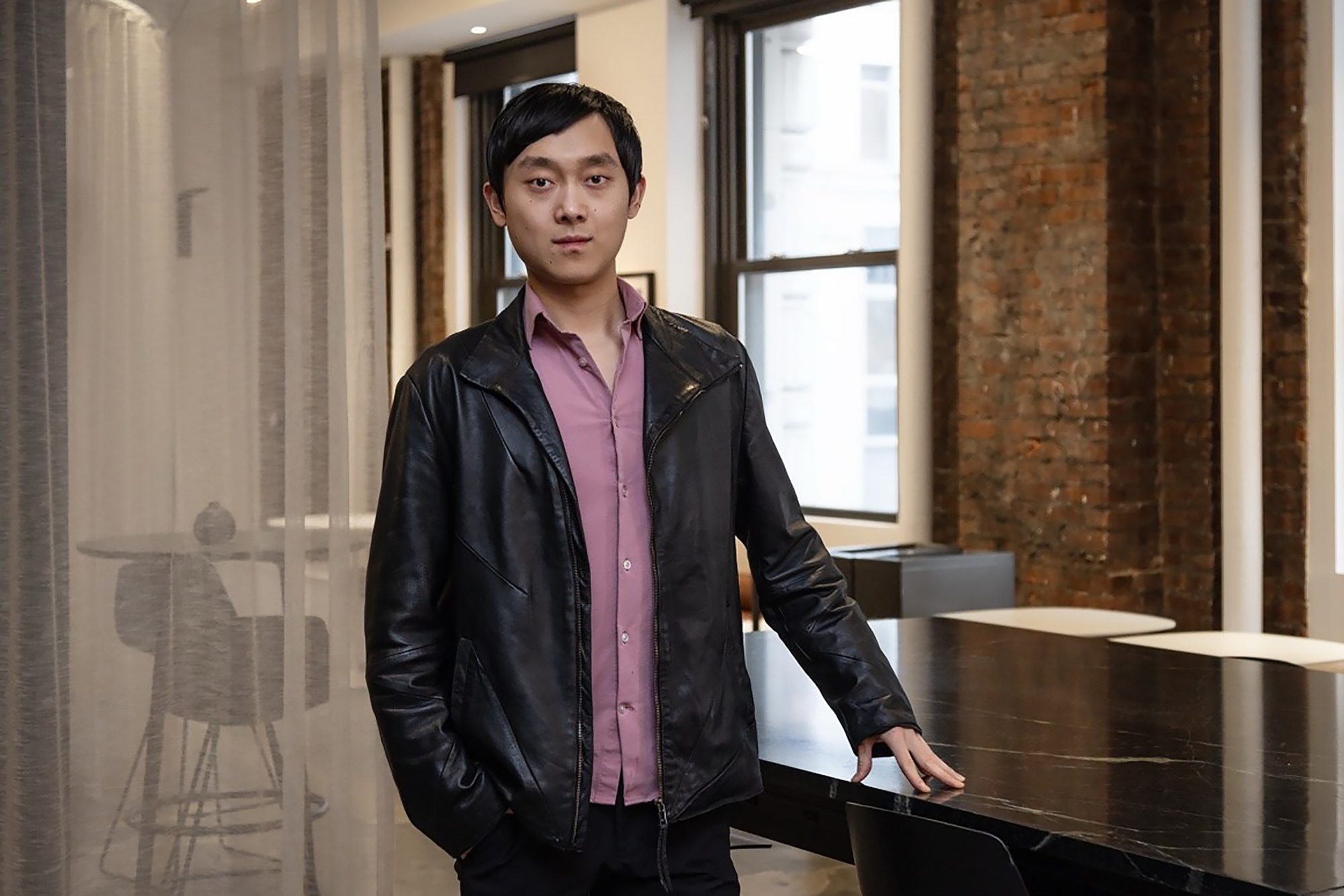
This as-told-to story is based on a conversation with Steven Wang, founder and CEO of Dub, a social investing platform that allows everyday investors to follow verified Wall Street professionals and wealth managers and automatically mirror their strategies. Wang left high school to build, fund and sell a VR startup called Realism. By age 18, Apple had hired him as an engineering product manager. He went on to attend Harvard before dropping out to focus on Dub, which has powered $2 billion in trades. The piece has been edited for length and clarity.
Reading Warren Buffett, starting to trade in second grade
My parents immigrated here from China. We didn’t have a lot of money growing up, so money was always a big topic in the family. I started hustling on the playground: just doing business here and there, selling Pokémon cards, etc. That got me interested in financial markets. I read a couple of the early books from Ben Graham and Warren Buffett. Then I asked my parents to open me a custodial trading account in second grade. They loaned me $200.
I remember losing a lot of money in those early days. It was still $7 a trade before Robinhood. But it was so cool, this concept of ownership in a company, no matter how small it was. In many ways, it was the first time I really realized the American dream. That was super inspiring for me as a kid, and I continued to invest.
Dropping out of Harvard to work on a second company
Early on, I got into technology too, through robotics. I ended up starting my first company, in virtual reality, during my sophomore year of high school. It was my first time leaving home, raising venture capital. We actually sold the business, and that was the first time I made some real money as a kid. So that led me to go work for Apple. I was the youngest person on our team. Then I decided to go to college.
I started at Harvard in the fall of 2020. Not a great time to start school. The pandemic had just hit. Classes were on Zoom. And the markets were starting to get really frothy. Crypto was taking off, all the SPACs (special purpose acquisition companies). Everything was happening. Robinhood and Coinbase were IPO-ing in the middle of 2021. I was trading all day long because there was just so much time.
Trading landscape shifts, inspiring investing platform Dub
Trading in 2021 was very different from when I started. The rise of social media, the influencer economy. People and their ideas drove investments — the biggest example of that was GameStop. People believed in one guy with a random username so much that they really changed the financial industry as we knew it.
So I was inspired to think about, How do we productize that? How do we make it simple to follow someone’s trades or investments that you believe in? And that led to the birth of Dub, the platform that makes it simple to copy someone else’s portfolio. That was five years ago. I left school and moved to New York City, and I’ve been working on Dub since.
When it came to fundraising for Dub, I feel like the Harvard dropout piece helped. And I’d sold a company before in high school. The investors from my first company didn’t even know what I was doing but offered to back the venture. So I definitely had a fundraising advantage many people starting out don’t necessarily have. And Dub was lucky to attract some of the best investors in the world — a lot of people that I’d idolized, like the CEOs and founders of Uber, Airbnb, Robinhood, Kalshi. Today, they remain some of my closest mentors.
Completing a more than $30 million Series A last year
We did our Series A last year, more than $30 million. As we’ve grown, the money’s been more a function of validation of the business and less that original vision and pitch, because we’re just a much larger and scaled company now. So I would say the fundraising was harder in a sense because it was based on the proof of the business.
It took about two and a half years to build Dub into a product people could use. No one had ever done what we’re doing with copy trading in the U.S. And to be a brokerage like Robinhood or Schwab, you have to get regulated by FINRA, the SEC. So it took us a long time to get that regulatory structure together, and then a long time to get it approved by the regulators. But that gave us a moat because we’re the first ones to do something that no one had really tried before. So that was exciting. Also, this is pre-AI, so building a whole brokerage from the ground up is a lot of work.
Dub’s process can be likened to eBay’s or Airbnb’s
You can think of Dub like eBay or Airbnb. Anyone can become a seller. So if they think they have a good strategy or good skill at investing, they can open an account just like a regular user, and they can choose then to publish their portfolio that they build. And a portfolio is like a fund, a basket of stocks they can trade in and out. Once these are launched, any user on Dub can see it, and they can decide to copy that portfolio. Whenever that portfolio trades, it automatically mirrors those trades in any customer account. Now, we have 400 to 500 of these people who have built these portfolios and launched them. It’s a minimum bar of $10,000 to invest in your own portfolio to launch it. So we have some quality filters. And there’s a very diverse range of investing strategies.
We also have 20 premium creators, and it’s a very high bar to become one. You need to have an extended track record. Any creator on Dub has the chance to get “promoted” from a regular creator to a premium creator. They need to meet a minimum time on platform, show that they can beat the market in performance and pass a series of interviews with our investments team so that we know they are real investors worth following and also not just lucky.
Only premium creators get a cut. Premium creators can charge a percentage of assets management fee, similar to ETFs or mutual funds.
Dub makes money through our subscription, which is $89.99 per year, and we also take a cut of the management fees that premium creators make.
Launching Dub’s AI investing assistant Arlo
We just launched Arlo, one of the industry’s first AI investing assistants that uses algorithms to mirror how financial advisors make decisions. Usually, to hire an investment advisor or put your money at Goldman Sachs, you need to be worth millions, if not tens of millions of dollars. With AI, for the very first time, it’s going to be like when Robinhood made trading free. There’s going to be a democratization event where probably 90% to 95% of the advice that you get from a real-life investment advisor can now be provided by AI.
So we decided to embark on this journey about a year ago, and it’s a lot harder than it looks. It’s not just like talking to ChatGPT or Claude. There’s a lot of work to make sure it gives accurate, regulated advice, no hallucination, but also has the right math and algorithms to figure out accurate mathematical advice to give someone. And it needs to give the same response every time.
The Arlo AI advisor can automatically build a portfolio
I think this will be a really cool moment in history where we look back upon this maybe five to 10 years later, like, Wow, now anyone with a phone can much better manage their money and not go into investing blind. The AI advisor will automatically build you a portfolio: These are the five people that you copy, this is what percentage you should do in each person, etc. And that’s how you build the most optimized, diversified portfolio that is aligned with how you want to invest and your risk tolerance.
We are clearly undergoing one of the most drastic moments in human history. Intelligence in many ways is getting rewritten by a potentially uncontrollable entity. So yes, there’s doom-ism, but on the flip side, optimistically, people at a younger age have never been able to build more with less. I would have loved to have AI when I started Dub. It would have been a whole different company-building experience. So to any young person, I’d say, if you have a dream, go pursue it. It’s one of the most beautiful things in life. Don’t hesitate. You may not have this chance again in a long time.
This article is part of our ongoing Young Entrepreneur® series highlighting the stories, challenges and triumphs of being a young business owner.
Key Takeaways
- At 18 years old, Wang worked at Apple as an engineering product manager.
- He left the role to attend Harvard, then dropped out of college to build Dub.
- Dub boasts $2B in trades and just launched its AI investing assistant Arlo.
This as-told-to story is based on a conversation with Steven Wang, founder and CEO of Dub, a social investing platform that allows everyday investors to follow verified Wall Street professionals and wealth managers and automatically mirror their strategies. Wang left high school to build, fund and sell a VR startup called Realism. By age 18, Apple had hired him as an engineering product manager. He went on to attend Harvard before dropping out to focus on Dub, which has powered $2 billion in trades. The piece has been edited for length and clarity.
Reading Warren Buffett, starting to trade in second grade
My parents immigrated here from China. We didn’t have a lot of money growing up, so money was always a big topic in the family. I started hustling on the playground: just doing business here and there, selling Pokémon cards, etc. That got me interested in financial markets. I read a couple of the early books from Ben Graham and Warren Buffett. Then I asked my parents to open me a custodial trading account in second grade. They loaned me $200.
I remember losing a lot of money in those early days. It was still $7 a trade before Robinhood. But it was so cool, this concept of ownership in a company, no matter how small it was. In many ways, it was the first time I really realized the American dream. That was super inspiring for me as a kid, and I continued to invest.