
Close Menu
    Facebook X (Twitter) Instagram
    TRENDING :
    • “Nobody Tells Me What We Should Be Selling or Not” * The Gateway Pundit * by Jordan Conradson
    • Zohran Mamdani and the Politics of Joy
    • Would you work harder if you knew your boss was anti-union?
    • Dylan Mulvaney Responds to Trump Roasting CNN’s Kaitlan Collins by Comparing Her Appearance to the Trans Activist * The Gateway Pundit * by Cassandra MacDonald
    • Claude users’ shared conversations were showing up in Google searches
    • RINO John Thune Lashes Out at Trump Amid Criticism Over SAVE Act – “Show Me How We Get an Outcome” * The Gateway Pundit * by Jordan Conradson
    • You have a big idea. Here’s how to turn it into impact
    • After Biden Tapes Released, Former Asst. AG for Environment Jeff Clark Argues – By Law – Joe Biden Must Forfeit $8 Million for Book Advance and His Delaware Home Where He Illegally Kept Classified Information
    Populist Bulletin
    • Home
    • US Politics
    • World Politics
    • Economy
    • Business
    • Headline News
    Populist Bulletin
    Home»Business»Would you work harder if you knew your boss was anti-union?
    Business 3 Mins Read

    Would you work harder if you knew your boss was anti-union?

    Business 3 Mins Read
    Share Facebook Twitter Pinterest LinkedIn Tumblr Telegram Email Copy Link
    Follow Us
    Google News Flipboard
    Share
    Facebook Twitter LinkedIn Pinterest Email

    Unions have grown more popular in recent years, with 16.5 million workers represented by a union in 2025—the highest share of the overall workforce in 16 years. As workers have mounted high-profile union campaigns at companies like Starbucks and Amazon, some employers have openly pushed back on those efforts, in turn becoming increasingly vocal about their opposition to unions.  

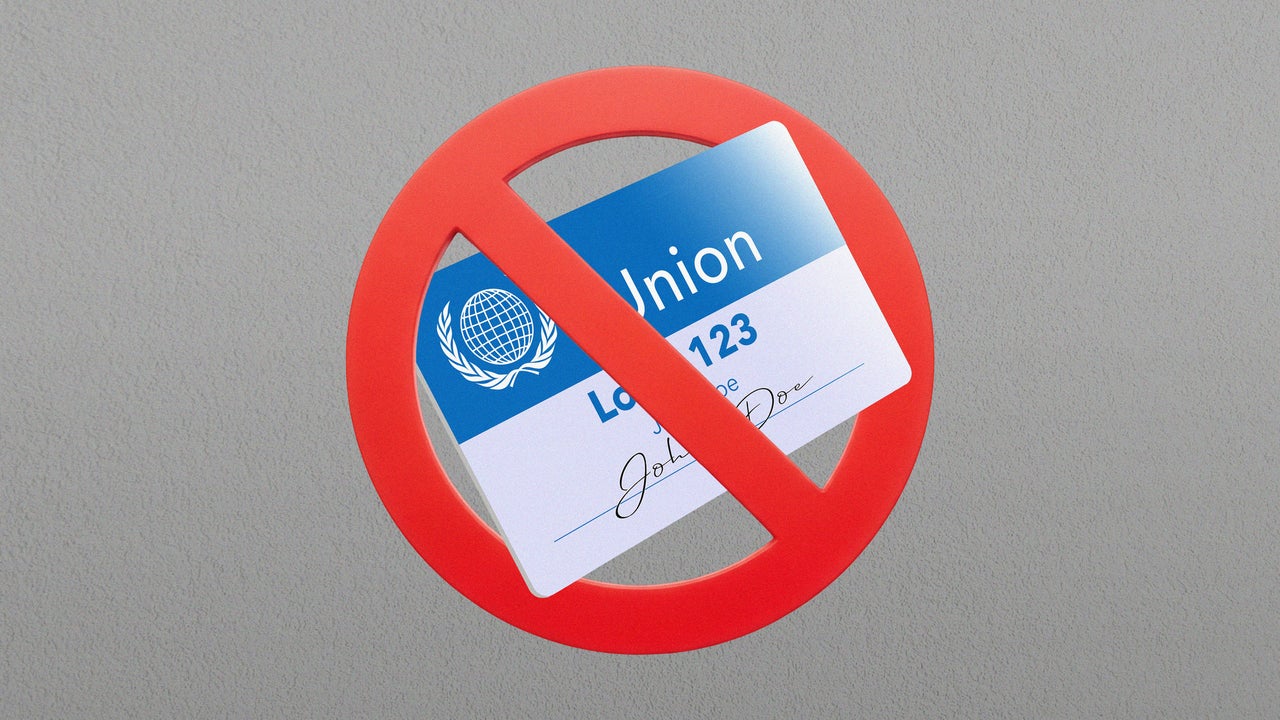
    New research from Cornell University indicates that a company’s stance on unions can have a measurable impact on its workforce and shape worker productivity.

    In an experiment that involved asking participants to act as workers and managers, researchers found that when a company disclosed its opposition to unions, some employees took a cue from that and responded by working harder—but only if they were skeptical of unions or thought collective bargaining was not in their best interests. 

    “Workers use the manager’s public stance to infer how managers intend to set pay under individual bargaining,” Xinyu Zhang, an accounting professor at Cornell and coauthor of the research paper, said in a statement. “Managers’ opposition gives workers information, and that information can change their behavior.”

    The workers who were already in favor of individual bargaining seemed to interpret their employer’s stance as a sign that they could negotiate higher wages if they increased their productivity. But when workers were in support of collective bargaining, their employer’s position on unions did not change their behavior, in part because that knowledge seemed simply to affirm what they already believe—that individual bargaining puts managers at an advantage.

    In the experiment, workers who were in support of individual bargaining successfully negotiated wage increases. For those who favored collective bargaining, there was little change. 

    This research suggests that how an employer publicly responds to a union campaign can significantly influence its workforce—even without the added pressure of other tactics companies often employ when faced with organizing efforts. While most employers tend to be opposed to unions, not all of them are explicit about it.

    Companies like Starbucks and Amazon have been clear on the matter in their public comments and have reportedly held captive-audience meetings, in which employers discourage workers from joining unions. Other employers, like Microsoft, have taken a more measured approach, even adopting a formal agreement to remain neutral in any future unionization efforts. 

    As the researchers note, workers are more split when it comes to their opinion of unions. Even with the uptick in organizing activity, unionized workers account for only a fraction of the overall workforce, with just 11.2% of workers represented by a union. But surveys show that unions have become more and more appealing to American workers; in 2025, more than 50 million people expressed a desire for a union at their company but were unable to get one. 

    It’s not hard to imagine why: A recent report from the Economic Policy Institute found that tripling union membership could significantly raise wages across the workforce, giving the median worker a 14.5% raise, or the equivalent of more than $7,700 per year. Over the course of a year, workers could stand to gain $1.2 trillion. For decades, worker productivity has far outpaced wage growth—a clear sign that workers don’t benefit from individual bargaining nearly as much as they might assume.


    Source link

    Share. Facebook Twitter Pinterest LinkedIn Tumblr Email

    Related Posts

    Claude users’ shared conversations were showing up in Google searches

    July 28, 2026

    You have a big idea. Here’s how to turn it into impact

    July 28, 2026

    How ‘wildflowering’ at work could lead to promotions

    July 28, 2026
    Top News
    Business 15 Mins Read

    What Is a Startup Business Loan Calculator?

    Business 15 Mins Read

    A startup business loan calculator is a crucial tool for entrepreneurs like you, helping estimate…

    Apple stock just reached an all-time high—and it’s because of this landmark product

    October 20, 2025

    Government Shutdowns: Past Lessons and Impacts

    October 1, 2025

    LLMs don’t get mental health right. We need a two-pronged approach to fix them

    April 24, 2026
    Top Trending
    World Politics 3 Mins Read

    “Nobody Tells Me What We Should Be Selling or Not” * The Gateway Pundit * by Jordan Conradson

    World Politics 3 Mins Read

    President Trump on Monday responded to Israeli Prime Minister Benjamin Netanyahu for…

    US Politics 6 Mins Read

    Zohran Mamdani and the Politics of Joy

    US Politics 6 Mins Read

    And it’s backed up by actions and initiatives that seem designed to…

    Business 3 Mins Read

    Would you work harder if you knew your boss was anti-union?

    Business 3 Mins Read

    Unions have grown more popular in recent years, with 16.5 million workers…

    Categories
    • Business
    • Economy
    • Headline News
    • Top News
    • US Politics
    • World Politics
    About us

    The Populist Bulletin was founded with a fervent commitment to inform, inspire, empower and spark meaningful conversations about the economy, business, politics, government accountability, globalization, and the preservation of American cultural heritage.

    We are devoted to delivering straightforward, unfiltered, compelling, relatable stories that resonate with the majority of the American public, while boldly challenging false mainstream narratives that seem to only serve entrenched elitists, and foreign interests.

    Top Picks

    “Nobody Tells Me What We Should Be Selling or Not” * The Gateway Pundit * by Jordan Conradson

    July 28, 2026

    Zohran Mamdani and the Politics of Joy

    July 28, 2026

    Would you work harder if you knew your boss was anti-union?

    July 28, 2026
    Categories
    • Business
    • Economy
    • Headline News
    • Top News
    • US Politics
    • World Politics
    Copyright © 2025 Populist Bulletin. All Rights Reserved.

    Type above and press Enter to search. Press Esc to cancel.