
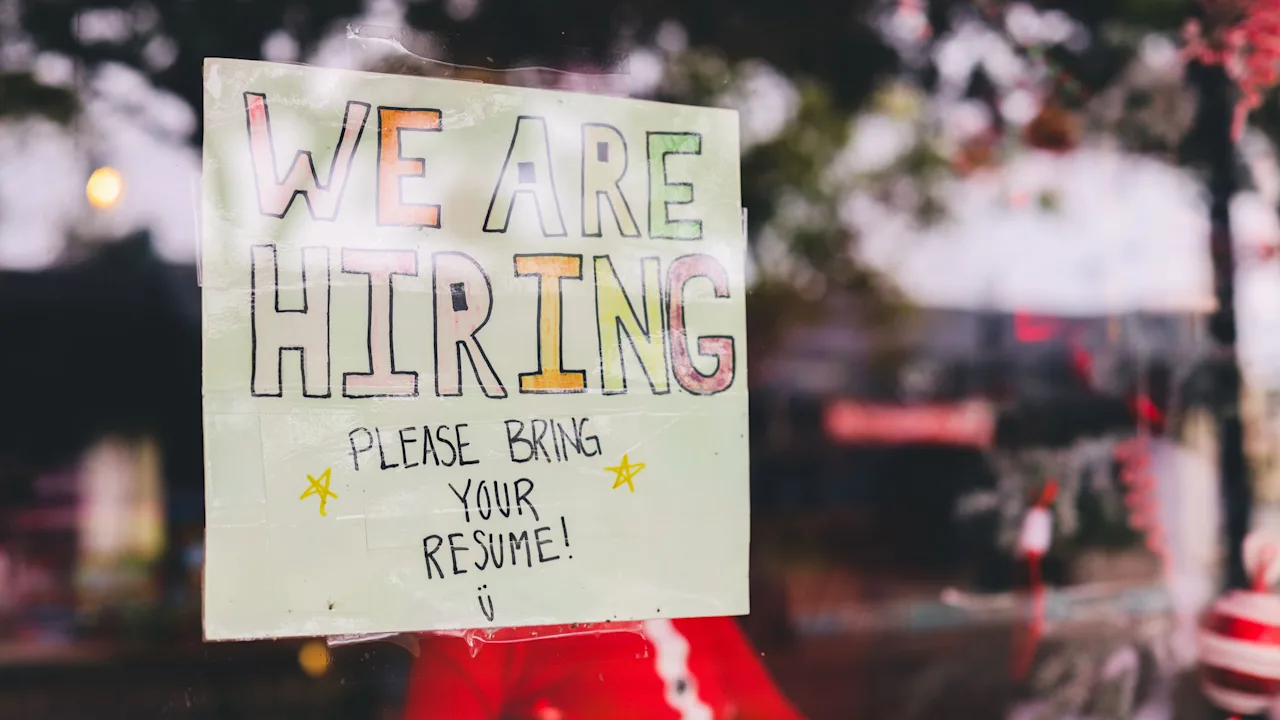
Small businesses are planning to hire fewer recent college graduates than they did in 2025, making it likely harder for this cohort to find entry-level jobs.
In our recent national survey, we found that small businesses are 30% more likely than larger employers to say they are not hiring recent college graduates in 2026. About 1 in 5 small-business employers said they do not plan to hire college graduates or expect to hire fewer than they did last year.
This would be the largest anticipated decrease in small businesses hiring new graduates in more than a decade.
Small businesses are generally those with fewer than 500 employees, based on standards from the U.S. Census Bureau and federal labor data.
This slowdown is happening nationwide and is affecting early-career hiring for people graduating from both college and graduate programs—and is more pronounced for people with graduate degrees.
Nearly 40% of small businesses also said they do not plan to hire, or are cutting back on hiring, recent grads who don’t have a master’s of business administration. Almost 60% said the same for people with other professional degrees.
National data shows the same trend. Only 56% of small businesses are hiring or trying to hire anyone at all, according to October 2025 findings by the National Federation of Independent Business, an advocacy organization representing small and independent businesses.
Job openings at small employers are at their lowest since 2020, when hiring dropped sharply during the early months of the COVID-19 pandemic.
Some small businesses may change their hiring plans later in the spring, but our survey reveals that they are approaching hiring cautiously. This gives new graduates or students getting their diplomas in a few months information on what they can expect in the job market for summer and fall 2026.
How small businesses tend to hire new employees
Our survey, which has been conducted annually at the LeBow Center for Career Readiness at Drexel University, collected data from 647 businesses across the country from August 2025 through November.
About two-thirds of them were small businesses, which reflects their distribution and proportion nationally.
Small businesses employ nearly half of private-sector workers. They also offer many of the first professional jobs that new graduates get to start their careers.
Many small employers in our survey said they want to hire early-career workers. But small-business owners and hiring managers often find that training new graduates takes more time and support than they can give, especially in fields like manufacturing and health care.
That’s why many small employers prefer to hire interns they know or cooperative education students who had previously worked for them while they were enrolled as students.
Larger employers are also being more careful about hiring, but they usually face fewer challenges. They often have structured onboarding, dedicated supervisors and formal training, so they can better support new employees. This is one reason why small businesses have seen a bigger slowdown in hiring than larger employers.
Then there are small businesses in cities that are open to hiring recent graduates but are struggling to find workers. In cities, housing costs are often rising faster than starting salaries, so graduates have to live farther from their jobs.
In the suburbs and rural areas, long or unreliable commutes make things worse. Since small businesses usually hire locally and cannot pay higher wages, these challenges make it harder for graduates to accept and keep entry-level jobs.
Industry and regional patterns
Job prospects for recent college graduates depend on the industry. The 2026 survey shows that employers in health care, construction and finance plan to hire more graduates than other fields. In contrast, manufacturing and arts and entertainment expect to hire fewer new graduates.
Most new jobs are in health care and construction, but these fields usually do not hire many recent college graduates. Health care growth is focused on experienced clinical and support roles, while construction jobs are mostly in skilled trades that require prior training or apprenticeships instead of a four-year degree.
So, even in growing industries, there are still limited opportunities for people just starting their careers.
Even though small businesses are hiring less, there are still opportunities for recent graduates. It’s important to be intentional when preparing for the job market. Getting practical experience matters more than ever. Internships, co-ops, project work and short-term jobs help students show they are ready before getting a full-time position.
Employers often say that understanding how the workplace operates is just as important as having technical skills for people starting their careers.
We often remind students in our classes at LeBow College of Business that communication and professional skills matter more than they expect. Writing clear emails, being on time, asking thoughtful questions and responding well to feedback can make candidates stand out. Small employers value these skills because they need every team member to contribute right away.
Students should also prepare for in-person work. Almost 60% of small employers in our survey want full-time hires to work on-site five days a week. In smaller companies, graduates who can take on different tasks and adjust quickly are more likely to set themselves apart from other candidates.
Finally, local networking is still important. Most small employers hire mainly within their region, so building relationships and staying active in the community are key for early-career opportunities.
Murugan Anandarajan is a professor of decision sciences and management information Systems at Drexel University; Cuneyt Gozu is an associate clinical professor of organizational behavior at Drexel University, and David Prisco is a director at the Center for Career Readiness at Drexel University.
This article is republished from The Conversation under a Creative Commons license. Read the original article.