
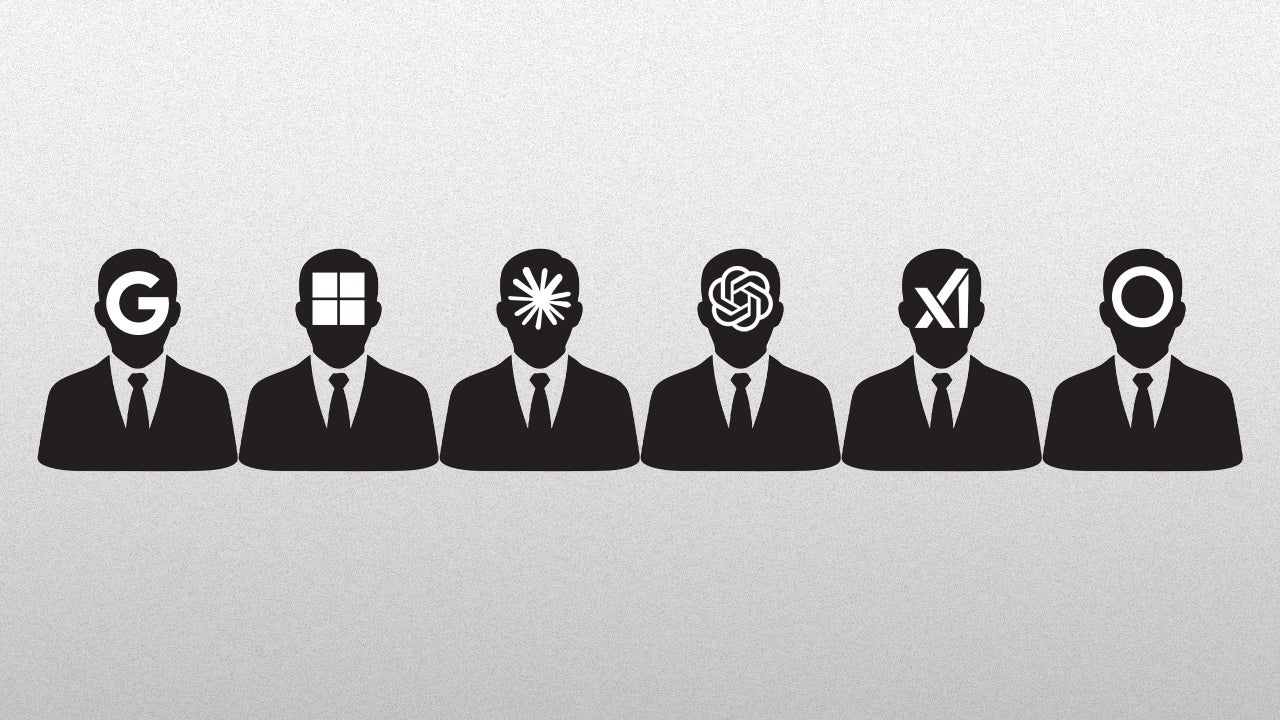
Anthropic has doubled down on its position as the AI company pushing hardest for industry regulation, announcing on July 21 that it plans to donate another $20 million to Public First Action, a political group that advocates for government-imposed safeguards on AI.
The contribution brings Anthropic’s total donations to the group to $40 million. It comes as the midterm elections in the U.S. draw closer and AI legislation remains a political hot button.
“We’ve long argued that frontier AI companies should be transparent about what their models can do and how they’re managing the risks,” the company said in a statement. “We’ve supported newly passed laws in several states that require greater transparency for AI developers. But given how fast the capabilities of the most powerful models are advancing, transparency alone is insufficient.”
While Anthropic is putting its money where its mouth is, not all of its peers share its enthusiasm for government regulation. Here’s where the other major AI players stand.
OpenAI
OpenAI has historically been receptive to government regulation, but its position has become murkier of late.
In 2023, CEO Sam Altman called for the creation of an international body, similar to the International Atomic Energy Agency, to oversee AI. Earlier this month, in an op-ed published in the Financial Times, he argued that governments, rather than AI labs, should set the rules for artificial intelligence.
Altman proposed creating a U.S.-led international forum that would establish safety standards for AI models, provide “expert and impartial analysis of capabilities and risks, and [make] the technology available to nations and companies that participate and follow the rules.”
Altman, however, has also discussed giving the government a stake in OpenAI, which could create questions about how restrictive any resulting regulations would be. Last month, he argued in front of the Senate Commerce, Science, and Transportation Committee that AI developers should not have to obtain government approval before releasing new models to the public.
Earlier this year, meanwhile, OpenAI President Greg Brockman and VC firm Andreessen Horowitz launched a super PAC called Leading the Future, dedicating $100 million to opposing AI regulation. OpenAI and Andreessen Horowitz also supported an unsuccessful effort to impose a 10-year moratorium on states’ ability to create their own AI regulations.
Google has considerably more experience dealing with government regulation. Despite the headaches it has faced in both the U.S. and Europe, the company has remained open to AI oversight.
Earlier this month, Demis Hassabis, who heads Google’s DeepMind division, called for a U.S.-led global AI watchdog, arguing that the technology is advancing faster than our ability to understand it.
“When there is a large degree of uncertainty and the stakes are this high, proceeding with cautious optimism is the sensible and correct strategy,” he wrote. “That calls for public policy that promotes innovation while also incentivizing responsibility and security, fosters international collaboration on key safety issues, and encourages careful consideration of how AI is deployed for the benefit of society.”
Meta
If Anthropic is the industry’s leading proponent of regulation, Meta may be its leading opponent.
Last September, the Mark Zuckerberg-led company launched and invested “tens of millions” of dollars in a super PAC focused on fighting AI regulation. The American Technology Excellence Project, as it is called, is intended to oppose policies that Meta views as harmful to AI development.
The group’s launch followed the creation of a separate California-focused PAC backing tech-friendly candidates in the state.
“Amid a growing patchwork of inconsistent regulations that threaten homegrown innovation and investments in AI, state lawmakers are uniquely positioned to ensure that America remains a global technology leader,” Brian Rice, VP of public policy at Meta, said in a statement.
Microsoft
Microsoft has not voiced strong opposition to government regulation, but it has called for policymakers to be especially clear about what AI companies can and cannot do. So far, the company says, that clarity is lacking.
Microsoft President Brad Smith has criticized officials in Washington for enforcing rules that have not yet been clearly established.
“Everyone is reluctant to say there should be regulation, but what we really have right now is regulation without transparent or complete rules,” he said at the AI for Good Global Summit earlier this month. “Without rules, businesses can’t plan. . . . Ultimately, common sense says don’t be heavy-handed, but have enough of a touch that you can do what needs to be done. I hope we can move the conversation in that direction.”
Microsoft published a detailed five-point blueprint for public AI policy in 2023 and has not deviated from its support for that framework.
xAI
Elon Musk’s AI company has strongly opposed state-level regulation, challenging several laws in court before the Justice Department intervened on the company’s behalf.
The company argued that one proposed Colorado law violated the First Amendment by restricting how developers design AI systems and program their responses to hot-button issues. The argument effectively sought to extend constitutional speech protections, which traditionally apply to people and organizations, to the output of an AI system.
xAI has taken a less aggressive position on federal oversight, sharing an early AI model with the government so officials could evaluate its capabilities.