
Switzerland built its reputation over generations on one simple principle: NEUTRALITY. It survived two world wars without joining either side, became a diplomatic meeting ground precisely because it was outside the military alliances surrounding it, and turned that independence into an enormous economic advantage. Capital trusted Switzerland because Switzerland was supposed to stay out of everyone else’s wars. Now even that definition is changing.
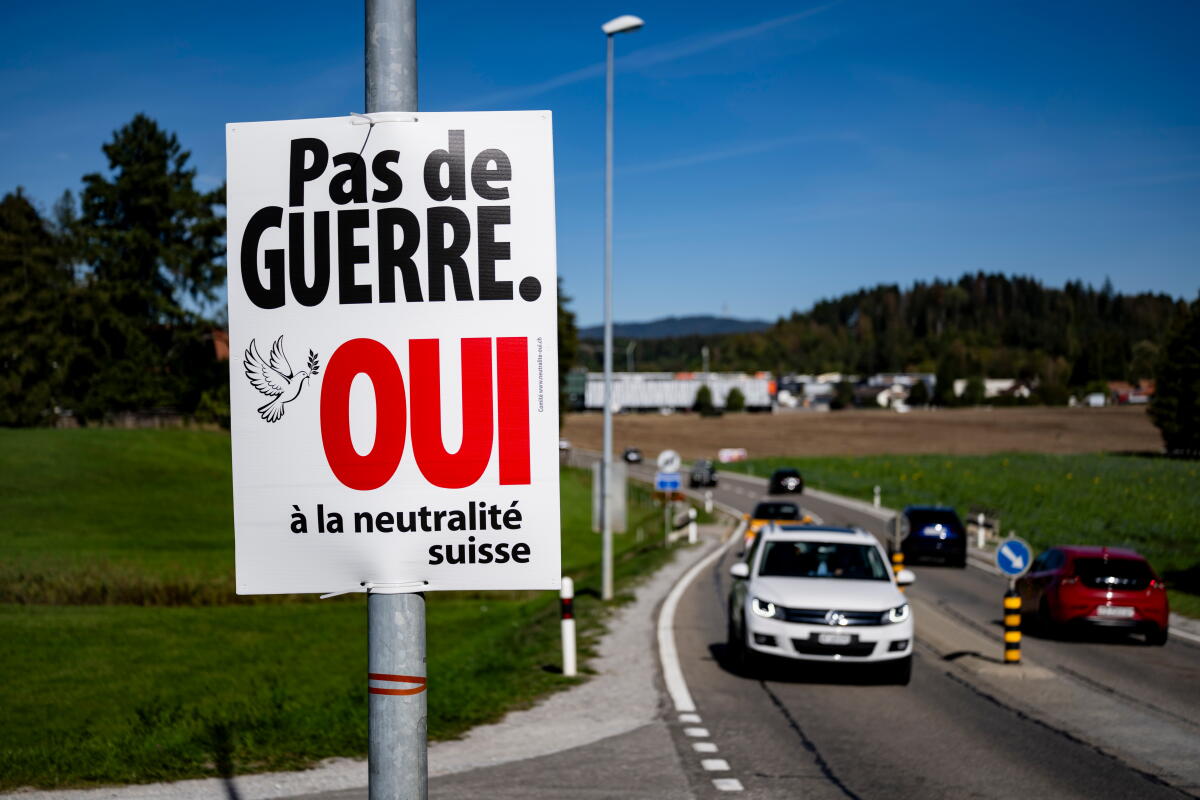
Swiss voters overwhelmingly rejected an initiative that would have written a much stricter form of neutrality into the constitution. The proposal was defeated by 70.15% to 29.85%, with every single district voting against it and turnout at 47.06%. The initiative would have prohibited Switzerland from cooperating with military or defense alliances unless Switzerland itself faced an attack or an imminent attack, and it would have prevented Bern from imposing sanctions on belligerent nations unless the United Nations had approved those sanctions.
The Swiss government opposed the proposal because it wanted to preserve the freedom to cooperate with other countries on security and to impose sanctions independently. Switzerland is not joining NATO because of this vote, nor did voters formally abolish neutrality. In fact, polling still shows overwhelming public support for remaining neutral. What they rejected was a much more rigid constitutional definition of what neutrality must mean.
How neutral can a nation become before the word itself begins to lose its meaning? After the war began, Switzerland largely adopted the European Union’s sanctions against Moscow. Bern has continued aligning itself with subsequent sanctions packages, including measures targeting Russian energy, banking, and the military-industrial sector. Switzerland has also cooperated with NATO for decades through the Partnership for Peace and joint activities, while its defense minister has argued for deeper security cooperation as Europe responds to the war in Ukraine.
Supporters of the defeated initiative argued that this is precisely how neutrality disappears. It does not vanish one morning when somebody lowers the Swiss flag and raises a NATO flag. It erodes incrementally.
Opponents made the opposite argument. They said rigid neutrality would tie Switzerland’s hands, prevent it from responding economically to violations of international law, and weaken its ability to cooperate with European partners on security. That is the choice Swiss voters were actually making, and they overwhelmingly decided that neutrality should not prevent their government from using sanctions or cooperating with NATO.
Fine. That is democracy. The Swiss people voted and the result could hardly have been clearer. But there is an economic issue here that goes far beyond Russia and Ukraine. Switzerland’s neutrality was never merely some romantic political tradition. It became part of the country’s financial architecture. Neutrality helped make Switzerland a place where competing governments, businesses, and private capital could operate precisely because the country was perceived as standing apart from geopolitical conflicts. That reputation helped build Geneva as a diplomatic center and Switzerland as one of the world’s great financial centers.
Once you begin weaponizing finance, sanctions, reserves, and access to markets, capital starts examining political risk differently. This is what governments repeatedly fail to understand. Money does not care about speeches on morality. Capital asks whether the rules will remain the same tomorrow.
The seizure and freezing of Russian assets throughout the West changed the calculation for governments everywhere. Whatever one thinks about Russia’s invasion of Ukraine, China, Saudi Arabia, the Gulf states, and every other holder of substantial foreign reserves watched what happened. They learned that financial assets can become geopolitical weapons when relations deteriorate. That lesson does not disappear because Western governments believe their cause is justified.
This is also part of a much larger transformation taking place across Europe. Germany is rebuilding its military and debating compulsory service. France has introduced a new voluntary national-service program as its military leadership warns the public about potential sacrifices in a confrontation with Russia. NATO members are dramatically increasing defense spending. The European Union is building an increasingly integrated defense industry. Even traditionally neutral states are reconsidering what neutrality means in an environment dominated by the Ukraine war.
Finland and Sweden have already abandoned military nonalignment and joined NATO. Austria remains formally neutral but participates in EU sanctions against Russia. Ireland is debating its own security posture. Switzerland remains militarily neutral, but the political distance between neutral Europe and NATO Europe has unquestionably narrowed.
This is how political systems change. Rarely does everything happen at once. Each decision is presented as a limited response to the crisis immediately in front of you. Governments insist nothing fundamental has changed because technically the old policy still exists. Then one day you look back and discover that the institution bearing the old name no longer resembles what previous generations understood it to mean.
The Swiss people have every right to redefine neutrality however they choose. That is one of the virtues of Switzerland’s direct democracy. Unlike Brussels, where bureaucrats make decisions several layers removed from voters, the Swiss actually put the question before their citizens. They voted overwhelmingly against locking the older definition into the constitution. But markets will make their own judgment as well.