

Kas Bordier sells her clients a vision of longer, healthier, and constantly measured lives—one that’s perfectly attuned to today’s optimized pursuit of health.
As the founder of Mavi, a new architecture firm and consultancy, Bordier offers homeowners the option to measure their homes via a 24-hour, 129-point inspection that assesses a home “the way a longevity clinic reads your blood.” The firm’s wellness blueprint covers everything from water purity to decibel levels and carbon dioxide concentrations.
“Developers want to show that better buildings are possible,” says Bordier, who has worked on homes in the U.K. and U.S. “But more importantly, they want to get an edge in their business.”
Since her first home renovation in 2024, she’s been busy working on more residential projects in London and Los Angeles, with five completed homes and two more in the works. Her clients, often high-net-worth individuals who have personal trainers, nutritionists, and doctors, seek to focus on longevity, or have discovered a mold issue or other health issue in their home. An initial two-week design review to map out a more healthy home costs $18,000.
Longevity as an amenity
Modern architecture has long focused on better health through design, from Alvar Aalto’s famous Paimio Sanatorium in Finland, which utilized “healing architecture” to increase light and airflow, to the residential work of early modernist pioneers in Southern California.
Take R.M. Schindler’s 1922 Kings Road house, which helped pioneer open floor plans and the indoor-outdoor lifestyle that became synonymous with the region. Or Richard Neutra’s Lovell Health House, a proto-modernist residence built for a health guru, erected on a Hollywood hillside in 1929; it boasts floor-to-ceiling glass windows to increase exposure to healthy sunlight, open floor plans to increase air flow and ventilation, plus sleeping porches and even built-in enema fixtures.
While there are design principles at play, often very traditional ones grounded in sunlight, natural rhythms, and sustainability, the trend toward what’s being called longevity architecture is less about making an aesthetic statement than it is about bodily optimization.
Eduardo Otaola, developer of Cora Merrick Park in Coral Gables, Florida, says the high-end Miami-area condo project designed by Arquitectonica will boast longevity-focused features, including air purification systems and electrification, and cost roughly 10% more to complete. But when the building opens in 2028, he expects a 25% to 30% premium in sale prices versus a comparable unit without the health focus.
“The future of residential real estate specifically is wellness,” he says. “With Miami being a very advanced or sophisticated market as it pertains to residential condos, everybody’s trying to push the envelope on what the next best trend and competitive angle is.”
This year’s Luxury Outlook by Sotheby’s specifically calls out longevity as a growing trend, especially as a cohort of boomer millionaires seek to age in place and upgrade their existing homes to optimize their experience during their golden years.
The new condos at the 52-story 262 Fifth Ave. in New York City have just hit the market, and a big part of the marketing pitch includes expansive wellness features, including air filtration, radiant-heated flooring, fresh air recirculation on an hourly basis, and Lutron systems that allow exacting control over environmental factors.
“Increasing life expectancy, coupled with affluent homebuyers’ desire to ‘age in place,’ is reshaping everything from home design and location choice to how inventory circulates in prime real estate markets,” Tammy Fahmi, SVP of global servicing and strategy at Sotheby’s International Realty, notes in the firm’s report.
Advocates of healthy buildings point to the post-pandemic awareness of home health factors paired with the expanding science of wellness that can help improve one’s health. The International Well Building Institute (IWBI), an industry group that promotes healthy buildings, has conducted research showing that features like greener, healthier spaces; better air quality and ventilation; biophilic design; expanded outdoor space; and more organic materials increase rent premiums, decrease sick days, and enhance employee focus and concentration.
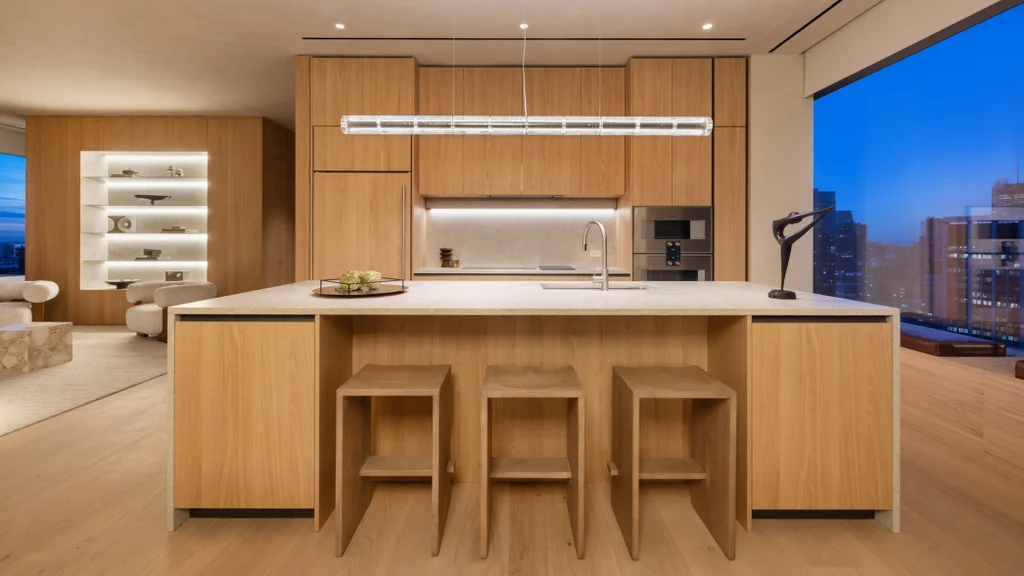
“An important part of this context is that longevity feels like the new luxury good,” says Rachel Hodgdon, IWBI’s CEO and president. “The billionaire’s quest to live forever, the notion that self-care, quality experiences and mindfulness and wellness can extend not just our lifespan, but also our health span.”
The hard stuff
In the commercial sphere, there are increased pushes to promote wellness as a design benefit. Large firms like HKS, HOK, Perkins&Will, and Gensler increasingly incorporate materials like mass timber, fitness-focused amenities, and design strategies that aim to meet Well building standards. Researcher Bill Browning, who worked on completing Buckminster Fuller’s last structure, has turned Terrapin Bright Green, the healthy building consultancy he cofounded, into an industry resource that is hired by companies like Bank of America.
In England, Long Lane, a new private club, is going up in the countryside outside of London. The manor estate is being transformed into a wellness-focused gathering space set to open later this year. Jim Kersey, a marketing manager at TGP, the hospitality agency behind the project, says wellness and the longevity idea are increasingly being asked for by consumers and demanded by commercial developers.
“It’s not just the kind of aesthetics and surface-level wellness that people want, but how it works in terms of the infrastructure operations and in terms of making money,” Kersey says.
Longevity architecture also appears to be a more bespoke, expensive, personally focused, private adoption of these principles and research. Skeptics, who don’t necessarily disagree with the larger push toward healthier buildings, see the increasingly popular longevity label as perhaps an expensive and overpriced pursuit of immortality. To them, it’s a massive spending spree by the 1% to over-index on gadgets to buy the illusion of more time. It’s a trend that designers and even brands are starting to latch on to, with “longevity-ready” interior design.
Mavi’s Bordier sees a difference between simply wellness and what she’s branding as longevity architecture. She says when she first heard the term wellness real estate, she “wanted to throw up,” noting, “For me, when I hear ‘wellness,’ I think cold plunge, I think a nice gym, I think workouts, the soft stuff. To me, longevity means there’s a science to what is best for my body.”
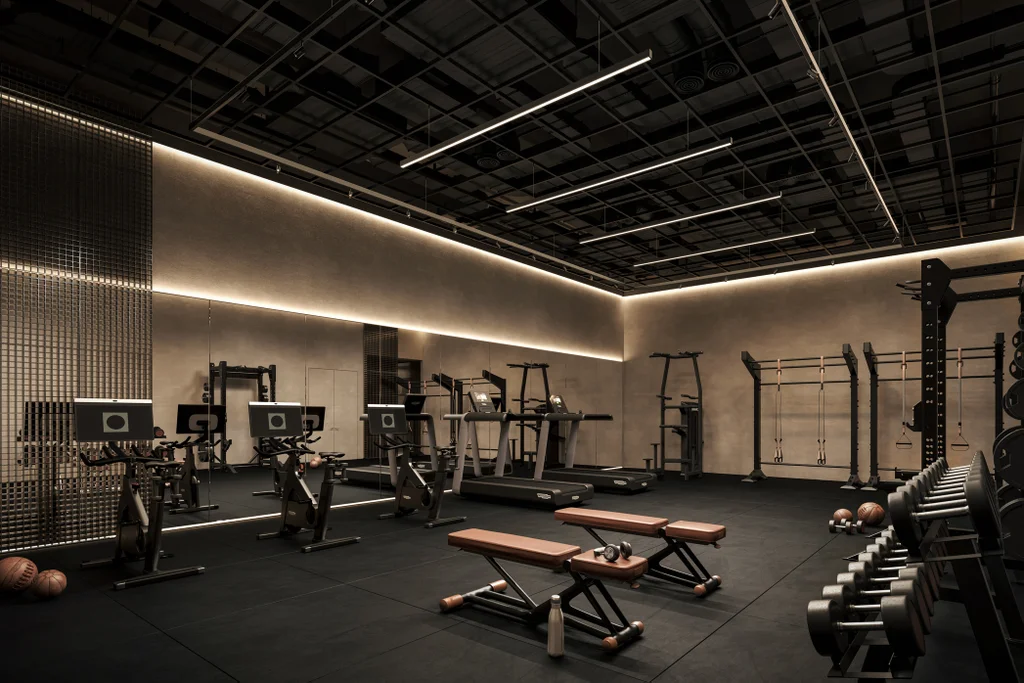
That includes incorporating “hard stuff,” including real-time air filtration, circadian lighting systems through buildings to mimic the natural ebb and flow of light throughout the day, and improved acoustic design to lower stress. Layout and physical design do factor in (think more skylights, curved surfaces, and rooms organized with acoustic and lighting in mind). But the systems approach remains paramount.
“I don’t think it’s an aesthetic style,” Hodgdon says. “It’s more about features than functions.”
Helping others benefit from better building design is personal for Bordier. She and her sister were raised in Communist Poland by a single mother, and the siblings suffered from numerous health problems as children. Bordier believes her turn toward longevity architecture—she formerly worked in startup finance in Singapore and isn’t an architect, though she hires and consults with them on projects—comes from a desire to improve health and wellness for others.
“We spend 90% of our time indoors,” she says. “You can do all the therapies you want, peptides or whatever you want to inject, but if you come home to a place that isn’t optimized, you’re basically destroying all the good that those therapies did.”
A more self-focused direction
The contemporary iteration of longevity architecture doesn’t have a precise starting date, Hodgdon says, but she sees the idea evolving from multiple societal trends.
Demographically, baby boomers and Gen Xers are increasingly facing their own mortality. Upgrading your home with the latest health tools and amenities takes existing wellness trends and data-tracking tech to the next level. And architects understand the impact of building design and health much better than they did decades ago. There’s also a push by many tech leaders to embrace these ideas in their own extravagant homes, incorporating AI and health features throughout.
Hodgdon points out that the concept of longevity architecture evolved from green design principles, in perhaps a more self-focused direction. Arguing that you need to sacrifice something so your home is better for the environment isn’t as persuasive as making changes to impact your health and well-being and supercharge your performance. Green building concepts may have started with energy efficiency efforts, she says, but now that same effort is overlapping with pushes for better air quality.
For many homeowners, longevity architecture is a way to take matters into their own hands. If we can’t make the changes needed to improve health on a societal level—reducing fossil fuel use, investing in water infrastructure, banning dangerous chemicals and pollutants—it becomes an individual responsibility.
Water filtration systems have become very popular due to increased awareness of PFAS (“forever chemicals”) and a distrust of municipal water supplies, for example. And air quality monitors, which have only in recent years become commonplace, often go hand in hand with the electrification of home cooking, one of the easiest ways to improve home air quality and health outcomes.
For Hodgdon, this movement shouldn’t be reduced to the idea that it’s just rich people paying to live in a spa. She believes it’s much more scientifically rigorous and grounded, taking scientific concepts and research and using them to improve and upgrade homes, offices, and hospitality spaces. It’s an architectural form of “quiet luxury,” where ultimately, it’s more about health scores than social mores.