
Ukraine’s latest strike inside Russia confirms the direction this war has been moving for some time. Ukraine is no longer limiting its attacks to border regions, occupied territory, or Russian military positions near the front. It is deliberately taking the war into Russia’s economic and industrial interior.
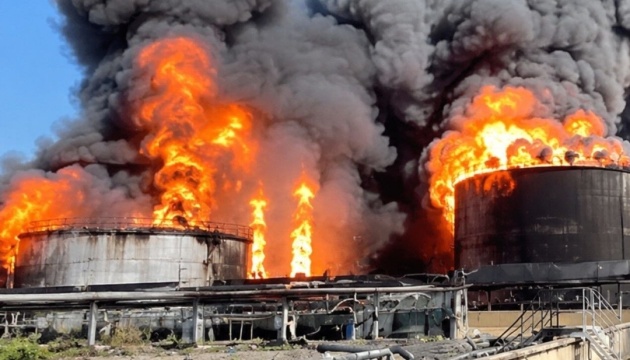
Ukrainian drones struck Nizhnekamsk in the Russian Republic of Tatarstan, roughly 1,200 kilometers or 750 miles from the Ukrainian border. Ukraine’s General Staff said it hit the TANECO oil refinery and started a fire. Russian authorities said the attack killed 13 people, including a child, and injured dozens more. The conflicting reports regarding the number injured range from 39 to 75, and the precise circumstances of the civilian casualties have not been independently established.
TANECO is not some minor roadside operation. It is one of Russia’s most advanced refineries and processed approximately 17 million metric tons of crude during 2024. Nizhnekamsk also contains another refinery and a major petrochemical complex. This was an attack on a critical industrial center that helps supply the Russian economy and, by extension, its war machine. The strike reportedly marked the third attack on the TANECO complex this summer. That alone demonstrates that these are not isolated raids. Ukraine has developed a sustained strategy intended to dismantle Russian refining, transportation, storage, and export capacity one facility at a time.
Ukraine cannot defeat Russia through a conventional war. Russia has more people, more territory, greater industrial depth, and more resources. Kyiv therefore shifted toward economic warfare, using inexpensive long-range drones to attack refineries, pipelines, ports, airfields, factories, warehouses, power systems, and logistics centers deep inside Russia.
In November 2024, I wrote about Ukraine’s use of American and British weapons to strike inside Russia and the corresponding change in Moscow’s nuclear doctrine. The danger was never confined to whether an ATACMS missile crossed an imaginary distance on a map. The strategic change was the decision to make Russia’s interior part of the battlefield.
By May 2026, the Russian government had gone so far as to authorize the central bank, Sberbank, and cash-collection organizations to deploy anti-drone systems and arm their personnel. Banks were effectively being told to defend themselves. This confirmed that the war had spread beyond military installations and into the economic infrastructure of the state.
Russia cannot place a sophisticated air-defense system beside every refinery, pipeline junction, railway yard, warehouse, bank, port, power plant, and factory across 11 time zones. Even Russia does not possess enough defenses to protect a country of that size against thousands of cheap drones approaching from different directions.
The Nizhnekamsk attack also exposes the false argument that deeper strikes will somehow force a quick peace without escalating the conflict. Ukrainian President Volodymyr Zelensky said Russia’s war “will be felt more and more at their own home—in Russia.” That is not the language of de-escalation. It is an admission that Ukraine is attempting to turn Russian civilians against Putin by making the economic and human cost of war increasingly visible inside Russia itself.
The attacks may certainly cause Russia economic damage, but they can also produce the opposite political result. Bombing a population does not automatically cause it to overthrow its government. It can unify the people against the common enemy, as we saw in Iran years ago. Ukraine says it targets infrastructure supporting Russia’s military campaign. Russia says civilians and residential areas were struck. Once drones are flying into cities hundreds or thousands of miles from the front, civilian casualties become inevitable. Russia then uses those deaths to justify still larger attacks on Ukrainian cities.
Ukraine has already demonstrated that nearly no part of Russia can be assumed safe. In February 2026, Ukrainian drones struck the Kaleykino pumping station near Almetyevsk in Tatarstan, also around 1,200 kilometers from the border. Kaleykino is a critical junction within the Druzhba pipeline system, receiving and blending crude from Western Siberia and the Volga region before sending it toward Russian refineries and export routes.
At least six explosions were reported, followed by a major fire. Two storage tanks, each reportedly capable of holding 50,000 metric tons, were ignited. Russia’s pipeline monopoly Transneft subsequently reduced crude intake by approximately 250,000 barrels per day. The station itself has the capacity to handle around one million barrels per day.
The consequences extended beyond Russia. Druzhba remains important to Hungary and Slovakia, two EU and NATO countries that depend heavily on Russian crude because their refinery systems and pipeline connections cannot be replaced with slogans from Brussels. Ukraine’s attacks risk dragging neighboring countries into an energy confrontation with Kyiv and further splitting Europe over continued support for the war.
In June, Ukraine said it attacked the Lazarevo oil-pumping station in Russia’s Kirov region, approximately 1,300 kilometers from Ukrainian-held territory. That station serves the Surgut-Gorky-Polotsk pipeline, which moves Siberian oil westward toward Belarus. Once again, Ukraine was not targeting a tank near the battlefield. It was attacking the circulatory system of Russia’s energy economy.
Then came the July strike on the Omsk refinery in western Siberia, approximately 2,700 kilometers or 1,700 miles from Ukrainian-held territory. Omsk is Russia’s largest refinery, processing around 23 million metric tons annually, equivalent to approximately 460,000 barrels per day. Local Russian authorities confirmed that drones reached the industrial area. Ukraine said the attack caused a fire. Zelensky called it an “important achievement” and declared, “Siberia, too, is now within reach of Ukrainian precision strikes.”
That statement should have awakened every government in Europe. A war that began over eastern Ukraine had developed into attacks on Siberia. Yet NATO continues pretending that each new escalation can be contained and that Russia will never decide it has reached the final red line.
During the same July campaign, Ukraine said it struck the TANECO and TAIF-NK refineries in Tatarstan, the Saratov refinery, a military airfield at Borisoglebsk, a petroleum pumping station in Bashkortostan around 1,450 kilometers from Ukrainian-held territory, and nine oil tankers in the Sea of Azov. Ukrainian operations also reached the Russian Baltic ports of Ust-Luga and Vysotsk, two major oil-export facilities.
On August 6, drones caused a large fire at the Slavneft-YANOS refinery in Yaroslavl, which has an annual processing capacity of roughly 15 million metric tons, or about 300,000 barrels per day. Ukraine also confirmed an attack against the Bashneft-Novoil refinery in Bashkortostan. Days later, a warehouse belonging to Russian online retailer Wildberries burned in Yekaterinburg, more than 2,000 kilometers from the Ukrainian border.
The pattern is unmistakable. Oil production is attacked at the refinery. Transportation is attacked at pumping stations. Exports are attacked at ports and aboard tankers. Aviation is attacked at remote airfields. Industrial supplies are attacked inside factories and warehouses. Ukraine is attempting to impose economic attrition across the entire Russian state.
This strategy did not suddenly appear in 2026. In April 2024, Ukrainian drones struck facilities at Yelabuga and Nizhnekamsk in Tatarstan, more than 1,100 kilometers from Ukraine. Yelabuga housed a facility connected to the production of Shahed-type drones, while Nizhnekamsk contained the TANECO refinery. Those attacks demonstrated that Ukraine was already developing the capacity to penetrate far beyond Russia’s border defenses.
Operation Spiderweb in June 2025 made the strategy undeniable. Ukraine concealed small drones in trucks and prefabricated structures transported across Russia. The drones were launched near Russian airfields rather than flying the entire distance from Ukraine.
The operation targeted strategic aviation bases at Olenya, Belaya, Dyagilevo, and Ivanovo, among others. Ukraine initially claimed that 41 aircraft were hit. American officials offered a lower assessment, estimating that as many as 20 Russian military aircraft were struck and around 10 destroyed. Satellite imagery confirmed damage to valuable Tu-95 and Tu-22M3 bombers used to fire missiles against Ukraine.
Belaya Air Base is located in Siberia, thousands of kilometers from Ukraine. The operation proved that distance no longer provides security when drones can be smuggled into a country, hidden near their targets, and activated remotely.
This is why Russia has begun spreading anti-drone nets, electronic-warfare systems, armed guards, and localized defensive units across infrastructure that was never designed to become part of a battlefield. Reports even show Russia placing additional anti-drone protection over submarines at its Pacific base on the Kamchatka Peninsula, more than 4,500 miles from the Ukrainian front.
Damaging Russian refineries has not forced Putin to withdraw. Operation Spiderweb did not end Russia’s missile campaign. Striking Siberia did not bring peace. Each spectacular operation has instead been followed by additional Russian attacks, tighter internal controls, more militarization, and a deeper commitment by both governments to continue the war.
There is also a dangerous political calculation behind these attacks. Ukrainian officials believe that economic hardship and civilian fear will turn the Russian population against Putin. Yet Putin faces pressure from the opposite direction as well. Russian hardliners argue that he has been too restrained and that Moscow should retaliate more aggressively against Ukrainian government centers, transportation networks, energy infrastructure, and the Western systems enabling these strikes.
Russia has already lowered the threshold in its nuclear doctrine for responding to conventional attacks supported by nuclear powers. This does not mean Russia will automatically use a nuclear weapon, but it does mean NATO governments are recklessly testing a doctrine they did not write and cannot control.
The West supplies Ukraine with money, intelligence, satellite imagery, targeting assistance, components, and weapons. Western politicians then insist they are not participants in the war. Russia does not necessarily accept that legal fiction. If Western intelligence helps identify a target and a Ukrainian system attacks it, Moscow may eventually treat the sponsor and the operator as part of the same military structure.
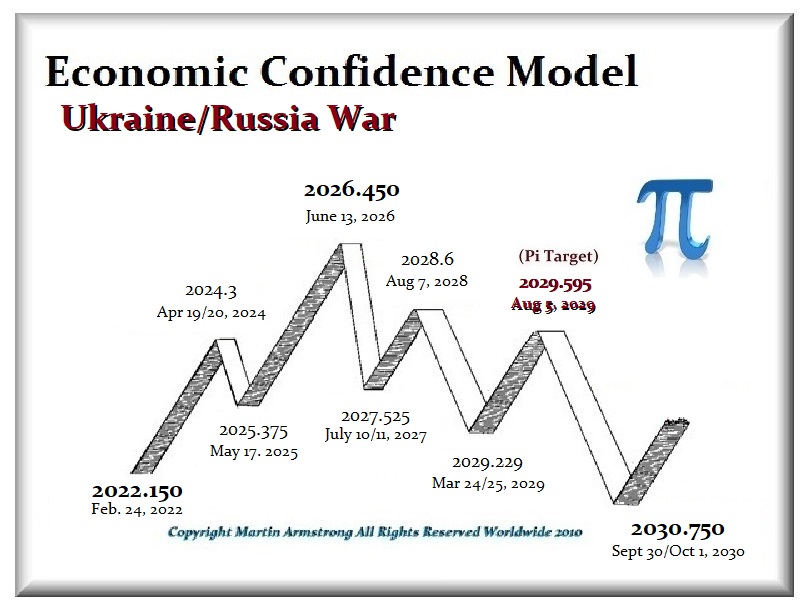
The War Cycle for 2026 never suggested peace. It indicated rising volatility and expansion, with extremes in both directions. There may be negotiations, ceasefires, or temporary gestures toward settlement, followed by renewed aggression. That is precisely what we are witnessing. Every attempt at diplomacy is undermined by another strike, retaliation, arms package, territorial demand, or political promise that neither side can accept.
No one is asking where this ends. That has been the fatal mistake from the beginning.