
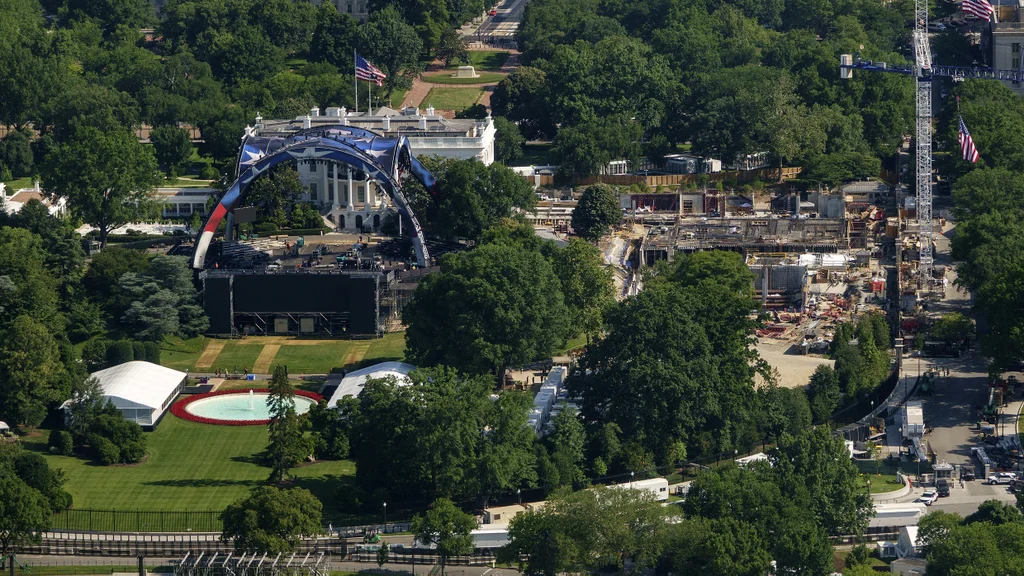
Ahead of the country’s big 250th birthday, America’s capital doesn’t exactly look party ready.
The White House grounds are a construction zone where the East Wing once stood, and the South Lawn is yellowed and flat after the staging for a UFC cage match was packed up and removed. The Lincoln Memorial Reflecting Pool is fenced off as crews work to clean and repair a rushed, attempted renovation job. The Kennedy Center is covered by a tarp.
Across the monumental core of Washington, D.C., the impact of President Donald Trump’s pricey pet projects can be seen from the sky. Rather than a city that looks dressed up for a celebration, it’s a construction site in the middle of overlapping projects, some of which courts have ruled Trump has no authority to pursue.
A developer, Trump is consumed by his renovation work and brings it up often in public, and it’s no secret he likes putting his name on things. Yet these projects come as the president’s approval rating has tumbled, and critics see them as out-of-touch vanity projects. “He should go off and become an interior decorator, if that’s what his heart desires,” said Representative Brendan Boyle, a Pennsylvania Democrat.
Plagued by ballooning costs, legal challenges, and a lack of official approval and public support, the timeline for Trump’s hoped-for improvements and renovations—some of which are tied to America’s 250th anniversary—won’t be finished until long after July 4, 2026. Here’s where they stand:
The White House
At the site of the former East Wing, construction has begun on underground portions of a massive military-style bunker, but a U.S. District judge has blocked aboveground construction of the president’s long-desired ballroom from proceeding, saying there’s no federal statute that gives the president authority to build it without congressional approval. Attorneys for Trump argued earlier this month that construction had to continue.
Trump originally said the ballroom would cost $200 million and that he and private donors would pay for it, which raised ethics concerns. The estimated cost has now risen to $600 million, with about half coming from taxpayers, according to The Washington Post.
The White House is where Trump’s design aspirations are most visible. He’s added gold embellishment to the Oval Office, had the Rose Garden paved over to create a Mar-a-Lago-style patio, and had two car-dealership-size flagpoles installed on the grounds.
Kennedy Center
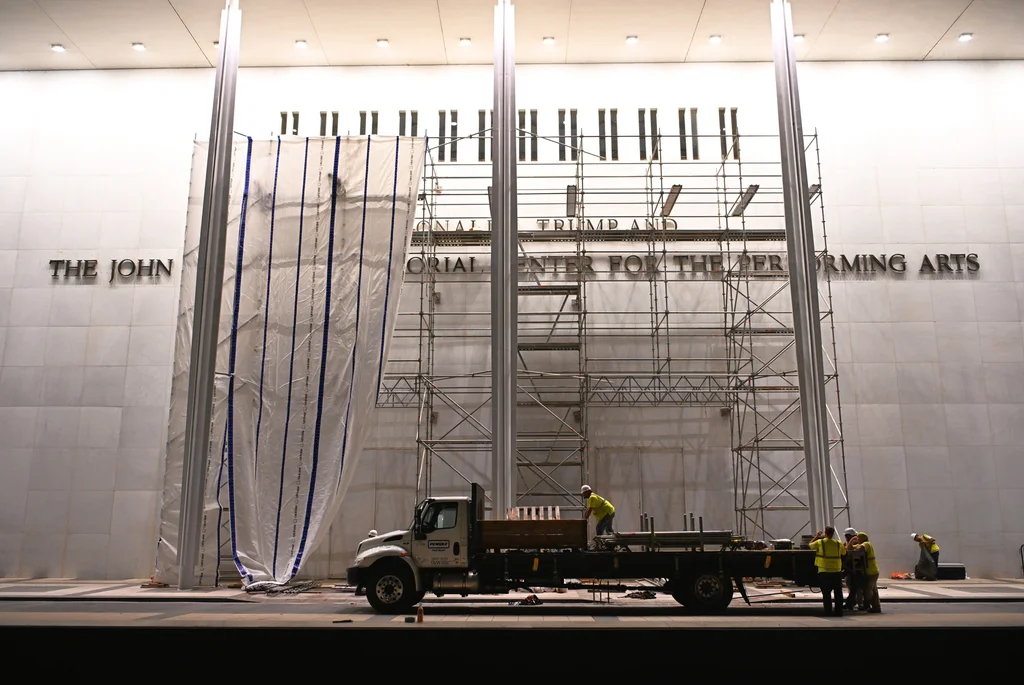
The John F. Kennedy Center for the Performing Arts had Trump’s name removed from its website and the outer facade of its building earlier this month after a court order ruled the president didn’t have the authority to change its name. A white tarp that was put up to conceal the lettering’s removal remains up, but the venue hosted an event with Trump-free branding for the Mark Twain Prize on June 28.
Arch monument
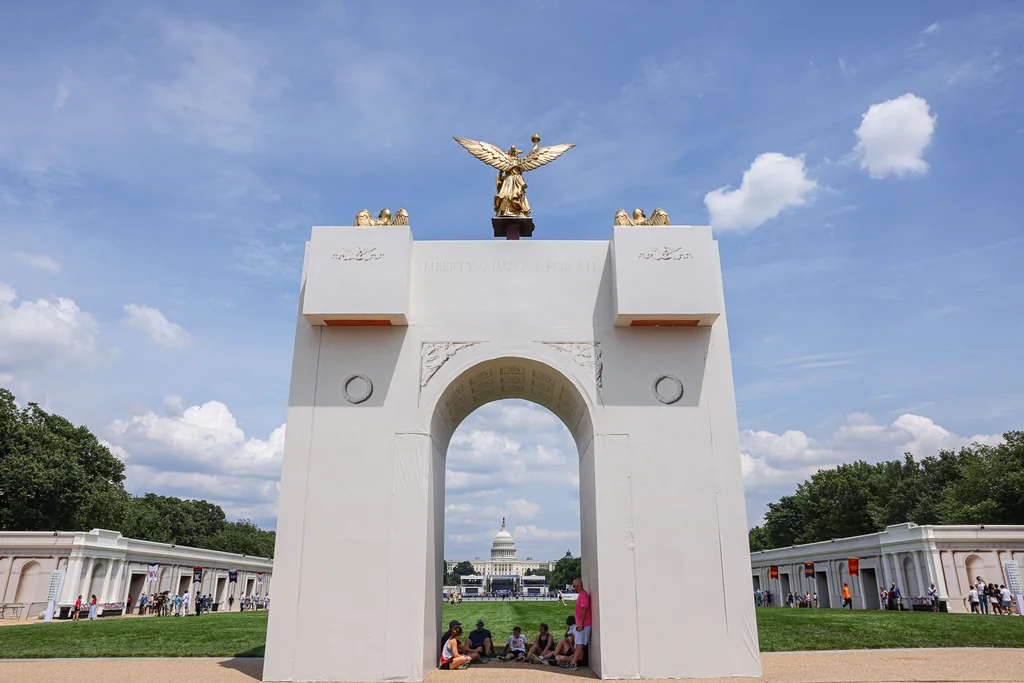
Trump has said his proposal to erect a 250-foot-tall arch just outside Arlington National Cemetery would celebrate America’s 250th anniversary, but it, too, is facing legal challenges. Even if it’s eventually constructed, it won’t be completed for several years. A prop version of the arch put up on the National Mall for the Trump administration’s Great American State Fair failed to impress.

Reflecting Pool
The water of the Lincoln Memorial Reflecting Pool is still green in photos taken June 29, and fencing has gone up with signs reading ”Coming to You On July 4″ and “Danger, Explosives, Authorized Personnel Only.” Trump promised a quick fix to long-standing issues at the reflecting pool and to add a new coat of “American flag blue” on the basin, but nearly as soon as renovations were supposedly finished, algae blooms and tears were visible.
Garden of heroes
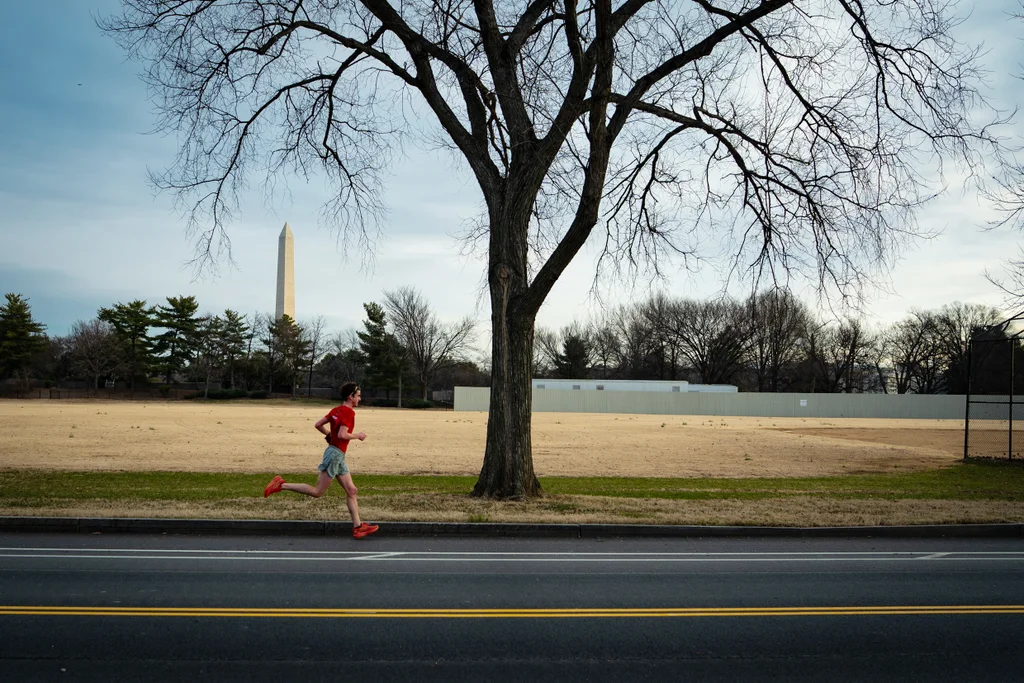
Trump signed an executive order creating the “National Garden of American Heroes” in his first term, and this May he wrote in a social media post that he wants it built in West Potomac Park, adjacent to the National Mall, featuring 250 statues for the U.S.’s 250th anniversary.
Earlier this month, preservation and cultural heritage groups filed a lawsuit with the U.S. District Court, arguing Trump’s plans are unlawful because Congress mandated the area closed to any new “commemorative work.” Statues of some of the figures Trump wants in the garden, like Benjamin Franklin and Alexander Hamilton, have been put up on the White House grounds.