
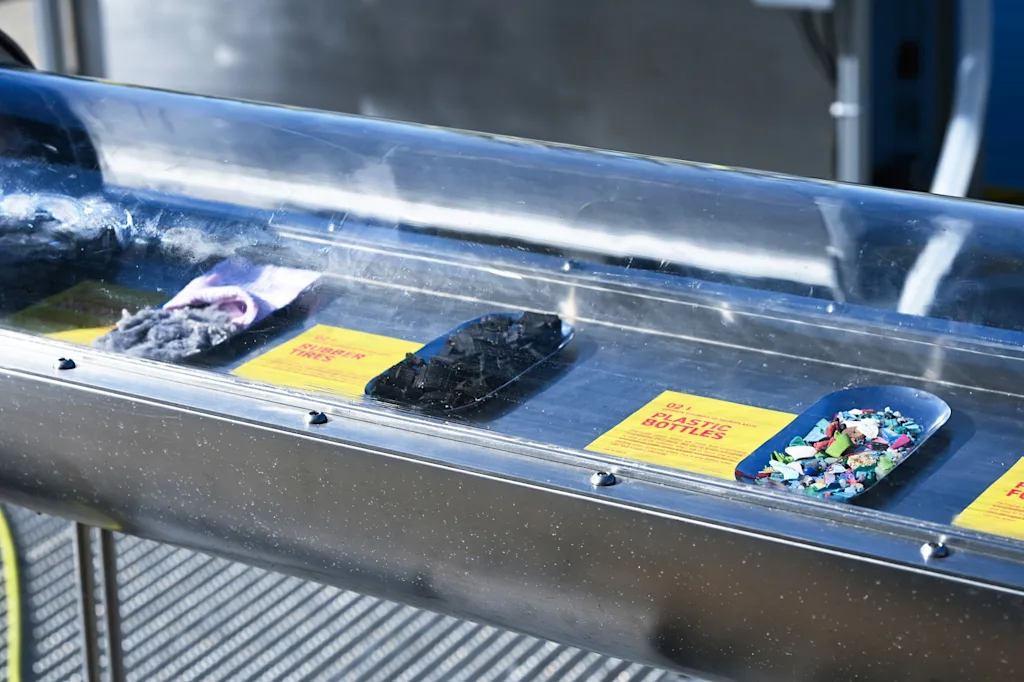
Tiny fragments of microplastics—from clothes, car tires, plastics, and other sources—slip through most water filters. But at a water treatment plant on the coast in Atlantic City, New Jersey, where plastic-filled wastewater would normally flow into the ocean, new technology has captured hundreds of millions of microplastic particles over the past year.
The technology, from a startup called PolyGone, can also clean microplastic out of lakes and rivers or treat wastewater at factories.
The startup spun out of research at Princeton, where the founders drew inspiration from aquatic plants that can naturally attract microplastic. The plants have fibrous roots coated in a hydrophobic gel that pulls in pollution. “We managed to imitate the geometry and hydrophobility of the aquatic plant root,” says cofounder Yidian Liu. “It has a lot of unevenness on the surface that creates little cavities for smaller pollutants to be trapped inside.”
Wastewater treatment plants are a pathway for microplastic pollution to enter the ocean, which is now filled with trillions of particles. Most wastewater plants in the U.S. don’t use advanced treatment before releasing water back into nature. Of those that do, most existing filters only catch larger microplastic, between 1 and 5 millimeters. Tinier fragments, invisible to the naked eye, slip through. Another type of fine mesh filter in use in some plants captures more, but then the plastic just ends up in landfills.
In lab tests, PolyGone’s system captures 98% of microplastic. After the filters are full, they can be cleaned and reused. The plastic is concentrated and sent for reuse. In Atlantic City, where the company launched its first wastewater pilot in September 2024, it has already captured more than 520 million particles of microplastic, exceeding performance targets. The plastic goes to other companies: one that turns it into chemicals, another that is beginning to use it to make fuel.
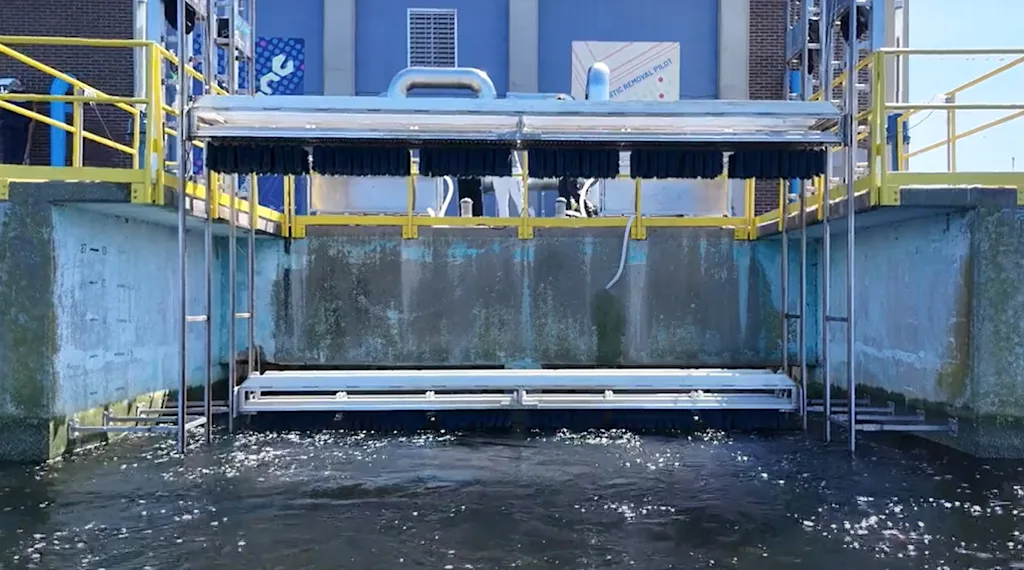
The utility now plans to expand the pilot into a full-scale operational system. PolyGone, which recently raised a $4 million seed round of funding, designed a new filtration unit that automatically lowers itself into water and cleans itself on a schedule. The unit fits inside a standard shipping container, with all of the tech fully assembled inside so it can be deployed in a day at a wastewater plant.
The company also designed another version of the technology that fits into wastewater pipes at factories. The first pilot of that system just launched at an industrial plant in Dubai. “This system is a very simple way for them to plug and play and get rid of microplastic before the water goes into their effluent,” says Liu. Other manufacturers are also beginning to test the technology, including clothing companies working to cut microplastic pollution from synthetic fabric. Cost varies depending on the system, but ranges from roughly $15,000 to $50,000.
The technology is much less expensive than other advanced filtration, in part because the filter works passively to “dramatically reduce energy consumption compared to traditional advanced filtration systems that rely on high-pressure pumps,” Liu says. The open design avoids clogging, so it needs less maintenance. It also can easily be added to existing infrastructure, she says, rather than requiring expensive retrofits.
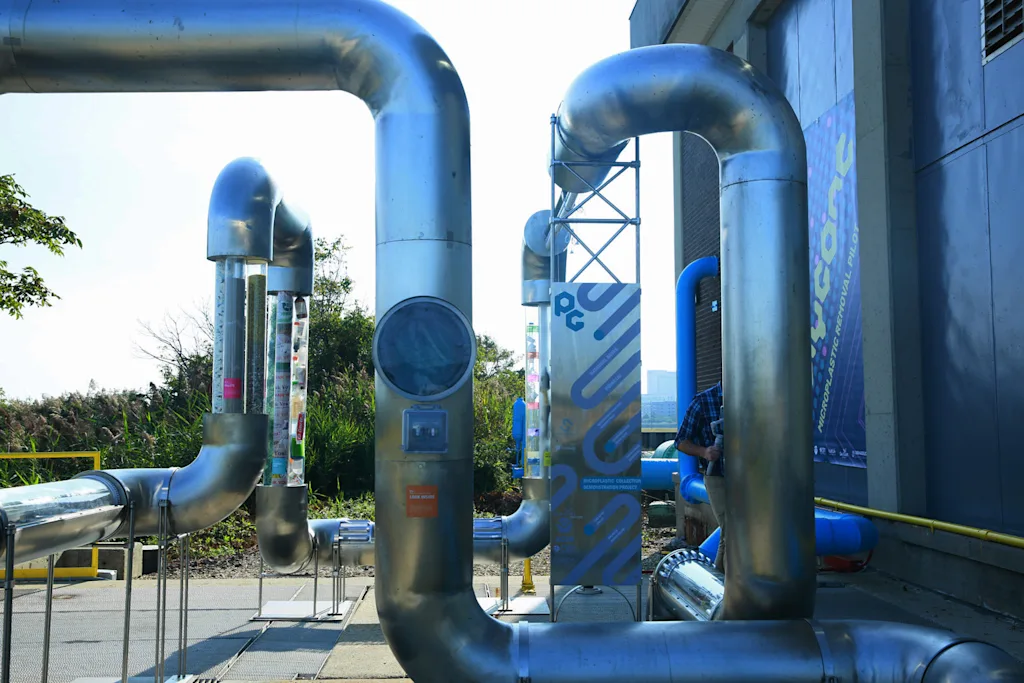
The tech can also be used directly in nature, and the company has tested a Roomba-like robot that filters water as it moves across a lake. But funding is harder to secure for this approach. There’s more demand for industrial use, especially from brands that are trying to tackle sustainability goals. And at wastewater treatment plants, some states may soon consider new regulations that would require better pollution filtering.
“California is leading on microplastic regulation,” says Liu. The state already requires microplastic testing in drinking water and is working on a new drinking water standard, though wastewater filtering isn’t mandated yet. “A huge reason is they don’t know what methodologies or systems are available for [wastewater plants] to quickly adopt for microplastic removal,” Liu says. “Our pilot is actually giving them a very good case study to understand okay, it is a problem that can be solved.”