

As data centers strain the power grid, utilities are scrambling to build new power plants. But a startup in California is one of a handful focusing on the problem from a different angle: building a network of batteries and solar panels at homes to relieve pressure on the grid more quickly.
In some cases, thanks to state funding, low-income homeowners can get the systems installed at no cost, and then start saving on their electric bills and have access to backup power if the grid goes down. Others pay a subscription that’s lower than their previous electric bill. Then the startup, called Haven, manages the flow of power back to the grid.
Why utilities see Haven’s network as a ‘mini power plant’
“We own and operate all the batteries,” says Haven CEO Vinnie Campo. (The company focuses on batteries, but also installs and owns connected rooftop solar panels at some homes.) “We’re then able to provide to the utility a fixed dispatch or fixed capacity from those batteries. They can almost think of it as building a mini power plant exactly where they need it.”
Haven works with utilities to identify spots in the grid that need help—substations that are overloaded, or feeder lines that are constrained—and then partners with the utility to find homeowners in those areas who are interested in installing new equipment at their homes.
In aggregate, thousands of coordinated batteries are a powerful tool. “It’s not that we actually need that much net new generation. What the grid really needs is more power at the right time,” Campo says. “The grid is mostly underutilized— it’s in the 30-40% range on a given day. Batteries are the most important part of the missing piece here, which is how you can absorb as much energy in the middle of the day when it’s being produced but not used, and shift that to later periods in the evening when you have a lot of electric demand coming online.”
A no-cost way for low-income homeowners to get batteries
For homeowners, there’s a clear incentive to participate as electric bills keep surging. In California, between 2019 and 2023, electricity rates rose by 47%. Customers who subscribe to Haven can get 20-30% savings on electric bills, helping ease the pain. For customers who qualify for state funding and install both solar and batteries, bills can drop by 90%.
“They see 80 to 90% bill savings because they don’t have to pay anything for it, but they’re getting all of the benefits of the solar and battery system,” says Campo.
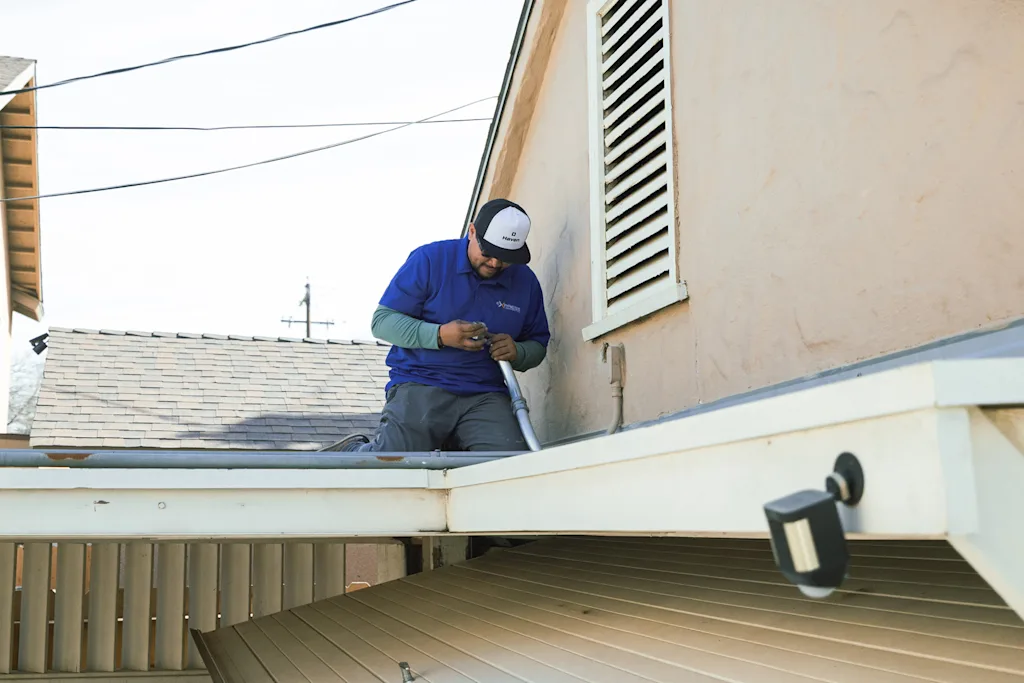
The state funding comes through California’s larger Self-Generation Incentive Program, which started rolling out $280 million for batteries and optional paired solar panels earlier this year. To qualify for the rebates, homeowners have to meet low-income requirements and live in areas that are at high risk of fires or public safety power shutoffs.
In theory, low-income homeowners could get the systems on their own. But that could require spending tens of thousands of dollars upfront and then waiting months to get reimbursement and the savings on their electric vills.. Haven helps by handling the paperwork and providing the capital.
The deal is so good that it created another challenge: convincing homeowners that it’s real. “When I found Haven, I was skeptical,” says Alex Colocho, a resident in Oceanside, California. “I was like, there’s no way that a company would put up all the cash up front to get me this product.” After digging into it, he eventually decided to move forward, and had a battery installed in August.
Colocho already had solar, and had taken advantage of other state incentives to electrify—for example, trading in an old gas car for an EV, and switching to a heat pump. As his family used more electricity, they wanted to take better advantage of their solar power, storing it to use at night. But, he says, “if this program wasn’t there, we would have never gotten the battery.”
Customers like Colocho have referred others. “It’s not ‘no money down,’ it’s ‘no money at all,’ and that creates this viral referral loop where they tell their friends and family,” says Campo. (Colocho has even created a side gig for himself helping neighbors access this and other incentives.)
Residential batteries could scale faster than new power plants
Haven has installed around 1,000 systems so far, and there’s the potential to install as many as 10,000 systems (a mix of battery-only and solar-plus-battery systems) through the state program. The company is also ramping up its subscription offering for other customers. Haven recently raised $40 million in new funding, including a $25 million credit facility, which it will use in part to expand to other states facing similar grid challenges. Already, its virtual power plant is around 10 megawatts in size, with another 50 megawatts of capacity in development in California.
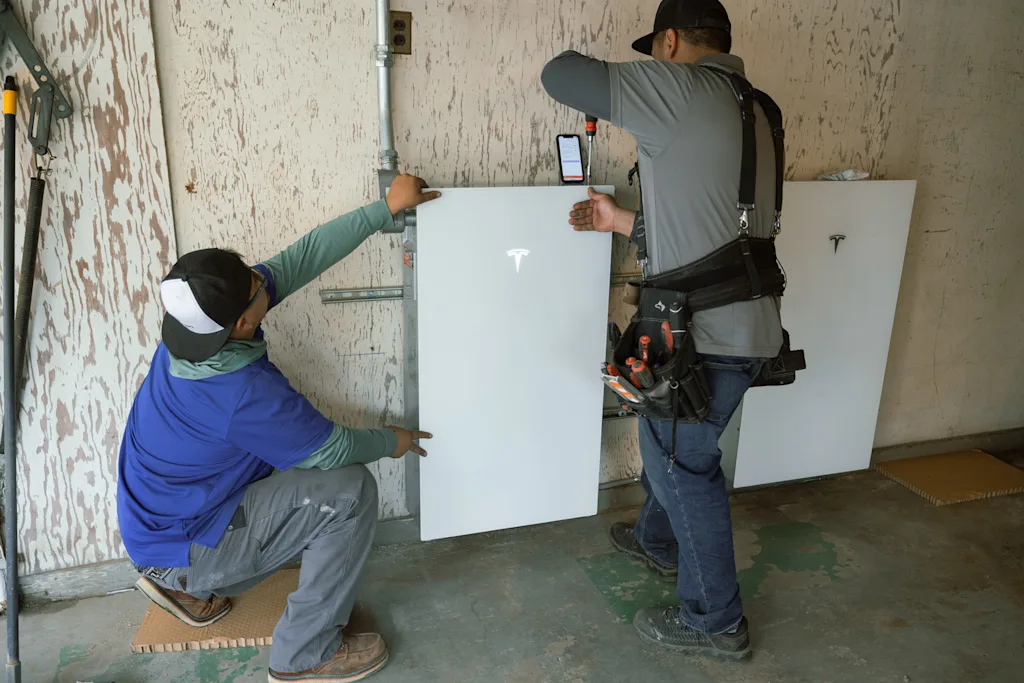
The process isn’t completely seamless yet, since the company still has to deal with delays from local permitting and getting connected to the grid. Still, unlocking more energy capacity this way is faster than trying to build large new power plants—particularly things like new nuclear tech that may be a decade away from being ready, or gas plants that face five-year delays on new turbines.
One recent report suggested that tech companies should help pay to install solar and batteries at homes as a way to access the power they need more quickly and avoid emissions. Some other companies, like Base Power—a startup that raised $1 billion in October—are taking a similar approach as Haven and also building networks of batteries to support the grid.
Even though it might seem like a consumer service business at first glance, “Haven really is an infrastructure business where we’re building battery capacity for utilities,” says Campo. “There’s a lot of talk around grid-scale batteries and energy storage. We think the missing piece and the fast deployment piece is residential.”