
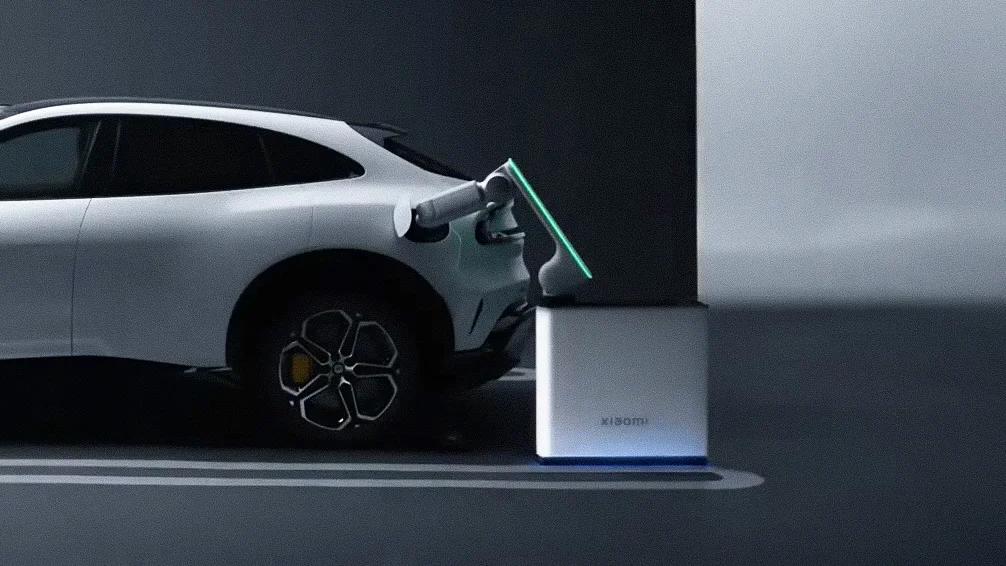
Xiaomi has just launched a fully automatic robotic arm that charges a parked car without human assistance.
The equipment will be a new consumer device in the vast ecosystem of the Chinese auto and electronics giant, which published a demonstration video confirming that preparations for the mass production of the product are already complete. The company expects to begin the first equipment deliveries in the third quarter, prior to the widespread commercial launch scheduled for the fourth quarter of 2026.
According to company founder Lei Jun, the equipment is already operating in some private garages. Jun is delivering on the promise that Elon Musk made back in 2014, when he said Tesla was going to create a metallic charging arm that looked like Doc Octopus’ articulated tentacles. He never delivered it.
An elegant design
Fully automated charging may not seem like a must-have feature…until you have to connect your EV to the grid every single day. Pulling that heavy plug and long cable from a box on the wall, opening your car socket, connecting it, and unplugging it hours later can quickly become a hassle.
While China has mobile charging robots—like Eraergy’s Energy Tank, which residents in apartment complexes can summon via app—those are shared services, not something you buy and install in your own private garage or your building’s parking spot. Xiaomi is the first commercial, consumer EV charging robot. The company is betting that the convenience the robot arm provides will make it a must-have accessory for buyers of its cars.
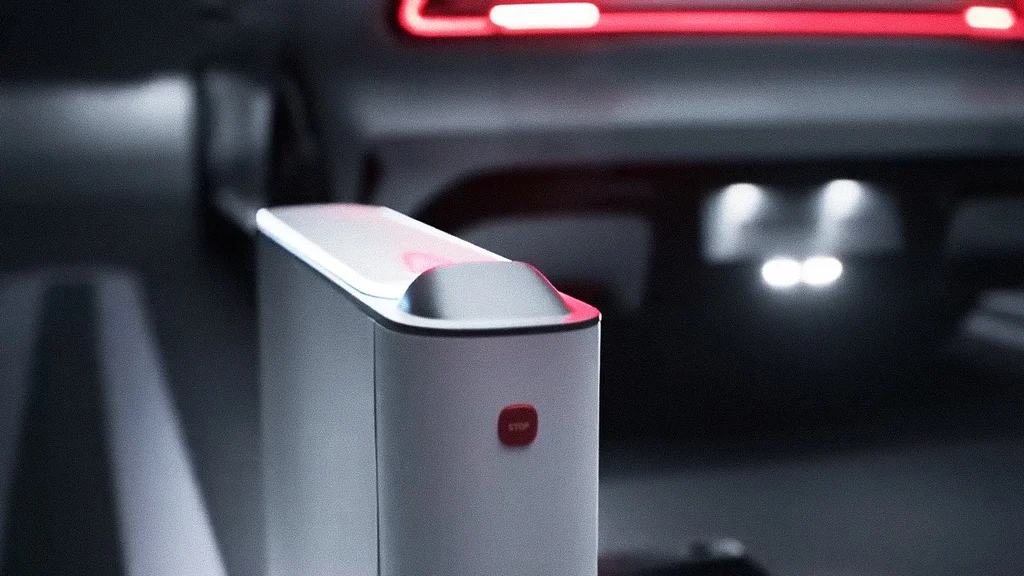
The robotic arm sits inside a brushed-aluminum rectangular base that looks more like a high-end video game console than an industrial robot. It is a compact, clean silver box with rounded edges and the Xiaomi wordmark stamped on its face. On the back, a big red button with the word “STOP” turns the arm off in case anything goes wrong with the charging. A thin strip of blue ambient light runs along its bottom edge, making it appear like an electrical life form.
The robot uses an artificial intelligence visual positioning system to guarantee the sub-millimeter precision that is needed to physically dock the plug head to the vehicle charging port. Housed in an above-ground vertical unit, the physical casing measures just under 6 inches wide. The design is narrow so that the device fits seamlessly into tight residential garages and crowded commercial parking lots.
The robot design is elegant, with gentle rounded edges everywhere and organic-looking knuckles that give the whole assembly the aesthetic of a futuristic manga bot. Or Tron, thanks to the blue LED accents on the sides of its arms.
Seamless integration
When a compatible vehicle pulls in and parks, the arm stirs to life without human prompting. When a car parks next to it, its black top moves up, revealing that it is part of a three-segmented, matte-white arm with three articulated joints: a shoulder, an elbow, and a wrist.
The robot then sends direct commands to the previously paired electric vehicle that digitally actuates the car’s motorized charging port door before inserting the plug. The arm rises and unfolds in an elegant arc motion. Meanwhile, the matte-black cylindrical charging plug head, featuring a hexagon-shaped seven-pin array, looks like the empty eyes of a cyberbeast.
When charging is done, the whole sequence plays in reverse: The arm withdraws, folds back into its three compact segments, and promptly disappears into the base.
The arm currently supports two Xiaomi vehicles: the SU7 sedan and the YU7 SUV, both of which feature a motorized charge port door that the system can open and close autonomously via direct vehicle communication. No other car models have been confirmed as compatible.
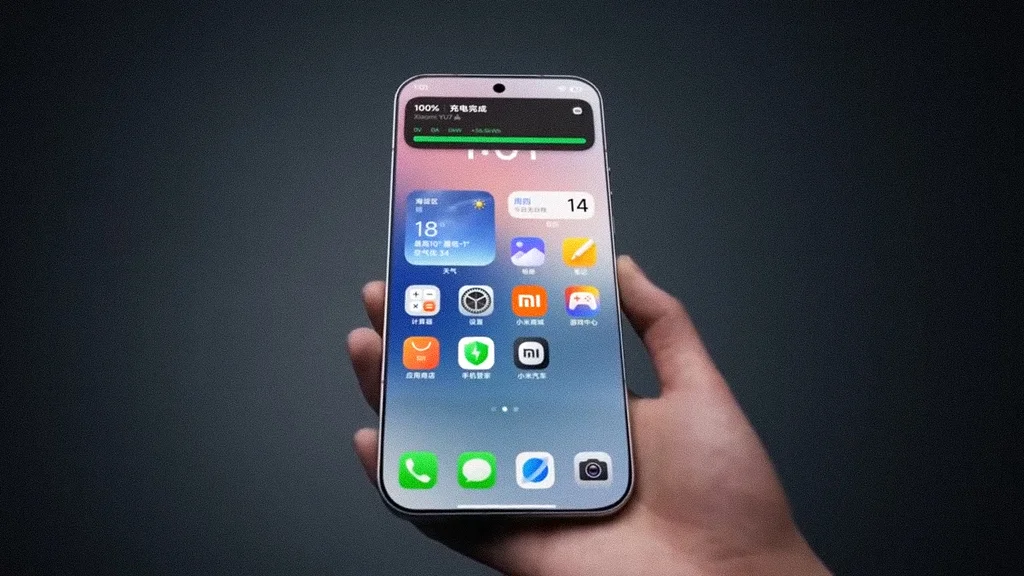
The mechanical arm independently manages each phase of the power recharge cycle. Once the vehicle reaches the desired battery level, the machinery automatically removes the plug. Drivers can also manually and remotely initiate the charging session through their mobile phones and control the robotic arm via Xiaomi’s home connectivity network, which is tightly integrated with a universe of compatible household appliances, devices that go from lamps to dishwashers and washing machines to vacuum cleaners, TVs, and projectors.
According to Xiaomi, “this is a smart charging solution for home users, an important part of Xiaomi’s ‘Human-Car-Home’ ecosystem, creating a full-scenario smart experience from parking assistance to automatic charging.” The company claims that its demo video was “shot in a real scenario, and all the demonstrated functions can achieve mass production and delivery.”
Xiaomi has not yet published the retail price. It also hasn’t clarified whether the system works as a standalone power supply or if it requires an external home charger. The brand’s current catalog offers 7- and 11-kilowatt wall chargers, but we don’t yet know what the power for the arm will be.
Fulfilling Musk’s broken promise
It’s a fantastic device that looks like the future. One that fulfills an old promise from 2014. But not from Xiaomi.
Musk initially proposed the concept of an auto-connecting charging mechanism on the last day of 2014, when he tweeted: “We are actually working on a charger that automatically moves out from the wall & connects like a solid metal snake. For realz. This can be used with all existing Model S cars, not just future ones.”
Tesla released footage in August 2015 showing a functional prototype of the machine, and Musk suggested the project remained active in their development plans as late as October 2020. However, Tesla’s VP of Vehicle Engineering Lars Moravy later indicated that the engineering team ultimately considered the autonomous charging mechanism superfluous.
Moravy claimed that drivers routinely exit the vehicle during public charging sessions to stretch their legs or buy food, making the manual insertion of the plug an insignificant hassle. (I think he underestimates people’s laziness.)
Moravy also pointed to the mechanical vulnerabilities associated with operating a multi-jointed exterior robot in ice and snow, and opted to completely scrap the concept of a physical robotic charging arm in order to develop wireless inductive charging for the future Cybercab. We have yet to see this magical inductive charging. Right now, when a Cybercab is about to die, it goes to a Tesla charging station and just parks.
The abandoned metal snake fits right in with Tesla’s persistent pattern of unfulfilled promises. Musk previously guaranteed the deployment of one million autonomous robotaxis by the year 2020 and full self-driving technology by 2018, but the current version of the software strictly operates as a beta system that demands uninterrupted human supervision. The second-generation Tesla Roadster debuted in 2017 with a 2020 manufacturing target, but the sports car has suffered a minimum of eight delays. It was expected to be presented by the end of 2026 but now won’t arrive until 2027 or 2028. Or, like the robot charging arm, perhaps never, who knows.