

When a winter storm took out the grid across Texas in 2021, Matt Popovits and his family didn’t have power for four days, and didn’t have heat in the record cold. “We spent the night huddled up lying on the floor in our living room next to our gas fireplace, just desperately trying to stay warm,” he says. “And I remember looking at my wife and saying, ‘We can never let this happen again.’”
They started researching whole-house generators, but the cost, at around $15,000, was prohibitive. Last year, another storm took out the family’s power again for several days. They relied on a small generator, but it didn’t work well. Now they’ve turned to a new solution: a battery backup system that they didn’t have to buy.
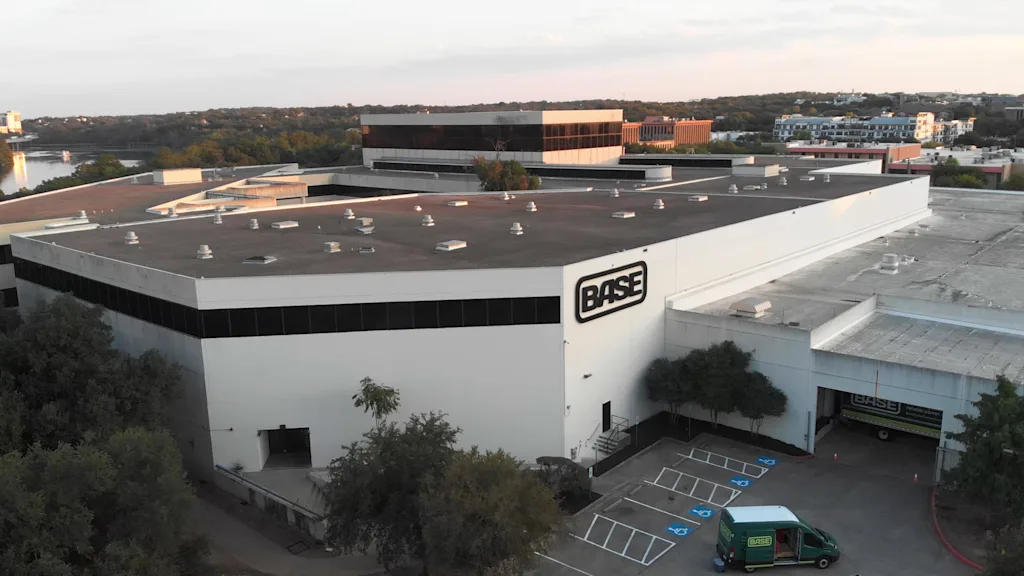
The system was installed by Base Power, a Texas-based startup that’s trying to reinvent the power company. The two-year-old company—which announced this week that it raised $1 billion in a Series C round of funding, from sources like Addition, Thrive Capital, Andreessen Horowitz, an others—owns a fleet of large batteries that it installs at homes—both to help homeowners and to provide critical support for the electric grid.
A new type of power company
Instead of buying the batteries, homeowners pay an installation fee and a $19 monthly rental fee. Then they also choose Base Power as their electric company. The total monthly cost is often less than customers previously paid on their utility bill.
Base Power can charge low fees because of the second part of its business model: it uses the batteries to sell power to the grid when utilities need it. The startup’s software tracks electricity prices, charging the batteries when the cost of power is low, and selling it back for a profit that it can share with homeowners.

“We don’t sell batteries, we sell power,” says Base Power founder Zach Dell. “We install the battery on your home. We own it. We operate it. When the grid’s up and running, we use it to support the grid. When the grid’s down, you get it to back up your home. The customer gets all the benefits of the power backup without the high upfront cost. And we get to deploy this really efficient asset class of distributed batteries.”
Dell started thinking about the need for utilities to change while working in private equity at Blackstone and as an investor at the VC firm Thrive Capital. “I identified that there was a paradigm shift happening in the industry,” he says. “The last five decades of energy have been defined by coal and natural gas. And the next five decades are likely to be defined by solar and storage.”
As an investor, he watched tech companies go after slow-moving industries and quickly take market share. “It occurred to me that the energy industry was really the last great part of the economy that had gone undisrupted,” Dell says. “If you look at electric utilities and the businesses in that category, they’re big, and not necessarily innovative, and not focused on technology and R&D. So the idea was okay, let’s go build the category-defining, technology-driven energy company around this paradigm shift.”
A different approach to battery storage
Most batteries on the grid today are utility-scale—packed in shipping containers in fields that often sit next to a solar or wind farm. Like renewable projects, they face long delays waiting for interconnection approval. Because they’re typically far from the cities that need the power, they also face challenges with congestion on the grid’s outdated wires.
“Distributed batteries allow you to circumvent the two constraints,” says Dell. “You don’t have to wait in the interconnection queue, because you deploy the batteries where interconnection already exists. And the deployment are co-located with the load, so you don’t have those transmission constraints.”
Other home batteries already exist, but the company wanted to offer something different. First, most home batteries are out of reach for many consumers. “The home batteries on the market today are very expensive, very premium,” he says. “They’re literally made of glass. They cost $20,000 and they look like an iPhone strapped to the wall.”
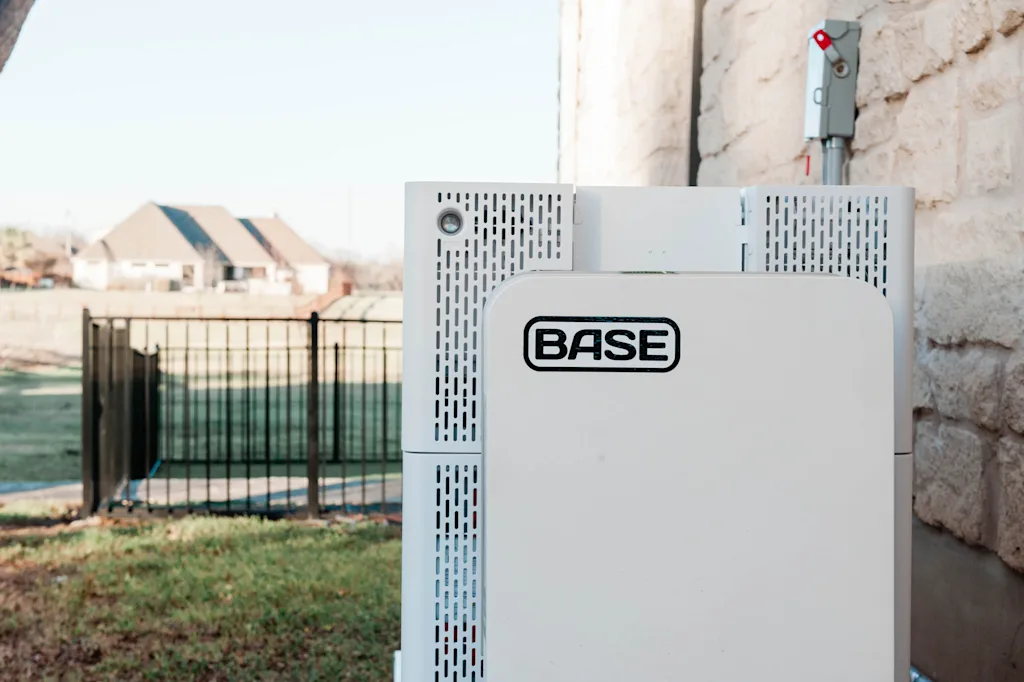
Instead of a premium product, the company decided to offer something utilitarian. Unlike other sleek home batteries, it looks more like an air conditioning unit. At 25 kilowatt-hours of storage, it has around twice as much power as some other home batteries, enough to fully power a house.
Some homeowners, like the Popovits family, get two units. While they’ve only had it installed for the month and the power hasn’t gone out in the neighborhood yet, they’ve run the system in test mode. “It really does run everything,” Popvits says. “It runs your air conditioner, which is a really big deal.”
Over the year and a half that the company has been installing the units, Dell says that other customers have used the batteries in thousands of outages. In some parts of Texas, it’s common for the power to go out once or twice a month.
A fast way to supply power to the grid
Using batteries as virtual power plants is increasingly seen as a critical tool to support electric grids. In California, two large utilities recently ran a massive test with customers who signed up to let their Tesla Powerwalls and Sunrun batteries send power to the grid; together, thousands of homes delivered 535 megawatts of electricity as proof of how the system could work when the grid is under strain.
In some cases, utilities are helping pay for distributed batteries. California’s PG&E offers some customers in wildfire zones free or low-cost batteries. In Minnesota, Xcel Energy plans to deploy a network of large batteries at businesses (the companies will be paid for the use of their space, but won’t use the power directly).
Some other companies also try to make it as easy as possible for customers to get home battery systems. In Texas, Sonnen and Solrite offer no-money-down batteries, though customers have to commit to 25 years; Base Power has a three-year contract.
Base Power’s low-friction approach could help virtual power plants grow much more quickly—and add capacity to the grid far faster than building standard solar farms or gas power plants. The company is now making plans to expand outside of Texas.
“We are in an unprecedented time of electricity demand, and we need more supply,” Dell says. The company can add supply to the grid faster and more cost-effectively than any other approach, he argues. “We’re deploying hundreds of megawatts a quarter now,” he says. “Hopefully we’ll be doing hundreds of megawatts a month.” We need to rise to the occasion and meet this massive demand.”
So far, the company has installed batteries in around 5,000 homes, and has more demand from homeowners than it can currently meet. “When I did my homework and I discovered that I could lower my energy bills and have power generation when I was in an outage or a storm, it just kind of seemed like a no-brainer for me,” says Popovits, who learned about the company from a friend who also has a system installed. “The lights stay on, my bills go down, and my overall cost to get whole-house generation is just really, really small.”