
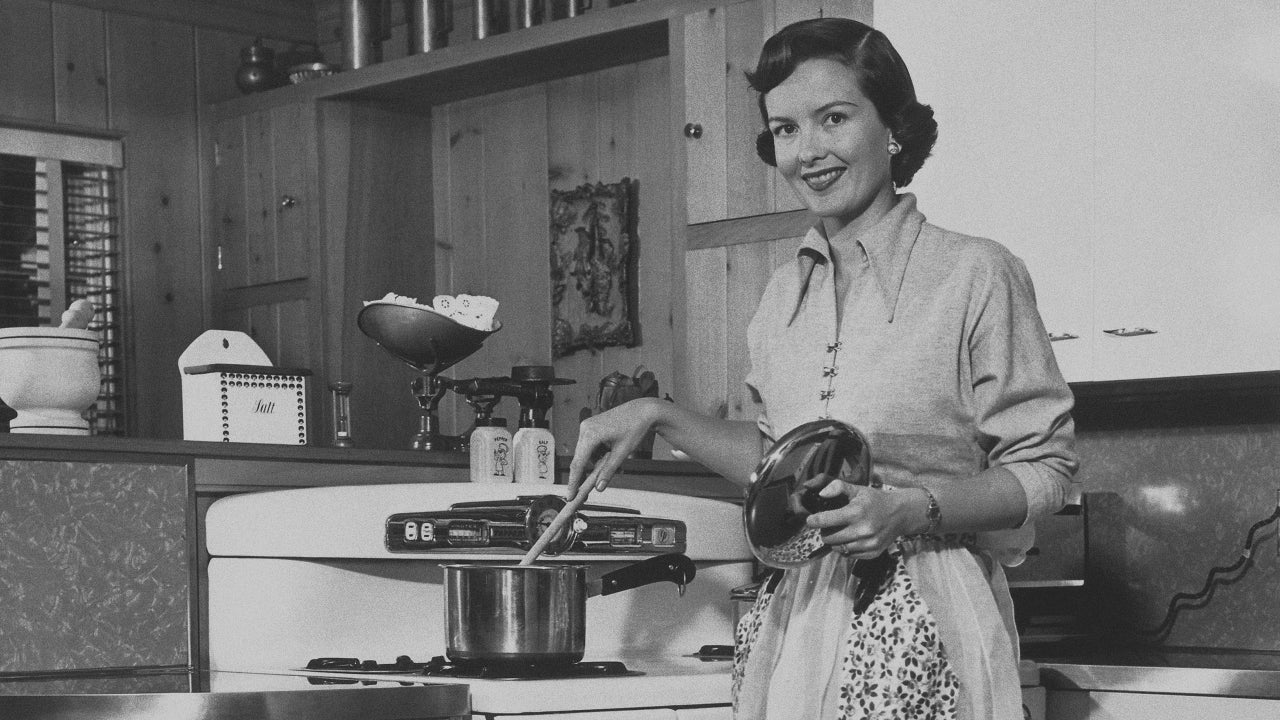
The tradwife has entered the conversation. Instagram showcases her baking bread, doing laundry, and extolling the virtues of domestic bliss—a counterpoint to the girlboss who is always working, and always tired.
Is this tradwife-versus-girlboss conflict simply the latest version of the mommy wars of the 1980s and 1990s, when women’s personal choices about paid work and caregiving became public judgements about what women ought to want? Or is it something more? This is what we sought to find out in our research.
Today’s version similarly divides women into those who “opt out” and those who “lean in.” The public conversation around tradwives often treats the issue as a debate over lifestyle: whether staying home, cooking from scratch, and embracing traditional domesticity represents oppression or empowerment. We found that the framing misses a bigger concern: Women are searching for control over their lives.
Women today have grown up in a world where dual-income families are the norm. At the same time, expectations at home have remained largely unchanged, and in many cases, intensified as women now juggle paid work while still disproportionately carrying the burden of household labor.
That may help explain why the tradwife image has gained traction at the same time that inflexible workplace structures are exacerbating burnout and driving women out of the workforce. In fact, one of the primary drivers of women leaving the workforce before reaching leadership positions is the inability to balance caregiving and work, largely due to inflexible workplace structures.
The tradwife aesthetic may be less about nostalgia for the past than disillusionment with the terms on which modern work has been structured.
The Influencers Associated with Tradwife Culture Are Working Women
The distinction between “tradwives” and “girlbosses” is complicated by the fact that many of the women associated with the tradwife aesthetic earn money by filming, branding, and monetizing domestic life.
Two of the most recognizable tradwives, Nara Smith and Hannah Neeleman, identify as working women. Smith, a model, content creator, and entrepreneur, recently described herself on an episode of Call Her Daddy as a “working mom,” while Neeleman described her workday. Both women share highly stylized images of motherhood and domestic life. Both also earn substantial income from the businesses and audiences they have built.
We Asked Gen Z Women What They Really Think About Tradwives
We asked 335 Gen Z women what they thought about tradwives. Participants read about a fictitious woman named Sarah who enjoyed a traditional homemaking lifestyle, which had four different versions. In one, Sarah was married to a man and didn’t work. In the second, she was in a queer relationship and didn’t work. In the third, she worked outside the home and was married. In the fourth, Sarah was simply described as enjoying domestic activities, such as keeping her home tidy and cooking from scratch; no information was provided about her employment or relationship status.
Across these different versions, women generally thought Sarah was happy and free. Participants did not think that Sarah was oppressed because she enjoyed a traditional homemaking lifestyle. When she was married, they also saw her relationship as stable.
However, perceptions changed when we asked women to rate how risky they thought Sarah’s situation was. Sarah’s life was rated 41% riskier when she was a tradwife married to a man than when she was simply described as enjoying domestic activities.
Even when Sarah worked outside the home and was married to a man, her situation was rated 24% risker than when she was described as just enjoying the tradwife lifestyle. Although the working heterosexual tradwife was rated somewhat lower in risk than the nonworking heterosexual homemaker, the difference was not statistically significant.
Meanwhile, the traditional heterosexual homemaker was rated as 23% riskier than the queer tradwife, despite both women being described as married tradwives. In contrast, the queer tradwife did not differ significantly from the version of Sarah who just enjoyed the lifestyle.
Presenting domestic life as desirable is not necessarily the same as advocating for not working. Our participants seemed attuned to that distinction. Although they generally viewed Sarah’s lifestyle positively, about two-thirds said the traditional tradwife lifestyle was not a viable option for everyone.
Why Workplaces Should Be Paying Attention
If women are attracted to alternatives to a nine-to-five job that promise greater control over time such as caregiving and domestic life, employers should pay attention to what is attractive about these alternatives.
Our research on women leaving corporate America for entrepreneurship and on women’s perceptions of power points to the same underlying needs: freedom and autonomy. The tradwife influencer moment is not evidence that women want to stop working. It may be evidence that women want more control over how work fits into their lives and their families. Traditional employers will need to fold in how to make caregiving and paid work more compatible, or they are going to lose talented workers.
Smith and Neeleman have not opted out of work. They have built forms of work that can exist alongside motherhood, caregiving, and domestic life while still providing an income, which gives them the ability to leave a relationship, make decisions about work and family, or simply decide what comes next.
Years after Anne-Marie Slaughter, the political scientist and commentator, asked whether women can “have it all,” the question now is not whether women want or can have both, but whether the version on offer today is actually livable. The tradwife and girlboss have more in common than it appears. Both sides are asking for the freedom to build a life that feels both secure and livable.