
This article is republished with permission from Laser Wars, a newsletter about military laser weapons and other futuristic defense technology.
The U.S. Army has awarded defense contractor AV a $464.8 million contract for the production of high-energy laser weapons under the Enduring High Energy Laser (E-HEL) program, the service announced—the U.S. military’s first formal directed energy program of record and a major milestone for laser weapons after decades of research and development.
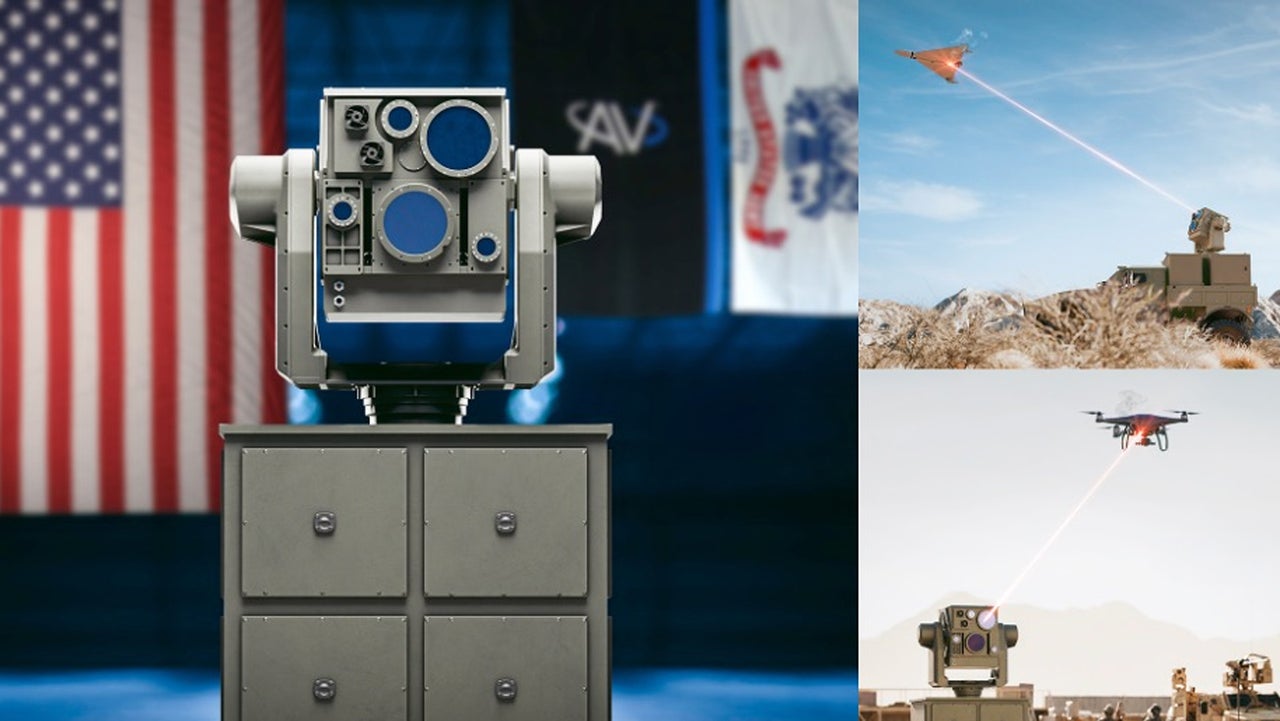
The Other Transaction Agreement (OTA) will see AV equip the Army with 26 30-kilowatt LOCUST X3 laser weapons over the next five years to counter the urgent threat of low-cost weaponized drones, the company said in a statement on September 2. Formally unveiled in March and designed specifically for the E-HEL program, the X3 is the latest iteration of the company’s tried-and-true LOCUST Laser Weapon System that American service members have employed for counter-drone missions from the Middle East to the U.S. southern border with Mexico in recent years.
The landmark contract follows previous reporting on the E-HEL effort. The Army’s fiscal year 2027 budget request called for the procurement of two E-HEL systems for $17.4 million apiece, with plans to “produce and rapidly field” up to 24 additional units in the next five-and-a-half years, according to a draft request for proposals (RFP) from the service’s Portfolio Acquisition Executive for Fires (PAE Fires) published in January.
“This award marks a defining moment not only for AV, but for the future of modern defense,” said AV chairman and CEO Wahid Nawabi in a statement. “The transition of directed energy from experimentation to an enduring, fielded capability reflects years of collaboration, innovation, and operational success alongside the U.S. Army. We are proud to deliver these production systems and support the Army’s mission with scalable, modular, and cost-effective defense solutions.”
First announced in a July 2024 special notice, the Army has envisioned E-HEL as a modular system that leverages design and sustainment lessons from earlier laser weapon efforts, including two previous LOCUST-based systems: the 20 kw Palletized-High Energy Laser (P-HEL) that conducted live-fire testing from the flight deck of the Nimitz-class aircraft carrier USS George HW Bush in October 2025, and the vehicle-mounted Army Multi-Purpose High Energy Laser (AMP-HEL) system that has undergone rigorous domestic testing from the back of the service’s Infantry Squad Vehicle and Joint Light Tactical Vehicle over the last year.
The U.S. Defense Department has slowly experimented with deploying laser weapons overseas to safeguard U.S. troops from hostile drones in recent years. The Army sent several P-HEL systems to an undisclosed location (likely the U.S. Central Command area of operations) starting in 2022, with four of the service’s now-aborted Stryker-mounted 50 kw Directed Energy Maneuver-Short Range Air Defense (DE M-SHORAD) systems following in 2024 for in-theater testing. As recently as this past July, the U.S. Air Force disclosed the deployment of several Boeing Compact Laser Weapon System (CLaWS) units across Europe as part of a layered defense network.
As Laser Wars previously reported, the Army requires that E-HEL systems operate with three distinct engagement profiles: 30 one-second shots per minute in high target density scenarios, six nine-second shots per minute in low target density scenarios, and three 17-second shots per minute against hard targets. The systems must also be able to run at full power for an entire minute, with a recharge cycle of no more than four minutes—a forced “reload” function despite recurring promises from defense officials of an “infinite” or “unlimited” magazine. Importantly, the draft RFP stated that the ideal E-HEL system should also come with associated production capabilities at the ready, a requirement AV appears to have met with a $30 million manufacturing expansion in New Mexico announced in March.
The E-HEL award comes after Defense Secretary Pete Hegseth personally observed AV’s LOCUST shoot down drones in a first-of-its-kind directed energy weapons demonstration at White Sands Missile Range in New Mexico in June, as Laser Wars was first to report. That demonstration also featured nLight’s “P5 version” of the Army’s DE M-SHORAD system and Lockheed Martin’s 300 kw Indirect Fire Protection Capability-High Energy Laser (IFPC-HEL) prototype, known as “Valkyrie.” Just weeks later, the Pentagon awarded nLight and Lockheed contracts for its cruise missile-killing 300-500 kw Joint Laser Weapons System (JLWS) effort in support of its “Golden Dome for America” domestic missile defense shield.
E-HEL is a culmination of the U.S. military’s decades-long pursuit of field-ready laser weapons for air defense. From the Mobile Test Unit, the first-ever vehicle-mounted laser weapon that defense officials deemed “neither scalable nor robust enough for Army standards,” to the DE M-SHORAD that the Government Accountability Office (GAO) declared “not mature enough” for full production, even the most technologically advanced systems have long appeared doomed to languish in the valley of death between R&D and procurement. But with LOCUST operationally proven both abroad and at home, the Pentagon finally appears confident enough to pull the trigger on a major investment in laser weapons as a real-world capability worth fielding to combat formations.
What this historic E-HEL contract might unleash in terms of the U.S. military’s broader directed energy ambitions remains unclear. But the contract offers a clear demand signal to the U.S. defense industrial base that the Pentagon is firmly committed to buying and fielding laser weapons beyond just aspirational rhetoric, one that may catalyze the investment in the advanced manufacturing capabilities required to rapidly produce these systems as the global directed energy heats up. Between the E-HEL and JLWS contracts and the Pentagon’s unprecedented funding for directed energy R&D, the U.S. military’s dream of fielding laser weapons at scale is closer to becoming reality than ever before.
This article is republished with permission from Laser Wars, a newsletter about military laser weapons and other futuristic defense technology.