
In an era of shrinking aid budgets and multiplying conflicts, every dollar spent on humanitarian aid must work harder than ever. As the Ebola crisis shows, aid cuts can bring disaster, but the question is not just how much the world spends. It’s whether resources are being directed towards investments that address crisis and generate lasting economic and social returns.
One of the highest-return investments in fragile nations does not involve roads, ports or security forces. It involves 4-year-olds. Investments in early learning and primary education generate some of the highest long-term returns. Evidence from rural Kenya found that every dollar invested in early childhood development generates over $15 in social and economic returns—through improved health, learning, productivity, and future earnings. Yet less than 4% of aid to crisis-affected countries is directed towards early childhood development—and less than 0.5% goes to early learning and play.
This is not a marginal oversight. It is a systemic failure to invest in the foundations of long-term stability and economic resilience.
Some donors are beginning to rethink the economics of education in emergencies. On May 27, for instance, our institutions announced a $97 million program to expand play-based early learning programs across conflict-affected regions in East Africa and the Middle East, one of the largest philanthropic commitments ever to early learning and primary education in crisis settings.
Over 400 million children are growing up in conflict settings where education systems are disrupted or have collapsed. This is not only a failure to educate children. It is a handbrake against virtually every other measure of an educated, capable population that can grow an economy. The global financing gap to meet basic education goals stands at $97 billion a year, and is growing.
Early childhood is the period when human capital is formed most rapidly and most cost-effectively. Additionally, ensuring continuity of education through primary school can generate significant returns: UNESCO estimates that reducing early school leaving and lack of basic skills by just 10% would increase annual global GDP growth by 1–2 percentage points. Miss that window, and the losses compound over a lifetime, in lower productivity, weaker labor markets, and reduced economic resilience. In crisis-affected regions, where instability is already high, these losses harden into long-term risks for growth and social cohesion.
Evidence from these settings shows that playful learning—structured, interactive approaches that build cognitive and social skills—can deliver measurable gains at a fraction of the cost of traditional models. This is grounded in the science of child development: Conflict and displacement can trigger a toxic stress response in young children, undermining long-term mental and physical health and development. But research shows these effects are not inevitable or irreversible. Play-based and social and emotional learning can create the stability and nurturing relationships children need to cope, recover, and continue developing despite crisis.
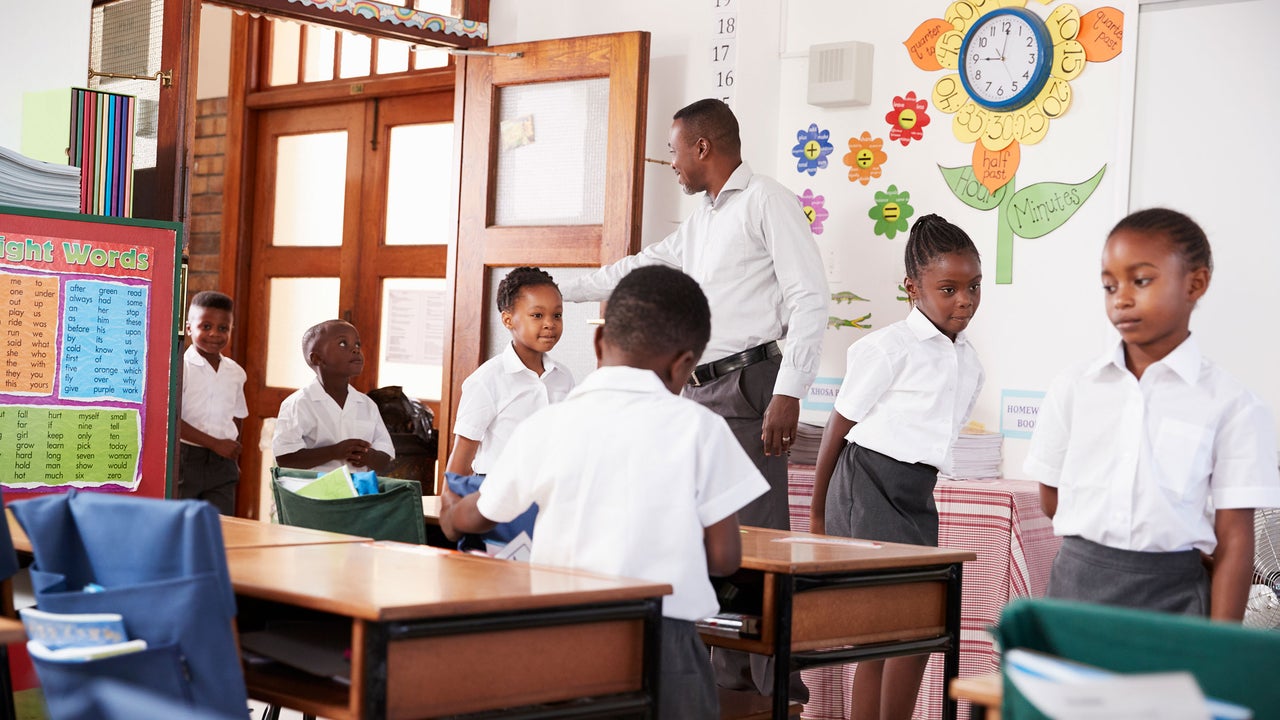
In Ethiopia, PlayMatters, a multicountry, large-scale program designed for children under 12, delivered significant improvements in literacy, numeracy and social-emotional skills for as little as $24 per child. That price tag—the cost of an office lunch—compares with an average of $240 for standard humanitarian education programs. PlayMatters also had an exceptionally positive impact on empathy, emotional regulation, and conflict resolution—with children showing these skills up to 2.5 times what is typically seen in crisis-affected settings.
Even where formal education systems have largely collapsed, the low-cost model can adapt: In Lebanon, an 11-week remote early learning program delivered educational gains comparable to a full year of in-person preschool. Because early gains in learning and social-emotional development shape outcomes across the life course, the program helped protect children’s long-term development from the effects of conflict and displacement at less than one-fifth the cost of traditional preschool provision.
For children in these programs, the impact is powerful.
For Tamrat, an eighth grade student displaced by the conflict in Tigray, Ethiopia, returning to school was not straightforward. “After the conflict, you can only think about the blast, about the soldiers firing into the sky,” he said, describing how fear followed him into the classroom. But Tamrat returned to a classroom designed to help students focus, participate, and regain confidence.
“I like to feel free,” Tamrat said. “If I’m free, I can understand the teachers.” Tamrat now hopes to become a software engineer.
These outcomes are real. The question, then, isn’t whether we should invest more in education in fragile states. It’s how much and at what scale. For governments, this means embedding early learning into national systems: teacher training, curricula, health services, and parenting programs. For institutional donors, it means shifting meaningful dollars toward play-based learning for children in crisis. For the private sector, it means recognizing that long-term economic resilience depends in part on strengthening the foundations of future markets and workforces. And it is a mindset change for all; civil society, community groups, NGOs reach those that governments cannot.
The numbers make the case. With many interventions costing only tens of dollars per child, even modest reallocations of funding could expand access dramatically and reach several times as many children for the same level of investment. These investments aren’t charity. They are among the smartest, most underutilized investments available for building economic resilience and stability in the world’s most fragile societies.