
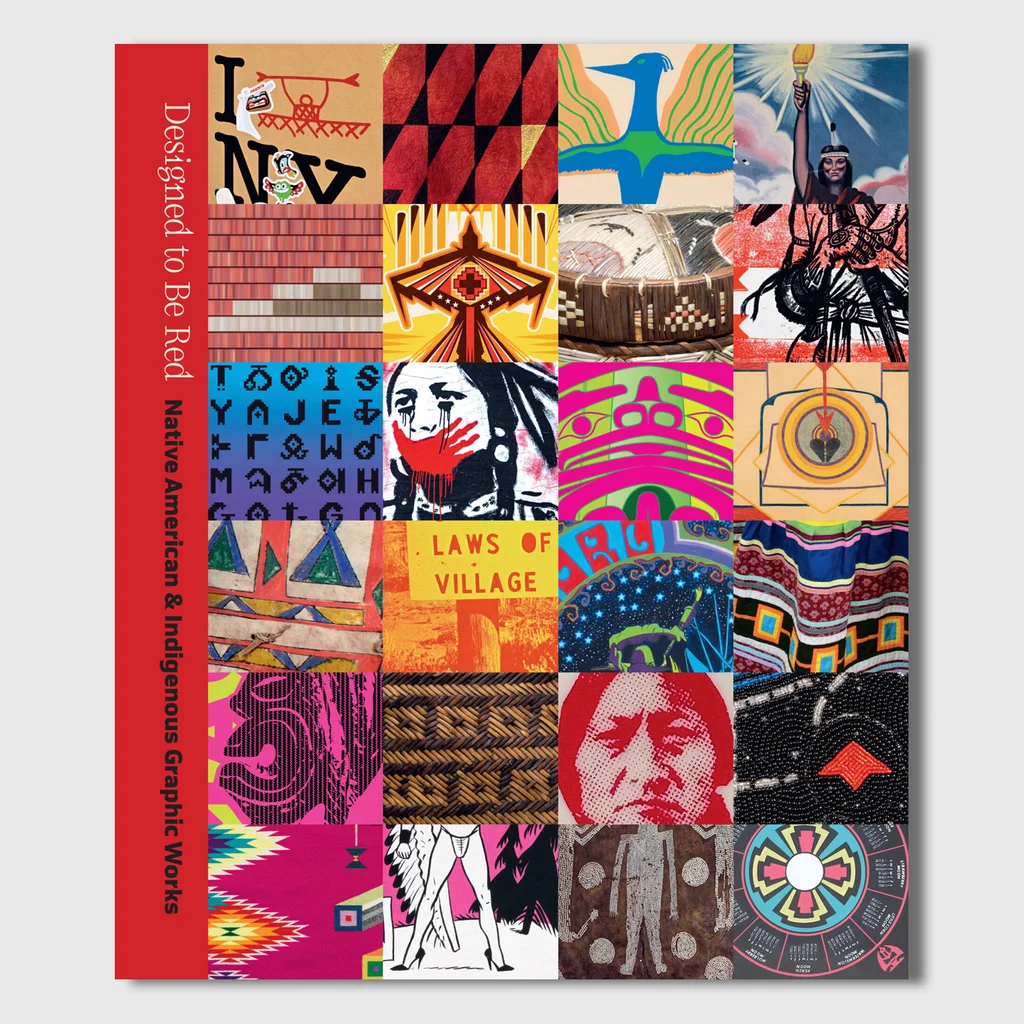
Brian Johnson, a member of the Monacan Indian Nation, is painting the field of graphic design red, with his new book, Designed to Be Red: Native & Indigenous Graphic Works, published on September 15 by DelMonico Books. The book contributes to the larger project of decolonizing design. Showing more than 200 years of Native American graphic works from makers across 144 distinct nations, tribes, bands, and Indigenous cultural and language groups, the book dismantles the myth of design as something that happened in Europe in the 1800s.
Sparked by a request to give a lecture on Native American posters by the New York City gallery Poster House, Johnson carried out his project of “cultural sovereignty” for three years. His Native American heritage and career as a designer, curator, and partner at the design studio Polymode earned the trust from the Native and Indigenous makers and guiding Aunties who contributed to the book.
In a two-hour Zoom interview, which has been edited for brevity and clarity, I sat down with Johnson to discuss the significance of this project for Native American and Indigenous makers and why non-Native people still need to be reminded to “Put Native First.”
Fast Company: Would you please explain the title of your book, Designed to Be Red: Native & Indigenous Graphic Works?
Brian Johnson: The title stems from this idea that everything is by design. And that Native Americans were designed [by colonization] to be “red.” This idea where we have been othered, classified, and made a taxonomy. We are in the past. We are imagined. I think dad jokes are the best thing ever because wordplay is really important to me. I think it is funny. I think it lets your guard down. That’s also a very Native trait. And so, to be red also means to be R-E-A-D, to be read like a book, to be read like a story, to be read to filth. I loved the play on words. To take a word, red, that is used as a weapon and then to flip it and show it was also designed to be read.
Tell me what is your authorial (i.e. both author and authority) relationship to the book?
First, I am Native American. I come from the Monacan Indian Nation, whose ancestral lands are in central Virginia: Lynchburg, Richmond, Charlottesville, and the Shenandoah Valley. Being proud of where I come from has always been one of the deepest parts of me. The Monacan Indian Nation finally got federal recognition in 2018 by the United States government. To some people, unless you have a certain level of recognition, whether it be state or federal, you are not allowed to be that thing.
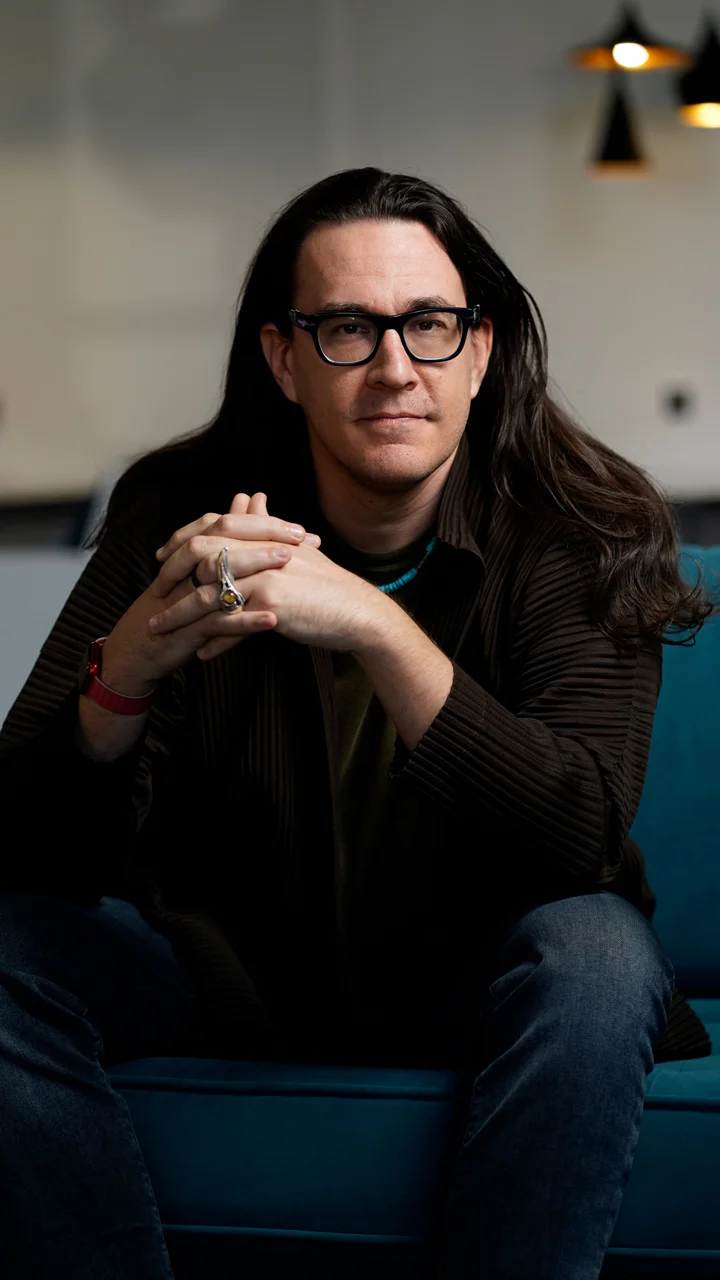
I went to RISD [Rhode Island School of Design], where I got a great education. I have been in the design world now for 25-plus years. I am a partner at Polymode. I work really hard to uplift marginalized voices. I started BIPOC Design History with Silas Munro. I am here to really show that people of color have been making, doing, striving, and surviving in beautiful waves for eons.
But it’s not just me, I invited other Native American scholars and designers to be in conversation with me: Dr. Jessica Moore Harjo (Otoe-Missouria, Osage, Pawnee, and Sac & Fox Nations), Monique Ortman (Cherokee Nation), Jackson Polys (Tlingit), Sadie Red Wing (Spirit Lake Dakota/Cheyenne River Lakota), Kathleen Sleboda (Nlaka’pamux/Coldwater Indian Band), and Leo Vicenti (Jicarilla Apache Nation).
Would you talk about your process of collecting and curating the over 100 graphic works for the book?
First, it was finding the works. In the Western design thinking, this follows the modernist timeline. From Native viewpoints, this is not the way we conceptualize the world. We think about everything as a web. It is all enmeshed together.
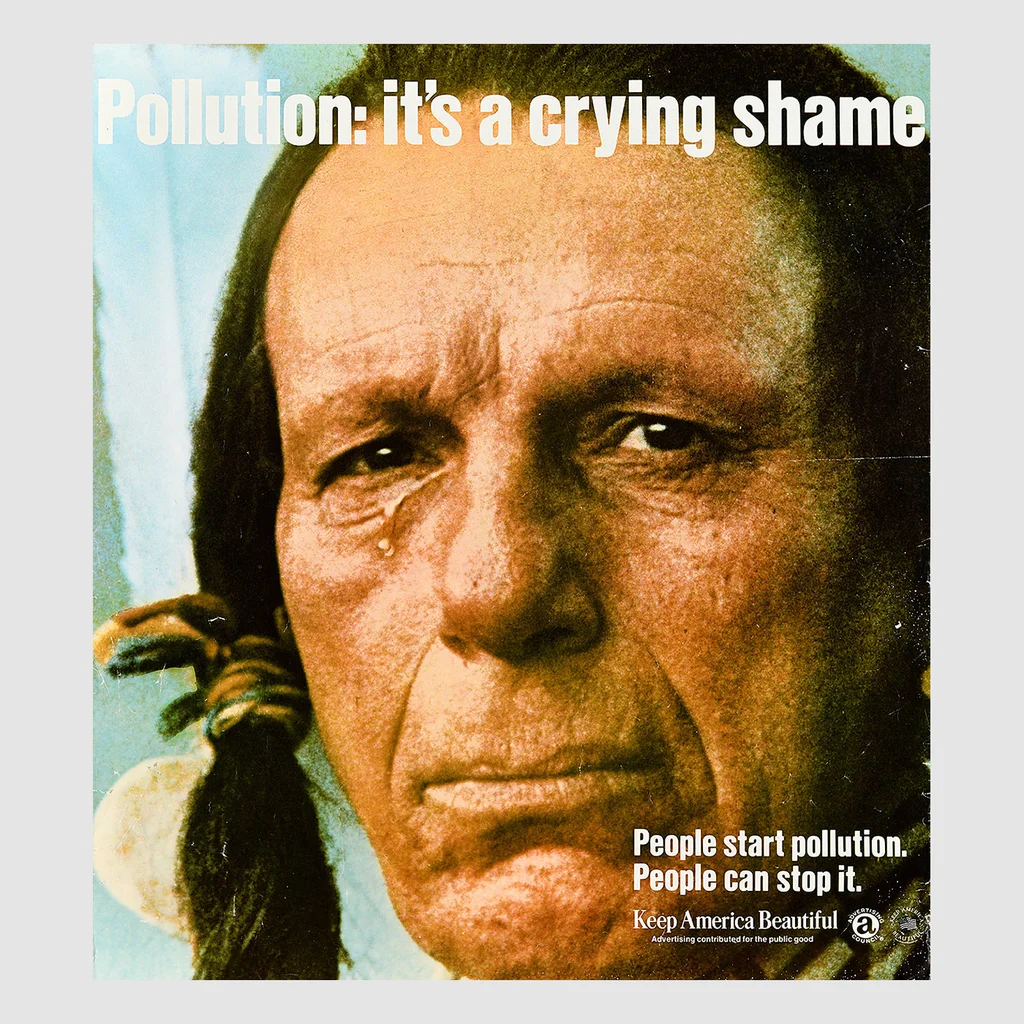
And so, I started by asking, “Where are the pieces that I know?” I knew about Akwesasne Notes, the newspaper that was key for the American Indian Movement, and those posters. As a child of the early ‘80s, I grew up in schools that had the “Hang in There” or “Soar with the Eagles” posters. I grew up remembering the Crying Native ad, with old Iron Eyes Cody, the pretendian. I also knew the extractive negative works that were in the common understanding of the things called Native.
Then once I found hundreds of works, I asked, “What are the stories behind them?” And I had to cold-call people, get on Facebook and Instagram, literally call up the Aunties and email people that I had never met and tell my story 5,000 times.
Then there is all the stuff you’re taught from a higher education standpoint. Go to an archive, open up the flat file, look through it, find what you need. But nine times out of 10, they weren’t documented or attributed correctly. It said “unknown.” That is not true. These are “maker once known.” These individuals were erased.
What are images that you knew you wanted to include in the book from the beginning?
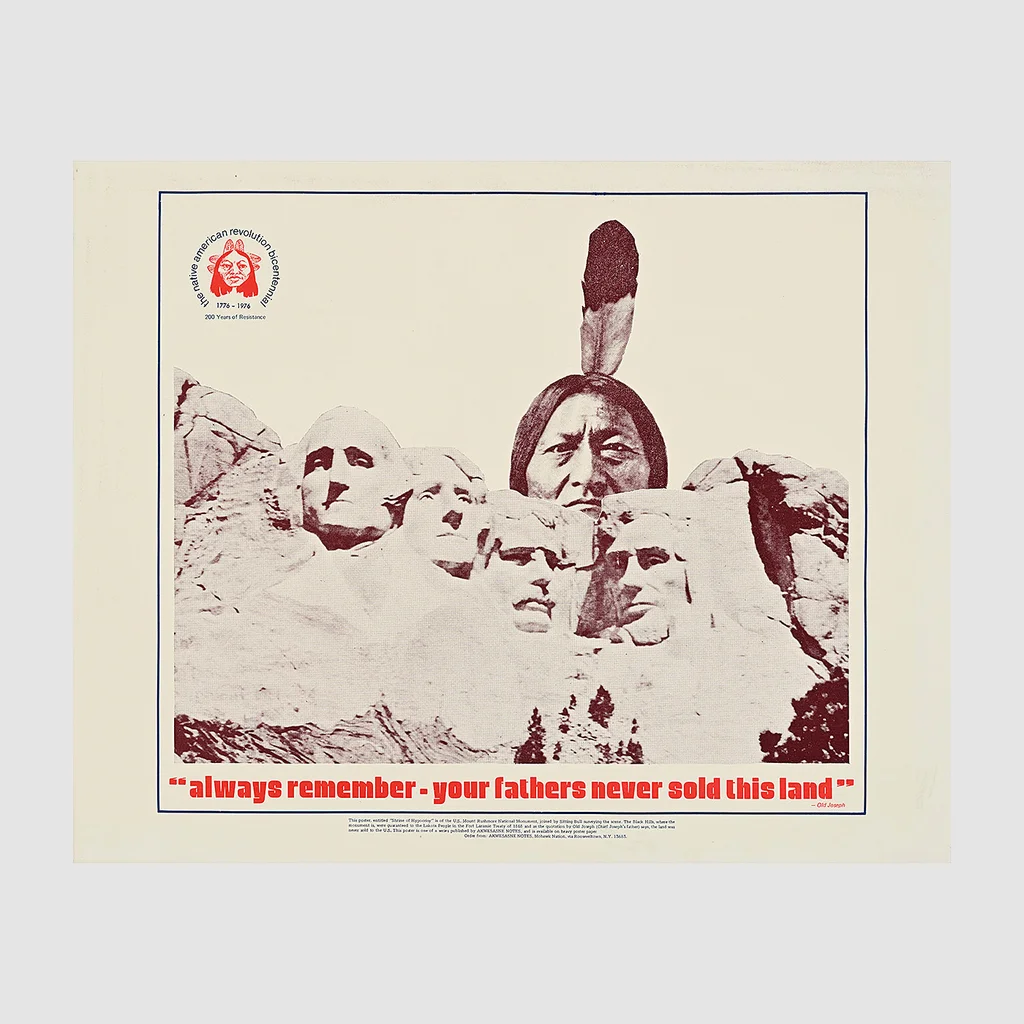
The first image was The Shrine to Hypocrisy by Akwesasne Notes. It is a poster of Mount Rushmore and Chief Sitting Bull’s head rising behind the American presidents that were bastardly carved into those sacred mountains. Everyone knows what Mount Rushmore is because of the American myth behind it. But that poster was saying, “Remember, your ancestors never gave away or sold that land.” It’s this dichotomy between how everyone sees and knows it.
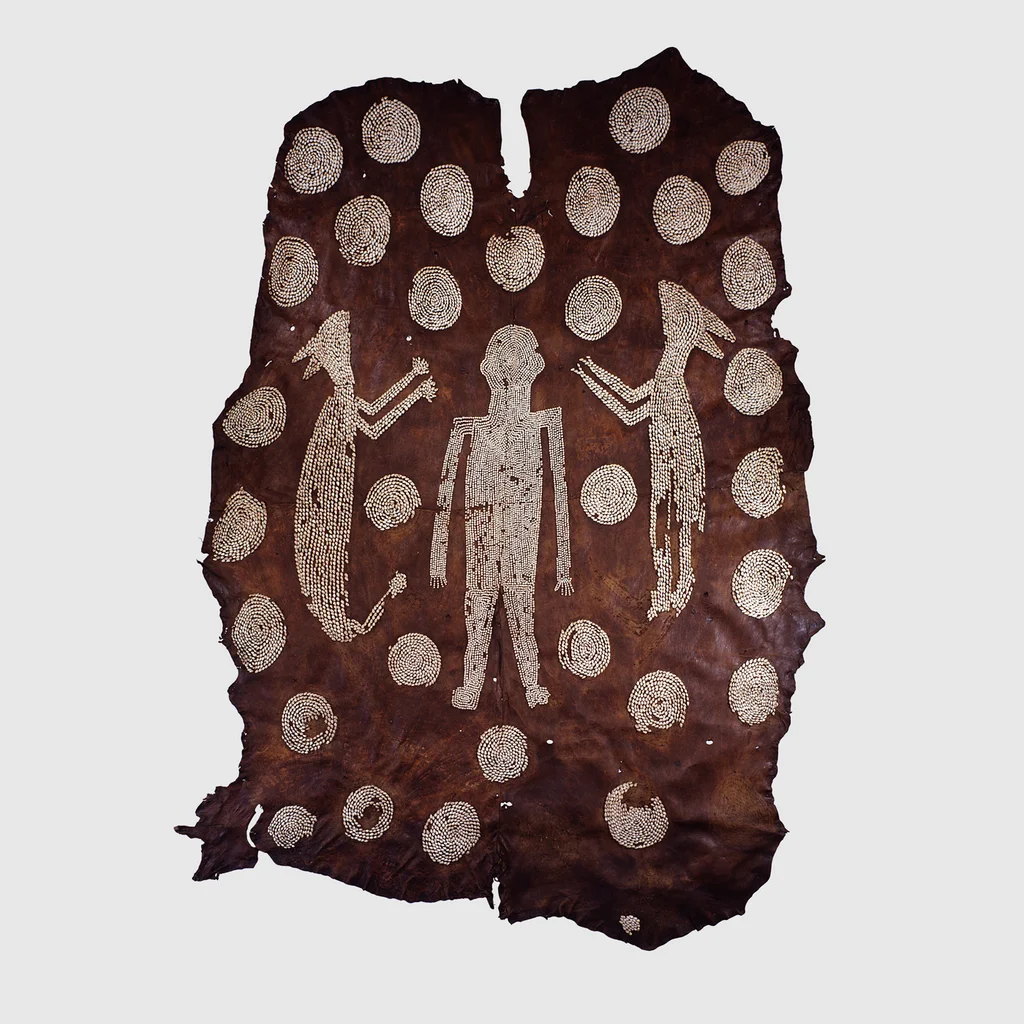
The other one is something closer to me, and that is the Powhatan’s Mantle. It is this large deer skin that has all of these shells so delicately sewn onto it. It has a human, two deer, and all of these circles that represent the different tribes or people that are all bound together in what is now called the Powhatan Confederacy. That object has deep meaning to me, even though I am not from that Native lineage, those people were from nearby lands. I knew of that object and how it was “given” as a gift to the King of England, where it now still sits.
You end the book with a call to action. What are those things that people should be doing to support the cultural sovereignty of Native American graphic works?
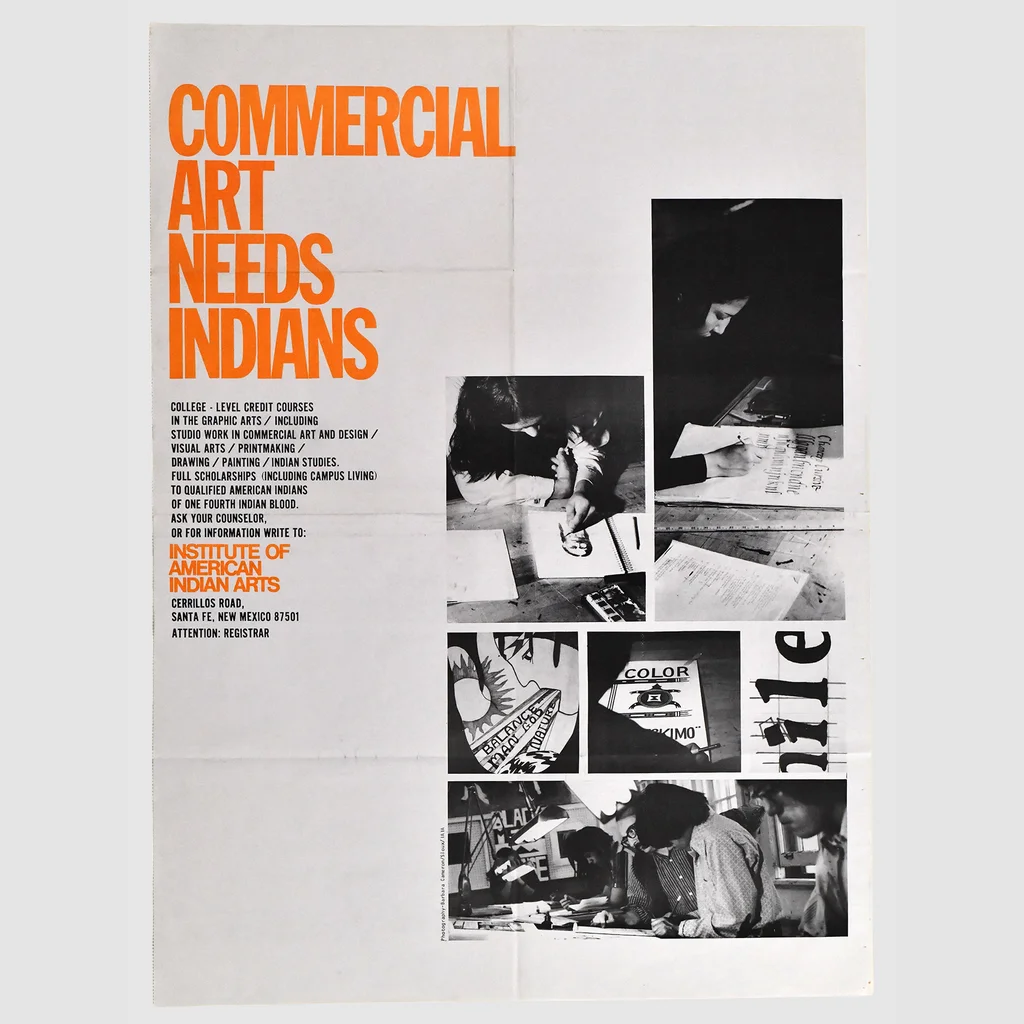
Yes, in the book there is an explicit call to action where people can understand “What can I do next?” for young Natives, for older Natives, for students, for non-Natives, for educators. Some of those things are: Try to decolonize what you’re teaching. Try to expand and find more things. Question the authority of what you’ve been shown. Ask the same questions from a different terminology. Sometimes sit down and let other Native people speak. The main point is that you have to slow down the idea of capitalism and the machine to do the real work to reestablish what has been destroyed—community connection and the value between human beings.