
The greater question, still to be answered, is whether this will work.
The struggle over how to make housing more affordable has riven the American left for several years now. The fight roughly divides into two camps. One, known as the YIMBYs (yes in my backyard) or Abundance movement (taken from the best-selling Ezra Klein and Derek Thompson book), argues for the market as the ultimate solution. Build enough housing and prices will fall. Prominent Abundance pundits like Matt Yglesias are skeptical of rent regulation and tough tenant protections. Anything that is seen as strangling the housing supply the private sector provides must be opposed.
And the second camp, the traditional progressive left, backs tenant protections, rent regulation, and believes all the talk of supply is just a way to enrich real estate developers at the expense of tenants. How will someone making minimum wage be helped by a glassy condominium shooting up next door, one where apartments might rent for $6,000 or more a month?
What makes the young Zohran Mamdani mayoralty so fascinating is that it has, so far, tried to find a middle ground. He is only the second New York mayor in the 21st century, after Bill de Blasio, who could be described as pro-tenant. Though Mamdani wouldn’t use the label necessarily, he could also be described as a YIMBY. He very much wants to build. He rejects the orthodoxy that supply doesn’t matter. He represents the triumph of a new breed: the Left YIMBY.
There’s logic to this approach. Both camps really do have a point. A lack of housing supply has led to a surge in prices. The 2008 economic crash and subprime mortgage crisis created a building crunch that the country never really recovered from. Suburbs and cities alike need to build more homes for people to live in. But the most aggressive YIMBYs can never quite admit that the market alone, in highly desirable locales like New York City, will never solve all of these problems. There will always be an ultrarich investor class, domestically and globally, that drives up prices. Some YIMBYs dream of the day when New York’s rent-regulated housing stock is transformed into market-rate housing, thus creating more supply on the open market, not understanding that this would just mean that a bunch of apartments that now rent for $2,000 a month might require, a few months later, far more. If a landlord doesn’t have to contend with any regulations, working-class tenants will suffer.
Left YIMBYs aim to reckon with this reality. Mamdani, a democratic socialist, has already successfully frozen the rent on all rent-stabilized apartments, which represent around 40 percent of the rental stock, fulfilling a major campaign promise; de Blasio froze rents as well, but Mamdani has gone further by halting increases, for the time being, on two- as well as one-year leases. His appointment of Cea Weaver, a top housing activist, to lead the Mayor’s Office to Protect Tenants placed one of the great enemies of the landlord and real estate lobbies into city government. The office, defanged under Eric Adams, is now empowered to address tenant complaints, and Weaver has been involved in the rescue of distressed rent-stabilized buildings owned by overleveraged, predatory landlords.
(Disclosure: In 2018, when I ran for office, Mamdani was my campaign manager.)
Current Issue
At the same time, Mamdani has stood at the forefront of a Left YIMBY movement that predates him at City Hall. A good deal of it was spearheaded by Open New York, a housing advocacy nonprofit that has become the policy and political backbone of Left YIMBYism. In the 2000s and 2010s, the real estate class and the progressive tenant movement clashed repeatedly because the former was committed to weakening or eradicating altogether the tenant protections built up in the 20th century. And even the development policy that was supposed to, in theory, create a supply boom was circumscribed. The Bloomberg administration oversaw significant rezonings that added housing density in a few select neighborhoods, usually those ripe for gentrification, but also downzoned wealthier, whiter neighborhoods in the outer boroughs. The de Blasio administration backed mandatory inclusionary zoning requirements citywide, but still focused on building density in lower-income, non-white communities because the politics of building in the richer neighborhoods were still fraught. It was only at the end of his second term, with the rezoning of SoHo, that the pendulum began to shift.
Eric Adams was a shambolic, corrupt mayor, and many of his appointees were patronage hires with limited competence. A few, though, weren’t: Dan Garodnick, his city planning commissioner, and Maria Torres-Springer, his first deputy mayor and a de Blasio administration veteran, helped oversee, along with the City Council, a crucial housing plan known as City of Yes. The first truly citywide rezoning plan in many decades, City of Yes was a blow to the hyperlocal opposition that often derailed development, especially in whiter neighborhoods desperate to preserve their suburban “character.” City of Yes was a rare moment for Adams, usually an enemy of the left, to work with progressives, and he left Garodnick, Torres-Springer, and the City Council, including Speaker Adrienne Adams (no relation), to hammer out the details of the plan. Mamdani, as a state assemblyman, backed City of Yes, though his support was symbolic since the vote took place in the City Council.
A second major shift was the ballot measures, passed by city voters in 2025 and backed by both Adams and Mamdani, that dramatically changed how land would be rezoned in New York City going forward. Instead of a drawn-out land use process that would inevitably end up with a single City Council member deciding whether a project would get built in their community, a new three-member appeals board made up of the mayor, City Council speaker, and borough president can overturn land use decisions or modify housing plans. Mamdani’s goal to build 200,000 affordable homes will rely, in part, on these new powers, and it’s unlikely a recalcitrant City Council will stymie him. Mamdani’s ambition led him into talks with Donald Trump about reviving the massive Sunnyside Yard housing plan; nothing new has happened since their White House meeting in March, but there’s hope Mamdani can eventually make some progress there.
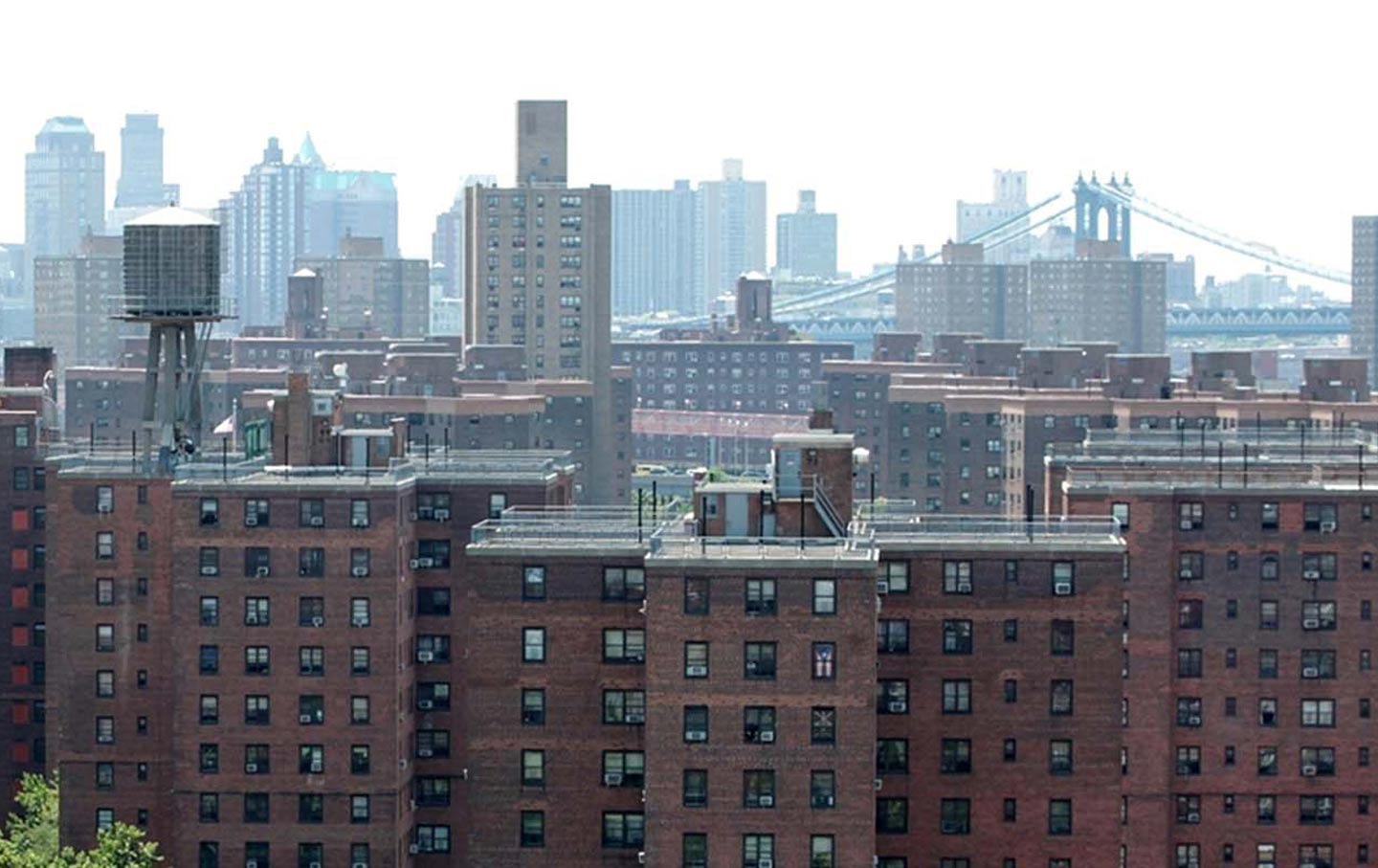
This will be the Left YIMBYism of Mamdani: build a lot more while defending tenants. The greater question, still to be answered, is whether this will all work. In the state government, Mamdani has found a partner in Governor Kathy Hochul, who wants to build housing and is far less hostile to tenants than her predecessor, Andrew Cuomo. The state legislature is largely in his corner. Mamdani is hoping, too, that he can somehow rehabilitate the city’s public housing stock, which has decayed for decades and has suffered from mismanagement and a lack of funds. Capital repair costs are in the tens of billions and there is no chance the Trump administration or a Republican Congress will assist. Mamdani, there, can only do so much. One day, though, there will be a new president and maybe a different party controlling Congress. The young mayor’s fate is hardly sealed.