
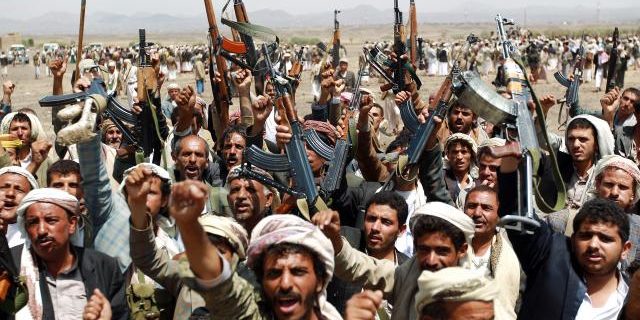
The Houthis have not technically seized the entire Red Sea, but that distinction is becoming almost meaningless for Saudi Arabia. Their forces have swept down Yemen’s western coastline, taking Mokha, Dhubab, the Hanish islands, and most importantly Mayyun, also known as Perim, sitting directly inside the Bab el-Mandeb Strait. They now control nearly the entire Yemeni coastline along the Red Sea and possess something far more valuable than territory. They have acquired leverage over one of the most important maritime chokepoints on Earth.
This is becoming an economic nightmare for Saudi Arabia because geography cannot be negotiated away. The Saudis traditionally relied heavily on the Strait of Hormuz to move oil eastward toward Asia. When Hormuz became increasingly dangerous, Riyadh shifted more crude through its East-West pipeline across Saudi Arabia to Yanbu on the Red Sea. That was the escape route. Oil could bypass Hormuz, load at Yanbu, sail south through Bab el-Mandeb, and reach Asian customers. Now the Houthis are sitting at the other door.
Saudi Arabia is therefore confronting the nightmare of being squeezed between TWO strategic chokepoints. Iran can threaten Hormuz while the Iran-aligned Houthis can threaten Bab el-Mandeb. Saudi Arabia built the East-West pipeline precisely to reduce its dependence on Hormuz, but geography has now transformed the Red Sea alternative into another vulnerability. You could not design a more dangerous strategic position for an oil exporting nation.
The shipping data already reflects the fear. Traffic through Bab el-Mandeb fell by half immediately after the Houthi seizure of Perim, from 30 vessels in one day to just 15 the next. Large crude carriers have been particularly reluctant to enter the strait. This is the part politicians never understand. The Houthis do not actually have to sink every tanker or formally “close” the waterway. They merely have to make the risk sufficiently expensive that insurers, shipowners, and charterers refuse to go there.
That is how modern economic warfare works. You do not need a naval blockade when the insurance market will create one for you.
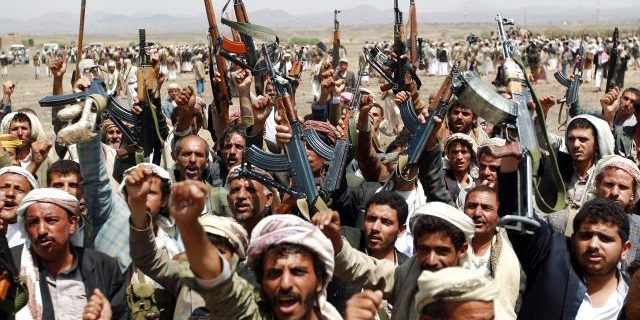
Saudi tankers leaving Yanbu can instead sail NORTH toward the Suez Canal. But oil destined for Asia then faces an absurd journey. Some vessels must enter the Mediterranean, pass Gibraltar, travel down the entire western coast of Africa, round the Cape of Good Hope, and then sail back across the Indian Ocean. AP reported that the journey to South Korea can increase from roughly 24 days to 54 days. Tankers can cost tens of thousands of dollars PER DAY to charter, and rates during this energy crisis have in some cases exceeded $100,000 per day.
This is inflation being manufactured geopolitically in real time. Every additional day at sea means fuel, insurance, crews, financing, and charter costs. Those costs eventually appear somewhere in the price structure. Politicians will then blame “greedy corporations” when energy prices rise while ignoring the fact that their geopolitical adventures have transformed the world’s shipping lanes into war zones.
Saudi Arabia’s vulnerability extends far beyond tankers. The Houthis have attacked Saudi energy infrastructure and announced what they call a maritime embargo on Saudi-linked shipping. Riyadh temporarily shut its East-West pipeline after an attack in September. Saudi Arabia then reportedly appealed to China for help, and Reuters reported that Beijing subsequently pressed Iran to restrain the Houthis. That is perhaps the most revealing development of all.
Saudi Arabia is asking China to help influence Iran. That tells you how dramatically the geopolitical chessboard has changed. China is one of the world’s largest energy consumers. It needs Gulf oil. Beijing therefore has an enormous economic interest in keeping both Hormuz and Bab el-Mandeb functioning. The United States once dominated every major diplomatic conversation in the Middle East. Now Riyadh is turning toward Beijing because China has relationships with both Saudi Arabia and Iran and possesses economic leverage Washington simply does not have in the same form.
This is precisely what happens when sanctions and endless wars fragment the world economy. Trade routes change. Alliances change. Capital flows change. Countries begin looking for alternative partners because survival always comes before ideology.
The Houthis have also demonstrated something that should terrify every major military establishment. You no longer need an enormous blue-water navy to threaten global commerce. Cheap drones, missiles, mines, and control of the coastline can impose tremendous economic costs on ships worth hundreds of millions of dollars. A relatively poor armed movement sitting beside the correct piece of geography can influence the price of energy across the entire world.
Bab el-Mandeb means the “Gate of Tears.” That name is becoming rather appropriate. This is not simply another chapter in Yemen’s civil war. The Houthis have acquired strategic leverage over the southern entrance to the Red Sea while Iran retains leverage over Hormuz. Between those two chokepoints sits Saudi Arabia and an enormous portion of the world’s energy infrastructure.
Saudi Arabia is certainly not cut off. Oil will continue moving. Markets always find another route. But every alternative becomes longer, more expensive, and more dangerous. You do not need to stop world trade to create an economic crisis. You merely need to make world trade expensive enough.