
The American action in the contested strait isn’t sustainable—and won’t alter the economic and political fallout from its closure.
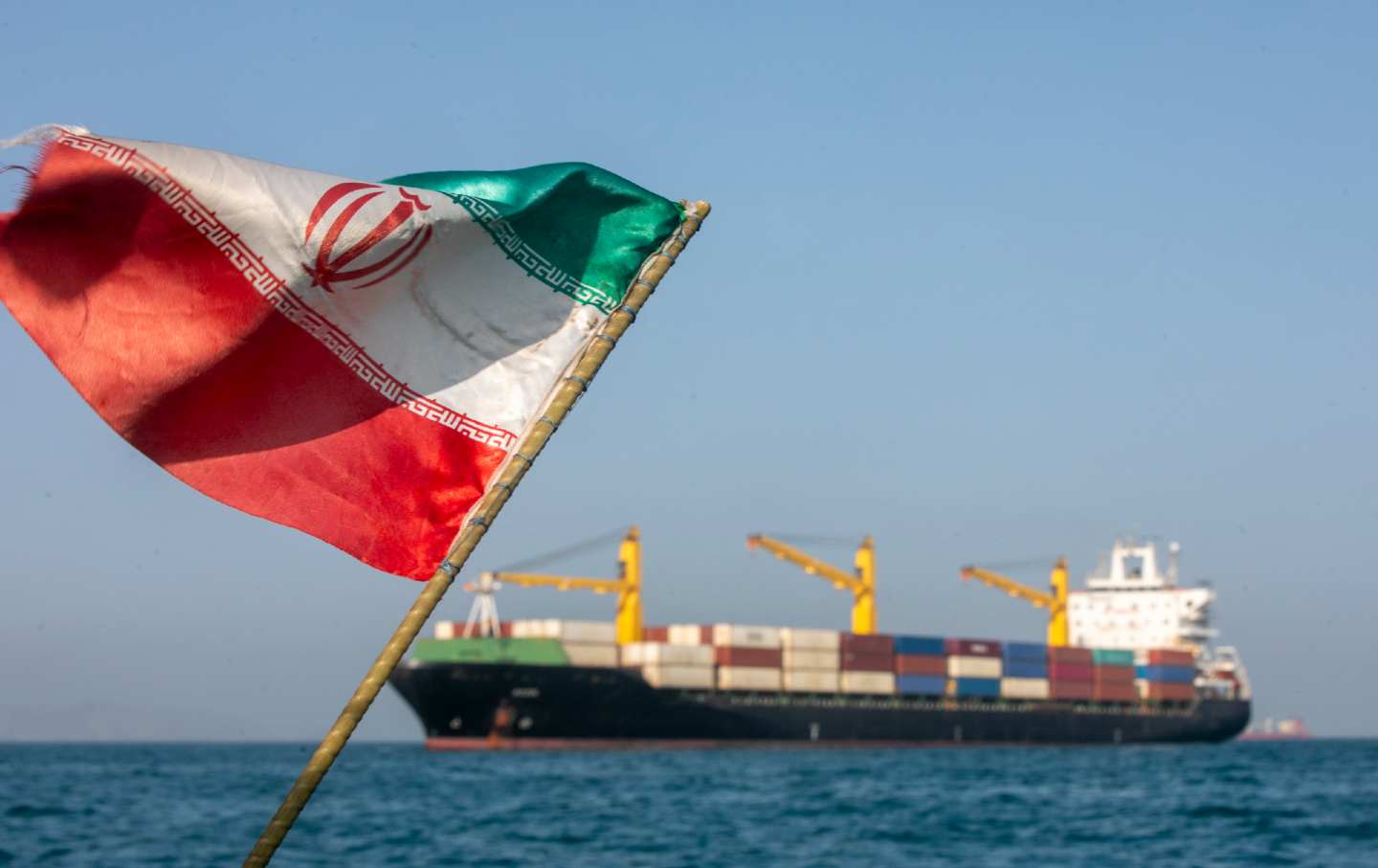
An Iranian flag flutters in front of a cargo ship in the Strait of Hormuz.
(Majid Saeedi / Getty Images)
Over the past week, the Trump administration has issued a coordinated flurry of claims about how oil flows out of the Strait of Hormuz are close to prewar levels. According to White House communications flacks, this sharp reversal of the long-standing stalemate in the strait is thanks to US military operations carried out in conjunction with Saudi Arabia and the United Arab Emirates.
In this instance, the White House party line claims at least partial confirmation from the well-regarded maritime intelligence firm Kpler would risk its reputation by faking data. But even assuming that we can take these claims at face value, they do not relieve the growing strategic and political pressure on President Donald Trump and the GOP. Nor does this wildly expensive and unsustainable work-around represent anything resembling “victory” in this increasingly strange “war.”
That hasn’t stopped various characters in the MAGA cinematic universe, desperate for any faint semblance of good news, from proclaiming, in essence, that war is peace—and peace of the gloating American variety. victory. CNN’s GOP lackey Scott Jennings took to X to declare, “We won. Iran lost. Period.” A Fox headline blared, “Iran Loses Grip on Strait of Hormuz.” And Trump himself is back to issuing bizarre predictions about the war’s imminent end.
But these sweeping pronouncements don’t stand up to scrutiny. One issue is that the return to prewar levels claimed by Kpler for the combined total of crude oil and refined products is not actually 100 percent of the former total; it doesn’t factor in the loss of Iranian oil supplies, which the firm acknowledges. The Kpler assessment also doesn’t account for an ongoing collapse in refined products, including diesel, whose US price will remain dramatically elevated into 2027 even in a best-case scenario. And temporarily goosing up oil flows out of Hormuz doesn’t address other economic bottlenecks caused by the ongoing, Trump-instigated crisis, including the strains on the supply and cost of fertilizer.
Then there’s the military side of the conflict, which remains grim for the United States. A situation that has the US Navy running a daily operation with the US Marines seemingly posted (and getting injured) on foreign-owned vessels is not sustainable in the long run. Likewise, the underlying crisis of commercially unacceptable risk in the Strait isn’t anywhere close to being resolved. All the breathless announcements of a new status quo in Hormuz really mean is that Trump has finally landed on a way to temporarily backstop the risk for a handful of Gulf allies, relieve some pressure on their economies, and prevent gas prices from getting well and truly out of hand.
The massive cost of this operation also has to be absorbed by someone. Right now, that’s American taxpayers, who are getting hammered at the pump while also footing the bill for the naval operation, which is running an estimated $30 million a day. And even with the additional supply now moving out of the Gulf, the Hormuz shock is in full swing across the oil sector. The daily cost of chartering a Very Large Crude Carrier in the region rose to more than $1 million in late September according to Bloomberg. And transit costs and fees are up everywhere. Auction costs for a passage through the Panama Canal have gone from around $55,000 a pop prior to the war to as much as $4 million per vessel today.
Current Issue

Alternative workarounds aren’t any cheaper. Taking the route around the Horn of Africa rather than going through the now-treacherous Bab el-Mandab Strait and on through the Suez Canal adds millions to overall costs. It’s now clear that the problems caused by the Strait of Hormuz crisis are sufficiently complex and long-standing that any bid to artificially ramp up oil flows is not going to dramatically bring down prices. And none of this is going to change until commercial vessels can freely transit the Strait of Hormuz as they were able to before Trump launched this omnishambles of a war.
Despite the assurances of Scott Jennings and Fox News, Hormuz’s increased oil flows aren’t translating into an instant military defeat for Iran—far from it. Indeed, if Iran were running low on munitions, or if its military had been completely wiped out as the Trump administration has repeatedly claimed, this operation would not be necessary. If the Strait were open in any meaningful sense, this operation would not be necessary. Instead, multiple tankers were hit by Iranian forces there just on Tuesday, and Iran maintains the capacity to strike the facilities conducting both this oil evacuation operation and pipeline transfers at any time.
That’s at least part of the story of why Brent crude prices have barely budged from their September high of $108. Markets clearly don’t buy the baseline claim that these hard-won oil flows represent a return to normal; nor do they seem to believe the operation is indefinitely sustainable, or suspect that Iran will escalate sooner rather than later by conducting more attacks on regional oil facilities again to maintain their leverage. And speaking of unsustainability, those ships are currently operating around the clock with a 2,200-mile-long supply line from Diego Garcia due to Iran’s destruction of the Fifth Fleet’s headquarters in Bahrain.
So what’s really going on here? Over the summer, Trump made the fateful decision not to cede operational control of the Strait of Hormuz to Tehran in exchange for an end to the war and concessions on Iran’s nuclear development program. That decision extended the war with no end in sight. And the prospect of the conflict continuing indefinitely is starting to inflict the dire economic consequences on the global economy that Middle East observers have long predicted, with both American and global oil prices remaining stubbornly high.
So the sudden claims of victory have two purposes. The first is to signal to Tehran that the White House no longer feels the economic squeeze, and that the best path back to peace is to swiftly agree to America’s terms. The second is a classic MAGA narrative gambit to convince wavering Trump voters, as well as high-profile Senate candidates who have begun to distance themselves from the war, that the United States is winning. GOP strategists clearly hope that this narrative will offset the daily pain of increased energy and food prices for GOP and independent voters disenchanted by the war’s economic fallout.
But for either of those goals to be achievable, the oil-moving operation needs to move markets and prices too—and that isn’t happening, at least not yet. Diesel remains just below its all-time highs, and the longer it does so, the more catastrophic the damage will be across the economy. It’s gotten so bad that Trump is threatening to impose a ban on US diesel exports, which virtually every reputable economist believes will ultimately make the problem worse.
Popular
“swipe left below to view more authors”Swipe →
It is certainly possible that Iran will cash in its leverage now, gambling that its position will be worse after the midterms, or that the US naval blockade and Operation Economic Outcast (a real moniker being used by US officials) will create a serious long-term crisis for Iran’s ruling regime. Few people know what is really going on in Tehran or how bad things are getting across the country. But it is worth noting that while the midterm elections are a significant source of leverage, Tehran’s negotiating position won’t magically evaporate on November 3. If the president fails to bring this conflict to an end before November, the pressure on him to avoid sabotaging 2028 for the GOP will grow by the hour.
The big tell that America doesn’t actually have Iran cornered is Trump’s return to leveling grandiose threats at Tehran while simultaneously claiming that the war will be over soon. “Maybe we blow them up,” he said on Wednesday. “It’s going to end soon, one way or the other.” Does that sound like someone holding the winning hand? Or is it a desperate ploy from someone who has just seen some polling showing a GOP collapse across the country? We’ll find out soon enough.
More from The Nation
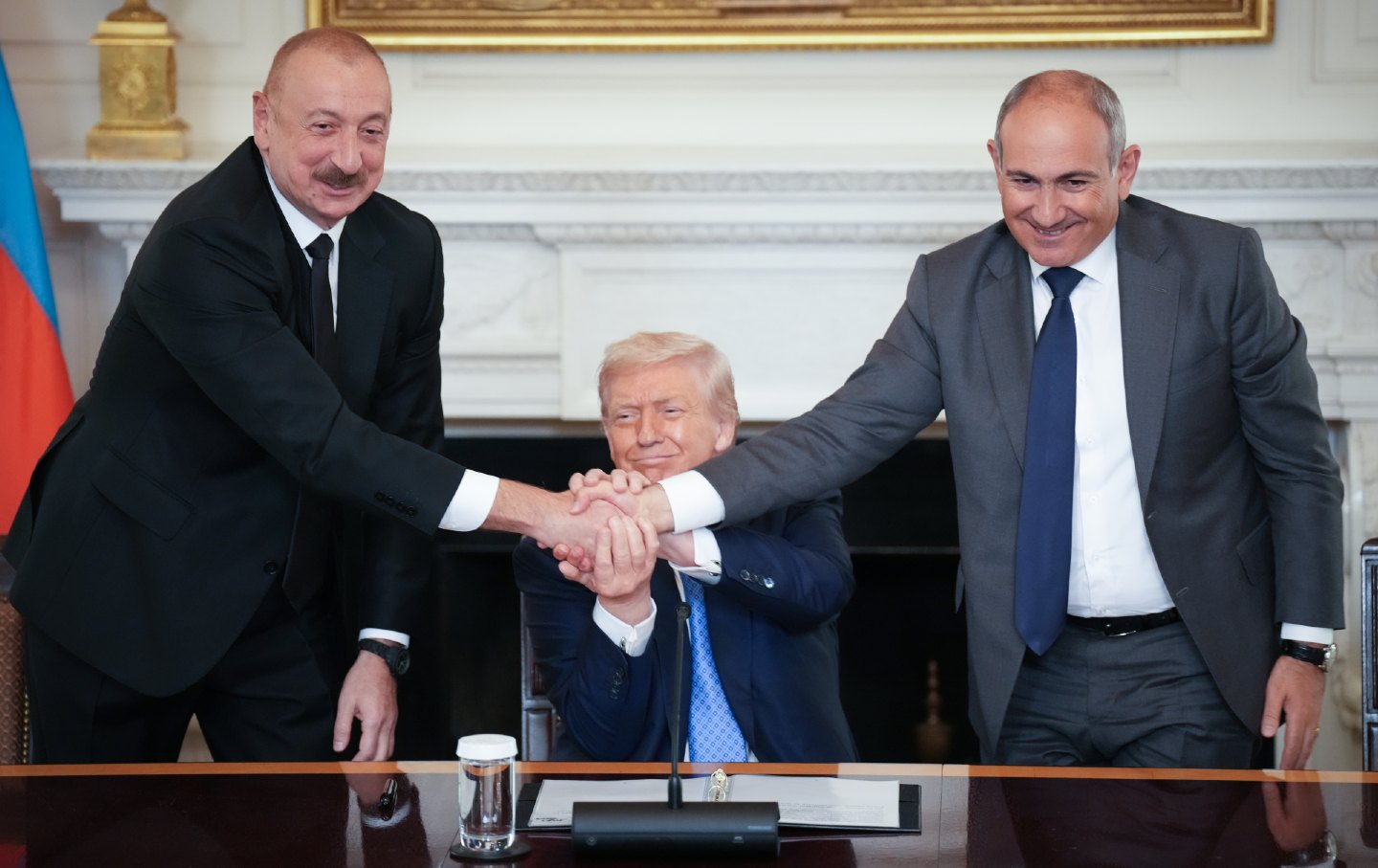
Eight years after Armenia’s “Velvet Revolution,” Nikol Pashinyan’s government has deepened the country’s neoliberal trajectory while reorienting Armenia toward the West.

Sanseitō has attracted young voters through a robust social-media strategy, Charlie Kirk–like public speaking events, and anti-establishment messaging.
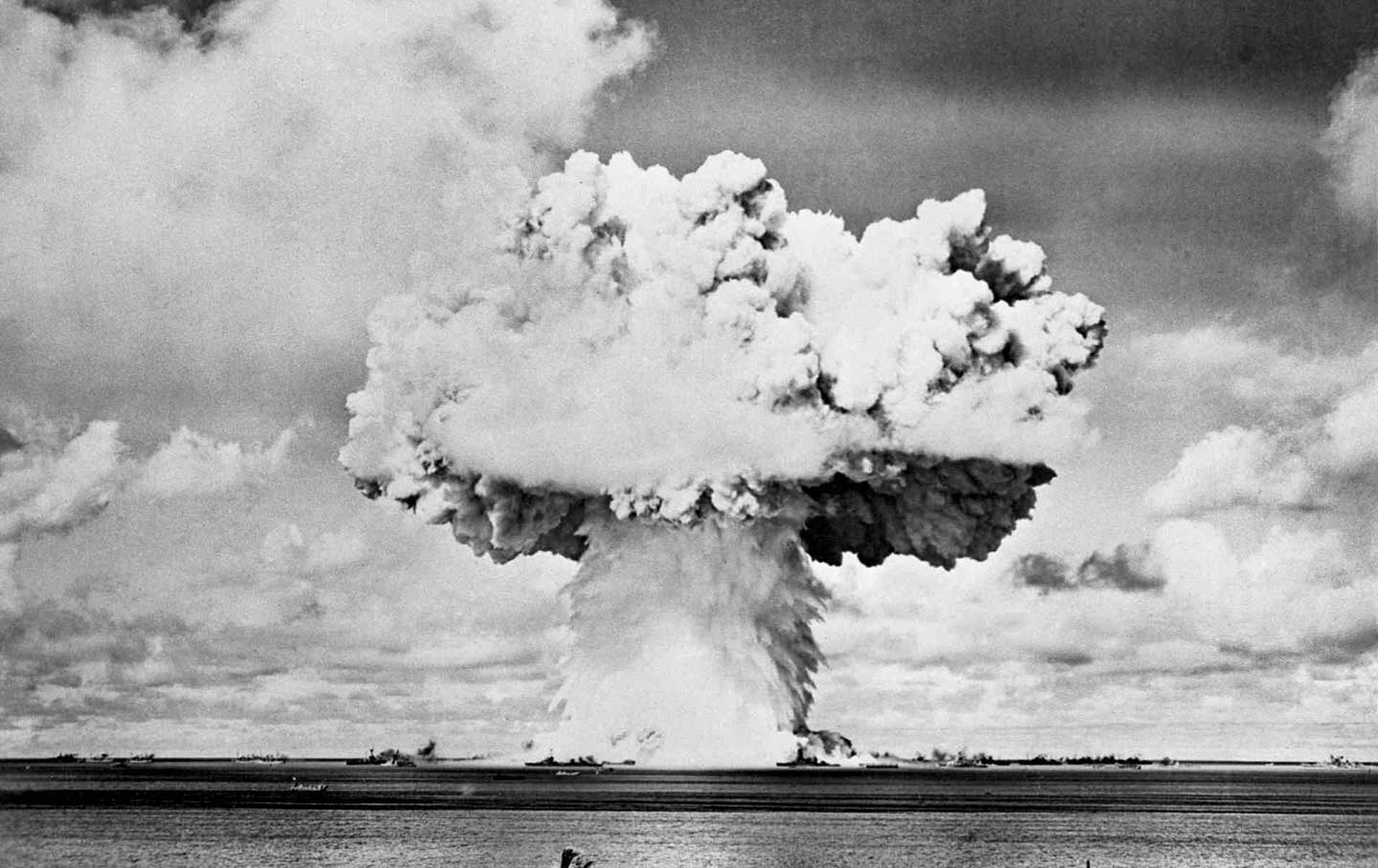
In the 1940s, The Nation asked questions about the atomic bomb we’re asking of artificial intelligence today.
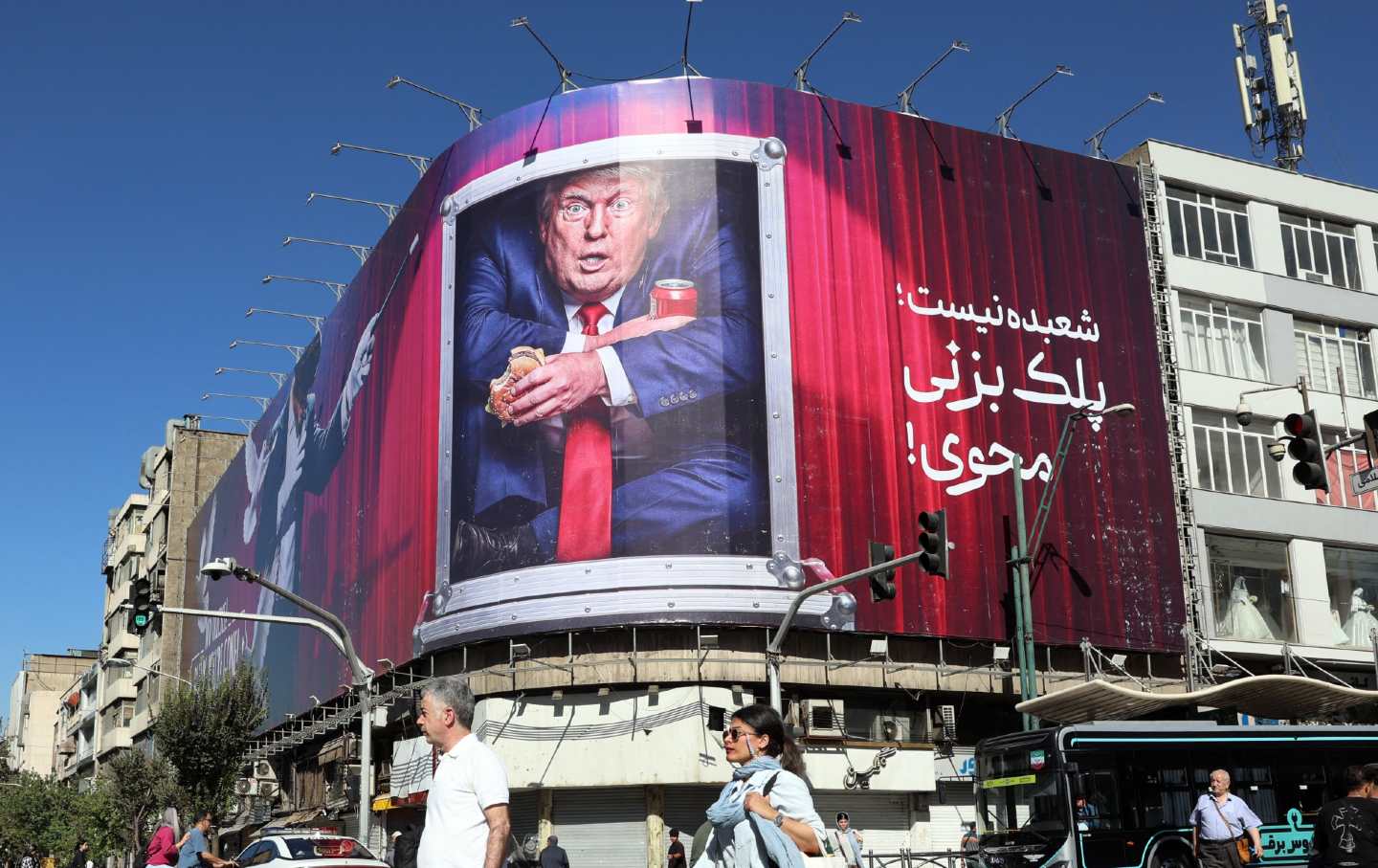
An interview with historian Behrooz Ghamari-Tabrizi about the generations of US presidents who have tried to destroy the Iranian regime.

Between a budget crisis and a cost-of-living squeeze, Macron is leaving a country feeling more insecure than ever—and ready to take to the streets.
The fundamental problem is not the name of the prime minister, but rather the actions of the Israeli government and the urgent issues that need to be addressed.