
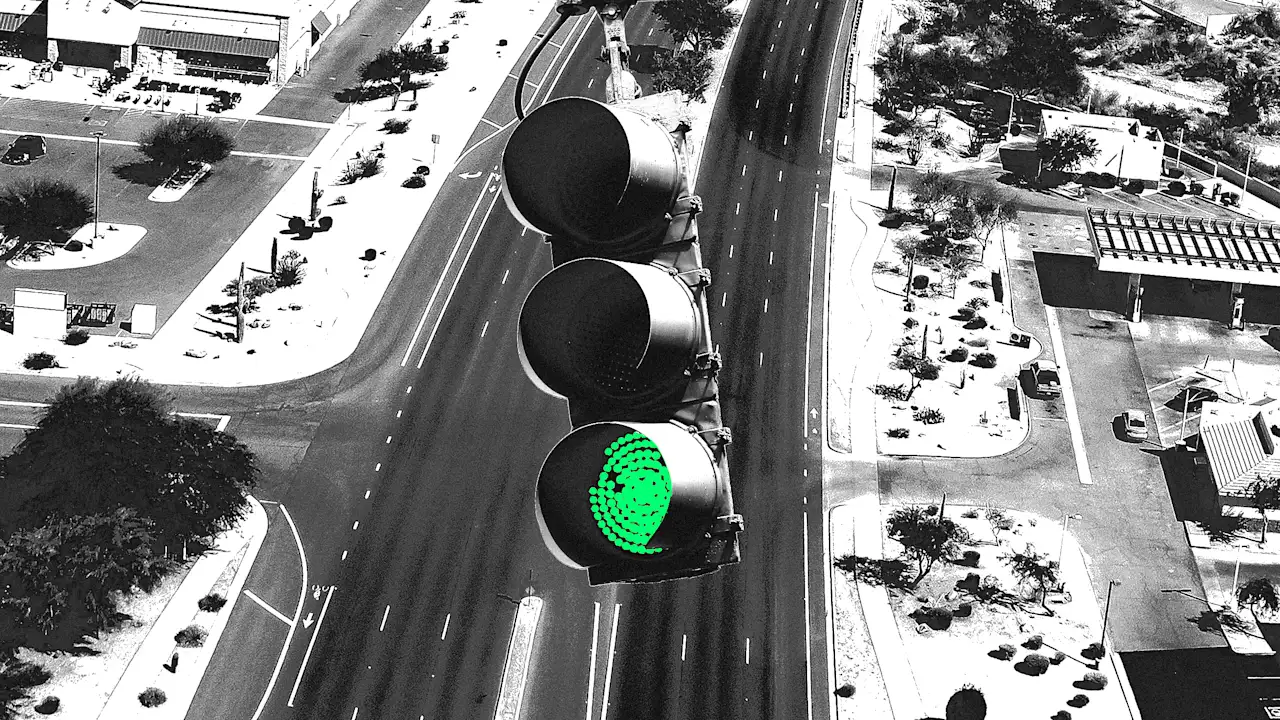
How do modernist transportation planners recommend handling congestion? By recommending new vehicle lanes. What happens when you build new vehicle lanes to handle traffic congestion? The vehicle lanes fill up with more traffic congestion. As they themselves have said for decades, you cannot build your way out of congestion. But every week you can do a quick internet search to see a bunch of new attempts.
‘Induced demand’
I’ve been hearing planners and engineers say “we can’t build our way out of congestion” since the 1990s, when I began my career. The wonky term that describes why adding more lanes doesn’t eliminate congestion is “induced demand.” Transportation professionals have understood the induced demand phenomenon for decades. Consider the hypothetical (or is it?) Route 60.
Route 60 has two lanes in each direction with turn lanes at each signalized intersection. Most of the real estate fronting the corridor is retail or office, but thousands of single-family homes, townhomes, and apartments are just behind the other land uses. As you might expect, people choose to frequent the shops closest to home.
{“blockType”:”creator-network-promo”,”data”:{“mediaUrl”:””,”headline”:”Urbanism Speakeasy”,”description”:”Join Andy Boenau as he explores ideas that the infrastructure status quo would rather keep quiet. To learn more, visit urbanismspeakeasy.com.”,”substackDomain”:”https://www.urbanismspeakeasy.com/”,”colorTheme”:”blue”,”redirectUrl”:””}}
The department of transportation adds one more lane in each direction. After construction, people choose to visit more retail centers further from home because there’s suddenly more space on the corridor. It gets to the point where enough people have made the same choices that car traffic on the corridor is back to its preconstruction levels.
In response, the department of transportation builds one more lane in each direction. Now with four lanes in each direction, the corridor is wider than the nearby interstate. And once again, people who were avoiding the traffic jams on Route 60 now choose to get back on the road and drive further. Enough people make the same choice to drive further from home and the car traffic is back to preconstruction levels.
The might-be-fictional Route 60 is the same never-ending story of induced demand in communities across the country. Road expansions only temporarily reduce traffic congestion, but professionals only temporarily remember expansions don’t work.
A better way
It’s no secret that public agencies are strapped for cash, and it’s no secret that public agencies continue to spend depleted accounts on road expansion projects. Meanwhile, the average citizen continues to point out problems with existing infrastructure: potholes, withering landscaping, crumbling sidewalks, and poor street lighting. Taxpayers’ financial contributions deserve good stewardship. Public agencies shouldn’t be building something that can’t be maintained, let alone expanding something that’s destined to attract even more traffic and thus maintenance.
Induced demand isn’t inherently bad or good—it’s just a description of an economics principle of scarcity and choice. There’s a way for departments of transportation to take advantage of induced demand by creating bicycle networks that will fill up with new bike traffic. Robust bicycle infrastructure gives people the freedom to make short trips without having to rely on a motor vehicle. And of course, bicycle infrastructure yields an extraordinary return on investment when compared to car-oriented infrastructure.
Culture plays a tremendous role in the planning and construction of transportation systems. When Danish streets were convenient for high-speed vehicular traffic and long commutes, that’s exactly how people behaved. Following a fundamental shift in design philosophy, bicycling was made convenient and Danes naturally opted for the easier travel mode. Copenhagen wasn’t always Copenhagen. They deliberately redesigned streets to make riding a bike an easy option, and just like that, the bike lanes filled up with people making obvious transportation choices.
America’s rural villages, sprawling suburbs, and big cities have so much potential. We’ll meet that potential as future generations lead the culture shift by using the induced demand principle for the greater good.
{“blockType”:”creator-network-promo”,”data”:{“mediaUrl”:””,”headline”:”Urbanism Speakeasy”,”description”:”Join Andy Boenau as he explores ideas that the infrastructure status quo would rather keep quiet. To learn more, visit urbanismspeakeasy.com.”,”substackDomain”:”https://www.urbanismspeakeasy.com/”,”colorTheme”:”blue”,”redirectUrl”:””}}
Source link