
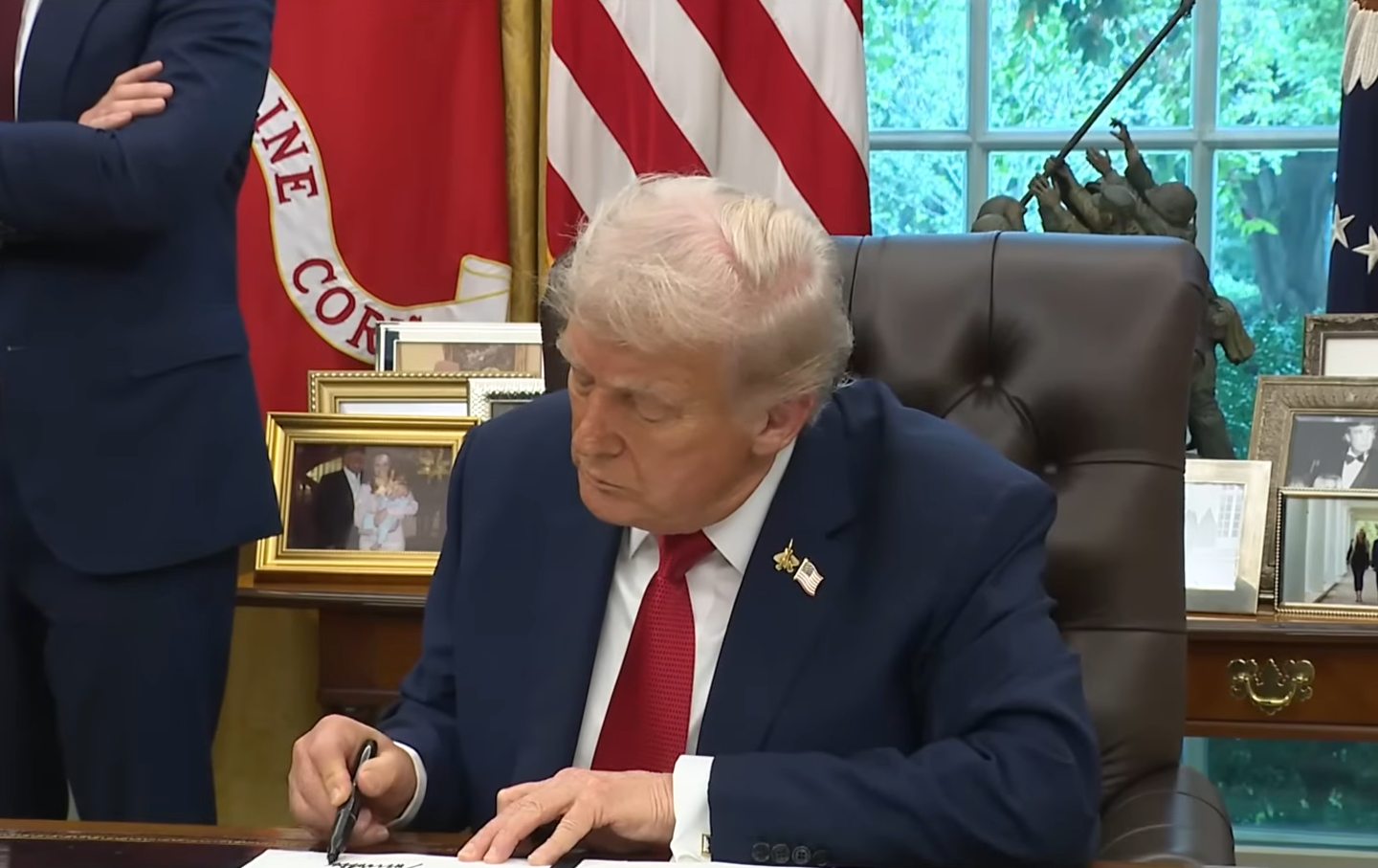
Why National Security Presidential Memorandum-7 is so important.
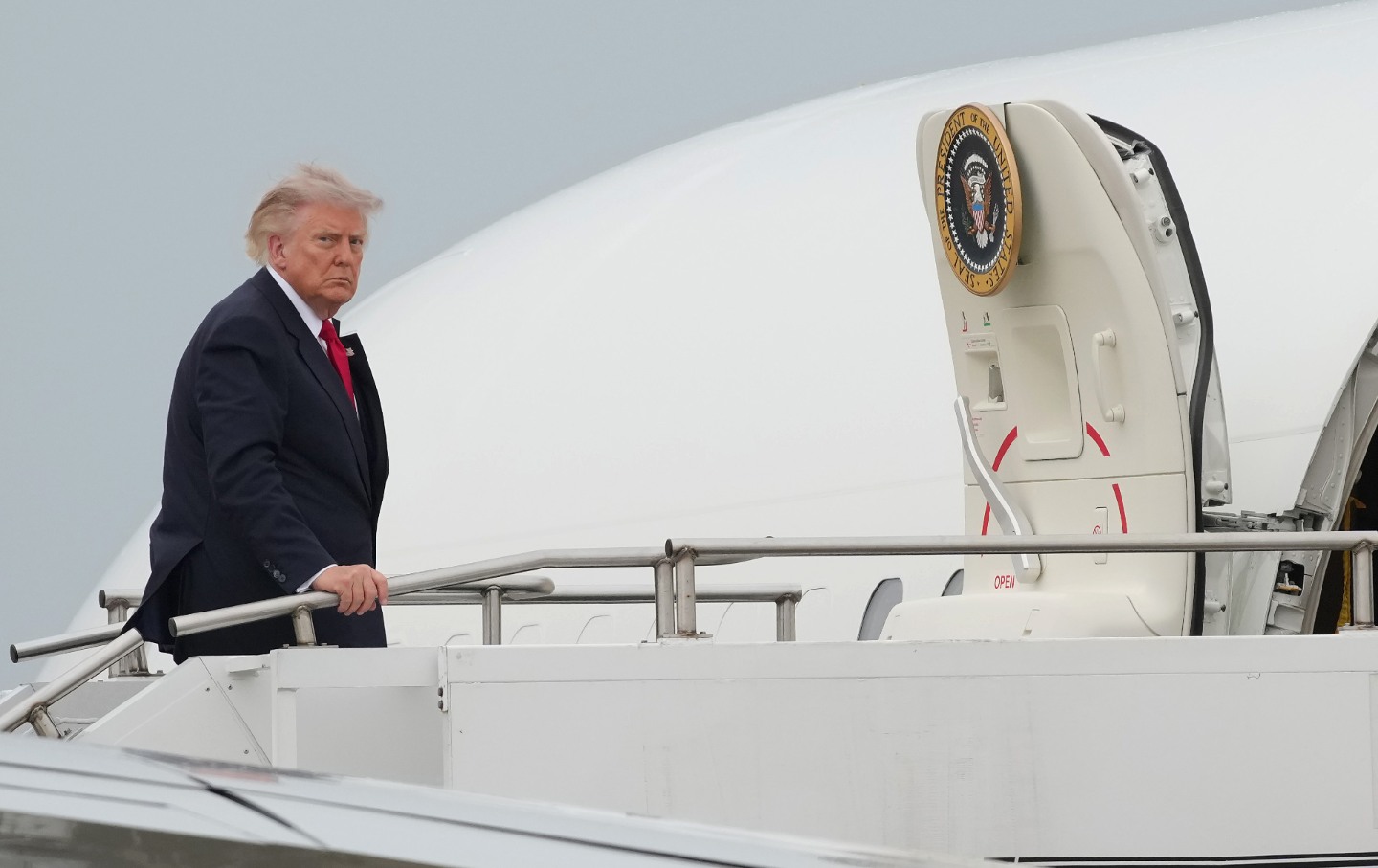
Donald Trump signs the NPSM-7 memo on September 25, 2025.
(YouTube)
In 1969, 21 members of the New York Black Panther Party were arrested in predawn raids and charged with a combined 156 counts of conspiracy. To prove the defendants’ dangerous ideology to the jury, prosecutors screened The Battle of Algiers and read aloud from Mao’s Little Red Book. Among the defendants was 23-year-old Afeni Shakur, who had no attorney and no legal training and chose to represent herself. She was eight months pregnant, facing a 350-year sentence for a conspiracy the prosecution’s own witnesses couldn’t describe (on the stand, one of the state’s key officers admitted that he’d never seen her hurt anyone or blow anything up). In its quest for a conviction, the government leaned on the so-called “conspiracy doctrine,” which requires only agreement with the idea of an action, not action itself. In other words, you don’t need to prove anyone did anything, only that they talked about doing it, or associated with people who did.
The Panther 21 jurors didn’t buy it. After seven months, they acquitted every remaining defendant, on every count, in under two hours.
Fifty-seven years later, in a federal courthouse in Fort Worth, Daniel Sanchez Estrada was sentenced to 30 years in prison. Estrada was one of 22 people charged over a Fourth of July noise demonstration outside the Prairieland ICE detention facility in Alvarado, Texas, in 2025. It was one of many demonstrations that had sprung up outside ICE facilities nationwide after months of armed federal agents violently sweeping communities, and a detention system on pace for its deadliest year in two decades.
At the protest, one man (not Estrada) shot and wounded a police officer. He says he fired defensively, and that the officer was about to shoot an unarmed protester. Whatever the case, Estrada was not being tried in connection with the shooting. He wasn’t in court for arson, or assault, or any other serious offense. In fact, he hadn’t even attended the protest. His crime? Moving a box of his own zines and political literature from the home he shared with his wife, who had been arrested after attending the protest.
The Prairieland prosecutors leaned on the same conspiracy doctrine used against the Panther 21, treating the defendants as a single, unified network. But Estrada’s fate would be very different from that of Afeni Shakur. Despite years in jail awaiting trial, the Panthers ultimately walked free. Estrada, on the other hand, was sentenced to 30 years. His codefendant and partner, Maricela Rueda, was acquitted of the most serious violent charges against her. That didn’t matter either. She was sentenced to 70 years for her presence at a protest where someone else fired a gun. In all, the Prairieland defendants drew a combined five and a half centuries in federal prison. They were largely found guilty due to mere proximity—being in the wrong place at the wrong time—and their political beliefs.
So what changed between 1969 and 2026? First, the Prairieland judge was able to use a “terrorism sentencing enhancement,” a tool that did not exist when the Panthers were tried that lets a judge multiply a sentence once a crime is deemed “calculated to influence or affect the conduct of government.” (This wildly abstract concept would have been catnip for prosecutors in the days of COINTELPRO.) Second, the state’s ability to reach into a person’s life has grown considerably, with a new surveillance apparatus and access to our personal data that allows for repression to take new forms. What ties both together, and gives them a target, is a presidential memo signed last September that few Americans have read but every American now lives under, called National Security Presidential Memorandum-7, or NSPM-7.
NSPM-7 is now the administration’s sharpest tool for criminalizing left political organizing. It directs a 10-agencyJoint Terrorism Task Force apparatus—including the FBI, DHS, the IRS, and the Treasury’s Terrorism and Financial Intelligence office—to investigate and prosecute what it calls “domestic terrorism and organized political violence,” with targets defined broadly enough to include anyone whose motivations involve “anti-Americanism, anti-capitalism,” or views that differ from the government’s on immigration, race, and gender. It pursues not just individuals but networks, funders, nonprofits, or even anyone who shows up to a protest.
The FBI and IRS have created a “mission control command center”—the IRS’s wording—to examine nonprofits, and the FBI’s budget request discloses a permanent “NSPM-7 Joint Mission Center” charged to “proactively identify networks.” In other words, its goal is to wield the full power of the state to replicate the repressive tactics of the Prairieland case throughout the country.
Current Issue
It’s important to stress that there is nothing new about the criminalization of left movement activity in the United States, or the presence of political dissidents in American prisons. But most prior cycles of state repression were constrained by a combination of legal hurdles and basic logistical challenges. In 1919 and 1920, the Palmer raids saw federal agents round up thousands of suspected radicals in dozens of cities in a single coordinated sweep—a logistical feat that required advance coordination among field offices nationwide and produced almost no usable evidence beyond membership in a suspect organization, since agents had neither the time nor the technology to build individual cases (they deported hundreds anyway, with little more due process than a hearing). COINTELPRO required infiltrators embedded for years in movements like the civil rights struggle, the American Indian Movement, and the Puerto Rican independence movement; the Panther 21 prosecution required the state’s own agents to create the conspiracy it then charged people with. What changes from era to era is not the targets—those stay remarkably constant—but the cost, both legal and technological, of proving association and manufacturing criminality.
In 2001, the Patriot Act began unraveling some of that constraint, handing the government easy access to the paper trail of a life: Internet history, financial records, travel patterns, library and bookstore records, phone metadata, and—through expanded “sneak and peek” warrants—the ability to search a home or seize property without notifying the owner until well after the fact. And a private surveillance apparatus has since wound itself around the federal one like beans up a trellis—cameras in stores, on transit, on your neighbor’s porch, at protests; license plate readers; facial scans; data brokers selling your locations to anyone willing to pay, including government agencies. That last part isn’t hypothetical: The FBI renegotiated a data broker contract around the time of the 2020 Black Lives Matter protests, and a separate data broker was caught boasting that it had harvested location data from nearly 17,000 phones at BLM demonstrations across four cities.
Meanwhile, the federal government has spent more than a decade failing to contain mass mobilizations (the 2020 George Floyd Rebellion, Standing Rock, Occupy Wall Street, the student encampments, Stop Cop City, the crowds now blocking ICE’s vans) through either ordinary policing or legal repression. Prosecutors in St. Paul charged the RNC 8 under a state terrorism statute after a protest at the Republican National Convention, then dropped the terrorism counts; a Chicago jury acquitted the NATO 3, accused of plotting Molotov cocktails, of every terrorism charge; the great majority of the roughly 800 people charged at Standing Rock over a winter-long standoff saw their cases dismissed or won them outright (even after the federal government sent informants into the protests). After 200 people were kettled downtown at Trump’s 2017 inauguration and charged with felony rioting for simply being in a crowd, six were acquitted at trial; the government dropped the charges for the rest. The criminal conspiracy case against Stop Cop City protesters has almost completely collapsed, with the RICO charges against all 61 people dropped.
NSPM-7 is best understood as both a response to those failures and the latest attempt to transcend them. It is an architecture broad enough, with a Department of Justice aligned closely enough with the executive, to make the earlier attempts look meek.
It does this not by creating new laws but by redirecting existing power. It steers the FBI’s roughly 200 Joint Terrorism Task Forces toward leftist organizing, directs agencies to use authorities they already had against nonprofits and activists, and hands the attorney general a new administrative designation, “domestic terrorist organization,” for groups engaged in offenses as minor as trespass or as vague as “civil disorder.” The designation itself creates no new offense (there is still no crime explicitly called “domestic terrorism” that a person can be charged and convicted of), but it does create a long target list, and lets prosecutors use tools already at their disposal: conspiracy doctrine, material support statutes, terrorism sentencing enhancements. The absence of new law is sort of the point—nothing in NSPM-7 needs, for example, congressional approval.
Nationally, the memo runs through an entity called Joint Task Force Vanguard, which greenlights prosecutions across the country. Washington’s instruction has been explicit. On a conference call this year, a senior DOJ official told prosecutors the department wanted headlines with the indictments. “Go big,” he said, “and go loud.” Days before signing NSPM-7, Trump signed a separate executive order purporting to designate “Antifa”—an ideology against fascism with no members, leadership, or headquarters—as, you guessed it, a “domestic terrorist organization.”
Two things are being further criminalized under NSPM-7, and neither is violence. The first is the group. Conspiracy law punishes agreement to commit a specific unlawful act—not membership in an organization, and not sympathy with its aims. The Constitution has drawn that line explicitly, twice, through the NAACP: in 1958 the Supreme Court refused to let Alabama pry loose the NAACP’s membership list, holding that the freedom to associate for a cause is inseparable from the freedom to speak at all; in 1982 it struck down liability against NAACP boycotters in Claiborne County, Mississippi, for other people’s violence, because belonging to a group whose members sometimes break the law is not itself a crime.
But association requires something to belong to, and “Antifa,” the concept used by the state to throw the book at the Prairieland defendants, is not a thing you can belong to. It has no members, no leadership, no headquarters, no dues; the FBI itself described it for years, accurately, as an ideology, not an organization. Trump designated it a domestic terrorist organization anyway, and the invention has proved more useful than a real organization, because a group without a membership list is one whose members the government simply gets to make up. (And the inventions keep expanding: in July, the State Department convened representatives from more than 65 countries for what officials informally called the “Antifa summit,” where the Secretary of State accused Iran and Cuba—without offering a shred of evidence—of working with “Antifa”).
The second thing criminalized is thought. NSPM-7 writes politics directly into the charging framework, listing “anti-capitalism” among the motivations that turns ordinary protest into terrorism and, in practice, presence into conspiracy. The state no longer proves what you believe by what you did; it proves what you did by what you believe.
Implementing this new repressive regime has not come without its hiccups. The day after the memo was signed, six protesters were arrested outside the Broadview ICE facility near Chicago; when grand jurors refused to indict them, prosecutors dismissed the grand jurors and re-presented until they got their indictment—which then collapsed after the government conceded there was no plan, only a “spontaneous conspiracy” that coincidentally began the moment the protest did. The charges have since been dropped entirely.
In those same months, the DHS announced the arrest of a “domestic terrorist” named Marimar Martinez—a 30-year-old teacher whom a federal agent had shot multiple times. The affidavit contradicted the press release; her lawyers say the body cameras contradicted both; a grand jury declined to indict. By spring, more than a third of around 300 anti-ICE protest cases had fallen apart, by ProPublica and Frontline’s count. The department’s answer was not to retreat but to escalate, right as public opinion turned sharply against it. By February 2026, two-thirds of Americans said ICE had gone too far, up from just over half the previous June; independent support for the agency’s tactics had cratered further still.
Despite these bumps, the NPSM-7 rollout has generally been smooth, its road graded long ago by both parties. “Terrorism” is now a word that gets stretched until it means whatever the state needs it to. Bill Clinton’s 1996 terrorism law (the Antiterrorism and Effective Death Penalty Act) built the material support doctrine, which didn’t require violence, or even intent to enable it—just a connection to a designated group.
Under George W. Bush, the FBI declared “eco-terrorism” the nation’s leading domestic terrorism threat, and Congress passed the Animal Enterprise Terrorism Act with barely a dissenting voice. DHS fusion centers monitored Occupy Wall Street and Black Lives Matter under a Democratic president, and soon after, the FBI invented a short-lived “Black Identity Extremist” threat category. After the January 6 insurrection, Democrats pushed for a new domestic terrorism statute, over objections from civil rights groups who warned—correctly—that every such tool eventually bludgeons the left.
In Atlanta, weeks after NSPM-7 was issued, an activist named Sam Tunick was indicted for wiping his own phone during an attempted search by a Customs and Border Protection “Tactical Terrorism Response Team” at the airport—not for anything he did at any protest but for what he did with his own phone afterward. And after a Fulton County judge dismissed the Cop City RICO case, the federal government came back, bolstered by NSPM-7, and charged two people over a four-year-old protest, using the same consumer-fireworks-as-terrorism enhancement as Prairieland. There will likely be more such instances: The attorney general’s implementation memo ordered five years of files be mined for “Antifa-related intelligence,” which is how conduct from 2022 becomes an indictment in 2026.
Popular
“swipe left below to view more authors”Swipe →
In Minneapolis, 15 residents were charged with felony conspiracy to impede federal officers over anti-ICE protests earlier this year. Four also face separate, individual charges—a kicked SUV, a knocked-away notepad, a sideswipe during a vehicle follow, tailing agents across a state line. But those specific acts aren’t what holds the case together. The conspiracy charge binds all 15 defendants regardless of what any one of them actually did—that’s simply how conspiracy law works, and has for a century. What NSPM-7 supplies is the will to use it broadly: to charge 15 people as one network over conduct this thin.
The “overt acts” in the indictment alone make the point: They include attending a meeting at a DSA office, posting a flyer to Signal, wearing a gag sweatshirt that says “I’m Antifa,” carrying a bullhorn, handing someone a radio, and receiving—twice—an automated text message from U-Haul. Writing an eyewitness account for an anarchist blog counts as an overt act. So does giving a public talk in Chicago. People stood on public sidewalks photographing the license plates of government vehicles, and were charged as conspirators by a government that scans millions of civilian plates a day without a warrant.
The alleged conspiracy is entirely about opposing ICE, peppered with mentions of “antifa” so that prosecutors can invoke NSPM-7’s terrorism architecture instead of an ordinary obstruction charge. When reporters pressed the US Attorney in Minneapolis on whether any defendant had actually harmed an officer, he was unequivocal: That, he said, wasn’t the point. In Fort Worth, the judge who sentenced eight of the Prairieland defendants—assigned their cases days before sentencing, having called the protest an “assault on democracy”—said from the bench that he was imposing the maximum because the state wants “to send a message to anyone who shares a similar ideology.”
Which is why the real question isn’t what any of these protesters did but what they were responding to. Editorials and commentators and politicians have framed protest this way for as long as there’s been protest to cover: The protest itself becomes the story, and whatever the protest was actually responding to gets minimized, if it’s covered at all. That’s exactly the inversion at work throughout the NSPM-7 prosecutions. In Minneapolis, the indictment itself quotes defendants reacting to “another ICE shooting,” to the shooting of Renée Good, to “the murder of Alex Pretti.” Said plainly: Federal agents killed two people, and 15 of their neighbors were criminalized for protesting it. Indignation over a kicked government SUV, in the face of a government that kills with near impunity, would be laughable if it weren’t so devastatingly real.
After all, who are the radicals? The people NSPM-7 names as terrorists imagine a world with fewer cages in it, a place where no one can be disappeared from a parking lot or shot while driving with their toddler in the back seat. The government calls that extremism. The world its authors defend—where masked agents shoot bystanders, where 2 million people sit in cells, where insulin is rationed, and corporations poison our water and air—is called moderation. It isn’t. It is the most radical proposition in American life: that this much cruelty is a reasonable amount, and it survives only as long as we agree to fear the people who refuse it. In Minneapolis, the morning after federal agents broke down the organizers’ doors, their neighbors came out with whistles. They followed the agents down the street. By evening, there were groceries on the defendants’ porches, and someone was already fixing the door.
More from The Nation
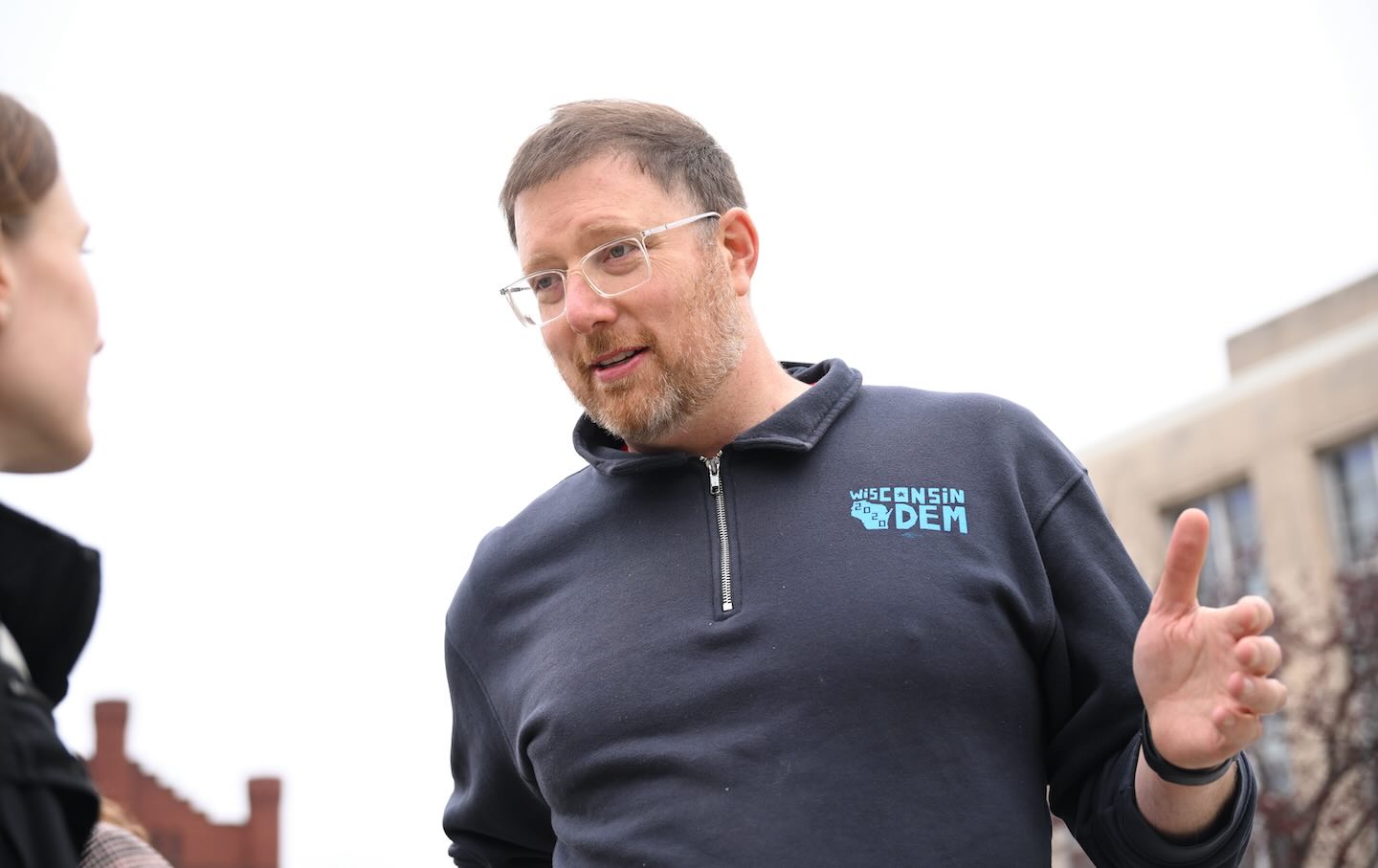
Democrats can save the country from an authoritarian takeover, but to do so they must focus on systemic reforms, the author argues in this adaptation from his new book.
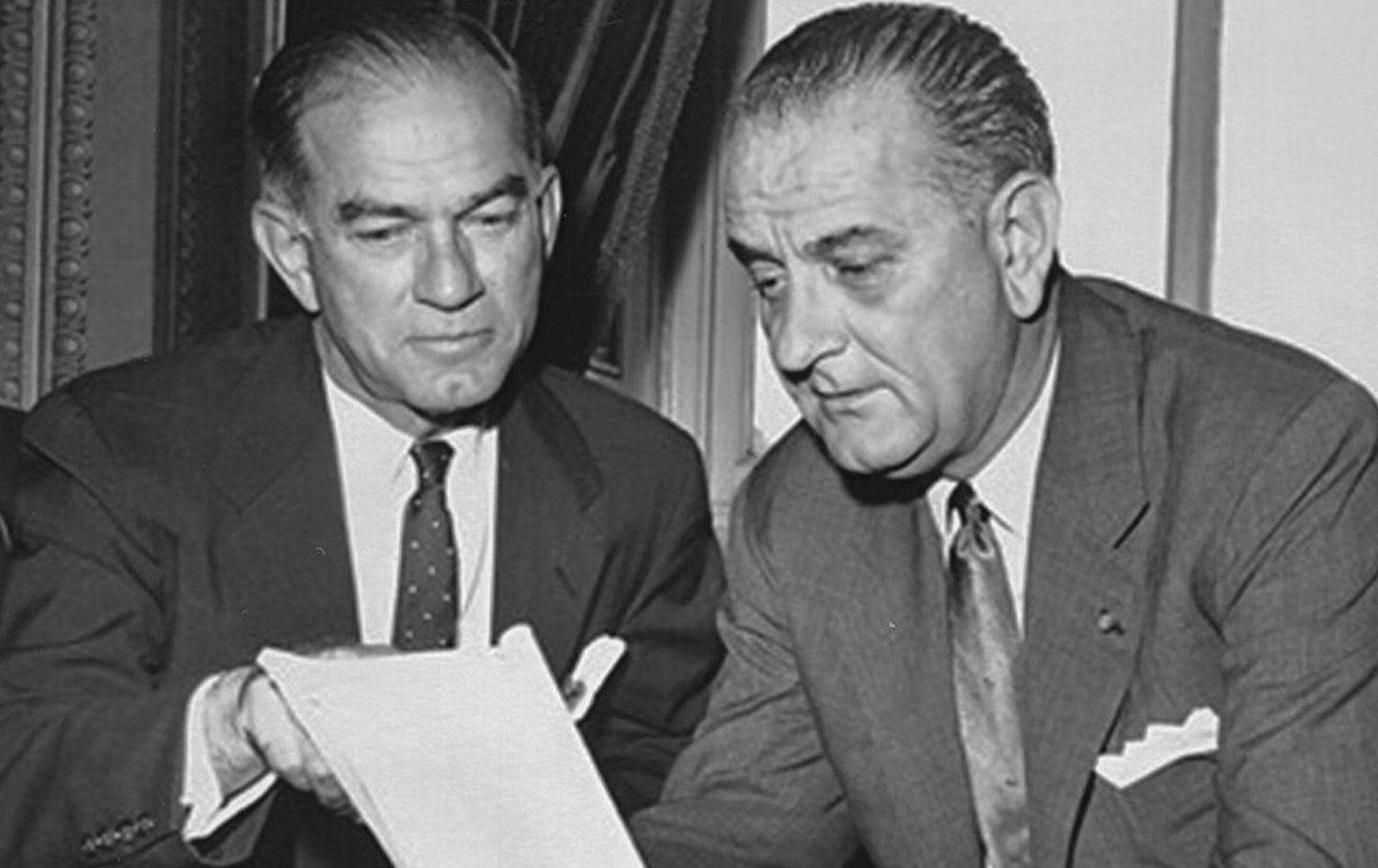
But a broader look at Fulbright’s legacy reveals him as one of the most prescient critics of militarism and the “imperial presidency”—lessons that apply more than ever today.
Blowing up innocent fishermen hasn’t curbed the drug trade.